
The Death of Music Criticism and the Risk of Algorithm Monoculture
In one of Pitchfork’s most notorious album reviews, Ryan Schreiber, the founder of the popular music publication, criticized Daft Punk’s sophomore album, “Discovery,” for “operating under the premise that if you hear something enough times, you’ll start to believe it.” While the album received a lukewarm 6.4 on Pitchfork’s elaborate point system, it became a defining work in Daft Punk’s illustrious career and is often praised as one of the greatest dance albums of all time. Tracks like “Harder, Better, Faster, Stronger,” “Face to Face,” and “One More Time,” once criticized by Schreiber for their endless repetition, are now regarded among the most successful dance tracks of the millennium.
This critical framework defined Pitchfork’s early years as provocatively contrarian, assigning 0.0 scores to otherwise moderately reviewed albums like Sonic Youth’s “NYC Ghosts & Flowers,” Liz Phair’s “Liz Phair,” and Jet’s “Shine On.” (For its review of “Shine On,” Pitchfork favored a video clip of a chimpanzee urinating into its own mouth to replace a standard, written review.) In recent years, the publication has lost this signature pessimism. With the exception of Tyga’s recent AI Album $TARFACE, Pitchfork has not awarded a 0.0 score in two decades. More significantly, this trend reflects the overall lack of criticism in music journalism, which is losing its, as stated by Kelefa Sannah in The New Yorker, “critical edge,” and has long suffered under a consensus-driven economy.
First, the future of music journalism is more unpredictable than ever. NME and SPIN have ceased print publication, The Village Voice halted operations, and Condé Nast merged Pitchfork with GQ. To survive the rising operational costs, music publications favor content optimized for engagement. This creates “an economic incentive to chase web traffic by writing positively about megastars,” Neil Shah of The Wall Street Journal concludes. “With shrinking staff, growing competition, and limited space, publications may simply not write about a bad album at all.” Bad reviews present not only personal and reputational risks for companies, but also the risk of losing “future access, not only to that specific artist but also to other artists on the record label,” Gretel Kahn writes in a Reuters Institute online article. With industry success driven by exclusivity and story relevance, losing intimate access to record labels and publicists is a significant risk.
Second, celebrities, who previously relied on media publications for dissemination, can now interact directly with consumers through public social media accounts. A cover shoot for Rolling Stone, for example, has lost the cultural significance it held a decade prior as the historic symbiotic relationship between artists and critics becomes antiquated.
Third, as Eli Zeger writes in the Boston Review, publications receive “more traffic when they featured artists who more readers knew and enjoyed.” An article praising an unknown indie singer generates less engagement than a profile on a Grammy-winning artist. The era of celebratory reviews for indie acts like Arcade Fire, Bon Iver, and The War on Drugs, which catalyzed their critical momentum and eventual Grammy-winning success, is a relic of the past. The pressure for contemporary journalists to produce hit pieces on new albums at a rapid pace “result[s] in half-baked, largely short-form reviews that parrot press releases,” Zeger writes.
Lastly, social media has democratized the industry of music journalism. The growing dominance of video critics like Anthony Fantano, AJay Deluxe, and the Swiftologist, who opt for a podcast-like intimacy, highlights music journalism’s distinctive evolution from the blog-driven ecosystem of the aughts. With self-publishing platforms like Substack and Medium, the old model of a centralized, institutional landscape is obsolete. While this environment lowers the barrier to entry, and with it, a perceived sense of arrogance, it also brings into question the value of music criticism. Listeners “no longer need music critics to tell them what album is worth buying or what concert is worth attending,” Kahn writes. We simply need to open our preferred streaming platform to digest new music. Former Music Editor of the LA Weekly Ben Westhoff confesses in an article written by Af Dan Ozzi for Vice that he “could spend paragraphs describing a sound and it wouldn’t compare to even a few moments listening to the track itself.”
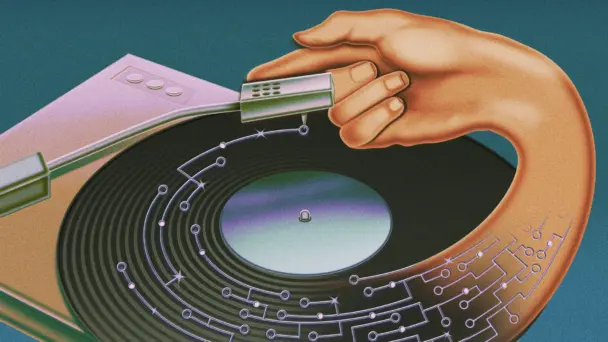
To grapple with the merit of music criticism is to understand the risk of its absence. For listeners, our ability to discover new music “which was previously more proactive by necessity—requiring manual effort to open up a newspaper” is now, as music analyst Cherie Hu describes in a Columbia Journalism Review, “passive as scrolling mindlessly through a personalized feed.” If we accept, as music critic Sanneh argues, that music journalism has lost its critical nature, a new algorithmic monoculture threatens us.
Music critics as curators of consumer taste are inherently expansionary, introducing audiences to new genres by “drawing upon their decades of subject-matter expertise,” Hu writes. With streaming algorithms, curation becomes self-reflective, “serving up music with the highest quantifiable chance of reflecting a user’s already-existing preferences.” Music Journalist John Doran writes in an article published in The Guardian that these algorithms—or music recommender systems (MRS)—reward “conformity to rigid metrics, including song length, and the prominence of chorus and hooks, and actively punish any kind of experimentation.” Writer Dan McCarthy notes in a music feature on Dazed that songs, on average, now have shorter track lengths, because they are “designed to keep skip rates low, and thus perform better on algorithm-curated playlists and discovery systems.” These systems penalize ingenuity and favor standardization, constructing a generic, formulaic approach to popular music optimized for virality.
Research from the University of Leeds by Hesmondhalgh et al. confirms that MRS tend “to favour items that are already popular” as well as certain demographic identifiers, “thus reinforcing or amplifying the success of the most successful artists and companies.” Overall, these systems reduce consumption diversity while forming an increasingly homogenized culture.
As music lovers, how do we combat the algorithmic homogenization of the art form? We must become more discerning listeners. Music journalism should enhance its critical subjectivity and unfettered dissent. The threat of automated culture is most pronounced when we move away from human subjectivity. Moreover, music listeners must take greater agency in seeking out organic forms of consumption, such as reading articles, attending concerts, and engaging directly with musicians and their communities. When we shift away from algorithmic consumption, we find greater meaning as musicophiles.
Carter Appleyard can be reached at cappleyard@wesleyan.edu.



Leave a Reply