

Professor Maaza Mengiste Wins MacArthur Genius Grant, Awarded 800k
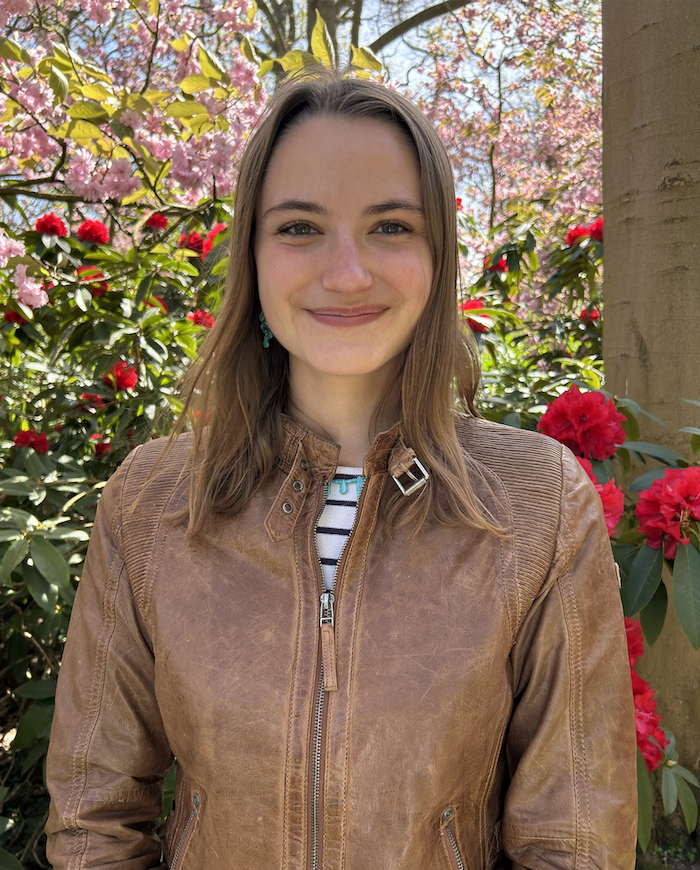
This fall, Wesleyan Professor of English Maaza Mengiste was awarded the MacArthur “Genius Grant,” a fellowship in recognition of creative and impactful work in the humanities, which will award her $800,000, no strings attached.
As a writer, essayist, and archivist, Mengiste confronts political violence, memory, and resistance through historical fiction. This grant is just one of Mengiste’s many accolades. Her 2010 debut novel “Beneath the Lion’s Gaze” was selected by The Guardian as one of the 10 best contemporary African novels in 2012, and her novel “The Shadow King” was shortlisted for the Booker Prize in 2020.
Both novels are set in her hometown of Addis Ababa, Ethiopia. “Beneath the Lion’s Gaze” explores the human cost of political violence, following a family in pursuit of freedom at the eve of the Ethiopian revolution, while “The Shadow King” follows an extraordinary tale of women in war.
This grant was not something Mengiste applied for; the winners were nominated by a selection committee that annually recognizes 20-30 individuals in the United States who “demonstrate exceptional creativity and promise for important future advancements based on a track record of significant accomplishments.” In the past, the grant has been awarded to writers and leaders in the arts, humanities, and sciences, including Wesleyan alum Lin-Manuel Miranda ’02.
Mengiste told The Argus she was shocked to receive the award. At the time of the call, she was in the midst of jury duty and had to wait for a break to pick up the call.
“I hung up wondering, is this AI?” Mengiste said. “It still hasn’t quite hit…but life just keeps going.”
Although Mengiste’s career as a professor cannot be fully interrupted by the recognition, there is no doubt that this $800,000 stipend will open up more opportunities to pursue her creative projects, especially research-intensive and archival work.
Mengiste intends to use a portion of the money to expand her website Project 3541, a database containing archives of the 1935-1941 Italo-Ethiopian war, which includes photographs shared by family members and loved ones from the time period. This fellowship will allow Mengiste to collaborate with more artists, archivists, and organizations that work on similar projects.
In addition to developing her archival database, Mengiste intends to use the money to continue traveling to the historical sites where her novels are set, to view archival work and speak to descendants of people who remember the events.
To write “The Shadow King,” for instance, Mengiste traveled multiple times to Italy and Ethiopia. In her travels, she conducted groundwork, walked through sites where battles occurred, and interviewed descendants of Italian fascist soldiers.
“It’s quite immersive; I really have to walk in the spaces that I write about.” Mengiste said. “And it’s exciting to work with the descendants of soldiers…. Realizing that that soldier had a family that loved [him] helps me with character development, in addition to finding out [historical] information.”
Mengiste also drew heavily from her own memory of growing up in Ethiopia. Further, she worked to voice her personal connection to the Italo-Ethiopian War and depict the impact of the many women that fought on the front lines, including her great-grandmother.
“A lot of [Beneath The Lion’s Gaze] was based on memory initially…what I saw and what I experienced as a child, but also what my family or friends of mine experienced,” Mengiste said.
It is through Mengiste’s firsthand experience that she was able to give her novels a more human perspective that history books may lack. In contrast to the colonialist narratives that describe the people of Ethiopia as powerless under European subjugation, Mengiste’s “The Shadow King” depicts them as actively resisting occupation and fighting for their country’s freedom.
“It’s really interesting that whenever there is oppression, there is also resistance. But people in power don’t ever want us to remember that fact. To me, it’s about piecing together those gaps that history leaves,” Mengiste said.
Since her next book will be set in Berlin in the 1920s and ’30s, Mengiste spent the Spring semester in Germany on a fellowship, doing research and conducting interviews in archival locations. Winning the Genius Grant, she says, will give her more breathing room to continue this research.
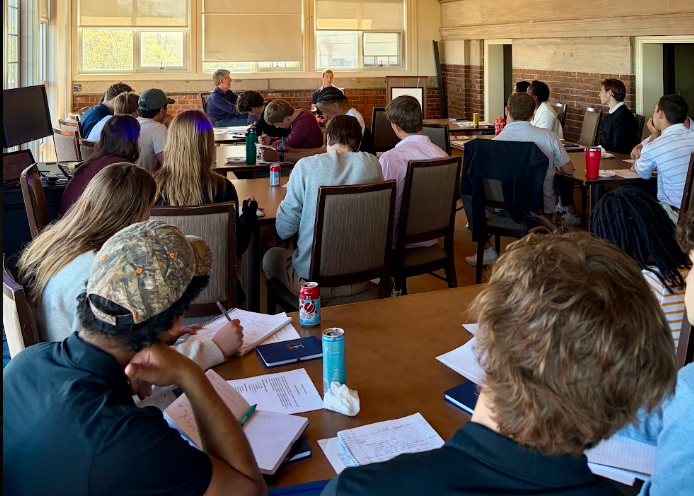
In addition to writing, Mengiste currently teaches “Difficult Novels, Uneasy Narratives” (ENGL393) and “Techniques of Fiction” (ENGL296) at the University.
“I think the students are absolutely fantastic,” Mengiste said. “I feel really lucky in that I’m able to teach what I love, but then being in the classroom, I learn a lot from the students. My engagement with their work is always inspiring, and the conversations that we have in class teach me new ways to think about my writing.”
Easy Weissman ’28 and Lucas Coleman ’29 commented on their experiences taking Mengiste’s classes.
“I think she’s a great professor,” said Weissman. “I’m in a class with her this semester, an upper-level creative writing class where we’re kind of doing a lot of reading of quote-unquote difficult novels, but I also took ‘Techniques of Fiction’ with her my freshman year. She was also my pre-major advisor. Especially this semester, she’s been a great person to bring an idea to in class, and she’s excited about your idea and wants to interrogate it with you.”
Students also shared their thoughts on Mengiste’s extraordinary achievement in receiving the MacArthur Fellowship.
“I’m really happy for her, and I’m happy that I’m in a class with her,” Coleman ’29 said. “One of the reasons you come to a school like Wesleyan is you get really good professors that have great credentials.”
“I want to be a novelist, and so to have somebody who is a novelist who’s been successful and is able to work with you on a day-to-day basis is [an] invaluable tool in making that kind of dream possible,” Weissman ’28 said.
Claire Farina can be reached at cfarina@wesleyan.edu.



Leave a Reply