
WSA and Fraternities React to Cornell Rape Case
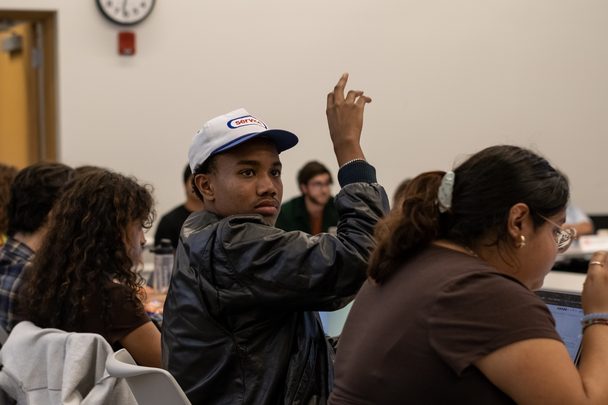
On Sunday, Oct. 4, the Wesleyan Student Assembly (WSA) passed Resolution 1.48, a measure aligning the WSA with the student governments of other universities, such as Princeton University and the University of Pennsylvania, in calling for Cornell University to pursue disciplinary action, namely expulsion, against the perpetrators of a 2024 sexual violence incident. The resolution passed unanimously under an expedited process due to the urgency and importance of the situation.
The incident involving Jane Doe, an unnamed survivor, happened at the Chi Phi fraternity house at Cornell University on Saturday, Oct. 19, 2024. Last month, Doe filed a lawsuit that has since gone public against Cornell University, the fraternity, her own sorority, Tri-Delta, and the seven men she alleges were involved in the sexual assault. The case has sparked widespread discussions across the United States about the prevalence of sexual violence on college campuses.
The Cornell Daily Sun, Cornell’s independent student-run newspaper, has played a large role in keeping the case alive. Spanning over two years, students on the paper refused to let the case become forgotten, keeping the investigation alive through personal contacts with Jane Doe and her lawyer. In a vehement editorial, The Sun published the names of the seven men who allegedly participated in the gang rape.
In their resolution, the WSA demands that Wesleyan and President Michael Roth ’78 issue a public statement that affirms their commitment to protecting students from sexual violence and to condemn Cornell University for its lax disciplinary response to the incident. The WSA also released a statement urging the Office of Residential Life to revisit its policies concerning emergency housing relocation due to sexual harassment or violence, Greek organizations, and other campus groups to foster cultures that uphold community standards. The WSA also called for the Wesleyan Board of Trustees and the University to open a formal review of the naming of the Frank Center for Public Affairs that addresses allegations of sexual misconduct by John Frank ’78 P’12 during a Board of Trustees Meeting.
WSA President Andrea Herrera ’27 shared that the WSA is currently communicating with the University administration to encourage them to make a public statement.
“I am very appalled by the case,” Herrera wrote in an email to The Argus. “It is extremely disturbing that something like this happened at an Ivy League institution. At the same time, we have to acknowledge that incidents like this happen regularly at colleges and universities across the country. We need to recognize that reality and ensure that proper measures are taken to address these situations and prevent them from happening again. We are currently reaching out to members of the administration, including the [Office of the President], as part of the steps established in the resolution. We hope to have them speak on the matter and continue the conversation about how the University should respond.”
The WSA reached out via email to all presidents of Greek organizations on campus after the passing of the resolution to encourage the organizations to respond to the Cornell case and address sexual violence at Wesleyan.
“I’m writing following the WSA’s passage of Resolution 1.48 to ask, and respectfully but firmly urge, each of your organizations to publicly reaffirm your commitment to supporting survivors and confronting sexual violence within our communities,” WSA Vice President UsZee McKoy ’29 wrote in an email to leaders of Alpha Delta Phi, Psi Upsilon, Rho Epsilon, Delta Kappa Epsilon, and Eclectic. “Fraternities and societies hold significant social influence on college campuses, including here at Wesleyan. This is an opportunity for your organizations to demonstrate that protecting survivors and demanding institutional accountability are commitments that extend beyond words and into public action.”
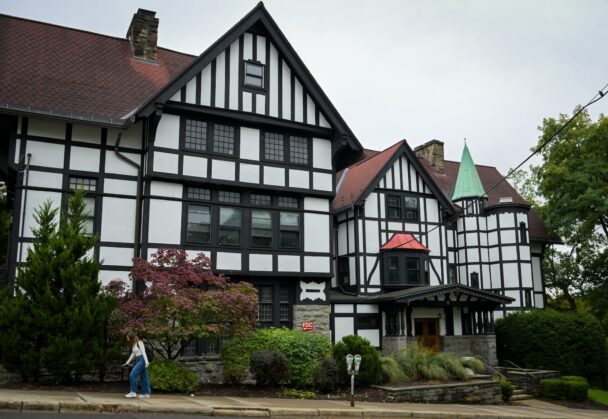
Several Greek organizations across campus have acknowledged the Cornell case’s effects on maintaining a safe culture around Greek life at Wesleyan. Delta Kappa Epsilon (DKE), an all-male fraternity unaffiliated with Wesleyan, was the first Greek organization on campus to release a statement.
“The brothers of the Gamma Phi chapter of the Delta Kappa Epsilon fraternity unequivocally condemn the events unfolding at Cornell University,” DKE wrote on a public Instagram story. “The actions of the seven men, the lack of accountability among the other 50 men, and Cornell University’s lack of response to this atrocious crime are unacceptable. […] Gamma Phi is committed to working to strengthen our policies to foster an environment that is safe and accountable.”
Gray West ’28, the president of DKE’s chapter at the University, also spoke about current initiatives the fraternity is working on in order to strengthen bystander prevention training.
“We’re partnering with One Love, which is a national nonprofit focused on preventing unhealthy relationships,” West said. “They have an advanced bystander training program. They’ve said that they’ve never worked with a fraternity before, so I’m really excited for this because I think it’s really applicable to their cause, and I think that we’re ready to learn a lot from them.”
Board members of Psi Upsilon (Psi U), a co-educational fraternity, also expressed their commitment to supporting survivors of sexual violence and continuing to be a space for all on campus. The fraternity also shared how they were facing its history as the location of a sexual violence incident in 2014 through its pledging process, where new brothers affirm that they will be active in ensuring that such incidents do not recur.
“What people don’t realize is that pledging Psi U is basically taking a semester of Psi U history and confronting the past,” Psi U President Katherine Risden ’28 said. “A lot of that past is muddied with racism, or issues of rape and other sexual assaults that have happened at Psi U at Wesleyan, and you’re spending a semester learning about all of that, confronting it, and at the end of it all, making a promise to never have Psi U look the way it did back in those days.”
Risden also spoke about the University’s policies that prevent Greek organizations from removing members even after allegations of sexual misconduct.
“All these Psi U [chapters] at other schools, they can kick people out,” Risden said. “We’re still bound by the rules of [Office of Residential Life], by the rules of the [Office of Student Involvement], and by University club rules. So this is all to say that, basically, Psi U as a residence hall, as a Greek life fraternity, as a social space has about the same power to remove perpetrators of sexual violence from our space as the Clay Club. In order to kick somebody out of Psi U, a formal Title IX investigation has to occur, and in order for that to happen, the victim has to consent to that. We as women in Psi U are much more concerned about the mental well-being, safety, and consent of somebody to go through a Title IX process than the saving of brand imagery.”
Alpha Delta Phi (ADP), another one of Wesleyan’s co-ed fraternities, commented on the Cornell case and their role in preventing similar events from happening in their organization. Speaking on how they manage their house environment during events and parties, ADP Vice President Lance Bridge ’27 stresses ADP’s dedication to maintaining a safe place for members and non-members alike.
“Any knowledge or evidence of sexual misconduct is immediately passed on to Wesleyan or other relevant authorities,” Bridge said. “For every event we host, there must be sober members at the door and inside.”
Bridge also shared how much independence ADP has as an officially recognized fraternity at the University, which limits the scope in which ADP can interfere in multi-person conflicts or sexual misconduct incidents.
“Although we are an independent space, all of our events must still be registered through OSI at least two weeks in advance with a volunteer list like any other organization,” Bridge said. “If any issues arise, we do not have the authority to remove or ban people and are told explicitly to call Public Safety for assistance.”
Green Dot trainings, a bystander intervention program that aims to prevent physical violence, including sexual assault, are a mandate for all members of Greek organizations on campus. Offered at universities around the country. Green Dot trainings are often the default program for organizations to raise awareness and avoid unwanted violences to occur in their communities. However, students have questioned the efficacy of Green Dot training sessions offered by the University and WesWell, prompting debate on whether the program contributes to the goals they tout.
“The Green Dot training is as effective as it can be, given that in general, the university’s procedures for providing justice for these instances is just lackluster,” Risden said. “It’s failing. Green Dot is the best it can be given what we have.”
“I’ve personally not found Green Dot training to be ever useful,” WSA Senator Montana Gura ’27 stated during the assembly. “I listen during it, but most people are on their phones, so if in the future there is an additional way of transferring information that would be even better.”
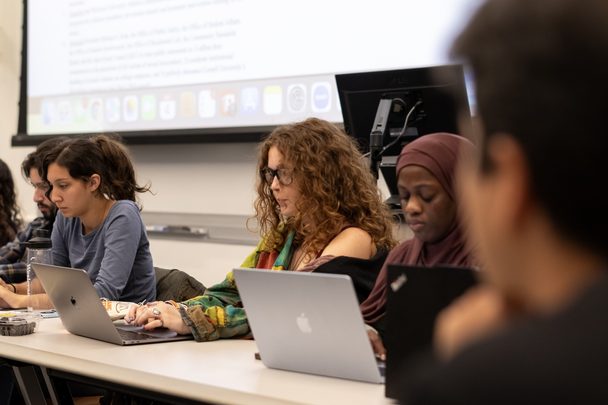
WesWell informed The Argus that there were updates to the training sessions for this academic year, but that they were working on improving outreach to students.
“WesWell is now using an updated Green Dot curriculum designed to feel more relevant and relatable to students,” Director of WesWell September Dibble wrote in an email to The Argus. “We’ve received positive feedback so far, and we’re excited to continue sharing it across the University. Students involved in Greek life and athletics are required to participate in Green Dot bystander intervention training, and many students also complete the training as part of their campus employment. We’re now working to reach more students who may not otherwise participate. We’re encouraging everyone to take part in a Green Dot Bystander Intervention training.”
The University encourages students who have observed concerning behaviour to report it via the Incident Reporting Form, or directly to Public Safety, Human Resources, or the Dean of Students Office.
Akari Ikeda can be reached at aikeda@wesleyan.edu.
Chloe Rappaport Crowther can be reached at crappaportcr@wesleyan.edu.




Leave a Reply