
Locals, Leaders, and Students Protest Cuts to JCCP-Affiliated Student Organizations
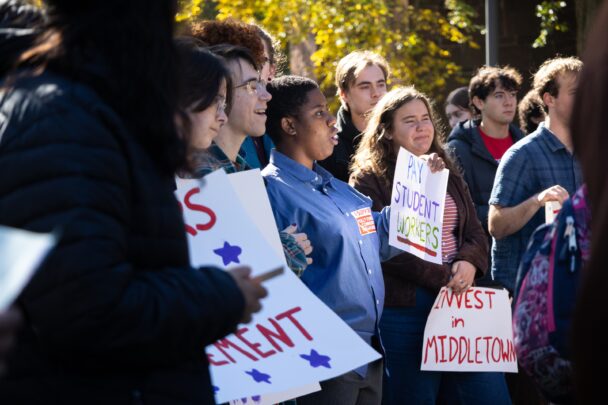
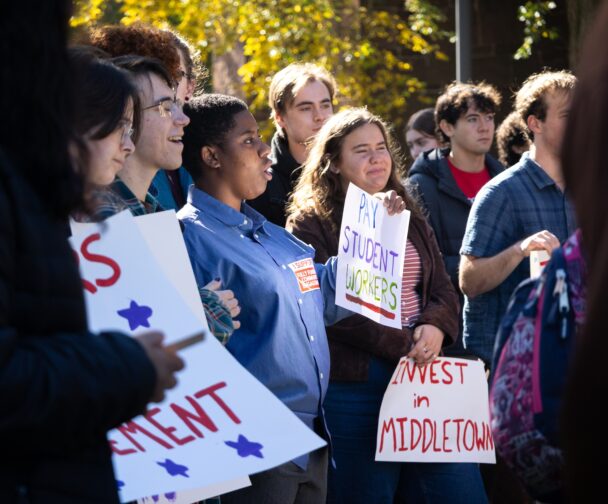
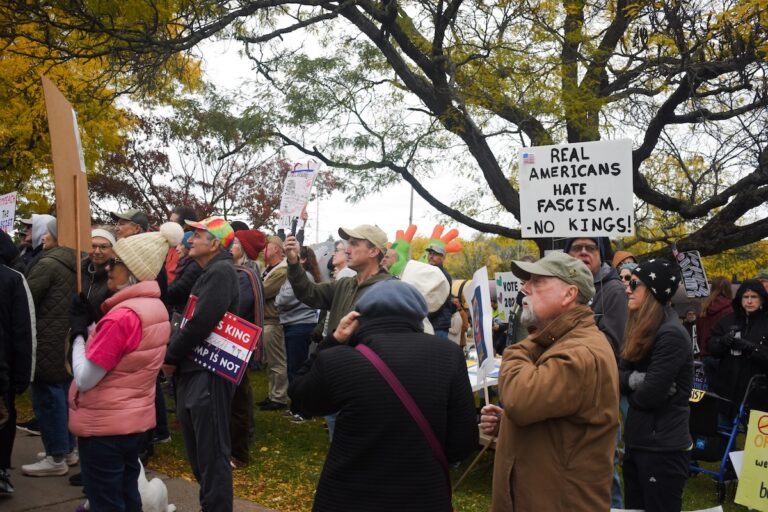
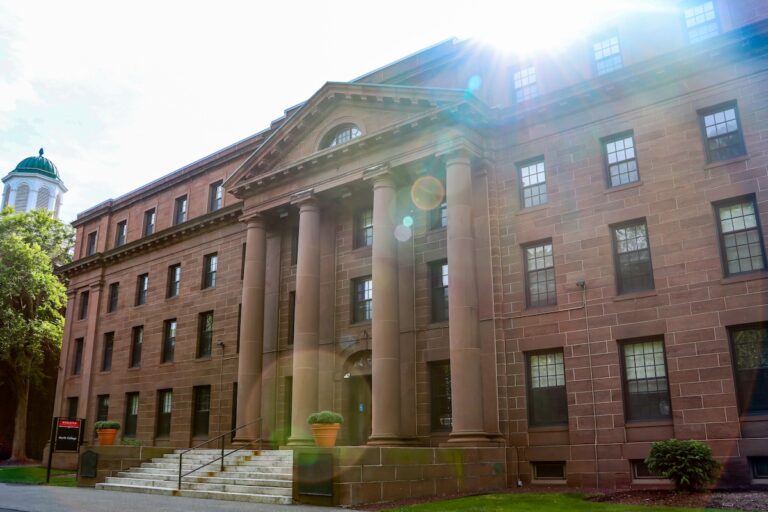
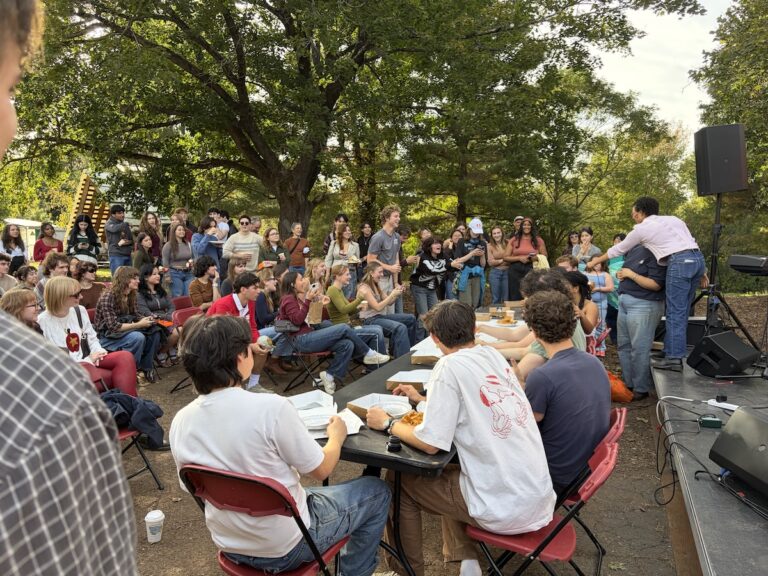
On Saturday, Oct. 25, over a hundred University students, alumni, and Middletown residents and community leaders gathered in front of North College to rally against recent funding cuts for student organizations affiliated with the Jewett Center for Community Partnerships (JCCP). The rally was organized by the student group Stop the JCCP Cuts, and ended in a march to the Usdan University Center amid Homecoming Weekend festivities.
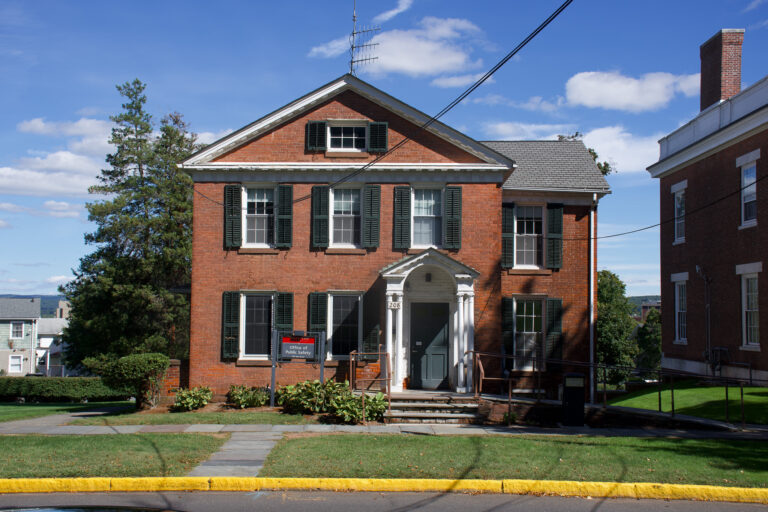
The JCCP is an on-campus organization that seeks to nurture cooperation between the University and the Middletown community. It administers the work of over a dozen student groups, including the Wesleyan Doula Project, the Traverse Square tutoring program, and the Wesleyan Refugee Project. Affiliated organizations rely on the JCCP to fund work-study positions for their members and pay for material costs. According to the University, the JCCP significantly exceeded its allotted budget in the 2024–2025 academic year. This resulted in financial commitments to groups that the University described as unsustainable without a substantial increase in the center’s overall budget, and forced the JCCP to decrease funding for the student organizations this year.
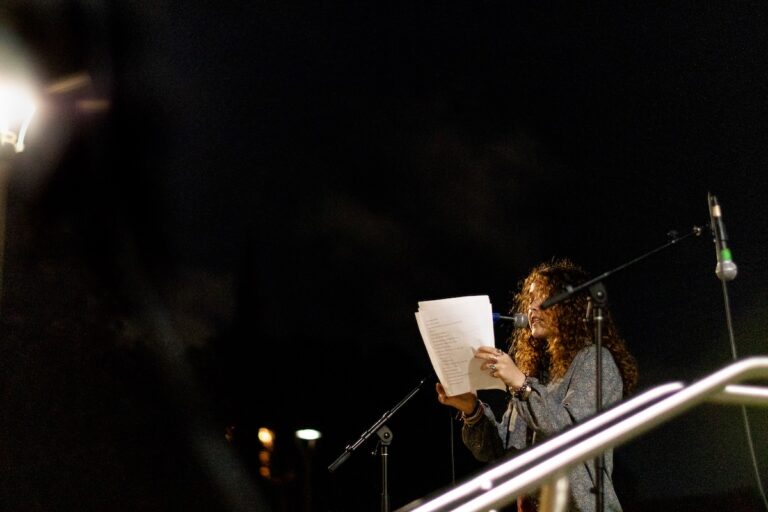
Coordinators of JCCP-funded student organizations, many of whom were present at the rally, expressed concern with the impact of such cuts on the local community, which they said have been significant. The rally also featured a variety of non-student speakers advocating for an increase to the JCCP’s budget, notably including Middletown Interim Mayor Gene Nocera and former JCCP Associate Director Diana Martinez ’07 MA ’19.
Nocera, who rose to the mayorship after the resignation of Mayor Benjamin Florsheim ’14, is currently running to finish out Florsheim’s term against former Middletown mayor Sebastian Giuliano.
“I absolutely support the University expanding the funding for [the JCCP],” Nocera said.
Martinez, who interfaced heavily with student organizations during her time at the JCCP, argued that the University’s refusal to help sustain JCCP-funded organizations stems from misplaced institutional goals.
“The space [for community service] has never been prioritized in Wesleyan’s budget,” Martinez said. “Since we know budgets reflect moral and ethical priorities, we know this means Wesleyan has never prioritized its commitment to the community around it nor its job of teaching students how to connect and work alongside the people right around them.”
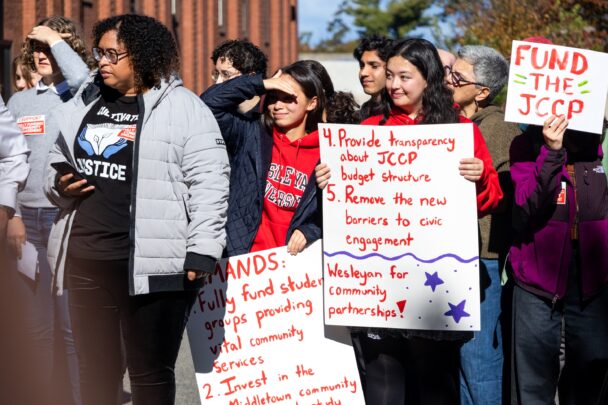
Dozens of University students also attended the rally.
“I came out today so that I could demand that the University fully invest in community programs and partnerships and be a better neighbor by investing more in Middletown,” Asher Harris ’28 said. “I also came out to demand relief for my friends who are on work-study [and] are coordinators of these groups [who] do valuable work, but aren’t being compensated fairly.”
Several student political groups were in attendance, including the Wesleyan Democrats (WesDems). WesDems Co-Chair for External Affairs Brendan Barry ’28 questioned the JCCP’s responsibilities to the Middletown community amidst the Trump administration’s cuts to federal spending on welfare programs.
“Community engagement is one of the core things students at universities are responsible for doing,” Barry said. “The University has continually pulled back from community engagement, and every time they do, students pick up more and more of the weight, the burden, the responsibility, and the privilege of supporting our Middletown community. The University’s continued divestment is unacceptable, especially in a time when services for cities like Middletown are being cut at the federal level.”
Rally coordinators called for action from President Michael Roth ’78, who has previously told The Argus that the JCCP would not see a budget increase to continue its funding of student organizations.
“We need to see a commitment from the administration to fully fund the JCCP,” rally organizer Luca D’Agruma ’27 said. “It must be set at levels in which [groups under the JCCP] can maintain their full operating capacity so that they don’t have to suffer operational budget cuts that will reduce the scope of their programming in Middletown. If the JCCP has always gone over budget, then there clearly is a need to find a sustainable budget for the JCCP and hold them to that, but we ask that students and stakeholders in the community be included in that funding process so that we can find a number that works for all parties and isn’t unilaterally set by the administration without understanding the needs of the community.”
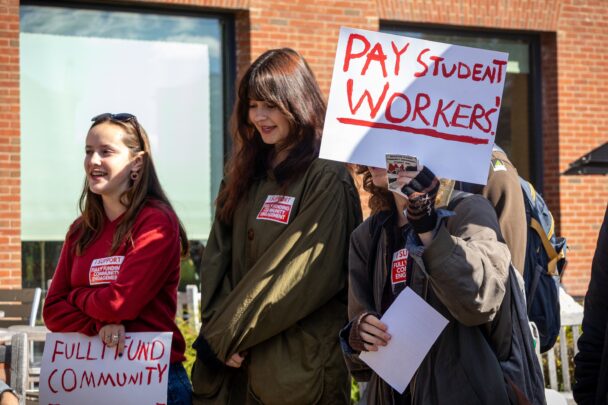
In addition to students and campus political groups, several student leaders of the affected organizations were present. Traverse Square Coordinator Maya Nelson ’27 emphasized the need for fully funded community service groups. Traverse Square, which provides tutoring and after-school services to residents of the Traverse Square housing development in Middletown, is by far the largest recipient of JCCP funding.
The University has argued that since the JCCP has been forced to revert to its previous budget limitations, the funding decrease that has accompanied the budget reckoning is not a cut.
“The University has not cut the JCCP budget,” Associate Director of Media and Public Relations Ziba Kashef ’92 wrote in an email to The Argus. “In fact, the Center will receive a modest increase in January to reflect the rise in minimum wage. No students were on the JCCP payroll until the beginning of this semester, and no students have been laid off.”
Neither the JCCP nor the University have responded publicly to the protesters’ demands; it’s unclear if they are being considered by the University, and to what extent the JCCP has sway in University budget discussions.
According to rally organizer Hana Frank ’27, Stop the JCCP Cuts is planning another protest in November.
Akari Ikeda can be reached at aikeda@wesleyan.edu.
Daniel Chehimi can be reached at dchehimi@wesleyan.edu.
Leave a Reply