
Holocaust victims remembered
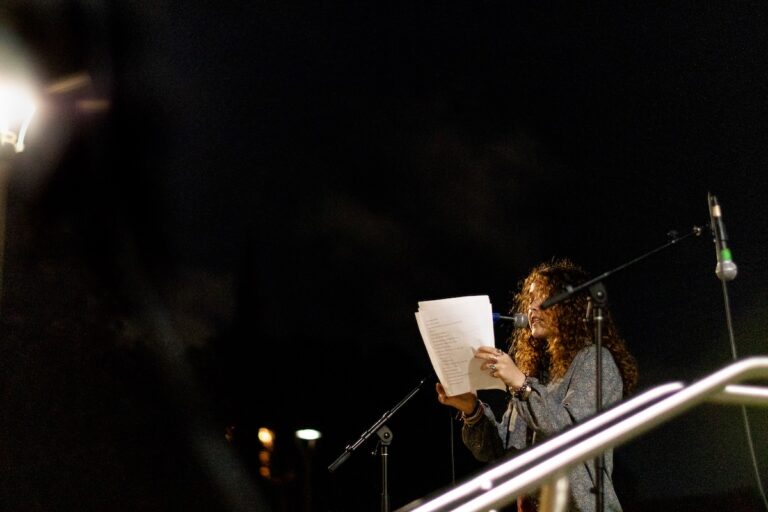
According to the Holocaust memorial project “Unto Every Person There is a Name,” only 3 million of the approximately six million Jews who perished in the Holocaust have been identified by name and included into the project’s collective database. To mark this year’s Yom Hashoah, or Holocaust Memorial Day, however, a number of students paid tribute by spending 24 hours reading the names of victims of the genocide.
Students sat at a table in the Science Center, reading aloud from three enormous binders that contained information about individual victims’ names, date and place of birth, age at death, place of death, and location of burial. In many cases, much of that information still remains unknown.
Eyal Bar-David ’09, a member of the Jewish student group Havurah and one of the event organizers, spoke to the difficulty in trying to pay homage to so many victims.
“Our three hefty binders carry at most a few thousand names which is not even a significant fraction of the millions of Holocaust victims,” he said. “It is also difficult saying people’s names and not knowing anything about their lives…It’s frustrating not to be able to know more. Even getting the mere five or six pieces of basic info about the victims is very rare.”
Co-organizer Madeline Weiss’09 expressed similar feelings of frustration.
“Over winter break I visited the Holocaust Memorial Museum in Jerusalem, where they have an extensive collection of names, one tremendous circular room full of binders,” she said. “And to think that there are still so many names of victims that aren’t known today.”
By the end of the memorial, Bar-David estimated that they had gone through about 10,500 names. Given that rate, it would take over two and a half years of non-stop reading in order to get through the names of the approximately 10 million total victims of the Holocaust.
Beyond being a campus tradition, a reading of names is held annually by various groups and institutions around the world. For Bar-David and Weiss, both of whom participated in last year’s Yom Hashoah campus memorial service, one of the most important tasks was finding enough volunteer readers.
“We had 48 half-hour time slots to fill [over the course of 24 hours] and we really wanted at least two people there all the time,” Weiss said. “Some time slots ended up with only one person, but really people were very good about volunteering, especially in taking the crazy morning hours.”
Participants found the event extremely meaningful, speaking to the importance of having a public reading and of reminding everyone of past tragedies.
“Maybe some people pass by and think how pompous this is, making so much of a genocide that happened long ago when there are so many other issues going on,” said Steven Maroti ’08. “I think it’s very grounding just to sit and contemplate past events.”
Havurah also held a memorial service at the Bayit on Sun. night, which included a candle-lighting ceremony in memory of the various identity groups targeted during the Holocaust.
Elana Bauer ’09 concluded the service by reiterating the purpose behind the reading of victims’ names.
“The reading personalizes the tragedy of the Holocaust, emphasizing the millions of Jewish men, women and children who were lost, and not just the cold, intangibility embodied in the term ‘The Six Million,’” she said.
Leave a Reply