
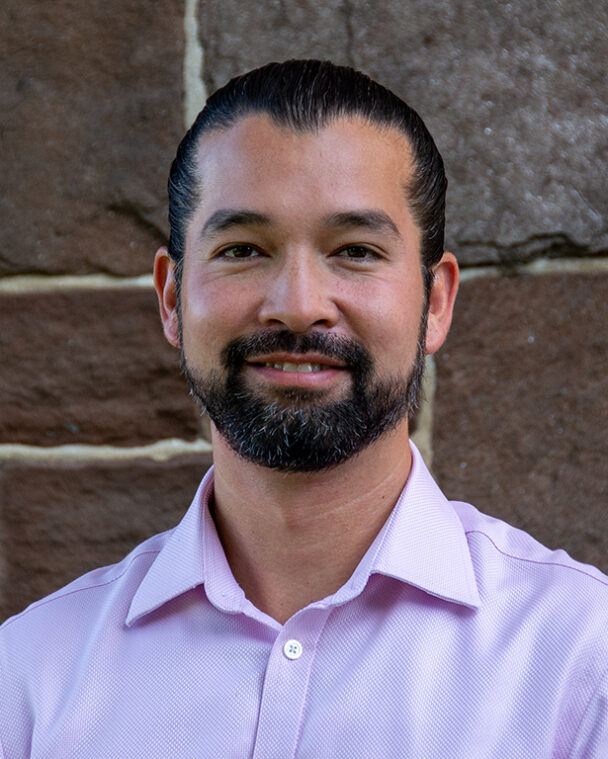
Jonathan Farrar to be New University Chief Investment Officer
The University Investments Office oversees large portions of the University’s endowment and financial due diligence, and has not been the subject of widespread student attention since calls for divestment during the encampment in solidarity with Palestine in 2024 and the subsequent dissolution of the Committee for Investor Responsibility (CIR).
While changes to its leadership are rare, a new Chief Investment Officer (CIO) was recently announced.
In an email to the University community on Thursday, April 16, President Michael Roth ’78 wrote that Anne Martin, who has served as the CIO for 16 years, will retire on June 30. Jonathan Farrar, who has worked in the office since 2014—and was previously the Deputy Chief Investment Office—will assume her position.
In his message, Roth praised Martin’s stewardship of the endowment during her tenure.
“She has been a marvelous colleague and a true believer in the power of a Wesleyan education,” Roth wrote.
Martin joined the Investments Office in 2010 to a department significantly smaller in assets under management and staffing than the one today. During her tenure at the University, she oversaw the expansion of the endowment from $500 million to nearly $1.7 billion, and significant increases to the portion of the budget dedicated to financial aid, which currently sits at $90 million per year. Martin received a compensation of $1.3 million in 2024, according to a ProPublica report based on the most recent voluntary reporting by the University. Farrar made $624,000 in the same year.
“This has been the high point of my career—which included consulting, investment banking, and private equity investing,” Martin wrote in an email to The Argus. “I can’t imagine another job that marries intellectual curiosity and financial skills with doing good for the world by funding financial aid for students.”
Martin said that the Investments Office began preparing for the transition three years ago by making Farrar the Deputy Chief Investment Officer and entering him into conversations with the board of trustees. This promotion comes with both change and continuity for Farrar.
“From an investment standpoint, our approach and strategy will remain largely the same,” Farrar wrote in an email to The Argus. “The biggest change is how I spend my time.” He explained that as CIO, his role will shift his presence in the Office to be much more public facing.
Farrar’s time at the Investments Office has seen major changes to the procedure and organization of the University’s investments. Since his arrival at the University, the number of staff members managing the endowment has doubled. Other changes, such as growing partnerships with the community and including the expanding role of AI in day-to-day operations, have changed how the Office is run.
Farrar emphasized the changing demands of the Office during his time at the University, alongside its expanded relationship with the student body. The Office has grown its footprint through its student internship program and a course designed to inform students about investing and fiscal management.
“We’re doing a lot that we’re proud of, but there’s always more we can do,” Farrar wrote. “Expanding access and awareness—especially for students who may not initially see themselves in this field—is an area we’ll continue to focus on.”
Calls for divestment during the height of the Wesleyan Palestine Solidarity Encampment put renewed focus and criticism on the Office, which met with the CIR to negotiate a list of divestment demands passed through the Wesleyan Student Assembly (WSA). Members of the CIR worked with Farrar personally before its unexpected disbanding by the administration in Feb. 2025.
Although there was collaboration between Farrar and the CIR, some on the committee emphasized the lack of attention paid to ethical concerns compared to other criteria.
“I would caution him to pay more attention to [ethical concerns with investment], especially since there is no CIR to check his decision making power,” Nicolas Millan ’27, former Chair of the CIR, wrote in a message to The Argus. “That being said, Wesleyan is ahead of the curve compared to its peer institutions when it comes to investment ethics, and I don’t see Jonathan changing that trend.”
Although it attracted some criticism for its opacity during the height of calls for divestment discussions, the Investments Office has continued to work with students on concerns over ethical investment.
“The Investments Office may feel a bit removed from daily student life, but our work is directly tied to the University’s ability to support financial aid, faculty, and programs,” Farrar wrote. “If students are curious about what we do, I would encourage them to reach out.”
Over the next two months, Farrar and Martin said they will continue working together during this transitional period.
“Jon has come to love and understand Wesleyan,” Martin wrote. “He is deeply aligned with the school’s mission and culture. I could not imagine a better successor.”
Anabel Goode can be reached at agoode@wesleyan.edu.
Miles Craven can be reached at mcraven@wesleyan.edu.



I have long felt that there should be an examination of the university’s investment policies in regard to the endowment. Just on the basis of a cursory occasional glance at the growth or lack of growth of the endowment causes me to wonder why it seems to underperform its peer colleges as well as the S & P average.
Perhaps there is some rational explanation for the mediocre growth of the endowment, but if there is, I haven’t read it.