
CTLCV Webinar Highlights Push for Plug-In Solar in Connecticut
The Connecticut League of Conservation Voters (CTLCV), a Hartford-based environmental group, hosted a virtual event on Monday, Apr. 20, focusing on the growing role of plug-in solar in Connecticut’s clean energy future. The webinar—“What is Plug-In Solar?”—featured Bernie Pelleter, vice president of People’s Action for Clean Energy, and Connor Yakaitis, deputy director of CTLCV.
CTLCV is a nonpartisan, nonprofit organization that advances environmental policy in Connecticut. Its work includes collaborating with Connecticut’s environmental advocacy groups to raise awareness of bills that address environmental issues. Additionally, CTLCV endorses pro-environmental candidates in elections and holds Connecticut political figures accountable through its environmental scorecard. This comprehensive document records each state legislator’s scores on environmental issues.
The event discussed Connecticut House Bill 5340 (2026), “An Act Concerning Renewable Power Generation.” The bill was proposed in Feb. 2026 and passed by the general assembly on March 19.
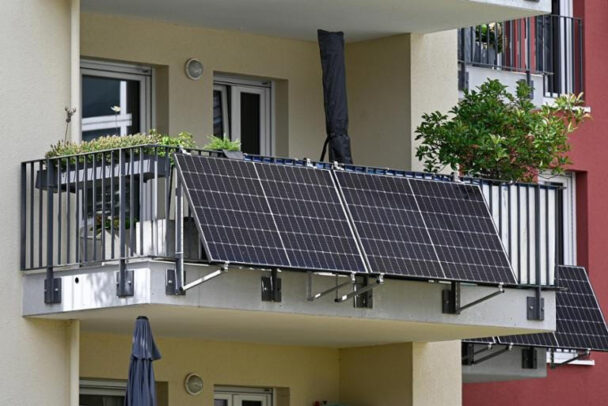
The proposed legislation would expand solar programs and establish a regulatory framework for plug-in, or “balcony,” solar systems. Yakaitis emphasized that public engagement will be critical to the bill’s success and encouraged attendees to contact lawmakers, including Speaker of the Connecticut House of Representatives Matt Ritter.
“I think the biggest takeaway and call to action for folks…is that we need to reach out to our lawmakers, and people like Matt Ritter who have leadership, and tell them that solar as a whole—not just plug-in solar—is very critical right now,” Yakaitis said. “There have been talks about putting caps on residential solar, both financial and megawatt caps.”
Plug-in solar refers to a small-scale solar system that can be plugged directly into a household outlet. These systems typically range from 400 to 1600 watts and include solar panels, a microinverter, and specialized cables, allowing users to generate electricity for immediate use within their homes. Unlike traditional rooftop systems, plug-in solar reduces reliance on the grid without requiring major installation or homeownership.
“It’s really an appliance…like a hairdryer or a coffee pot,” Pelleter said. “Instead of consuming 1200 watts, it produces 1200 watts.”
Because of their smaller size and lower cost, these systems may be particularly useful for renters and apartment residents, who are often unable to install rooftop solar panels.
“People with a balcony, with a little bit of sun, not a lot of sun, perhaps in a rental situation…. Plug-in solar would be sort of the great entrée into this world of renewable power,” Pelleter said.
Speakers also highlighted how plug-in solar can change how people think about their energy use. By generating electricity at home, users can become more aware of how and when they use power. Ultimately, this can lead to more sustainable, efficient habits.
“If I have a solar panel out there that’s plugged into my refrigerator or my oven or whatever, I’m more conscious about the energy that I’m using and also the energy that I’m producing,” Yakaitis said. “It really ties in; it’s a mindset as well.”
University students also expressed interest in using the technology on campus.
Shikhar Gupta ’27, an economics and computer science major, highlighted the financial and environmental advantages of plug-in solar.
“I would use it because it would save me money on utility costs in the long run, and it’s also a cleaner source of energy,” Gupta said. “Overall, things like solar panels and electric vehicles are better for the environment and better for your budget.”
Other students emphasized the importance of this technology to the University’s broader sustainability aims.
“Plug-in solar should be made more available [at the University] to help with energy affordability and increase the supply of renewable power,” Thalia Witkovsky ’27, an environmental fellow at the University, said.
The University already has solar panels on Long Lane, Freeman Athletic Center, 19 Fountain Ave., and the Office of Admission, but personal panels would be a new development if the University chooses to implement them. The University also participates in Solarize U, a state-run solar discount program.
Brendan Kelso can be reached at bkelso@wesleyan.edu.


Leave a Reply