
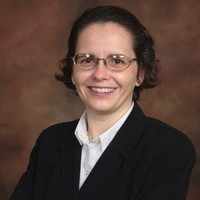
Office Hours: Professor Kelly Thayer on Curing Cancer With Computers, Responsible Use of AI, Collaborative Research, and Lobster Dinners
Welcome to Office Hours, a series brought to you by the Features section! In these articles, Argus writers speak to faculty, staff, and members of the administration about their interests, classes, and lives on and off campus.
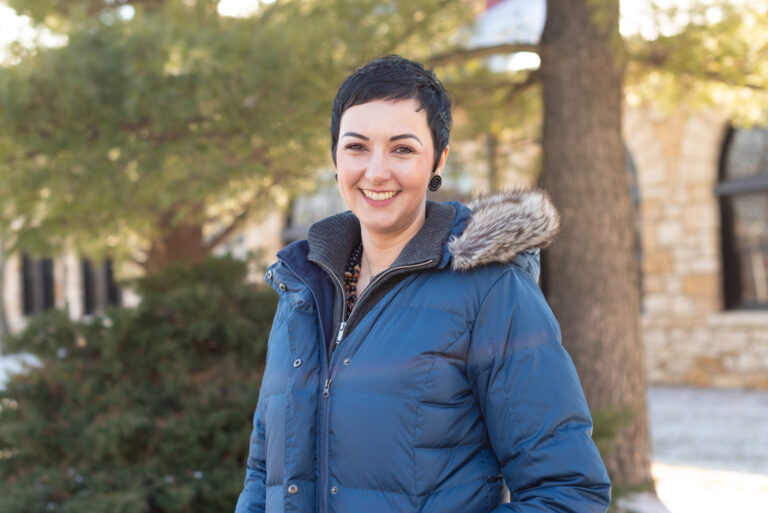
Assistant Professor of Integrative Sciences Kelly Thayer completed her Ph.D. in computational chemistry at the University in 2004.
She has developed novel HIV therapeutics, improved strategies for the development of malaria vaccines, provided insight into the relationship between the stability and evolution of proteins, and combated biomolecular bioterrorism. Her current research, the Thayer Laboratory at the University, uses computational molecular biophysics to study the p53 protein involved in cancer.
The Argus: Your lab webpage says that you are working on curing cancer with computers. Could you tell me about what inspired that research?
Kelly Thayer: Cancer, of course, is something that many of us have been touched by. I mean, you’d be hard-pressed to walk into a room and say, “Okay, raise your hand if you don’t know anybody who has ever had cancer.” In my early schooling, it really bothered me that we have had such a revolution in molecular science and the understanding of molecular biophysics, but many of the treatments that we have for cancer are still pretty crude. People still go in, out comes the scalpel, and they lose body parts, right? We should be able to do better than that by now.
A: How is the p53 protein involved in cancer?
KT: So p53 is a molecule common to more than half of all human cancers, and usually it’s doing nothing in the cell. But when something goes wrong, like when you don’t wear your sunscreen [and] you get peeling of the skin, that’s your p53 doing its job, saying that your cells are too damaged and they have to undergo programmed cell death. The other thing P53 can do is initiate repair. But what if p53 breaks? Now you have a damaged cell that’s copying itself, and nothing is telling it to stop. This is essentially how we get tumors.
A: What are some challenges in your research on p53’s mutations?
KT: So the biggest problem that we have with p53 is that it gets mutations. When we think about a mutation happening in a protein, it binds to DNA, if the mutation were here, it would be fairly obvious that the problem is going to happen, right? I mean, you could understand if you jammed it or something like that, something will go wrong. But how do we understand if the mutation happens someplace far away? That’s a much more challenging problem to understand.
A: What part of the p53 molecule does your research answer?
KT: So the idea is you get a mutation which is bad, and the mutation might happen nearby or it might happen far away. The idea of allosteric signaling is when you poke something in one place, and something happens very far away, somehow that information went across the molecule. What we are trying to do is understand how that signal might go across. But of course, that’s only half the problem. Understanding the effect of p53 mutations is great and is necessary, but what we also want to do is reverse their effect. We are trying to design a small molecule that would undo the mutations.
A: Has there been any coming close to a breakthrough in this research that has provided a drug to cure these cancers?
KT: Yes, it so happens that one was discovered by accident by a scientist called Alan [in] the UK. The issue is, well, because it makes the covalent bonds, it could bond to any other protein that has that same amino acid, and there are only 20 of them. It will not pass clinical trials because there are too many side effects, and it’s probably because it’s going around, binding to the right place, but also many wrong things too. It is very dangerous.
A: How does the scientific community communicate research findings to each other?
KT: We publish papers, and of course, we also are very involved in going to conferences and giving talks. We have journals that we publish papers in. It’s very serious. We generally read them from the journal, so that we know that it’s been checked, then you get certain labs and groups that you collaborate with regularly, and you know you more or less trust them. And so those are some of the ways that the scientific community learns about what’s going on.
A: What was the process of getting a paper published like?
KT: People submit their papers, and then they undergo a secret peer review process where other scientists will write scathing things about your work, and then you have to fix it and try to convince them that you have a good paper. This is what keeps up the quality of the papers. I mean, usually people are reasonably friendly about it, but it’s not just like you made a blog post on the web. You have to do the peer review process, and then when a minimum of three peer reviewers have said it’s okay and then the editor that you had from the journal also agrees, then it gets published in the journal.
A: Have you gone through this process of writing and publishing papers?
KT: Yes, we’re in the 40s now, in the number of papers that we have published from our lab.
A: You’re currently collaborating with scientists from Yale University on a piece of their research project. Could you tell me about that?
KT: They are asking us to do a piece of their project, and they asked me to model the molecules for them. So, different people may work on different parts of the results that are in a project. For example, they’re studying brains in rats. I work on some quantum-mechanical calculations for them, and they inject wraps and stick them in NMR spectrometers and stuff. We each write our own parts, and then we share the draft, and we iterate on the project and what’s written up, and that’s how collaborative research papers can be written.
A: How do you use computers in your cancer research?
KT: We look at molecular models to see how they move over time and how they would react to being perturbed. By adding molecules and making mutations to them, we have the basic structure, and then we modify it on the computer to see what we want to study. Of course, it’s not the real system, and it’s not the real cell, but the detailed information that we get out can help us generate hypotheses and then test them in the lab.
A: How have there been advancements in molecular modeling and drug design?
KT: Drug design has been going on for a long time. The very first antibiotics are, right now, about 100 years old. We have been doing molecular work for about that long. Most of the way that molecules have been discovered in the past was kind of more like trial and error. People would go to exotic forests, pick plants, grind them up in the blender, stick them with bacteria, and see which one worked. That’s how a lot of the original antibiotics were discovered. Now I guess that still happens, but we try to do things more purposefully.
A: Can you explain a little bit more about the signaling pathways you’re looking at?
KT: We wish we knew what the pathway was, but we don’t exactly. But what it means is if I make a mutation here, intuitively, I wouldn’t be thinking, “It’s going to change over there,” but it does. So, what happened? Signaling could happen in complicated ways like long-range effects. Magnets, for example, act even though they’re not touching. It is like the electrostatic interaction that happened in cells. Electrostatic interactions are one of the kinds of intermolecular forces, which are an inherently long-range interaction where it’s very hard to keep track of exactly what’s happening. But they are our most promising forces that are causing things to happen far away.
A: What use does ChatGPT have for predicting molecular signal pathways?
KT: There are some very interesting natural language processing models that do things like ChatGPT that can be adapted for predicting molecular signal pathways. ChatGPT comes up with real sentences by putting strings together, words that frequently go together, that match the thing that you gave to it, right? But what if, instead of words, that was signals, just like words in the English language have a pattern of what usually comes before and after.
A: What do you think ChatGPT can and can’t do, or replace?
KT: I think a lot of that is really about what you hook it up to. Am I about to hook up ChatGPT to my bank account? Absolutely not. There are some things that it’s really good at, like math, or it’s pretty good at programming. The issue is that it’s not that good at projecting forward for multi-step tasks. What it is good at is if you guide it and say, “Okay, help me find out a way to do just the next step.”
A: How can we responsibly use ChatGPT?
KT: It’d be useful to not view ChatGPT as a source of knowledge and instead to understand how these programs work. I think for the average person to know this is not useful for life or health advice, and it should all be taken with a grain of salt. What it is very good at is being quick at reading lots of information and providing it back to you. What you need to learn is how to reason and think. But once you know how to do that, it becomes more busy work, and it’s the busy work that you can outsource to AI very well.
A: Do you see a danger in how ChatGPT sometimes gives responses that are not safe or helpful?
KT: I think there’s another problem here, and that problem is that there is a choice of what you use it for, which is more on the individual than the designer. Computer programs will do exactly what you tell them, even if it has nothing to do with your actual intent. Computers are very literal. There is an old saying in computer programming of garbage in, garbage out. And I think we should not rely on ChatGPT for health or life advice. Some programs should not be used for certain applications, and I don’t think they will ever be suitable for such applications. Certainly not for a very long time.
A: Why is your office called the Lobster Room, and why does it have AI-generated pictures of lobsters all up on the walls?
KT: The Lobster Room used to be located in the chemistry department. Before we moved here, and a long time ago, they used to have lobster dinners in there. Because we were a computational lab, we could have food in the lab. We were in Hall-Atwater, 66, the original Lobster Room. People would be asking, “Oh, where’s Hall-Atwater 66?” “The place we have the lobster dinners?” And everybody’s like, “Oh, yeah, of course. I know which room that is.” Hall-Atwater 66 is now getting destroyed, which is very sad, but we preserved the history of the Lobster Room.
A: What inspired the chemistry department serving lobster dinners?
KT: I don’t know. They just served lobster dinners. I guess they had a lot more money for dinners, and people were not worried about vegetarianism at that time. This was probably a good 40 years ago. I heard about them because I was in that lab because I was a grad student here in that lab for the person who hosted the dinners. The official title outside that lab was the Lobster Room.
A: Do you think we will come close to developing a drug that cures cancer?
KT: p53 is very complex. One of my colleagues once looked at me and shook his head, and asked “I don’t know. Are you ever gonna solve this thing?” Well, I don’t know, but it’s a really interesting problem, and we’re giving it our best shot to combat it.
This interview has been edited for length and clarity.
Claire Farina can be reached at cfarina@wesleyan.edu.

Leave a Reply