
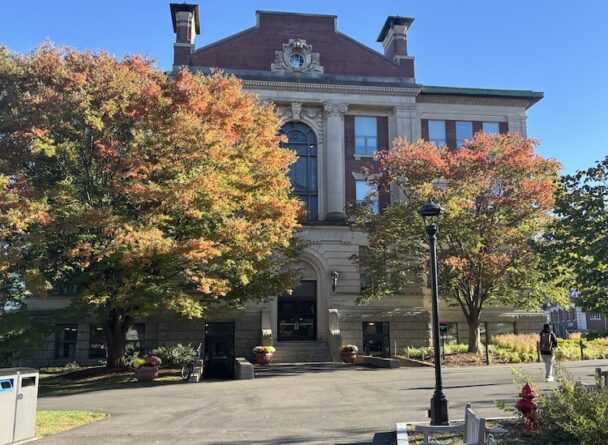
JCCP Mismanages Last Year’s Budget, Cuts Funding for Student Organizations
At the beginning of the academic year, student-run organizations associated with the Jewett Center for Community Partnerships (JCCP) were informed that the JCCP would drastically decrease its funding of their organizations. The organizations, which include both political advocacy clubs and groups oriented around a specific community need, rely on the JCCP to fund work-study positions for their members and pay for material costs.
According to the University, the JCCP spent well beyond its budget in the 2024–25 academic year, making financial commitments to student groups that it could not sustain without a significant budget increase.
“Last year, JCCP’s student employment expenditure significantly exceeded its budget,” Executive Director of the Allbritton Center for the Study of Public Life Khalilah Brown-Dean wrote in a memo dated Monday, Oct. 6 to JCCP student groups. “The overrun was covered by diverting funds from other programs and commitments that are equally important to fulfill the mission. This is not sustainable and cannot continue.”
The JCCP is an on-campus organization that manages resources for several clubs at the University, including the Sunrise Movement, Wesleyan Doula Project, Wesleyan Refugee Project, WesReads/WesMath, and Habitat for Humanity, among others. The organization, overseen by the Allbritton Center, aims to foster partnership between student-run organizations and the Middletown community.
The University declined to explain how the JCCP overspent to such a significant extent, but President Michael Roth ’78 told The Argus that some of the funded positions last year should never have been established.
“[The JCCP doesn’t have] a huge budget, and so it didn’t get flagged, but it shouldn’t have happened,” Roth said. “It should have been caught last year…then those people wouldn’t have had jobs last year, either.”
Many student organizers expressed frustration that the University had reneged on a previous funding commitment. The Argus obtained a communication to student groups, sent in August, confirming that a representative of the JCCP had promised the groups funding for both student leadership and member positions.
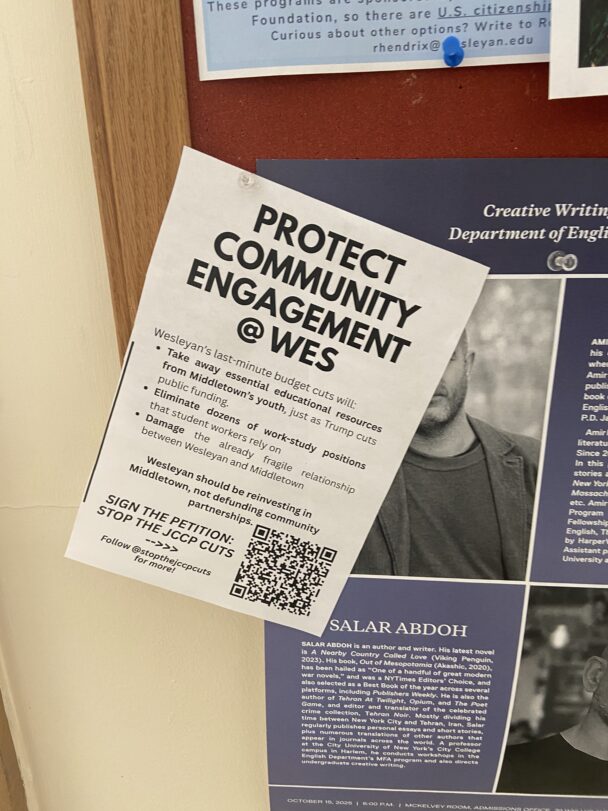
As frustration grew, the leaders of several defunded student organizations formed an organization called Stop the JCCP Cuts and circulated a petition calling for an increased JCCP budget.
“Decided behind closed doors and announced only in the last few weeks, these budget restrictions slashing hundreds of hours of paid community work have left student organizations scrambling to continue providing essential community services across the city,” the petition read.
According to WesReads/WesMath Coordinator Elizabeth Berke ’26, the JCCP’s funding has allowed students who are eligible for work-study to be compensated for volunteer work through the organization, which sends University students to help teach students at a local middle school and after-school program.
“JCCP funds our organization by allowing work-study students to get paid during their shifts,” Berke wrote in an email to The Argus. “Because of these JCCP funding cuts, we have been limited to clocking a maximum of 16 hours a week for the entire semester between both coordinators and all students involved in the club who are work-study eligible. This has limited how many hours a week we are able to allow volunteers to work for pay, and we have been trying to advertise it more as a volunteer-based club because of this.”
“This budget cut left us with 0 pay and 0 resources,” a spokesperson for the University chapter of the Sunrise Movement, a progressive climate-focused organization, wrote. “In the days since finding out the news, we have already lost 2 of our Hub Coordinators who don’t have capacity to work without funding. We are expecting to continue experiencing a loss of membership.”
The Foster Connection, which connects foster children with University students who provide tutoring and mentorship, said that the loss of funding would imperil its ability to attract students.
“In previous years, as student leaders of civic engagement clubs on campus, we received significant support from administrators at the JCCP, including project funding, paid student coordinator positions, and compensation for work-study volunteers,” a representative for the organization wrote in a statement to The Argus. “Without these resources, it has become increasingly difficult to manage the responsibilities of the club and sustain the impact we’ve worked so hard to build.”
Several others have noted the impact that the budget reckoning would have on the JCCP’s stated mission.
“These last-minute cuts undermine the mission of the JCCP and fray the fabric of community partnerships that have been cultivated by dedicated students and community members despite wavering institutional support,” a student leader of a defunded organization, who was granted anonymity for fear of losing future on-campus employment, wrote to The Argus. “Ultimately, the community will pay the price for the University’s divestment from student-led community-facing work.”
While Roth did not comment on the work of non-partisan organizations, he suggested that the University should not fund student-run political clubs.
“After these people graduate, no one pays them to do [political work],” Roth said. “I don’t think that the University should be funding political groups to do their work.”
Some confusion remains around the rationale behind the “cuts,” as they have been described by many student organizers. The University has maintained that they are merely enforcing an existing budget.
“The JCCP budget has NOT been cut,” Brown-Dean wrote. “In fact, the budget has been maintained with a modest increase expected beginning January 2026 when Connecticut’s minimum wage increases.”
Roth put it even more starkly.
“The Jewett Center spent more money than they had to spend, and this year they’re going to spend only what they have in their budget,” he said. “I don’t know how that will impact clubs on campus. Some clubs pay people for being part of the club, and some clubs don’t, and I think a lot of clubs are robust without paying people.”
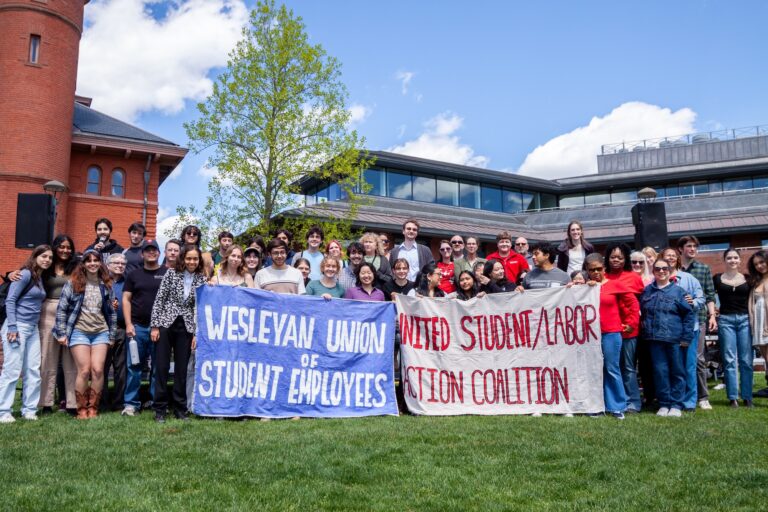
But in the end, leaders of the affected organizations made it clear that the funding cuts would extend far beyond the pockets of University students. Wesleyan United Student/Labor Action Coalition member Luca D’Agruma ’27 argued that the decrease in funding would have an outsized impact on community-facing organizations.
“The largest JCCP groups with the deepest roots in Middletown face the biggest cuts, disproportionately impacting Middletown community members, not political groups,” D’Agruma said. “The Middletown community and the students who make vital community programs run year after year deserve the University’s investment.”
Akari Ikeda can be reached at aikeda@wesleyan.edu.
Spencer Landers can be reached at sklanders@wesleyan.edu.

Why does the Sunrise chapter need funding from Wesleyan instead of from the national nonprofit to continue? Their argument that “we are expecting to continue experiencing a loss of membership” suggests that they rely on paying members, unlike other clubs. It sounds suspicious. Some more information would be helpful, likewere these members paid hourly or given a stipend?
Wes should fund the Foster Connection though, this is messed up. It seems like the JCCP needs to be more careful about where their money goes and who gets prioritized…