
Wesleyan Ranks 127 Out of 257 Universities in FIRE College Free Speech Rankings
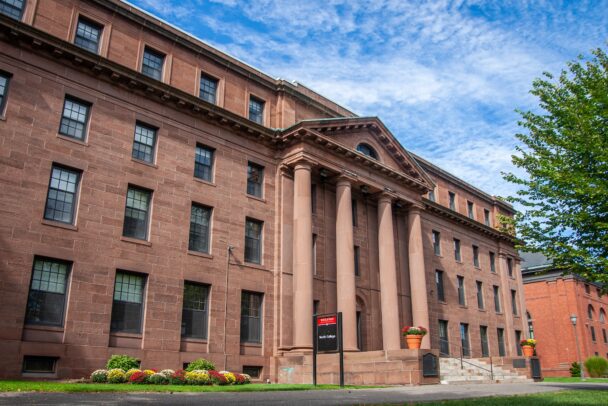
Wesleyan has received an F grade for the third year in a row from the Foundation for Individual Rights and Expression (FIRE).
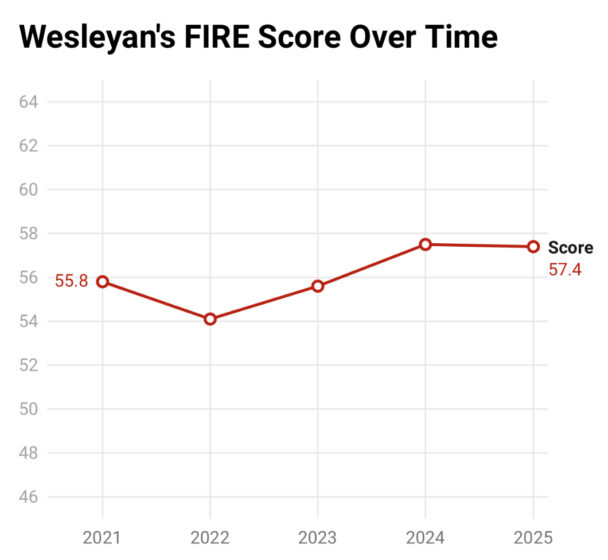
Although the University moved up 25 spots from last year’s rankings, it still placed 127 out of 257 evaluated institutions, with an overall grade of 57.4, 1.22 points below the national average.
Founded in 1999 with a focus on defending free speech on college campuses, FIRE began annually evaluating the free speech environment at U.S. colleges and universities in 2020 to “defend and sustain the individual rights of all Americans to free speech and free thought.”
This year, only 11 schools received a C- equivalent grade or above.
FIRE scores colleges based on 12 criteria, 6 of which draw directly from student surveys: comfort expressing ideas, political tolerance, self-censorship, disruptive conduct, openness, and level of administrative support. The evaluations also assess speech policy.
FIRE rates universities on a scale of red to green. Wesleyan received a yellow marking. In their report, FIRE suggested that adopting the Chicago Statement for Free Speech, a policy initiative created by the Committee on Freedom of Expression at the University of Chicago, would increase Wesleyan’s ranking.
An excerpt from the Chicago Statement reads as follows:
“Because the University is committed to free and open inquiry in all matters, it guarantees all members of the University community the broadest possible latitude to speak, write, listen, challenge, and learn. . . . [I]t is not the proper role of the University to attempt to shield individuals from ideas and opinions they find unwelcome, disagreeable, or even deeply offensive.”
According to FIRE, University students’ attitudes are split. Wesleyan places in the top 25 schools for openness, indicating a willingness to engage on tough issues, yet the school ranks in the bottom 50 for political tolerance.
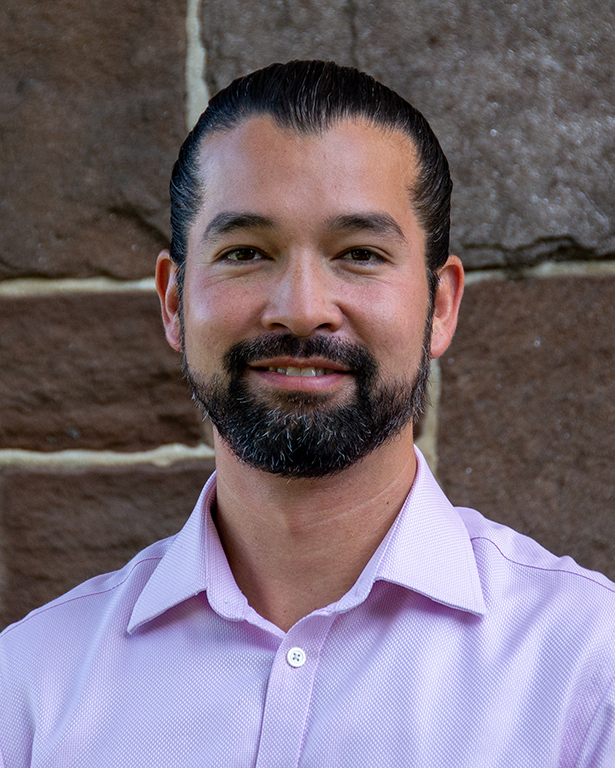
President Michael Roth ’78 has been publicly vocal on the importance of intellectual diversity at Wesleyan and other universities. In a Wall Street Journal article from May, Roth argued against ideological compliance, stating that freedom on campuses must reflect the civil liberties all Americans possess.
“Those of us fortunate enough to work in education must continue to follow the questions where they lead us, united in pursuing knowledge and eager for the company of people of diverse beliefs,” Roth wrote. “The freedom to do so is essential for learning—and for our country, too.”
Roth has also previously advocated for increasing ideologically divergent voices on campus. One relevant initiative is Renewing Democracy’s Promise, a multi-year initiative announced Sunday, Sept. 7 that seeks to address political polarization through dialogue. According to Roth, the University is also in talks to exchange speakers or host debates with Christian and politically conservative Hillsdale College in Hillsdale, Mich.
However, Roth has expressed some skepticism about FIRE’s ranking system.
“I’m very suspicious of [FIRE’s survey] methodology,” Roth said. “I think it’s a disservice to the public to have ratings based on sample sizes and surveys that are rather opaque and questions with value, which, to me, is unclear.”
Despite misgivings regarding the organization’s polling procedures, he praised FIRE for its other endeavors, noting the importance of such organizations during a time when many institutions of higher education face coercive pressure from the federal government. Roth said he has donated to the organization.
“I think FIRE is doing the Lord’s work in fighting against censorship,” Roth said. “I think FIRE has been much more consistent than I gave them credit for before.”
In previous years, Wesleyan administrators collaborated with FIRE when given a red light ranking, working through issues with the University’s Code of Non-Academic Conduct. This year, FIRE assigned the University a yellow ranking, indicating that FIRE perceives the institution has at least one policy vague enough to potentially allow administrative abuse or arbitrary assignment.
Scores on several other metrics, including openness, comfort expressing ideas, and self-censorship, suffered in 2025, with 43% of Wesleyan students polled saying they have self-censored on campus.
“It seems clear from the survey data around the country that students, in particular, don’t express their political views out of fear, not so much from the faculty, but out of fear from other students,” Roth said.
While Wesleyan’s overall score has remained relatively static since 2021, its upward trend bucks nationwide regressions in free speech at other universities. Across the country, schools have suffered for a variety of reasons, including administrative action against student protests, increased oversight of student journalists, cancellation of speakers, and financial and political pressure from the Trump administration.
Aarushi Bahadur can be reached at abahadur@wesleyan.edu.
Brendan Kelso can be reached at bkelso@wesleyan.edu.



Such an excellent article that combines data reporting and administrative voice on an issue that Roth has the power to do something about. Protecting student speech on campuses is essential to a healthy democracy; thanks for bringing light to FIRE’s ranking and adding context on why so many campus rankings are low. Adopt the Chicago Statement!