Author: Jodie Kahan

  • My Beauty-free Pandemic Challenges Notions of Putting on Makeup “For Myself”

    In a makeup tutorial recently posted to Instagram by fashion designer Marc Jacobs, he encourages viewers to believe that makeup provides a way to be more yourself, not less. The video features a half-quirky, half-deranged Jacobs ranting about his haters, proclaiming his love for Diana Vreeland and asking, why not play with makeup just for the fun of it? “Why not get dressed? Why not parade around in your underwear? Why not enjoy this time that I have, and why not be me and be unafraid to be me?” Five minutes and thirteen seconds later, he begins finger painting his eyes with Marc Jacobs beauty products until his face is transformed into a smokey, glamorous, and messy canvas. Later on, he comments, “perfection is an ideal, beauty is an ideal, and beauty comes from just doing it, just expressing yourself and enjoying it.”

    Jacobs here is more perceptive than he realizes, I think, about the means through which the beauty industry targets women: these beauty products are for your enjoyment and expression. They are made in service of your needs as a modern woman. The eye cream, the bronzer, the hair dye, the workout classes. This is an endless investment in the best version of yourself, an investment you make daily “because you want to.” This is beauty.

    My quarantined self would suggest otherwise. 

    It would be misleading to say that I have broken off ties with the beauty industry in my time of social isolation. Like others in the privileged position to stay home and self-isolate, I allow my hair to get greasy, I have no idea where my mascara is, and I have not picked out an outfit with a stylistic vision in weeks. I’ve mostly not even worn pants for weeks. But this doesn’t cancel out the fact that I repeatedly refresh Instagram and occasionally fall into thirst traps leading me to sparsely designed websites that attempt to sell me lipgloss in the name of “self-care.” I also sit on YouTube watching makeup tutorials with a religious devotion that in small moments, after two hours of the automatic reloading of video content, transforms into a glitteringly transcendent experience. One tutorial after the next, I watch as people contour their faces like a paint by number and then rub a beauty blender over the lines as if trying to get a stain out of a carpet. It seems vaguely painful but also oddly satisfying. 

    My normal routine in the morning at school isn’t horribly taxing. I wake up earlier than I would like in order to shower, because my curly hair does not do well when slept on. I use about 10 sprays of hair product. I pick out an outfit, trying on a few shirts if I have time. (I almost always land on an oversized sweatshirt, which both provides the illusion that I don’t care, and hides my body’s curves.) Then I put on some mascara and I’m out the door. It’s a 20-25 minute process. I “like” getting dressed in the morning at school, but it’s hard to tell how much of that is an adherence to patriarchal authority. (Like, I love my mascara, but I’m not sure about why I bulk order it as if when it runs out my essential food supply will be cut off).

    Quarantine, however, has forced me to confront the ways that “doing it for myself” is an attempt to justify the participation in behaviors that are actually oppressive. Being at home without the pressure to be beautiful has explicitly reminded me that I don’t use most of my beauty routine as a means of expression and enjoyment. It’s more like a chore I’ve come to dread that I justify by saying “this is for me.” 

    The New York Times recently published an article about women’s changing beauty rituals during the pandemic. “I think about putting on lipstick, but then I ask myself: why?” said Deborah Mitchell, a media and marketing consultant in her 50s. “Only the people at the supermarket are going to see you. And now that we have to wear masks, they’ll never know it’s you.”

    She highlights the social aspect of her beauty habits, making it seem arbitrary. When the social world is taken away, the reasons to wear lipstick dissipate. 

    For others, that performance of femininity is integral to identity.

    “Beauty for me is 100 percent performance of my blackness, my queerness, my femininity,” the article quoted a Ms. Frazier, 31, saying. “A worldwide pandemic will certainly affect that. But it doesn’t eliminate it.”

    In an article for Cosmopolitan titled “Why Is the Internet Trying to Make Me Feel Bad for Wearing Makeup RN?”, Ama Kwarting tracks the change in her mood after deciding to put on makeup. 

    “Then one day last week, Mia Lardiere, Cosmo’s Snapchat editor, asked me to film a TikTok for Cosmo’s channel,” Kwartings article reads. “I decided, okay, since people would, you know, see me, I’d better put on some makeup. What started out as looking presentable for social media became an absolute game changer. My mood did a complete 180. I was instantly happier and calmer, and I suddenly had a more positive outlook on the future—all because of some concealer and pink eyeshadow. I finally felt more…me.”

    Kwarting explains that her daily makeup application at this time doesn’t stem from vanity, as her internet trolls believe, but instead from a desire to control the things she can during a time when the world is chaotic. In other words, it’s an act of self-care. 

    “Because self-care looks different for everyone,” she wrote. “For some, it’s baking six loaves of banana bread, and for others, it’s piecing together a jigsaw puzzle. But for me, it’s putting on bright lipstick and pink eyeshadow—and yeah, I might also look f*cking pretty doing it.”

    The vocabulary of self-care emphasizes the ways in which beauty products have become not only tools for enhancement, but also weapons of empowerment. Where we once bought makeup in the name of beauty, we’re now being sold makeup as if it were a panacea for all of the problems of life under late capitalism: it makes you happier, more productive, more extraordinary, and more authentic. This is evidenced in the success of beauty brands like Glossier and the industry of “natural beauty” that has developed in its wake. Make Makeup now sells you makeup with the language of freedom and choice: “We believe makeup and skincare should work around your life, your looks, your choices.” Em Cosmetics encourages you “to claim your power, share your art, and above all—rethink beauty” as you spend 25 dollars on blush.

    Beauty in the time of the pandemic highlights this double-edged feature of “self-care.” On the one hand, it’s nice to put on mascara in the morning and feel beautiful and ready to go. On the other hand, the marketability of “self-care” disguises the ways that our use of beauty products aren’t really for us after all. 

    In her essay “Always be Optimizing,” Jia Tolentino writes about the ways that the female body is always framed as a financial asset that requires endless individual investments of money, technology, and culture in an attempt to become an idealized version of the self. And that project of optimization, significantly, is seen as “natural, mandatory, and feminist.”

    “When you are a woman, the things you like get used against you,” she writes. “Or, alternatively, the things that get used against you have all been prefigured as things you should like.”

    The desire to be beautiful, and the pleasure we get from trying to make ourselves beautiful, then, can be easily weaponized and used against us. Because a woman chooses to put on a face of makeup, it seems somehow less exploitative, even when those choices are inevitably influenced by patriarchal norms. But more than that, I think, it’s hard to understand how wearing mascara became an act of female empowerment.

    Amanda Hess writes about this in relation to Amy Schumer’s 2018 movie, “I Feel Pretty.” The movie is about a woman, played by Schumer, who gets into an accident and wakes up thinking she’s become really hot. This empowers her to be a good human being, and she succeeds at work and in her personal life. She realizes that she actually did not change at all, and it was her self-confidence that propelled her toward success, not her looks. The corporate feminist message here is clear: feeling beautiful is empowering. Do what makes you feel beautiful. Hess writes, “But part of the conditioning of the ‘patriarchal ideal’ is to make women feel empowered by it on their ‘own terms.’ That way, every time you critique an unspoken requirement of women, you’re also forced to frown upon something women have chosen for themselves. And who wants to criticize a woman’s choice?” Whereas before women were beautifying to please their bosses and husbands, now women are motivating each other to pamper for ourselves. And something about choosing to do it makes it impossible to question.

    It’s difficult to know how much weight to place on these individual politics. It seems like “the personal is the political” has become distorted to mean that the choice to pamper or not to pamper yourself is itself a political act. But on the other hand, I think there must be a way to practice radical cultural politics on an individual scale and have it be politically meaningful. In either case, there’s no world in which feminism should look like refusing to perform femininity but not fighting for paid maternity leave, reproductive rights for all women, and equal pay. Or in which self-improvement poses as political progress. 

    It’s funny to see the younger girls and women on my Instagram feed doing quarantine photoshoots all dressed up with full faces of makeup. The thing about performance is that it always requires an audience, and social media provides a space where an audience is always in attendance. It’s hard to “do it for myself” when I’m always actually doing it for you. 


    Jodie Kahan can be reached at jkahan@wesleyan.edu. 

  • Maybe We Should Interrogate Our Studio Art Department
    Maybe We Should Interrogate Our Studio Art Department

    I have never taken a studio art class, but I do have a fascination with artists. This probably dates back to the pre-bat mitzvah Friday evenings I spent on the floor of my bedroom, reading Sylvia Plath, understanding little other than the myth that surrounded her tortured genius. Back when Tumblr was my primary aesthetic informant, I devoured any myths about artists who exhibited unbridled creativity. One such myth claimed that Jackson Pollock painted his largest work “Mural” overnight. As the story goes, Pollock was so consumed with artistic passion that he stayed up for hours painting this gigantic work. This myth has since been debunked, as various imaging techniques have determined that the painting contains several layers of dried paint. But it’s not hard to see how this myth came to be: Staring at “Mural” is like peeking behind a restaurant curtain to watch a master chef move passionately around the kitchen. The process of assembly is the true work of art, the food that is produced only a byproduct; it’s impossible not to see “Mural” as a bursting expression of both mind and body.

    In the age of Etsy, Pinterest, and Instagram, the picture of the artist has become far less hegemonic, which is to say, far less white, male, and genius. Our daily lives have become potential aesthetic commodities, and all of us are creators, buyers, and sellers. As always in the art world, what is deemed “good” and “bad” is constantly changing. Works displayed at the MoMA, (the Van Goghs, the Dalis, the Warhols), which are now found tattooed on millennial forearms and suspended on dorm room walls, were at one time considered disruptive and provocative. And more recently, when Banksy shredded his work “Girl with Balloon” at a live auction, the videos on the Instagrams of spectators revealed hushed whispers to the effect of, “Is that art?” 

    In any university art department, there are decisions that must be made about what gets included in the curriculum and what does not. And these decisions inevitably echo the same question asked by those Sotheby’s spectators: Is this art?

    It is true that the creation of all academic departments is ideological. The Sociology Department at Wesleyan, for example, does not teach quantitative sociology. A conscious decision was made by the department to not hire quantitative sociologists; those faculty members can likely justify that decision and its consequences. But this process of creating an academic department is more complicated with creative arts for two main reasons. 

    First, because art is a personal creative expression; having another thinking body prescribe what is right, or good, complicates much of the creative aspect of making things. At school, this becomes quantified through the grading system: You literally receive a numerical indication of how good your art is according to the department’s standards.

    And second, creating an art department gets complicated because unlike a discipline like sociology, in a creative field, you are learning the standards and expectations of a subject in which the most celebrated works often break the rules, not just in content, but also in form. In sociology, you are learning the methodology and tools of analysis to write a paper that will be identifiable as a legitimate academic paper. But as an art major, while you can learn the tools and language of artistic creation that others have used, and while you may choose to use those tools to express your own content, you can also play with the form. You can create art out of anything: you can combine mediums, you can take the canvas off the easel and use your whole body to paint (as Pollock did) even though no one has set a precedent for such an act before you. And all of that can still be recognized as legitimate. 

    Our art curriculum is inherently making prescriptive judgments about the kind of art Wesleyan students should make, and that has to be problematized, or at least interrogated, not because those judgments are wrong, but because you are allowed (and should maybe be encouraged) to disagree. 

    The Wesleyan studio art major demands eleven courses. You must take Drawing I, one 3D art class (like architecture or sculpture), four studio classes, and three art history classes (which dictate that you must take one non-Western, one classical through renaissance, and one post-Renaissance). Additionally, you must complete a thesis, so general education courses are required (that’s three science/math classes, and three social science courses). In total, then, the studio art major requires seventeen courses. The English major, for comparison, requires only ten. 

    Some interesting comparisons can be made between our studio program and others. Wes rival and NESCAC member Amherst, for example, requires twelve courses in their art major, ten if you choose not to complete a thesis (which you can!). Of those courses, the requirements dictate that you must take eight studio courses, one contemporary art history course, and one additional art history class. Needless to say, Amherst’s art studio major is less rigid. 

    At Skidmore, another liberal arts school, the art studio major demands sixteen credits, but they offer far more art forms, including ceramics, jewelry making, and fiber arts. The presence of these art forms at Skidmore might be due to a larger arts budget, but the exclusion of them from Wesleyan’s curriculum suggests a distinction being made between what is fine art and what is craft. Some students reported personal stories about professors in the department actively making that distinction, citing a professor who no longer works at Wes who would explicitly reject screen printing as “craft.” But sometimes the enforcement of this binary is more implicit. 

    The art world loves this distinction. This way, we can neatly divide art that is high art and art that is utilitarian—things to be contemplated versus things to be used, enjoyed. This semantic distinction is gendered as well. Pulitzer Prize-winning art critic for NY Magazine, Jerry Saltz, wrote, “Today craft is considered ‘girly.’ Why people still believe this is a sick mystery. But it’s time for it to end. It was never really true in the first place.” While these standards have changed over time, particularly since after the 1960s, the distinction persists in university art departments, where decisions must be made about what art forms are available. 

    At Wes, contemplation is certainly prioritized. As Associate Professor of Art Julia Randall pointed out, the Art Department is housed in an academic institution.

    “[The program] develops thinkers, and the thinking is foregrounded,” she said.

    In this exaltation of “thinking,” there comes a devaluation of “doing” just for the sake of it. Thesis student Rafe Forman ’20 has been challenged throughout the process of creating a thesis to produce art that will be received critically by his faculty and peers. But he sees this challenge as a necessary part of the major. 

    “A lot of the stuff I make is really cutesy,” he said. “I had a lot of conversations first semester that were like ‘where is the bite?’ ‘How do you subvert this cutsey thing?’ At the time though I was like ‘I don’t want to subvert anything! I just want to make cutesy shit!’ But this program is really specifically grooming you to have a fine art practice. Capital-F Fine Art. And that can be really great.” 

    In a small department, one professor’s ideas about what is good art can become the concentration’s ideas about what is good art. Aware of this trap, Randall circumvents the problem by making an effort to have all of her advisees attend each others’ meetings with her. 

    “So you’re getting more of a conversation as opposed to ‘she is god,’” Forman said. 

    But sometimes, when a professor’s approval has so much weight, the process of making art for class inevitably changes. Many students labeled this phenomenon as a “culture of validation.”After seeing the kinds of works that get positive feedback in a critique, students subconsciously begin making that kind of work. Caris Yeoman ’21 complicates this critical narrative, as she also finds the culture created in workshops to be a motivating force. 

    “I think it’s dangerous the trap of validation that a lot of art students fall into, but it feels so good!” she said. “When I think of last year, that’s sort of what I think of: me thinking, what am I gonna shoot that’s going to be worthy of this class.” 

    The thesis looms at the end of the studio art major, and with it comes rules and regulations, including the requirement for installation in Zilkha Gallery. 

    “There are a lot of constructed parameters around finishing your thesis (that I totally chose and I wanted to do a thesis so I’m down), but it is pretty limited in terms of what art could be,” Lucy de Lotbiniere ’20 said. “It’s very focused on a contemporary art show. Zilkha is a limestone and perfectly white gallery. It’s a very contemporary art feel.” 

    Forman began the year with ambitions to learn new software and construction techniques for his project. To some degree, he feels like this was accomplished, but sacrifices had to be made.

    “On the one hand, it’s the most exciting thing and never will I have this many people talking about my work,” he said. “But on the other hand…because I want a really polished gallery thing at the end, I feel like there’s an added pressure that maybe means developing shortcuts instead of learning.”

    This space also regulates the kind of art that is deemed acceptable for a thesis project.

    “There is so much work to be made for the purpose of advertising that can be super innovative and creative,” Randall said. “But there’s a marketplace for that. What we’re trying to do here is get to the thought process. If there’s not an intellectual inquiry there then it’s not really the right department.”

    Forman recalls one student who proposed a graphic novel for their thesis project, which was subsequently rejected on the grounds that “that’s not what the program is.” 

    “But as much as I want to shit on that, I’m never going to put my stuff in a giant beautiful gallery. That’s cool. For an undergrad to be able to do that? That’s really cool.”

    Jodie Kahan can be reached at jodiekahan@wesleyan.edu.

  • “Normal People” Is a Sharply Authentic Portrait of Modern Love
    “Normal People” Is a Sharply Authentic Portrait of Modern Love

    c/o goodreads.com
    c/o goodreads.com

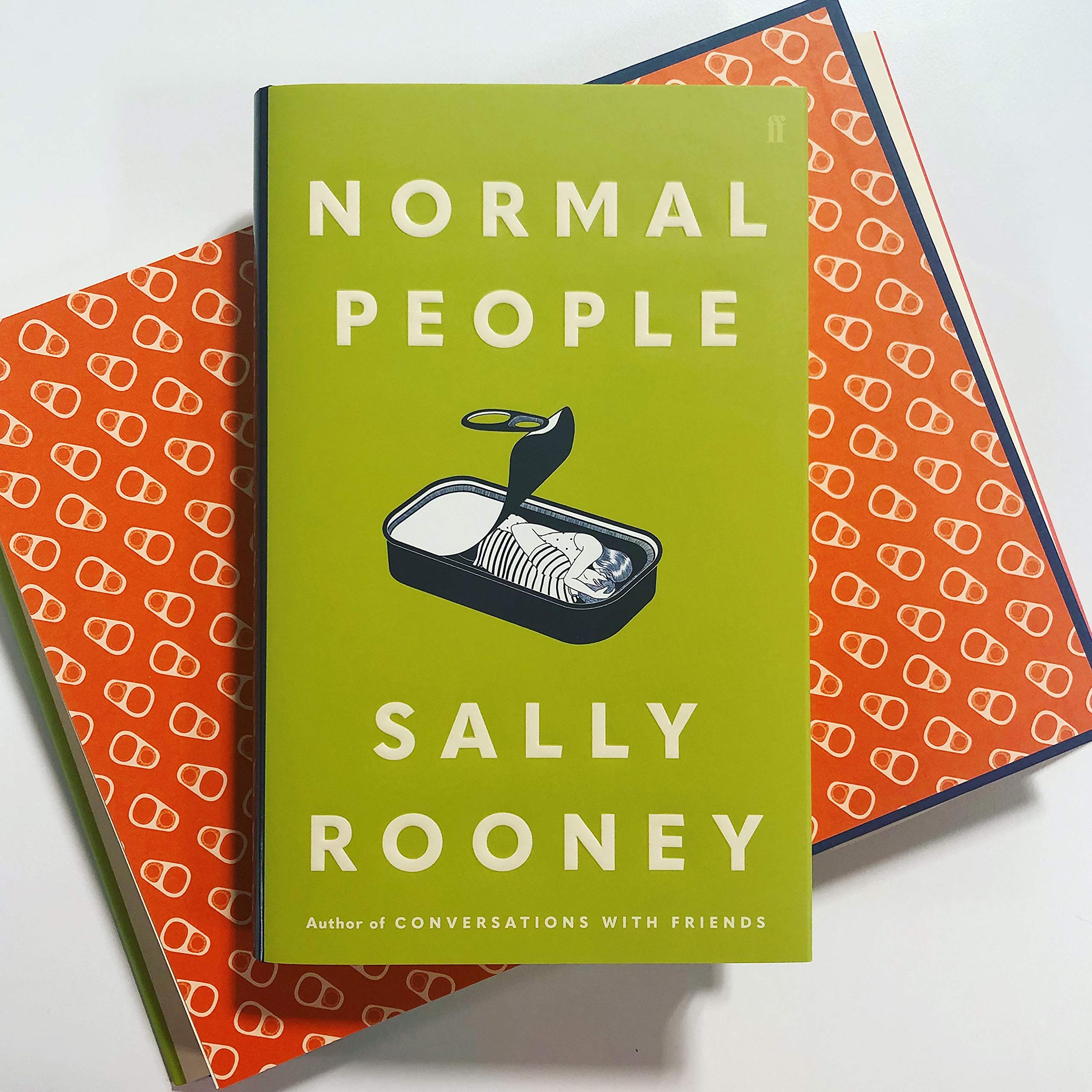
    Novels about relationships can be fraught with overly emotional language and unrealistically high stakes. “Normal People,” Irish author Sally Rooney’s second novel, centers around the relationship between protagonists Marianne and Connell, a complicated dynamic that inspires both admiration and pity. She writes about romance and lust in a manner that is nothing short of painful.

    Some romances seem happy at the start and only doomed with the emergence of life’s obstacles. Rooney’s ideas of romance are different. Marianne and Connell’s relationship is the site of tension from the start. Marianne comes from a wealthy and abusive family. Connell comes from a working-class family. His mother works as a cleaner in Marianne’s house. He is popular in high school. She has no friends. Connell is crippled by social anxiety, which motivates him to place too much weight on his reputation. Marianne doesn’t care what people think of her. Maybe she even likes people to hate her, likes the painful feelings caused by self-induced isolation.

    But they’re also drawn to each other. When they start sleeping together, Connell doesn’t want anyone in school to find out, and Marianne is okay with that. Marianne has a penchant for self-destruction and tends to assume a submissive role in relationships because of it. Connell crumbles with the power this grants him. “She would have lain on the ground and let him walk over her body if he wanted, he knew that.” After Connell doesn’t ask Marianne to the Debs, a school dance, their relationship ends. They both move on to go to Trinity College in Dublin, where they once more become entangled with each other in complicated ways.

    It all seems clichéd. These are stories and myths we’ve heard before, too many times. And often, it is. The language sometimes seems rushed, as if Rooney could not be bogged down by metaphor in the process of getting this story on the page. And some of the details seem too perfect, too ingrained in cultural myths about romance, to assist Rooney in her task of creating a fictional world that is equally alive as ours.

    But as in her first novel, “Conversations with Friends,” these trite stories are being remade, rejuvenated by authenticity and a knack for the psychological portrait. In doing so, Rooney challenges our notions of reading as an empathetic act. It’s not that picking up “Normal People” is satisfying because we are granted access to the world through Connell’s or Marianne’s eyes for a few hours. It’s far more narcissistic than that. Rooney creates dynamics between characters so vivid that it is impossible not to identify yourself within them. Reading Rooney is like looking into a mirror.

    This creates layers of projection. The reader projects themselves onto the characters. The characters are projecting their insecurities onto each other, and their relationship becomes “like looking into a mirror, seeing something that has no secrets from you.” The more intimate they become with one another, the harder it is for them to communicate. They are projecting what they think the other would say, which is really only a manifestation of their own insecurities. Sometimes it works through frustrating but harmless linguistic mishaps. In one scene, Marianne thinks Connell went outside to pursue another girl when in reality, he had asked if Marianne would go to the smoking area with him. She heard, “I’m going out to the smoking area,” and he said (or meant to say), “Do you want to come out to the smoking area?” This, they can communicate through. Other times, it leads to months of silent hostility between the two of them. It’s heart-wrenching to watch as their assumptions based on personal insecurity become the grounds of their own subjective realities.

    Both of these protagonists are extremely intelligent and interested in conversing about topics like the problems with capitalism, the Israeli-Palestinian conflict, and Irish politics. Marianne, particularly, feels comfortable expressing opinions that put others on edge. One night, Marianne is talking to Connell and her friend Peggy when she comments, “Generally, I find men are a lot more concerned with limiting the freedoms of women than exercising personal political freedom for themselves.” The intellectual tone of their relationship works in tandem with their physical relationship, creating a deep sense of intimacy. “At times, he has the sensation that he and Marianne are like figure-skaters, improvising their discussions so adeptly and in such perfect synchronization that it surprises them both.” It creates an intensity that hinges on destructive. Connell and Marianne are bouncing between two mirrored walls, a space where the moments that make them happiest are also plagued with a toxic intensity and the remnants of a past that make those same moments tragic.

    Social class also, inevitably, sits at the novel’s center. Connell comes from a working-class family in West Ireland, and expresses discomfort in the metropolitan environment of Dublin, where “classmates have identical accents and carry the same size MacBook under their arms.” He critiques his classmates’ sense of entitlement, where “they were coming into college every day to have heated debates about books they had not read.” Connell, on the other hand, is deeply uncomfortable taking up space he has not proven himself to deserve.

    A Vox review offered the critique that these characters are made dynamic at the expense of flat minor characters who are often introduced as other love interests. One such character is Helen, Connell’s girlfriend for a period in college with whom he had “a normal, good relationship.” And while it is true she is almost stereotypically the opposite of Marianne, Connell loves her. Her individual characteristics are second to the dynamic between her and Connell. This criticism of the novel, I think, fundamentally fails to grasp the thematic complexity of Rooney’s work. This is a novel that challenges the basic ideas of the individual. It posits that perhaps our only option is to suffer in loving each other, even when it hurts more than being alone.

    It is worth noting that this isn’t a story about Marianne’s emotional transformation from a self-destructive girl into a woman who learns to love herself enough to believe she is deserving of healthy love. Rooney is not interested in the business of the romance novel where knots are tied and untied neatly. Marianne craves powerlessness that Connell can’t grant her. And Connell carries the weight of his mistakes and Marianne’s refusal to stop loving him; he almost faults her for it. But between them, something essential also exists. Marianne thinks, “Most people go their whole lives without ever really feeling that close with anyone.”


    Jodie Kahan can be reached at jtkahan@wesleyan.edu.

  • All My Little Words: War and Peace and Modern Love

    All My Little Words: War and Peace and Modern Love

    Julie pointed to a short line in the middle of a paragraph nestled somewhere between the words “evil” and “modes of valuation.”

    “Be weary of man,” it stated.

    She raised an eyebrow at me, as if to say, I’ve known for years.” I pursed my lips and mouthed, “amen.”

    I understood very little of what Nietzsche wrote in the remainder of that essay.

    *

    The first night I had sex, I was wearing industrial FUPA minimizing Spanx. Actually, the first night I had sex, I did not anticipate that I was going to have sex. In fact, I anticipated a conversation that would be breathy and naked:

    “I don’t want to have sex.”

    “Why?”

    “Because I haven’t had sex before.”

    “Okay.”

    And I was mostly right. Except after the first “okay,” things escalated and my answer changed to, “okay, I want to.”

    And then the imagining began. Was this about to hurt? Is this normal? Is this how I imagined it would be? And then my thoughts transformed.

    Is he okay? Is he comfortable? Does this feel good? Would he tell me if it didn’t?

    *

    In a Russian Lit class about Tolstoy, I’m reading “War and Peace.” Tolstoy, it turns out, sat down to pen his magnum opus with the intention of writing about the year he was in, 1865. But after beginning the large tale, he was unsatisfied with the state in which he found his protagonist.

    In his journal entry from that year, he wrote, “In order to understand him, I had to move once again back to his youth, and his youth coincided with the period of 1812, so glorious for Russia.”

    But that wasn’t quite enough either, because really, he needed to understand society at a time before 1812 to really write about 1812 itself. So he went back to 1805, and even then, there are moments when the reader watches Tolstoy resist the urge to go back further, going on brief tangents to explain events, both minute and historical, that came before.

    *

    Stop thinking about him stop thinking about him stop thinking about him. Just text him.

    *

    We smoked together for the first time. I swore there was an old man walking his dog next to us. He had on dad jeans and a baseball hat. For a moment this was a life 40 years from now, us sitting in the backyard, laughing at some old guys talking about business, both reading something academic, in our old worlds but oddly close. I started to get giggly. And then I got paranoid that I was giggly and you thought I was stupid.

    I stared at your face for what felt like hours. It could have just been one. You said you remembered a Bible story that you needed to look up. I laughed. Were you suddenly religious? You told the story of a man caught in a flood. You did it slowly, deliberately. The man got on his roof so he wouldn’t drown. He prayed for God to save him. A man with a rowboat came by and said “Get in, I’ll help you!” The man said no. God was going to help him. The water rose higher. A motorboat came by and said, “Get in, I’ll help you!”, but the man said no again. He prayed more. Then a helicopter came by, and over the noise of its chopping engine, the pilot screamed, “Grab the latter. I will help you!” But the man would not. He continued to pray. The water rose and he drowned.

    He got to heaven and pleaded to God, “I prayed to you! Why didn’t you save me?” God laughed. “I sent a rowboat, a motor boat, and a helicopter. What more do you want?”

    You said you thought the parable was about about how sometimes in life there are things that are good for us, but we don’t take them because we’re waiting for something better, or different, or more. You said you wanted to do better at recognizing good things, at taking them and appreciating them. I thought it was about me. The more I think about it, the more I think we are just so concerned with ourselves. The story had nothing to do with me. It was nice to think about, though.

    At 1:45 you told me you were tired. I would never have told you to leave.

    *

    The New York Times Modern Love columns are often retrospective in a way that makes me nostalgic for a future time when I can look back on a relationship and say, I was so young. I have matured so much.

    I am still young and dumb and want you to want me even when I really don’t want that for myself. Fuck you, Modern Love.

    *

    In seventh grade, I gave the boy I liked a box of chocolate hearts on Valentine’s Day under the pretense that I had a spare box of chocolate hearts lying in my locker. He laughed at me and then sent me an “AIM” later that night, “do u like me? say yes or no.”

    I sent back “yes.”

    We didn’t really talk in school. Is that why I have problems?

    *

    Tolstoy knew about love. He understood that the problem with love and attachment is that it grows difficult to separate yourself from the object of your attachment. So much so, that to tell any kind of full story, you must go back in time so far, the story itself becomes something entirely different.

    *

    “Jodie you should cut him off cold turkey,” Julie said.

    “I’m going to get distance.”

    I picked up the phone the next time you called, like 10 minutes later.

    *

    I wonder if there are quiet moments when you wonder what I am doing.

    *

    You called and said you really needed to talk because you weren’t feeling well and there was a lot going on. I want to say that my primary emotion was sadness that you were sad. But more than that, I felt happy to be needed.

    *

    Julie texted me “you taking him out for Valentine’s Day?”

    He saw the text pop up on my phone.

    “Why would she say that?” He said it genuinely.

    “Noooo idea.”


    Jodie Kahan can be reached at jtkahan@wesleyan.edu.

  • An Open Letter to Jonah Hill

    An Open Letter to Jonah Hill

    c/o vanityfair.com
    c/o vanityfair.com

    Hi Jonah,

    I hope you are doing well, perhaps buying a new mustard yellow colored beanie, or drinking a green-looking beverage. You see, I’m not a huge comedy nerd. I don’t pride myself on following your career particularly closely or memorizing the lines of any of your iconic roles. In fact, your presence in my life has been rather neutral until recently.

    Perhaps that’s untrue. Your breakthrough role as a horny teenage boy in the comedic cult classic “Superbad,” was rather influential in my life. Not for the reasons you might think, but influential nonetheless. As a young 10-year-old, I wanted nothing more than to loiter around my older brother and his friends, particularly when they made it explicit that I was unwanted. One night, he and a group of his friends were watching “Superbad.” I opened the door and he immediately paused it and told me to leave.

    “But I want to watch it!”

    “You can’t watch it!”

    I did the only thing I could do: I appealed to higher authority. As the younger sister, I had an inherent advantage; the “I Just Wanted to Hang Out with my Cool Older Brother” excuse. How could anyone say no to that? But to my surprise, my parents took his side!

    “You can watch that movie when you’re older.”

    So that was the day that “growing up” became measured by precise achievements for me. I began recording the status of my brother’s so called “privileges” in seventh grade. I made sure to ingrain in my head that his bedtime was 11 p.m. He was allowed to go to the mall alone with his friends. He was allowed to watch “Superbad,” to laugh at a plump Jonah Hill drawing varied penises.

    My memory would be my weapon, I thought. When I was in seventh grade, I would pull the, “But he got to stay up until 11 when he was my age!”

    All of this is to say, I never used you as my weapon, Jonah. Because when the day finally did come, and I no longer needed permission for my movie selections, I had no particular desire to watch “Superbad,” to be quite honest.

    I’ve gleaned all I need to know about the rest of your career from your rather complete Wikipedia page, although the thing I find most startling is how little your Wikipedia picture resembles the you I see in tabloids in the Target checkout line.

    The Jonah Hill I know is the guy who was named “best dressed” by Vanity Fair in October. He’s the Jonah Hill who wears circle-framed glasses in a posse with Maroon 5’s Adam Levine. He’s a Jonah Hill who is the king of street style and has a starring role in Netflix’s “Maniac,” a hipster-fresh stylized TV drama.

    But you’re also the Jonah Hill who is the chubby sidekick to a muscled Channing Tatum. The Jonah who delivers the punchline of the joke in an oversized dad polo.

    You are like the eternal reminder that “authenticity” is perhaps just a portrait of an ever-changing portrait, and for that, I appreciate you. Maybe you are the antidote to a savage Hollywood system that projects images, not people. The ghost of chubby Jonah is both alive and dead. Jonah Hill of “Superbad” is Jonah Hill forever, even though that Jonah doesn’t exist in real time anymore. And maybe that doesn’t have to be sad. Enjoy that green juice, Jonah. Enjoy the way your butt looks in those tight pants.

    Sincerely,

    A sort-of fan.


    Jodie Kahan can be reached at jtkahan@wesleyan.edu

  • “Hadestown” Retells Old Myths With New Meaning
    “Hadestown” Retells Old Myths With New Meaning

    c/o nationaltheater.org
    c/o nationaltheater.org

    Hermes blows a train whistle, and a station car comes up the road from Hell.

    This is just the beginning for “Hadestown,” a genre-defying, Greek myth-based new musical, currently being performed at London’s National Theatre. Hermes–part messenger god, part eccentric jazz singer (André De Shields)–works with the Fates (Carly Mercedes Dyer, Rosie Fletcher, and Gloria Onitiri) to tell two intertwining love stories through a mixture of New Orleans jazz and American folk music.

    These are ancient tales buried in the depths of our cultural consciousness brought to life on the modern stage.

    We meet Persephone (Amber Gray), goddess of spring, who must return to the underworld for the winter to be with her husband, Hades (Patrick Page). Yet, Hades’ Hell is more a sweat factory than a mythical underworld. An ensemble of workers keeps the beat with their machinery, slaving over the foundry that Hades has created. He’s a businessman with power and resources and is unafraid to use them for his personal gain.

    The mythical Romeo and Juliet provide an innocent counter to the warring gods. Eurydice (Eva Noblezada) is a poor girl looking for shelter who finds love instead. Orpheus (Reeve Carney), her lover, is the skinny white boy with a guitar who’s convinced his songs can bring back spring. But winters are cold, and Eurydice quickly realizes Orpheus’ tunes can’t provide the security she needs.

    Instead, she meets Hades behind closed doors, accepting an offer to come work in his underworld in exchange for shelter.

    While Eurydice attempts to adjust to the harsh working conditions of Hadestown, Orpheus finishes his song and realizes his lover is gone. He resolves to get her back, but there’s only one railroad to Hell, and he doesn’t have a ticket.

    With the aid of Hermes, Orpheus makes his way to Hell and wins Eurydice back by playing his magical song. Hades decides to let her free on one condition: Orpheus must lead them back up to Earth, and cannot look back to see if Eurydice is behind him. If he does, she will return to the underworld.

    On the turntables of the National Theater stage, an audience watches with bated breath as Orpheus walks in the dark, Eurydice behind him, her cries falling on deaf ears. Suddenly, Orpheus looks back, and Eurydice’s fate is sealed. She descends into Hell below, lost forever.

    “It’s an old song. It’s an old tale from way back when…we gonna sing it again and again. We’re going to sing it again,” Hermes tells us in the final song.

    This is an ancient tale with an ending that is jarring, but not surprising. But just because we know the ending doesn’t mean we shouldn’t watch or tell the story again.

    Anaïs Mitchell, the creative mind behind the book, lyrics, and music, retells these myths with a new life. We’re not watching an antiquated, distant tale, but one that is instead relevant to our modern world.

    “Hadestown” began its development over 10 years earlier as a song cycle in 2006. After a cast album in 2010, Mitchell met Rachel Chavkin, director of the recent Broadway hit “Natasha, Pierre & The Great Comet of 1812.” The pair worked to transform the thread of songs into a robust musical ready for the stage.

    The show is set to take Broadway stage in April, and currently runs on the National Theater stage in London.

    While the character tropes are familiar to a Western audience—the young lovers who will crawl to the ends of the Earth for one another, people in need who will sacrifice anything for shelter, lifelong partners who overcome differences to renew their love—there are elements that are more American than anywhere else. It’s not just the accents.

    Hades is a power-hungry, capitalist, white man who’s trying to build a wall around his underworld. His song, “Why We Build The Wall,” was a later addition to the show, written during the time of President Trump’s election.

    “Why do we build the wall? My children, my children,” Hades asks in rhythmic song. “How does the wall keep us free/Who do we call the enemy?”

    “The enemy is poverty,” responds the cast in unison, a stark contrast from the rest of the show’s elaborate harmonies. “And the wall keeps out the enemy/And we build the wall to keep us free.”

    Gasps scattered throughout the audience. The horror!

    English audience members could see the embodiment of a familiar, powerful man, and hear the chants of words they’ve no doubt heard in foreign media. Yet as I sat there with fellow Wesleyan students, we weren’t shocked. Our closeness to the political situation was instead discomforting; a myth from ages ago was akin to our cultural experience. It stung.

    This is what good theater does. It makes us feel things, even if we’re uncomfortable or pained. Mitchell’s work isn’t supposed to reassure us that everyone is good and that fairy-tale endings exist. Instead, it teaches us lessons about relationships, love, security, and even our modern world. “Hadestown” doesn’t tell a happy tale; it tells an important old one with new meaning.


    Zoë Kaplan can be reached at zkaplan@wesleyan.edu.

  • Local Restaurant B&B Wings Challenges Conceptions of Vegan Culture
    Local Restaurant B&B Wings Challenges Conceptions of Vegan Culture

    c/o B&B Wings and Things
    c/o B&B Wings and Things

    At this point, everyone knows that the consumption of meat and dairy is laced in processes of cruelty and barbarism. And if you don’t know it, there’s no excuse not to. It takes 30 seconds on Google to bombard yourself with horrifying articles, pictures, and videos. We know the sounds of sorrowful moans that female dairy cows make when their calves are ripped away from them; we know they have to endure this process of artificial impregnation five to seven times before they are rendered useless and, quickly thereafter, slaughtered, reducing their lifespan by 20 years. We know that chickens are bred to maximize breast size, making them so top heavy they cannot walk. We know these chickens usually have less than a square foot to roam around, causing high rates of infection that farmers eradicate with a constant supply of antibiotics.

    While it sounds like PETA rhetoric, it’s nearly impossible to make the reality sound less dire. It seems to me that Upton Sinclair’s “The Jungle” has been released and rereleased, only this time it’s penned by regular people, without formal publishing, on the internet. The verdict is clear: the food industry, particularly that of meat and dairy, is getting away with dirty and cheap practices at the consumer’s expense as well as the expense of the consumed, the animals. Even with this information, regulating Big Food in a radical way seems off the table, and most of us as individuals are content to do nothing.

    Of course, many have begun to embrace individualized solutions in this neoliberal age. These are the people who intentionally reduce or eliminate their meat consumption, boast their pescatarianism with pride, or even go vegan, eliminating all animal-based products. But these choices are inaccessible to many for various economic, cultural, and maybe most significantly, mental reasons. The problem is that veganism is entrenched in a world of expectations and judgement, and a rhetoric that boasts moralistic sacrifice.

    The internet has perhaps exacerbated the portrait of the vegan as a person who sacrifices pleasure in favor of morals, with Instagram “food porn” making it all too easy to rule out veganism as a viable option for many. If you decide to go vegan, your Instagram feed would like to tell you that these are your options: granola with a strange milk substitute, tofu and kale, and seitan (a meat substitute made from cooked wheat gluten). While this is appetizing to many, to many more it’s a lifestyle change that seems almost masochistic in nature. Why would anyone subject themselves to a gluten-based meat substitute? People go vegan for a host of reasons, including an opposition to animal cruelty, environmental reasons, for labor rights, and in anti-capitalist protest. But whatever the reason, there’s a judgement inherent in declaring yourself a vegan, it seems: I’ve martyred my desires for the good of the planet and animals and people. Why haven’t you?

    But what if there was a veganism that celebrated itself without judgement of alternative practices? A veganism that didn’t feel like sacrifice, but instead like a world of culinary possibility filled with flavor and texture and creativity?

    Towards the end of Main Street lies a small restaurant with an unassuming awning that reads “B&B Wings and Things.” Inside, Rita stands behind the cash register, immediately saying hello with a smile to each customer who enters. She’s excited to tell you about her menu of choices, both vegan and non-vegan comfort food.

    Rita first became vegan eight years ago after participating in the Daniel Fast, a spiritual fast with her church. The fast lasts three weeks, and participants are asked to abstain from what she calls “rich foods,” things like meat and dairy as well as processed food. After ample internet research, Rita stumbled upon several vegan websites, whose eating practices aligned well with the fast. As internet rabbit holes usually go, one website led to the next, and eventually, Rita stumbled on videos and articles exposing the animal cruelty that in many ways marks the food industry.

    “I never kind of made that connection before,” she said. “Just looking at the food industry as a whole is what made me go, I cannot go back.”

    With her two sons and her husband, the fast became a family project. The mission? Find good food that everyone will enjoy that abides by the rules of the fast.

    “We just had such a good time as a family,” she recalled. “And from a bonding perspective, with all the creative things we were able to do as a family, it just continued on, and then evolved to, ‘oh, there’s a thing for this and it’s called veganism and I’m on board.’”

    This combination of consumption and positive energy or bonding continued throughout the conversation. This is where the vegan journey gets beautifully complicated for Rita: to her, it seems, food is not just about sustenance. Instead, it’s a mood, as a poster in the restaurant reminds her customers.

    This mantra is evident the moment you walk through the doors of B&B. It’s homey, with crafty posters hanging on the walls, a few chairs for waiting, and a completely open kitchen. It’s a collective atmosphere, one where both chef and customer are sharing in the pleasures of great food. All of this is to say, this is not the portrait of the skinny Instagram vegan, trading in burgers for kale.

    This cultural expectation is rooted in the belief that the relationship between veganism and food is an either/or. You cannot be a vegan and like food. For Rita, this was radically untrue, but her limited options at restaurants, generally including an unappetizing meat substitute or a meal of sides and carbs, did not accurately reflect her beliefs.

    “To me, tofu tastes like throw up,” she said matter-of-factly. “So, with vegan cooking, the more you experiment, the more you start to perfect things. My husband has professional culinary experience. So I’d find something, and he’ll take it to a whole ‘nother level. He knows the science of food.”

    And here is the other half of the B&B operation. As a trained chef, Rita’s husband is able to actually produce the delicious food that Rita researches. And beyond his cooking talents, it’s their relationship that creates the light and comfortable environment.

    But the mood turns serious when she begins talking about a vegan culture she’s all too familiar with.

    “A real, true, die-hard activist, blood on your coat vegan, is not coming in here because there is non-vegan food, too,” she said. “I think when you have that mindset you miss the mission. I liken it to a Christian who puts their nose down to a Muslim, or vice versa. How can you learn from each other, or share with one another, if you don’t meet each other in the place that you’re in. I don’t understand that.”

    Her comment again speaks to the judgmental nature of being a vegan. Validly, vegans have taken a stance against cruelty. But to react angrily at those who are uninformed, Rita expresses, only serves to isolate the community.

    So at B&B, they’re flipping the script. A meat eater and a non-meat eater walk into the restaurant together. Rita greets both customers with a smile, perhaps the carnivore customer asks about the vegan steak and cheese, to which Rita responds, you gotta try it. The customer, of course, falls in love with the sandwich, which totally does satisfy the steak craving with its textures and taste. The vegan customer and Rita can now explain what veganism is, including what options are available to you instead of what foods you will never be able to eat again. Even better, that steak and cheese costs exactly the same as the regular steak and cheese.

    “The most important thing to me was not having the vegan mark-up crap,” Rita said. “If you go to places that have the vegan option, the price is marked up crazy because it’s vegan. If the regular steak and cheese is 10 dollars, it’s gonna be 10 dollars at B&B. The only time it’s gonna have a different price is because that’s the least amount I can charge it to afford to give it to you.”

    Her strategies are working, as numerous cases have indicated, even in communities where a meatless or dairy-free diet seems impossible. Rita is half Black and half Puerto Rican, and the stigma of veganism in these communities is not confounding to her by any means.

    “I think it’s because food in a lot of cultures, particularly Black and Latin cultures, is symbolic with celebration,” she said. “For being poor or disenfranchised, food was the way you communicated your love.”  

    But a Puerto Rican man who lives next door to the restaurant saw people in and out, eating vegan food. After trying the vegan steak and cheese at Rita’s recommendation, he’s hooked.

    “By the way, fast forward, three months later, he’s lost like 30 pounds,” she said.

    Now that he understands what veganism is, Rita has explained that she can help him “veganize” all his favorite Puerto Rican dishes. She’s now helping him to learn to cook all his favorites so he can introduce it to his family, and together, they can begin to perfect it.

    There is no talk of sacrifice, of giving up, of being noble. And while Rita is certainly doing amazing things to make change, she only speaks of love.

    “The greatest commandment is to love God and to love each other,” she said. “If you love one another, there are certain boundaries, lines, things, that you’re not gonna do because the love abides. So how can you possibly love an animal but not love a human? How can you have compassion for this little defenseless animal, but you’re here berating this human that also has emotions? That’s the crap that pisses me off.”


    Jodie Kahan can be reached at jtkahan@wesleyan.edu.

  • “Legally Blonde” Brings Infectious Energy and an Uplifting Message

    “Legally Blonde” Brings Infectious Energy and an Uplifting Message

    Cher Qin, Assistant Photo Editor
    Cher Qin, Assistant Photo Editor

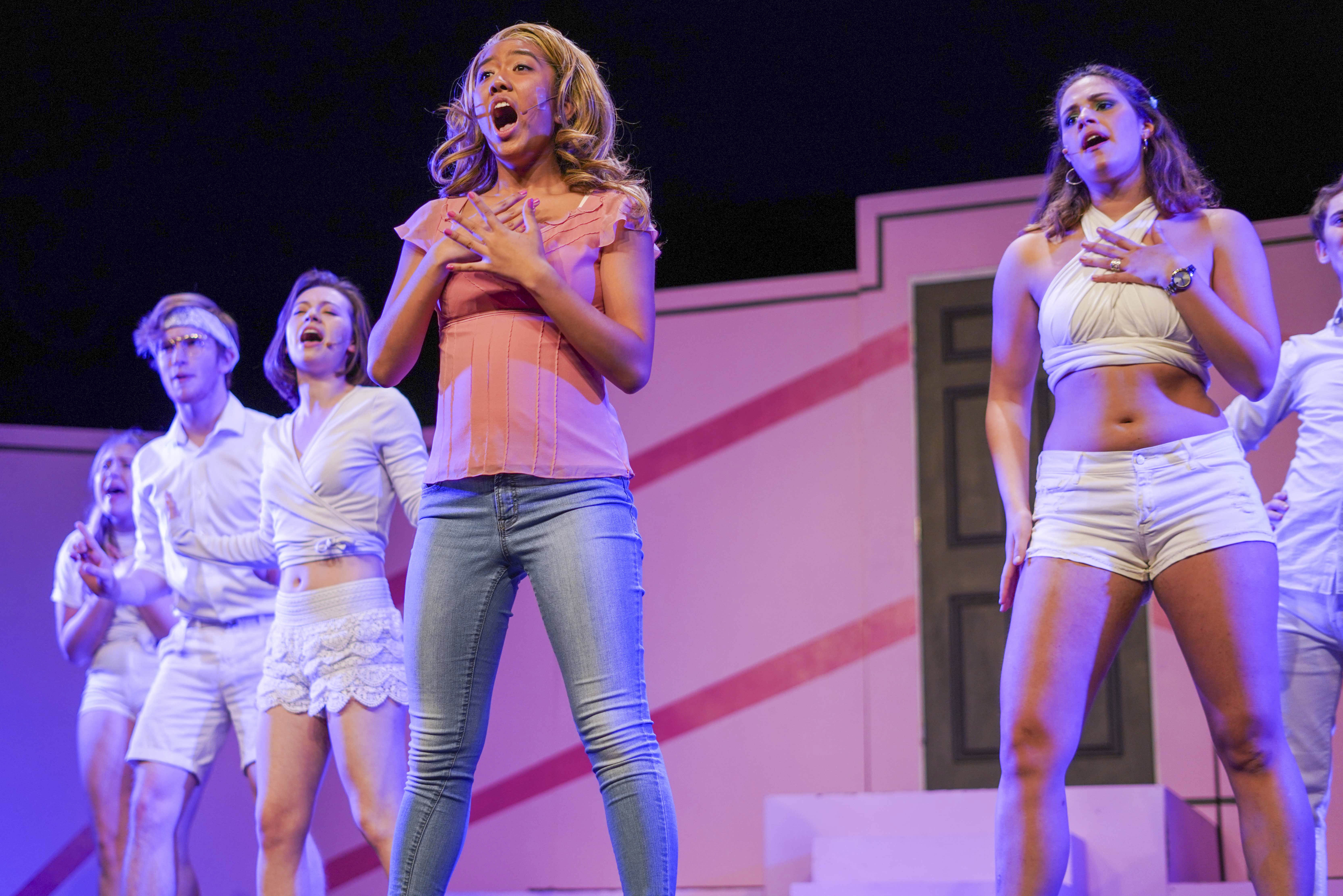
    Flinging open a door center stage, Elle Woods (Jolie Villegas ’22) appears in the perfect pink dress, ready to conquer the milestones ahead. In the opening number “Omigod You Guys”—one of the many tunes from “Legally Blonde: The Musical” that you’ll be humming around campus this weekend—Elle has found the perfect dress to wear for what she believes will be the most important day of her life, the day she expects her boyfriend, the pompous Warner Huntington III (Michael Bloom ’21), to propose. In a parallel moment, many scenes and a great deal of character development later, Elle emerges again in an explosion of pink. This time, instead of dressing up to go meet a man who belittles her, she is off to the courthouse to demonstrate her skills as a Harvard Law School–educated defense attorney.

    This transformation from naive optimism to empowered positivity commands the heart of Second Stage’s production, which opened in the ’92 Theater last night. The story follows Elle as she embarks on a journey to get back her boyfriend and finds her inner power as a lawyer instead. While on the surface “Legally Blonde,” a musical adaptation of the 2001 movie starring an extremely peppy Reese Witherspoon, is two hours of grand, up-tempo numbers and flocks of squealing sorority members, at its core, the story focuses on women helping other women find empowerment in the male-dominated field of law. As such, the production, directed by Sarah Connolly ’19, not only presents a fun-loving show that will make the audience dance in their seats; it also illuminates a message that is especially poignant in the time of the #MeToo movement.

    If the show’s heart is its nuanced exploration of topical issues through thoughtful blocking and diverse casting, its backbone would most definitely be the unfaltering energy of the cast. Despite the difficult score, which barely gives performers time to catch their breath between numbers that are both vocally demanding and highly choreographed, the leads and ensemble bring the necessary vigor to each song. With commendable choreography by Karolina Hetesova ’19, elaborate numbers such as “What You Want” and “Bend and Snap” sparkle with captivating positivity. Even with the occasional musical faux pas in the larger numbers, the engagement in every movement on stage made the audience eager to applaud at the end of each song.

    Camille Chossis, Staff Photographer
    Camille Chossis, Staff Photographer

    Although many of the leading performers’ portrayals partially echo some characteristics of actors from the original film, many of the actors approach the characters from fresh angles. Villegas as Elle brings a sweetness and earnestness reminiscent of Witherspoon’s performance, as well as impressive vocal stamina. Yet she also makes the character her own, incorporating a believable vulnerability and elegance that, despite not being traits usually associated with the character, work well with Elle’s journey to empowerment.

    Alex O’Shea ’19 as Emmett, Elle’s romantic interest, gives undoubtedly one of the best performances of the show, with strong vocals and impeccable acting that creates a character who both foils Elle and lifts her up. Instead of being simply a replacement for Elle and Warner’s relationship, Emmett’s budding relationship with Elle becomes something entirely new and special in itself. Emmett is the character in the show who sees Elle for all that she is and all she can be, and the representation of a queer relationship onstage reinforces the inclusive nature of this production. Elle and Emmett are strong apart and strong together, compelling the audience to root for both of them to find success in addition to love.

    Similarly, the actors portraying an eccentric array of minor characters give convincing performances. Bloom’s skillful portrayal of Warner as more ignorant than outright vindictive allows the audience to have more compassion for the heartbreak that spurs Elle to apply to Harvard Law. Vienna Kaylan ’19 as Paulette, a hairdresser who quickly becomes good friends with Elle and finds her own empowerment through their friendship, has perhaps the best comic timing of the show while never turning her character into a caricature. Thea LaCrosse ’21 as Vivienne, Warner’s new girlfriend whom Elle describes as an “evil preppy,” brings a fitting coldness for the majority of the production, but the character evolves to play a support figure to Elle, all while delivering impressive belting during multiple musical numbers. Yael Yossefy ’22 as Brooke, the head of a fitness emporium convicted of murdering her husband, gives a thoroughly invigorating performance, singing flawlessly as she jumps rope in an orange jumpsuit. The ensemble cast of sorority members (gals and guys included—an honorable nod to Wesleyan’s co-ed Greek life) and law school students keep the audience engaged with high levels of spunk and charisma. It’s easy to tell those on stage are all having fun, and the fun is certainly contagious.

    On the tech side, the show appears to run effortlessly, which of course is a testament to the crew’s tremendous efforts. The set, designed by Daniel Gordon ’19, is relatively simple but versatile nonetheless, and the costumes, designed by Tina Omoeva ’21 match the colorful energy of the show. (And bravo for all the quick changes—this show has a ton of quick changes!) Lighting, designed by Matt Grimaldi ’21 complements the mood while nicely accenting big moments for the characters. The live pit was absolutely necessary and handles the challenging score gracefully.

    Cher Qin, Assistant Photo Editor
    Cher Qin, Assistant Photo Editor

    Much of the show’s power can also be attributed to Connolly’s directorial choices, specifically in casting that highlights different dynamics in relationships between strong female characters. Additionally, the directorial and acting choices made concerning the subplot of Elle’s infamous law professor, played with frighteningly realistic creepiness by Franklin Gu ’20, kissing a female student without consent leaves a lasting impact. This impact is heightened as the audience watches Elle find support in Vivienne, Paulette, and especially in O’Shea’s Emmett. Characters like Professor Callahan are all too recognizable, and watching a group of powerful women take him down has never been more satisfying.

    As with any show, minor details could be improved. The dialogue between songs feels rushed at times, though the difficulty of finding the pacing of a script filled with easily excitable characters has to be acknowledged. The live orchestral pit contributed to the high energy of the show during numbers, but not having the pit play during set transitions interrupts the momentum between scenes. And then there’s the problem of Second Stage’s limited access to microphones, which makes the many fast lines delivered by ensemble members difficult to catch. Overall, none of these minor drawbacks impede the outstanding quality of the production.

    Besides the catchy songs, what will most likely stay with the audience of “Legally Blonde” long after they leave the theater is the show’s spirit. The production not only captures Elle’s optimism with a technically impressive show, but elevates the message by making the story much more inclusive and applicable to women facing any obstacle. Performed in the current political moment, “Legally Blonde” is an unexpected ray of hope. The confidence and positivity Elle inspires is no longer just something encapsulated in sororities; it is more recognizable in the Women’s Marches taking place across the country. The diversity of the cast furthers this parallel, as the production’s inclusivity reminds the audience of the importance of intersectionality in feminism. When women from all backgrounds help each other overcome challenges, they rise up and find success together.


    Sara McCrea can be reached at smccrea@wesleyan.edu. 

  • All My Little Words: Grunge, 25 Years Later
    All My Little Words: Grunge, 25 Years Later

    c/o rollingstone.com
    c/o rollingstone.com

    In the fall of 1993, 25 years ago, Pearl Jam’s lead vocalist Eddie Vedder appeared on the cover of Time magazine. The photo shows Vedder at the height of the grunge movement: hair plastered around his face, head jolted backwards as if in rapture, face contorted from the force of the energy being expended to deliver the rage from within his soul into his microphone to millions of fans.

    The short header of the cover declares that Vedder gave a voice to “the passions and fears of a generation,” the flannel wearing, cigarette smoking Generation X, known mainly in popular culture for their profound laziness and specific tastes in music. When people talk about grunge music today, they are generally referencing the “big four”: Nirvana, Pearl Jam, Soundgarden, and Alice in Chains. These bands all formed in Seattle, Washington, a hub for angsty teenage boys of the ’90s with long hair who wanted their electric guitar distortion levels high and their cares about things like “normalcy” and “society” low.

    My memory of being an angsty 13-year-old often circulates around family car rides, where I spent most of my time complaining and being angry at everything and everyone, particularly my parents. Family to me then, and sometimes even now, seemed like obligation. I resented the authority of it, the complete control it at times had over my life. I remember Lithium station, Sirius XM, blaring from the car speakers, the other constant next to the presence of my parents in the front seats. The car rides started the same: my dad rolling down the windows and turning up the song, maybe today it was Pearl Jam’s “Jeremy” blaring from the speaker. Around 20 seconds into the song, my mom would start yelling, “David! Turn this down! This is not appropriate!” I never would have said it, but I always agreed with mom. Vedder’s muffled voice sounded more like noise than music.

    As I got older, I began listening to music from the ’90s more and more. I connected with it in a way that felt personal. I was discreet about my newfound interest. In some ways, admitting that I listened to my dad’s music seemed like admitting defeat.

    But some of the bands also became a window into a life he lived in the past, one where he let his hair grow out, left his scruff untouched, and preferred his attitude less refined. It’s an image of my dad as a person, as opposed to a figure. Maybe in some ways this added a level of pain to our relationship. “Something in the Way” was not just a song he and I liked: It was also a reminder of his own imperfections. He was once young and maybe reckless, maybe angry, and maybe heartbroken, too. It didn’t feel like that gave us more shared ground then, but instead like he was taking something away from me by feeling a connection to the same music I did.

    I am more like my mom than my dad in many ways, or at least I think so. But while I didn’t realize it then, grunge feels like a love that I inherited from him. A love that is not necessarily rooted in a profound love for the angriest of Nirvana songs (although, in some moments, Kurt Cobain wailing on “Heart-Shaped Box” is everything I need), but a connection with the kind of cultural loneliness that grunge captured. I was raised by people who at my age felt that people like Eddie Vedder and Kurt Cobain spoke to their isolation and pain in a way that nothing else could. In that way, grunge is not just a music scene; it’s a whole culture, a style, a feeling, a mood, a way of looking at the world. Vedder on the cover of Time is not only significant for its accomplishment for his band and talent. It speaks to the cultural significance of his music, of his demeanor, of what he stood for. It speaks to the person my dad was as a young adult in the world, grappling with himself and the world around him, which probably looked a lot like I do now.


    Jodie Kahan can be reached at jtkahan@wesleyan.edu.

  • Kahlil Robert Irving Installs New Exhibit in Zilkha South Gallery

    Kahlil Robert Irving Installs New Exhibit in Zilkha South Gallery

    c/o goodartnews.com
    c/o goodartnews.com

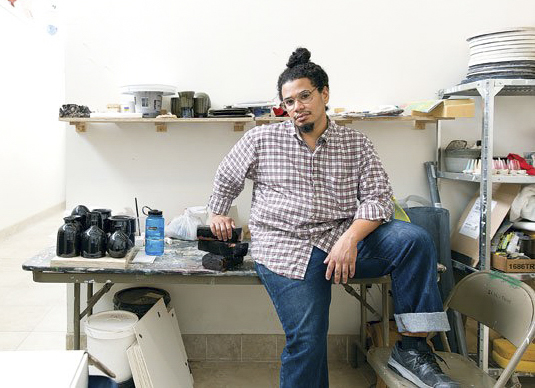
    St. Louis-based multimedia artist Kahlil Robert Irving is curating the second exhibition at the University’s Ezra and Cecile Zilkha Gallery beginning Friday, Oct. 26. The exhibition features two parts: “This Country,” and a series of video screenings, “Mapping Energies,” both of which will be on display through Nov. 18.

    Functioning in relation to Irving’s recently installed exhibition “Street Matter: – Decay & Forever/Golden Age,” “This Country” uses the American flag as its motif, challenging and engaging with conceptions of race in the United States. Irving spoke to The Argus about this theme, as well as his experiences organizing the exhibition.

    “In some way, I can put their work together and have a conversation between theirs and mine,” Irving said. “In my installation next door I have four flags. So I thought it could be interesting to continue or expand on that idea with people who I’ve seen reference the flag, too.”

    The exhibition includes works by artists Modou Dieng, Addoley Dzegede, André Filipek, Ari Fish, Rashawn Griffin, Andy Li, Patrick Martinez, Catalina Ouyang, Edward Salas, Aram Han Sifuentes, and Edra Soto, each of whom Kahlil has personally asked to contribute to the exhibit. He is cautious, however, about the word “curator,” and the responsibilities that follow.

    “I’d say I’m just organizing,” Irving clarifies. “There’s research, there’s time, there’s attention, there’s phone calls, there’s a whole bunch of stuff that goes along with curating, and I don’t want the title, because I’m not taking the other responsibility that comes along with it.”

    But Irving has plenty of responsibility, as quickly evidenced in the slow and uncertain process of assembly.

    A flag goes up 14 inches from the top of the wall. No. Two inches higher. No. A little lower. No. It’s uneven. His work is both particular and uncaring. It seems as though he knows the real work has already been done; the rest is just detail. The deceptively easy display of casualness, though, is well-practiced. This is Irving’s fourth exhibit as organizer, and he feels less pressure than he used to. Now, this kind of work is exciting.

    “It’s different people’s works that reference autobiographical, larger systemic issues, fantasy or personal narrative, creating a new space for themselves beyond exactly what we know is a certain way,” Irving said. “Their investigation, and the way that they’re building their work, is something that I’m drawn to, that I feel akin to.”

    He talks about each of the artists and their work with pride, like in some way they are each his own creation. He points to one large flag sprawled on the table, its triangular shape constructed out of pool table felt with the word “Griffin” printed in large letters through its center.

    “This work is about a fictional place in Kansas, but this is the artist’s last name.” Irving explains. “It’s called ‘Griffin, Half’. Rashawn Griffin [the artist] works a lot with pool felt and imaginative landscapes of spaces that he builds, and that you can walk into, and sounds and colors shift.”

    In just a few more hours, the white walls will be transformed into something else entirely, something Kahlil himself has envisioned for months. And at that point, the art lives independently of his thoughts or intents, instead left for viewers to interpret and reinterpret, perhaps left for them to politicize something that, to Irving, feels personal.

    It seems almost inevitable: To start a conversation about America and race is to start a conversation that is political in nature. Instead of responding to this with frustration, Irving uses it to his advantage, forcing viewers to experience the racial realities of America simultaneously with their experience of the art they consume.

    “We’re all living life and we’re all coming to this with something,” Irving said. “And if you live life and you see things in the world and you come in here, you should see things connected to the world out there going on in here. So it’s really not separate. But we’re trained to think that they’re separate.”

    Viewers’ thoughts about the exhibit almost don’t matter, as they are inhabiting a space that Irving has created, the ultimate degree of an artist’s control in many ways.

    “You can be in a space, and it’s one thing to present things, intimate things in the space, or autonomous things in a space,” he said. “But when you can actually engage and take over space, that’s a different kind of authority.”


    Jodie Kahan can be reached at jtkahan@wesleyan.edu.