
Students Hold Vigil for Cornell Sexual Violence Case
Content warning: This article contains references to sexual assault, sexual violence, and rape.
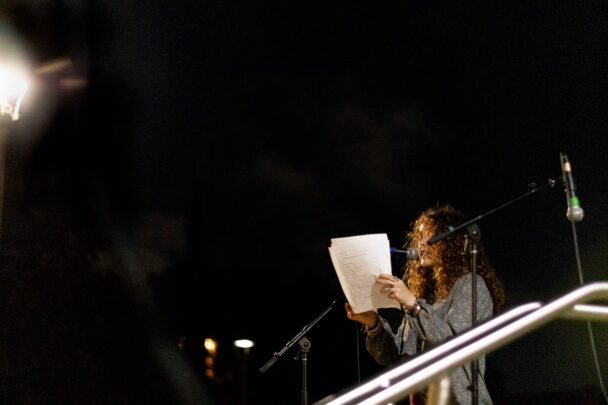
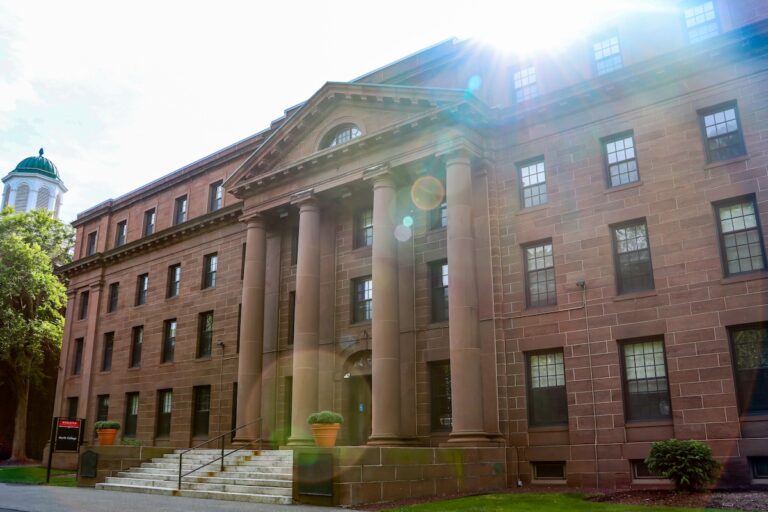
About a hundred students gathered outside Usdan University Center on Tuesday, Oct. 13, 2026 in solidarity and support of those affected by sexual violence at Wesleyan University, Cornell University, and other institutions of higher education across the country.
The protest vigil was organized in response to the rape investigation involving Jane Doe at Cornell, which has initiated a national discussion about sexual assault on college campuses. On Sept. 16, 2026, Doe filed a lawsuit against Cornell, the Chi Phi fraternity, the Tri Delta sorority, and the seven men allegedly involved in her sexual assault, which took place on Oct. 19, 2024.
As the case gained widespread attention, an email was sent out by Wesleyan Vice President of Student Affairs Michael Whaley and Vice President for Equity & Inclusion Willette Burnham-Williams to the entire student body on Tuesday, Oct. 6. The email mentioned the resources available to students and reaffirmed Wesleyan’s commitment to eliminating sexual violence on campus.
“We strive to eliminate all forms of violence and sexual assault from our community,” the email said. “We also aim to foster a campus environment in which those who have experienced sexual misconduct of any kind feel supported enough to come forward. We will support survivors and will hold perpetrators accountable.”
Montana Gura ’27, the organizer of the vigil, expressed feeling overwhelmingly angry and lonely when the lawsuit first came out.
“After hearing and seeing the lack of response from Wesleyan and other students as well, I felt quite alone,” Gura said. “People around me weren’t really engaging with it much as it was really deeply personal to me.”
This led her to reach out to several campus organizations, including Adolescent Sexual Health Awareness (ASHA), Rho Epsilon Pi (Rho Ep), and the Wesleyan Student Assembly (WSA), which participated in the event.
The vigil had seven speakers, many of whom said that they are survivors. Afterward, students in attendance were offered the chance to write their thoughts on a piece of paper. There was also a group of 20 attendees who stood in a circle offering support to anyone who wished to share. A somber feeling encompassed the whole event, with students hugging each other during and after speeches.
The case involving Doe, primarily addressed as the case of the Cornell 7, included evidence of a Chi Phi group chat with 57 men, none of whom intervened or reported the messages to the authorities.
“Not every man is a rapist,” Gura said. “But a majority of men will protect men who rape women, and that’s the issue. That’s what makes it ‘all men.’ Not because all men will do it. But because some will, and some will let it happen, and we don’t know who those will be.”
Earlier this month, the WSA unanimously passed a resolution condemning sexual violence and calling for accountability from the Wesleyan administration. WSA Vice President UsZee McKoy ’29 expressed pride for this resolution, which he believes is starting to address the gaps that Wesleyan has not.
“We demanded that our university recognize where it has fallen short,” McKoy said at the protest. “It is not enough for universities to tell us that they care about survivors, and it is not enough to send out an email, put together a task force, or remind us that resources are available. We need action, we need transparency, and we need accountability, and we need institutions to understand that their responsibility is not to protect themselves from scandal, but to protect their students from harm.”
Throughout the evening, systemic issues were highlighted in the speeches. According to the Rape, Abuse & Incest National Network (RAINN), one in eight college students report experiencing sexual violence during their time in school.
“This is a cultural problem, it is an institutional problem, and it is a political problem,” McKoy said. “It is a problem that all of us, especially those of us who benefit from these power structures, have a responsibility to confront.”
Individuals from Rho Ep, including Angelise Benimadho ’29, Rho Ep’s Diversity, Equity and Inclusion chair, also read a statement from the sorority during the event.
“On behalf of Rho Ep, we stand with the survivor,” Benimadho said. “We want to acknowledge that there’s never any room or any toleration of sexual violence, sexual assault, or sexual misconduct on this campus. We stand to hold other fraternities and sororities accountable, and we’re committed to fostering not only a safe space for female-identifying students, but fostering a safe campus for all students.”
Another member of Rho Ep, who requested to remain anonymous, shared that her past boyfriend assaulted her on campus. She praised Amanda Carrington, the Associate Director for Sexual Violence Prevention at WesWell, as a confidential campus resource. While the student commended Carrington, she acknowledged that resources only help support students after sexual assault has occurred.
“She offered to help me in whatever ways I needed, and suggested getting documentation that would excuse me from work that could be triggering,” she said. “And while her many ideas helped me, the unfortunate fact is that none of this changes that I’ve been catcalled, grabbed, and assaulted multiple times on this campus. As a victim, I processed Jane Doe’s story the way I processed my first assault, and that was alone. And maybe that’s why it sat with me so heavily. I’m disappointed in Wesleyan for the lack of spaces it offered people to process.”
WSA Senator Lucia Martinez-Pelaez ’29 expressed the WSA’s interest in both education to prevent such instances from occurring and collaboration with other bodies on campus. Martinez-Pelaez also expressed interest in having non-first-years and those no longer living in dorms receive green dot training.
Additionally, WSA has mandated green dot training for all senators.
“I would love to see collaboration between different [administrators] and departments talking not only about mandatory consent talks, but in general, training for people,” Martinez-Pelaez said.
While Carrington was not physically present at the event, a student read a note on her behalf.
“I support and stand with survivors as they name what healing injustice means to them,” Carrington wrote. “I understand that the case of Cornell has brought up a host of complicated emotions for survivors and for the general community. I am here as an advocate, educator, resource, and for a space for those in need.”
Finn Feldman can be reached at ffeldman@wesleyan.edu
Raiza Goel can be reached at rgoel@wesleyan.edu


Leave a Reply