
Letter from the Editor: Institutional Failures Extend Beyond Cornell
Dear Readers,
On Friday, Oct. 2, New York Magazine published a piece titled “The Post-Me Too Generation Gets Its Me Too Moment,” referencing the recent lawsuit made by plaintiff Jane Doe against Cornell University and several other institutions and individuals from the time of her sexual assault on Cornell’s campus in 2024. The author of the article, Zoe Yu, talks about the premise of living in a post-#MeToo landscape, where women in college are supposed to believe they are safe now, writing “For many young men, lessons had been learned. The new generation would be different. Harvey Weinstein and Larry Nassar were behind bars; the old monsters were gone. What more was there to do?” This statement in particular stuck with me. Like Yu and her friends, whom she quotes in the article, I too grew up reading the headlines about Larry Nassar and his abuses against the USA Women’s Gymnastics team. I followed the effects of Weinstein’s sexual abuses across the entertainment industry. Most recently, we were faced with the publication of the Epstein Files and the reckoning that followed. Again and again, we are forced to confront the systemic cracks that allow for abusers to slip through. And it is clearly still no different on college campuses.
In 2014, The Atlantic reported on the $10 million Title IX lawsuit that was filed against Wesleyan University and the Beta Theta Pi fraternity after a student was sexually assaulted inside the fraternity house. After an up-and-down battle beginning in 2005, when the University attempted to require fraternities to house female students if they wanted to be a part of University Program Housing (a decision that would later begin to be implemented in 2014), Beta Theta Pi chose to opt-out of making their house part of the program, giving up official recognition from the University, meaning that Public Safety did not have authority over the property. In 2010, even after the requirement for houses to become co-ed to count as Program Housing was dropped, Beta still refused to join, resulting in the University sending an email to the campus community advising students against visiting the house.
After the assault occurred in the Beta house, President Roth issued a statement banning students from visiting private societies unrecognized by the University, which he was later forced to retract. After releasing statements claiming to support victims of sexual assault, the University chose to fight the lawsuit by blaming Jane Doe for being raped, with The Atlantic reporting that the reasons listed, amongst others, included that she “did not remain in a public place with a person with whom she was unfamiliar”; “failed to make reasonable and proper use of her faculties and senses.” To avoid any confusion, I will add that Jane Doe reported not engaging in any substances the night of her assault, making the University’s statements all the more baffling. A few years later, a student reported an attack and attempted sexual assault in the Beta house. The following September, NBC CT reported on a sophomore student who fell out of the Beta house window, leading to the suspension of the chapter from the national organization.
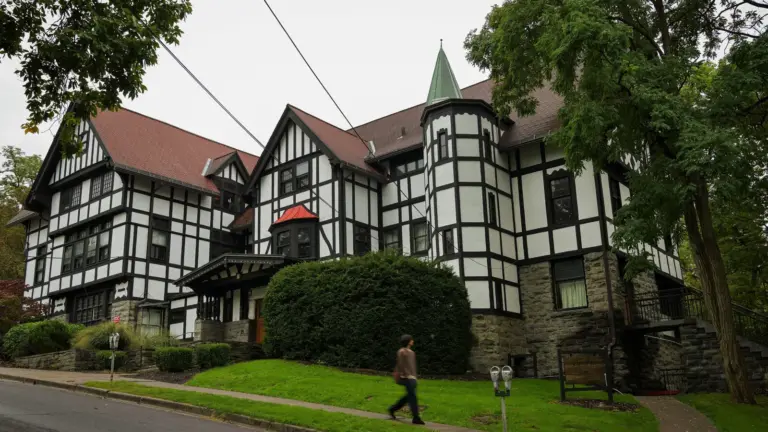
Considering this long history and the failure of the institution to protect students from continued harm at the same location, it’s especially perplexing to me that the University sent an extremely lukewarm statement in an email following pressure from the student body and WSA titled “Supporting our Community,” where Mike Whaley and Willette Burnham-Williams bureaucratically list out the various resources that the University offers to assist survivors, like WesWell, CAPS, QPR, etc. In a corporate manner, the University simply states, “We strive to eliminate all forms of violence and sexual assault from our community. We also aim to foster a campus environment in which those who have experienced sexual misconduct of any kind feel supported enough to come forward. We will support survivors and will hold perpetrators accountable.” Very vague and very underwhelming. And this all comes after the sudden departure of Debbie Colucci, our former Title IX Coordinator, and an announcement by the University that it has purchased 184 High Street, the former Beta Theta Pi house. In a nutshell, the disappointing response by the Cornell administration isn’t unique to that university. Responding to survivors of sexual assault in a constructive, cooperative, and genuinely accommodating way seems to be an institutional challenge for universities, and it dishearteningly hits very close to home.
I’m also tired of seeing responses from fraternities that claim to vehemently oppose sexual assault and stand with survivors, and yet reduce their statements to Instagram stories without promising actionable steps in reaction to what occurred in Cornell. Fraternities can’t claim to support survivors when they don’t promise to take concrete measures to ensure that everyone feels safe in their spaces. This past Monday, The Argus reported on the expedited passing of Resolution 1.48 from the Wesleyan Student Assembly. I hope that the fraternities on campus—Delta Kappa Epsilon, Alpha Delta Phi, Psi Upsilon, and Eclectic—take this opportunity to speak out against sexual violence on college campuses. I also hope to hear more about the partnership between DKE and One Love in the future. Especially considering the history that the University has in regards to handling sexual assault cases, I believe it to be important that the fraternal institutions who also call our campus home reiterate their commitment to making sure that their spaces remain safe for all who inhabit them.
On the other hand, it begs the question, should fraternities as institutions even continue to exist, especially considering the deep history of abuse from fraternities that we seem to hear about year after year.
Fraternity culture doesn’t just encourage such behavior, it breeds it. Gender-based violence is of course very prominent, but it isn’t the only form of violence that fraternities condone. Around the same time that the Cornell Sun came out with their article about Jane Doe, ESPN reported that sixteen former hockey players at the University of Michigan are suing their school for allegedly ignoring complaints of hazing that included sexual harassment. Barely ten days later, reports started to come out regarding an incident of hazing from Alpha Epsilon Phi at the University of Madison-Wisconsin. Despite being unaffiliated with the school in 2015, the fraternity maintained an unofficial presence in off-campus housing where the incident took place.
Returning to the University of Michigan case, ESPN writes, “[a] university spokesman called the allegations ‘disturbing’ but said many elements of the lawsuits were ‘misleading’ because Michigan has had an anti-hazing policy in place since 1982.” To that, I ask, since when has an anti-hazing policy actually stopped people from hazing? As a college student myself, I can almost guarantee that every single university with an anti-hazing policy still has hazing occurring on campus. And yet, these incidents are gaining more and more media attention every year. The secrecy of these initiations is the whole point. It breeds a culture where members are bullied into keeping what happens to them under wraps, protecting themselves and their “brothers” from receiving penalties for their behavior. This bleeds into fraternities’ interactions with the campus community at large, where when a sexual assault happens, members stay silent and protect their brothers and their crimes rather than report them to authorities. Not even just protect, but as the Snapchat messages prove in the Cornell case, encourage others to engage in the assault.
It’s hard to be hopeful that things will change when it’s clear that they haven’t. I don’t have much else to say except that I’m extremely sad, disturbed, and angry over what has happened to Jane Doe and how she has been treated by the Cornell administration. It feels strange to call ourselves a post-#MeToo generation. Perhaps people are too hopeful that we have institutionally eradicated abusers. The allegations against Cornell and Chi Pi, amongst countless others that haven’t made national news, prove differently.
Speaking on behalf of The Argus, we applaud the members and editorial board of The Cornell Daily Sun for breaking the news of the lawsuit, as well as the initial report of the sexual assault allegation. The Cornell Daily Sun has conducted themselves exactly how a college newspaper should, reporting on the failures of the Cornell University administration to protect and support Jane Doe instead of the members of Chi Pi who raped her.
The Argus stands with victims of rape and sexual assault. The Argus commends Jane Doe’s decision to bravely share her story and pursue a rightful path to justice. We hope that she gets it.
Yours,
Julia Podgorski
Editor-in-Chief




Leave a Reply