
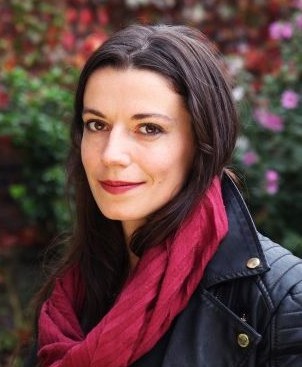
In Interview With Distinguished Writer in Residence Cal Flyn
Every year, world-renowned writers are hosted to mentor students on campus by the Shapiro Center for Creative Writing and Criticism.
Founded in 2022, the Distinguished Writers in Residence program offers students the opportunity to study and connect with professional writers across a variety of fields and genres via slam poetry readings, original research presentations, and other live performances of their work.
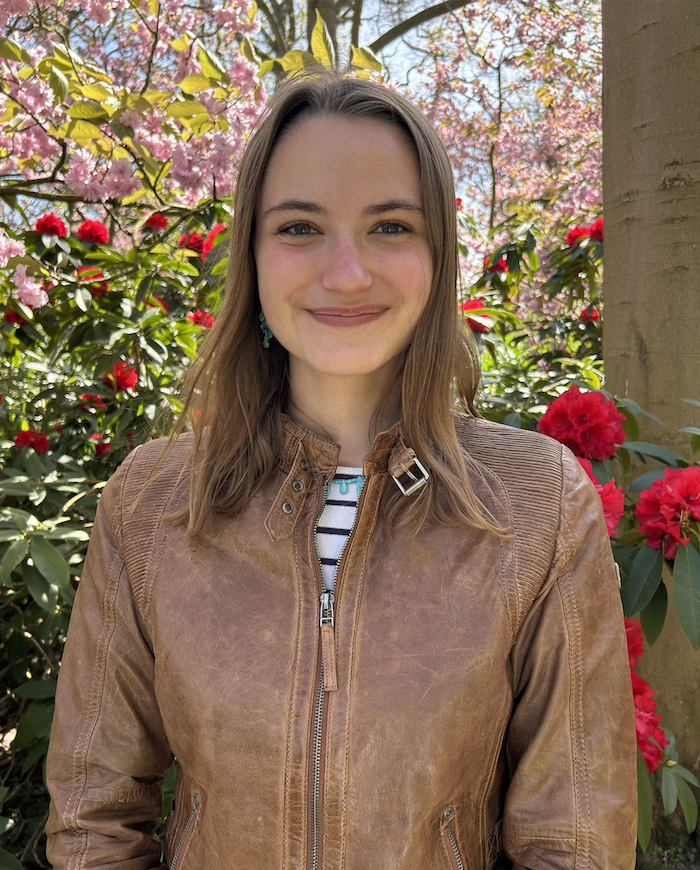
The Argus interviewed Cal Flyn via email, one of the two Distinguished Writers for the 2025–26 academic year, to learn about her writing process, experience at the University, and future endeavors.
Flyn, hailing from the Scottish Highlands, is a creative nonfiction writer, journalist, and literary critic. She has published three books, and her work centers around humans’ relationship to the natural world. She aims to blend her personal life experiences with ecological and societal concerns and captures humanity’s negative effect on the climate. Her debut book, “Thicker Than Water,” follows the journey of her distant relative, Angus McMillan, and his participation in the massacres of the Gunai Aboriginal people. The book was selected by The Times as one of the best books of the year. Additionally, she has won and been nominated for numerous awards, such as the Wainwright Prize, the British Academy Book Prize, and the Ondaatje Prize, all well-known literary awards.
The Argus: What brought you to the University and the Distinguished Writer in Residence program?
Cal Flyn: I’ve been aware of the position for a few years and was very keen to be selected. [The University] has a great reputation, both for its smart and energetic student body and its storied faculty. I knew it would be good for me to be exposed to the culture and community.
A: How did you get into writing?
CF: I’ve always written. As a child, I wrote stories and diaries and letters and poems. Now, as an adult, I do the same. Saying that, it wasn’t until my twenties that I really considered it possible to be “a writer” professionally. Initially, I found work as a news reporter, which is a challenging and fast-paced job. It’s less about the writing and more about what you find out. I loved investigations and detective work, but struggled sometimes with the confrontational aspects of the job. I was always having to call up people to warn them about a piece we were about to run—usually negative—and to ask for a quote in response. My news colleagues’ brains seemed to run much faster than mine; they could smell a story on the air and follow it tirelessly. I often felt slow and feeble in comparison. Still, it taught me a huge amount, not only about how the world works, but also the basic building blocks of a “story” and what you need to tell one. When you only have 400 words, you must be able to distinguish flesh from bone.
These days I focus on book-length nonfiction, essays, and long-form journalism. Word counts are much larger, which I know now to be a luxury. And I have more stylistic freedom: I can think in more literary terms. But I hope I carry elements of that journalistic discipline with me.
A: What is your writing process, what inspires you, and how is this translated into your works?
CF: I always categorise my own work as having originated either “top down” or “bottom up.” A “top-down” piece starts from an idea or an issue that I’d like to write about, but don’t immediately know how. A “bottom-up” piece starts from a vivid experience—sometimes a feeling, a strange character or a weird interaction—and I have to analyze to understand its impact.
So, for example, in my last book, “Islands of Abandonment,” I spent 24 hours on a totally abandoned island, just me and the birds and a herd of cattle wandering loose. I wasn’t sure exactly what I was going to write about, only that I was sure to have some kind of intense experience there. Ultimately, it became a chapter about feral animals, “de-domestication,” and how husbanded animals can become wild once more. But that argument grew from the strange experience of wandering the ruined houses and stalking the suspicious animals from a distance. Another chapter started completely differently: I wanted to write about invasive species and what they call “novel ecosystems,” and so I had to find an abandoned place that embodied this subject. I learned about an abandoned botanical garden and laboratory high in the Usambara Mountains of Tanzania, and arranged a trip there specifically because it served as a perfect stand-in for the subject I wanted to write about. This is often the case in nonfiction, I think: People, places, things become symbols for larger, more abstract notions. Sometimes you feel it instinctively, and sometimes you have to reason your way there.
A: Your debut book, “Thicker Than Water,” touches on relevant topics such as race, controversy, and guilt while creating an engaging and compelling narrative to follow. Can you tell me about your process of writing and discovering this part of your family’s history?
CF: I learned about my connection to [Angus McMillan], an early explorer and “pioneer” of Victoria, Australia, while touring an archive in Scotland. I was intrigued and sort of excited about what seemed a glamorous piece of family history—but when I read more, I learned that he had recently been implicated in a number of bloody attacks on the Gunaikurnai aboriginal group. He was considered significant enough for the National Library of Victoria to have archived his journals, so I travelled to Australia to read them and to retrace his journey: I wanted to know how he apparently evolved from idealistic young man, fleeing Scotland during the brutal Highland Clearances, into a cold-blooded killer in the space of a few short years in the colonies. His story was a surprisingly common one in 19th-century Australia, but the recent nature of these atrocities was shocking to me.
In Australia, I met with members of the modern-day Gunaikurnai nation, dug around in local archives, and hiked paths he and his men followed. The two narratives—Angus McMillan’s and my own—were woven in and out of each other.
A: Your three books, “Thicker Than Water,” “Islands of Abandonment,” and “The Savage Landscape,” all contain an overarching theme of nature and how humans interact with the natural world. What role does nature play in your life, and what prompted you to base your works around it?
CF: I’ve always been very outdoorsy, and I find it interesting how the natural world can have such a powerful impact on one’s psychology. A place can catch you off guard in a thousand ways: the tint of the sky, the sound of the wind through the leaves, the unexpected angle of the light. The more I attune myself to nature, the more it seems to affect me, and it’s out there, all the time, ready and waiting. You can just walk out into it, any time, for free. I also respond to the unsettling lack of sentimentality in nature. Flowers are pretty, sure, but they are also sexual organs. Wild animals might be smooth and sleek, but they might tear one another’s faces off. All beautiful things are threaded through with danger and disgust. Looking for the light in the dark and the dark in the light—that’s what writing is to me.
A: Do you have plans after your time as a Distinguished Writer is over? What about plans for a new book?
CF: My new book, “The Savage Landscape,” will shortly be released in the U.K. (May 7), and it will be released in the U.S. on July 28. So the next few months will likely be taken up with the launch. I also hope to start work on at least one new project. I find that the early stage of envisioning a new book takes a lot of time, but I hope and wish I will speed up with age and experience.
A: What is your biggest piece of advice for aspiring journalists and writers?
CF: Write what you want to write, even if no one is expecting it.
The great thing about writing is that you don’t need any expensive equipment. You don’t need permission. You can start right away if you want.
A: What do you hope your readers take away from your books, and how do you grapple with conveying hard and thought-intensive topics throughout your books?
CF: I want to make my readers think. That’s the key thing. I want to surprise the reader and force them to question basic assumptions they make about the world. Ultimately, that’s what guides me to select the subjects I write about: There’s nothing more delightful than being surprised.
This interview has been edited for length and clarity.
Chloe Rappaport Crowther can be reached at crappaportcr@wesleyan.edu.

Leave a Reply