
When Should Flags Fly Low? Who’s Behind Wesleyan’s Decision to Lower Flags to Half Staff
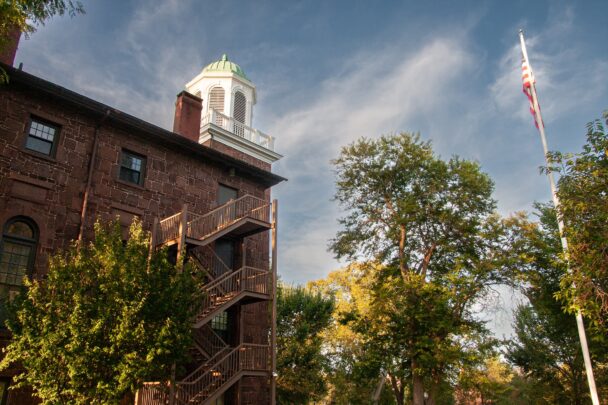
When former U.S. Vice President Dick Cheney passed away from complications with pneumonia on Nov. 3, the nation mourned: Funeral arrangements were drawn up and American flags were lowered to half staff across the nation for the following 10 days, including at Wesleyan.
But let’s investigate the passive voice: Who are the people in charge of lowering the flag at Wesleyan? What goes into that decision?
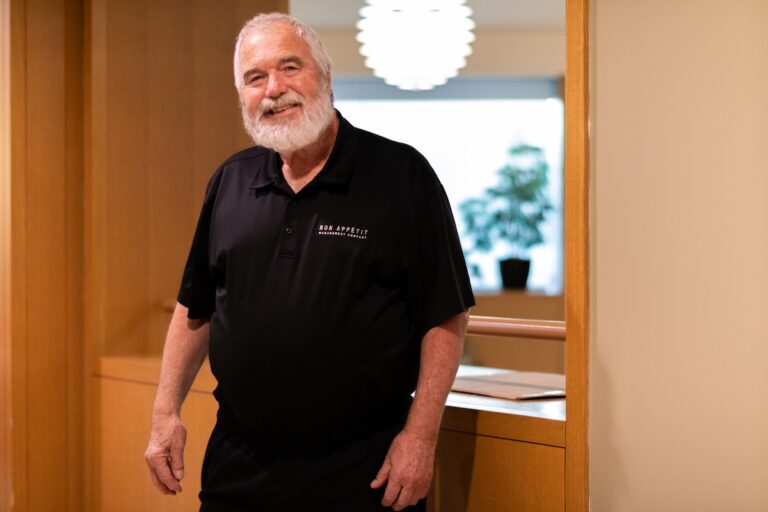
The University follows a concrete policy regarding the lowering of the American flag, according to the Director of Public Safety Scott Rohde. The policy—originally established in 2017 at the request of a student and U.S. military veteran—outlines that “the flag will only be lowered on orders of the president of the university or in recognition of State of CT officially designated events.” Connecticut follows all U.S. recognized half-staff dates.
The University’s two American flags, flown in front of South College and Freeman Athletic Center, are under the respective purviews of Public Safety and the Athletics Department.
The U.S. Flag Code does not require private individuals and institutions, such as Wesleyan, to follow federally-designated half-staff events.
Why, then, do private institutions across the country choose to follow federal government guidelines, especially when the mourned figures may not align with the institutions’ values?
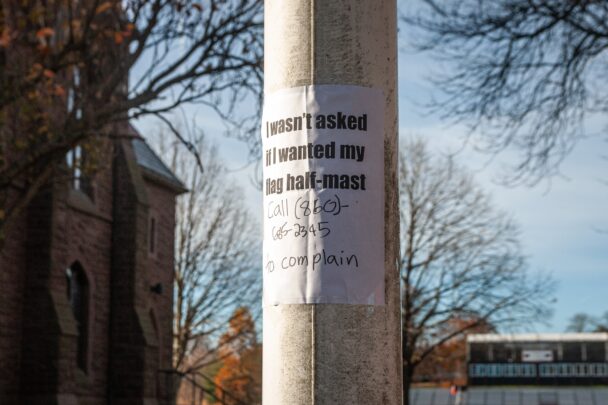
Brendan Barry ’28, the Vice Chair for External Affairs of the Wesleyan Democrats and the Event Coordinator for the University’s chapter of the American Civil Liberties Union (ACLU), argued many students at the University do not view Cheney as a figure who should be honored with the lowering of the University flag.
“On campus, many students do view him as a war criminal [whose actions] led to the deaths of over 1 million Iraqi citizens during the 2003 and post-2003 Iraq conflicts,” Barry said. “If students had been made aware that we were going to be lowering our American flags in respect of his passing, there would [have been] significant student demonstrations. I personally am opposed to lowering the flag for people who have committed such horrible actions against humanity.”
Cheney is not the only controversial figure whose death made headlines this year and led to federal orders for flags to be displayed at half staff.
On Sept. 10, 2025, Charlie Kirk, an alt-right commentator and the founder of Turning Point USA, was assassinated at Utah Valley University. Kirk, a close ally of the Trump administration, played a key role in organizing young voters towards the conservative agenda. In a New York Times obituary, the paper called him “the leading voice among a cohort of young conservative activists who emerged during the Trump era.”
President Donald Trump issued a proclamation on Sept. 10 ordering all public buildings and grounds to fly flags at half staff in honor of Kirk’s passing. Following Trump’s proclamation, Governor Ned Lamont issued a gubernatorial order in accordance with federal guidelines to lower the flag until sunset on Sept. 14. Lamont added that “individuals, businesses, schools, municipalities, and any other private entities and government subdivisions are encouraged to lower their flags for this same duration of time.”
According to Rohde, neither Public Safety nor the University directly faced opposition to the lowering of campus flags in recognition of Kirk’s passing. But as is customary, the University did not make any announcement acknowledging the action.
“I don’t recall getting any pushback,” he said. “Again, that was a presidential decree. It was an order to do it.”
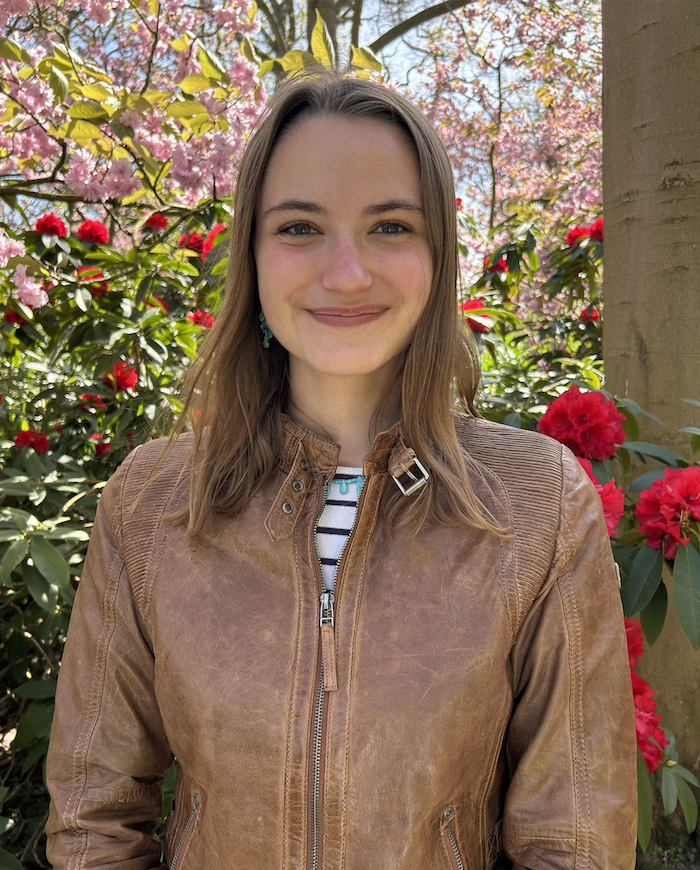
“In my opinion, lowering the flag is reserved for the remembrance and recognition of truly important political figures and nationwide tragedies,” Phoebe Scott ’29, a member of Wesleyan ACLU, said. “I don’t think that figures such as Charlie Kirk, regardless of political affiliation, should be honored with flag-lowering, as they are not sworn-in public servants. I also think that this lowering can alienate members of the community who felt victimized or hurt by the figures’ rhetoric.”
Barry proposed an alternative to following federal guidance, suggesting that the University might lower the flag only for figures that staff and students deem meaningful.
Scott, while expressing disagreement with Cheney’s politics, asserted that his status as former vice president was legitimate grounds for lowering the flag.
“I think there should be a conversation when the flag is ordered to be lowered for somebody not typically honored with the action,” Scott said. “For instance, I think there should have been a school-wide survey for the flag lowering for Charlie Kirk. However, although I know many who were opposed to the lowering for Dick Cheney, I don’t feel as though there is a need for a school-wide decision for that, as he was a sworn vice president, and should be given the honor of flag lowering due to his held position.”
Leah Ziskin can be reached at lziskin@wesleyan.edu.



Leave a Reply