
Artist Spotlight: WESU’s Chaim O’Brien-Blumenthal Broadcasts the Absurd and Esoteric
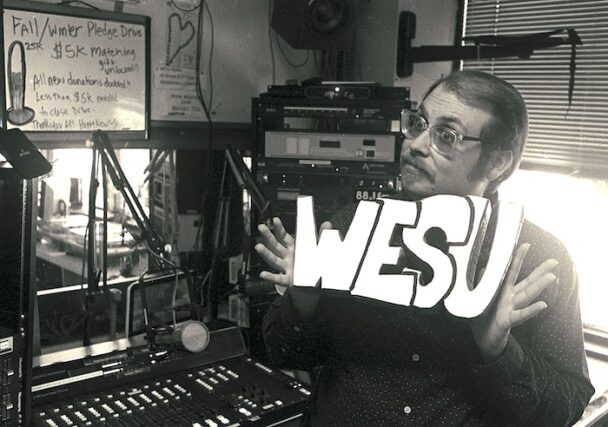
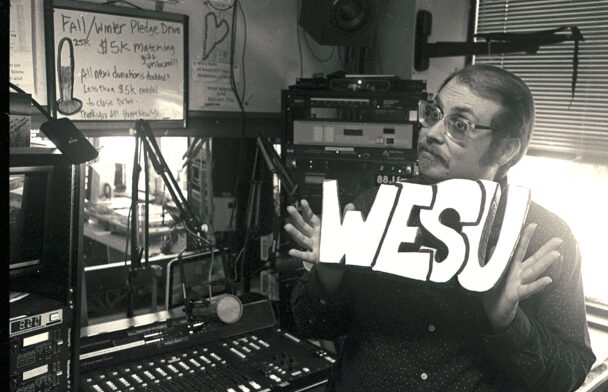
For almost a decade, Chaim O’Brien-Blumenthal has produced and hosted a weekly radio show at WESU, the University’s student- and community-run station. As the station’s Community Liaison, he helps organize events and connect students with Middletown community members at the station. Each year, he also pulls together the Record Fair, a CD and vinyl bonanza which draws vendors from all over the Northeast.
Every Friday from 4:00 p.m. to 5:30 p.m., O’Brien-Blumenthal goes on WESU air, running a show called “Anything Goes.” The show features a different theme each week: He might interview an artist one evening and play music related to a random word the next. For a recent show, he interviewed Jerry Harrison from the post-punk band Talking Heads.
However, what makes O’Brien-Blumenthal’s show special isn’t just the interviews with high-profile artists. His show, as he told The Argus, tends to “shy away from playing the obvious things.”
Besides being a radio show DJ, O’Brien-Blumenthal is also a producer, writer, and record archivist. In his radio show and other professions, he aims to platform voices not easily available to the public. When he’s not on the station, he writes for a music publication called “Shindig!,” where he conducted a career-spanning interview with Bobby Callender, a psychedelic/fusion artist from the ’60s and ’70s. The interview led to Callender’s wider recognition, and O’Brien-Blumenthal is now producing a live album for the artist, to be released in November with Think Like A Key Music.
“Because he had never given an interview, there were all these rumors over the years and people saying, ‘he’s a mysterious guy,’” O’Brien-Blumenthal said. “And I was like, ‘Why don’t we let him tell his story?’ When the artist actually can straighten everything out, it’s really great to let them tell their story and certainly let them share their music on their own terms. And that’s what really encourages me.”
O’Brien-Blumenthal is also working on a book right now but, mysterious as he is, he won’t reveal what it’s about yet.
“I try to pick projects that are enjoyable to work on, but obviously that’s not always the case,” he said. “Nevertheless, I have the same level of enthusiasm and put the time, energy, and passion into each project. When a project really connects, the results can be wonderful.”
As an archivist, O’Brien-Blumenthal is fascinated by working on projects for bands that are no longer around but have yet to be (re)discovered. He finds ways to bring the spotlight to unknown artists, like working with their families.
“It’s about getting great music and great art out into the world,” he said. “That’s what drives me. Whether it’s an article I’m writing for a magazine or a book or a project I’m producing, I get really invested in projects.”
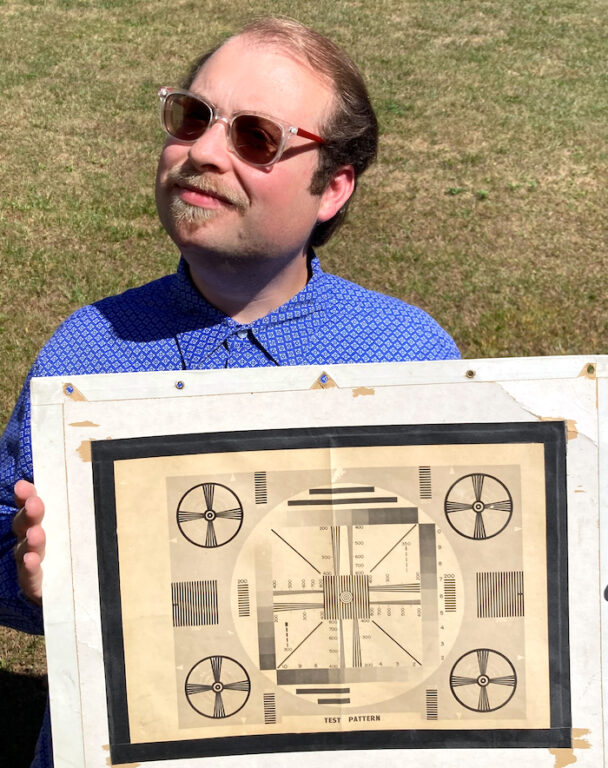
For O’Brien-Blumenthal, radio presents a place for novel ideas and creativity. His fans will fondly recall his previous “The Test Patterns Show,” an hourlong program that showcased O’Brien-Blumenthal’s absurd and spontaneous humor. Drawing from the avant-garde Dada movement, the show repurposed the older form of radio drama, with little quirks sprinkled in: songs played backwards, parodies of other shows, and surreal humor.
“Every week we’d get a different show…[it was] very spontaneous,” he said. “But also scripted at times. And really, really fun. It was just kind of whatever came to my mind. Which is my sense of humor, which is very absurdist.”
While O’Brien-Blumenthal is concerned for the future of college radio, he still finds hope in WESU. He believes college radio’s crucial contribution to our current media ecosystem is bringing new, interesting, and esoteric music to the public.
“I mean, commercial radio exists for a reason, people enjoy it,” he said. “But we provide an alternative viewpoint, musically. A lot of what I play, you’re not gonna hear on other radio stations because I’m putting together each show. I’m spending hours of time to put these shows together.”
He added that the students he works with at WESU are “incredibly encouraging for the future of radio.”
“I look forward to WESU working with Wesleyan,” he said, “working with the community, and continuing the legacy of bringing freeform radio to the people.”
Haruka Kodaira can be reached at hkodaira@wesleyan.edu.
Conrad Lewis can be reached at cglewis@wesleyan.edu




Leave a Reply