
Seeing Everything, Knowing Nothing: An Incomprehensive Review of “You Can See Everything”
Includes spoilers for “You Can See Everything”
After an explosive investigation by The New York Times into Theranos’ suspicious activities, the company vanished, and Elizabeth Holmes began serving her 11-year prison sentence for fraud on May 30, 2023. Thirty-four days before her sentence began, Holmes and her partner, Billy Evans, invited filmmakers Nathan Fielder and Lance Oppenheim to record their lives at a rented beach house in Del Mar, Calif., a project which culminated in the blockbuster documentary “You Can See Everything,” released on Oct. 16, 2026.
This decision was odd for several reasons, some of which are explored in the documentary. First, why was Holmes eager to document this period of her life? As the center of a notorious corporate scandal, one would think that Holmes would prefer to spend her remaining free days in private with her two young sons. Moreover, why ask Fielder, of all the figures in the world, to make this documentary? For those unfamiliar, Fielder is a comedian and television creator best known for his use of satire and surreal humor to effectively blur the lines between fiction and reality, often turning himself into a character for various projects. His most notable works include “Nathan for You” and “The Rehearsal.”
Holmes, meanwhile, is the infamous founder and CEO of the biotech company Theranos, which falsely claimed to have developed compact automated devices that could run a series of medical diagnostic tests with only a small amount of blood. Though this claim was largely false and highly improbable, the company received hundreds of millions of dollars from hopeful investors, including Rupert Murdoch, General James Mattis, and Henry Kissinger.
If Holmes and her partner wanted to change public opinion about her life and make a straightforward documentary that humanized her, Fielder was not the person for the job. Yet the misalignment of the subject’s intentions for the project and the creator’s intentions is what makes it such a thorough and layered exploration of truth.
According to the Oxford English Dictionary, a documentary is a film based on real events or circumstances, intended primarily for instruction or record purposes. “You Can See Everything” is classified as a documentary because it documents the real daily lives of Billy Evans and Elizabeth Holmes and informs audiences about the pair. We see the strange couple’s workout routines, family outings, and even showers. The classification of “You Can See Everything” as a documentary is central to understanding its message about the complex creation of fact.
Fielder begins the film with an understandable suspicion of Evans and Holmes, questioning their motives for creating the documentary and his position as an interloper in their home. Early on, he asks Holmes directly why she lied about the capabilities of the Theranos tests. She responds by stating that she has “never told a lie,” and her words were simply misconstrued: She stated that the devices could run any test, and she maintains that they have the potential to do so.
Seventeenth-century Irish chemist Robert Boyle’s construction of scientific fact requires the presence of witnesses. If someone does not witness a scientific phenomenon, it cannot become a fact. Investors poured millions of dollars into technology they had not seen because they trusted that Theranos had proper scientific witnesses, who we now know were silenced by Holmes and her former romantic and business partner, Ramesh “Sunny” Balwani.
Despite the cameras recording Holmes’ and Evans’ actions in “You Can See Everything,” nobody on the documentary team can agree on what actually happened. In a recent interview for Wired with Katie Drummond, Fielder stated the following: “At the end of the day, I would have in my head what I thought was a very clear idea of what was happening, and Lance or our camera guy, Jonathan Mitchell, or our DP, David Bolen, or our sound guy, Richard Carlos, they would all have a different take on what actually happened.”
Truth is witnessing the same events, but walking away with different perspectives. It completely changes the role and importance of witnesses, if at this moment they cannot agree. This places the audience even further away from the answers this film needs, as we only witness an edited, curated, and controlled form of truth.
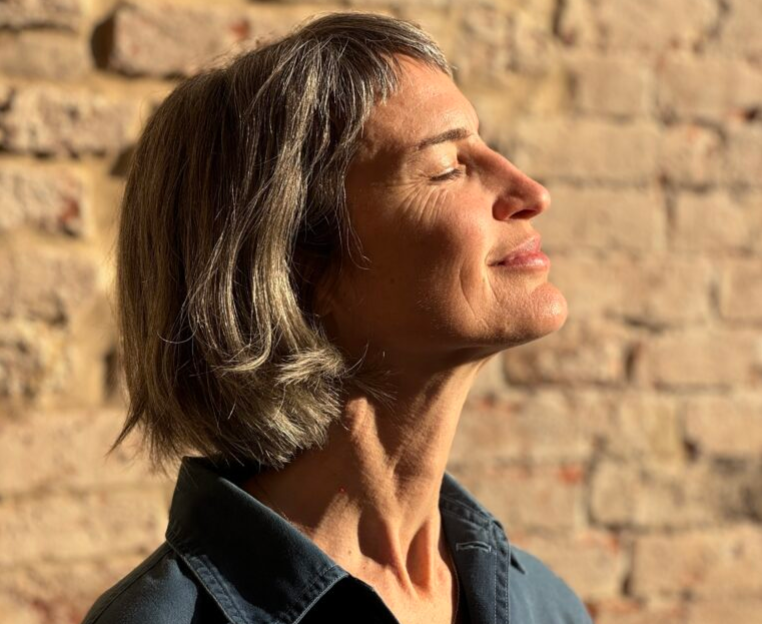
Despite being a documentary that is shot in real time, “You Can See Everything” still manages to manipulate its setting to distort reality. For example, the use of natural lighting and close-ups allows viewers to see every pore, wrinkle, and movement on people’s faces, which emphasises the film’s commitment to authenticity. However, it is also these techniques that obscure the truth. In many scenes, a bright glare from the sun is blocking the faces of Holmes and Evans, making viewers unable to see them clearly; thus, we are forced to pay less attention in those scenes.
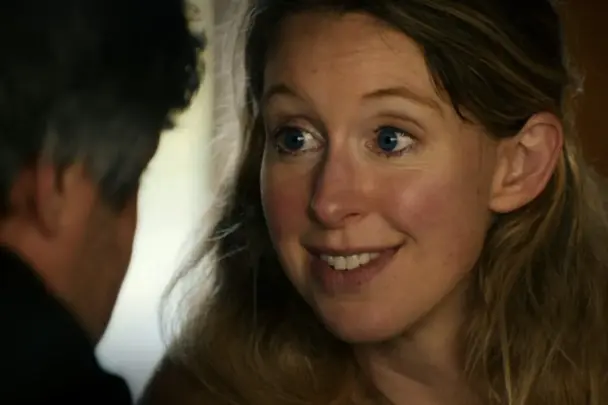
The close-ups on Holmes’ face also remove context and force viewers to pay close attention to her and forget about the outside world. We are sucked into the world of “Liz,” as she’s called by Fielder and Evans. I also highly doubt that some of the film’s most important moments came about organically. Take the scene between Fielder and Holmes in which she asserts her honesty by stating, “I’m not deceiving you.” While their interaction may have been natural, the editing of the scene and the addition of a soundtrack add to its intensity. There is dissonance between her dead-eyed smile, the increasing volume of the ambient noise in the background, and her insistence on her honesty.
The film zooms in on both Holmes and Fielder as they react to what each other is saying, leaving us with no idea of what is happening in the background. The switches between their two close-ups increase until we immediately switch to a wide shot of them staring at each other while Holmes rocks her baby’s cradle with her foot. This was all likely done in post-production to give viewers an understanding of Fielder’s confusion and stress as he tries to get a real answer from and about Holmes.
This becomes more complicated after Holmes is sent to prison, and Fielder loses opportunities for direct contact. Hence, he turns to actress Amanda Seyfried, who previously portrayed Holmes in “The Dropout,” to help him reenact his previous unrecorded conversations and fleeting interactions with Holmes. This moves us further from the truth and calls Fielder’s integrity as a witness into question. Seyfried provides a more objective view of the situation: She is able to sympathize with Holmes, but also hold her accountable for her feigned helplessness and continued lies. While Fielder also questions Holmes, he seems to take a more gentle approach.
The climax of the film, the final reenactment of Fielder and Holmes’ meeting in a Texas prison, is meant to be a letdown. We don’t know if Seyfried’s portrayal of Holmes is how Holmes behaved during the interview, so it’s difficult to interpret her meaning and Fielder’s reactions. The ending is intentionally left open to allow for discourse and to make us all feel deeply uncomfortable. We’re left in our seats, staring wide-eyed at the credits, full of doubt.
Isha Bhandari can be reached at ibhandari@wesleyan.edu.
Leave a Reply