
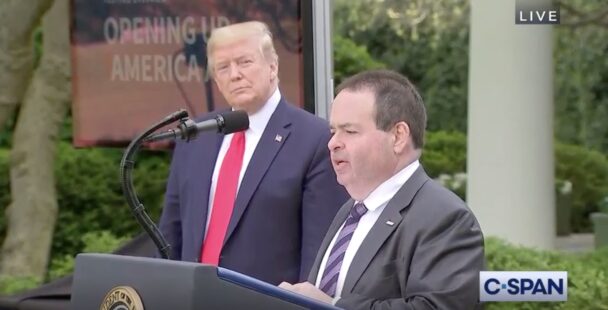
How Marc Casper Makes Wesleyan Complicit in ICE Repression
In 2020, in the waning months of the first Trump administration, the Department of Homeland Security (DHS) adopted a new rule, mandating that every undocumented immigrant subject to fingerprinting who is detained by Immigration and Customs Enforcement (ICE) or Customs and Border Patrol (CBP) have their DNA collected and entered into the FBI’s Combined DNA Index System, or CODIS for short. This means that virtually every person in ICE custody has their DNA taken, because the only individuals who are not subject to fingerprinting are those that are too young or those who have been entered into the CODIS already. The same year that this policy was put in place, DHS lowered the minimum age that DNA can be collected from migrants from 18 to 14 years old. This policy continued throughout the Biden administration and remains in place.
A report titled “Raiding the Genome,” conducted at the Center on Privacy & Technology at Georgetown University Law Center, found that the vast majority of DNA collection is of migrants of color and argued it violates the Fourth Amendment, on the grounds that DNA is taken “without individualized suspicion of criminal wrongdoing.”
Adding to these concerns, the nature of DNA collection by federal officials has been extremely coercive: Individuals were improperly informed about the purpose of DNA collection and were told that they would be subject to criminal prosecution if they did not comply. Coercive collection of DNA is classified as a human rights abuse according to the United Nations.
Once someone’s DNA has entered into the CODIS, it is never deleted, meaning that such DNA is searchable by federal and state authorities for the rest of that individual’s life. This increases the likelihood of an innocent person being implicated in a crime and, as many privacy experts have pointed out, could be used to link DNA to family members, who could then be targeted by law enforcement.
In 2022, the DHS released a Privacy Impact Assessment, explaining the process of how DNA gets entered into the CODIS. The FBI provides CBP and ICE with buccal cheek swabs, which they use on every individual subject to fingerprinting, as mandated. The agencies then send that DNA to the FBI, who processes it using a DNA test, allowing for it to be entered into the CODIS. This DNA collection is reprehensible, repressive, violates due process and the Constitution, and enabled by the help of one particular company in the recent past: Thermo Fisher Scientific.
Thermo Fisher Scientific is a multinational biotechnology company that calls itself a “leader in serving science.” They manufacture research chemicals and reagents, help produce DNA sequencing equipment, and are a mainstay in most chemical research laboratories: Many STEM majors here at Wesleyan will likely recognize the brand name. Their CEO, Chairman, and President is Marc Casper ’90, a Wesleyan alumni!
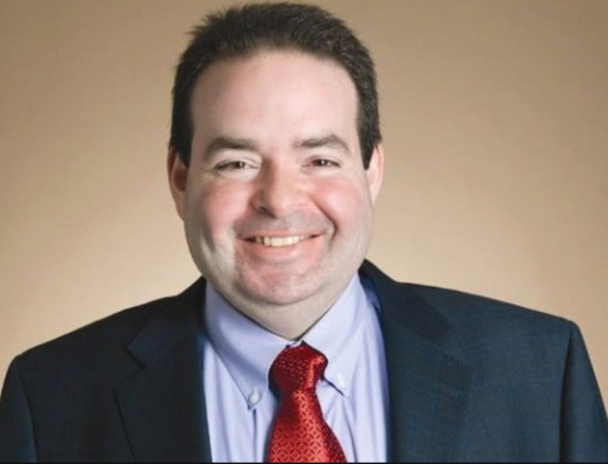
Casper is the Vice Chair of Wesleyan’s board of trustees, and has been a member of the board since at least 2016. He has held various extremely influential positions on the board, including Chair and Head of the Finance Committee. Most notably, in 2022, he donated $25 million, one of the largest single donations in the University’s history, to aid in the construction of our New Science Building, and it seems very likely to be named after him. “His commitment to Wesleyan and to the advancement of science is extraordinary,” President Michael Roth ’78 said in 2022.
As CEO, President, and Chairman, Casper is the most influential person at Thermo Fisher. Thermo Fisher is also just one of three companies, alongside private biotech company Promega and private German company Qiagen, which have DNA tests which can turn any DNA sample, like a buccal swab, into information that is usable by the CODIS. Every single time immigrants are detained by CBP or ICE, one of those three companies’ tests are used to enter that person’s information into the CODIS. However, presently, it is only Thermo Fisher that profits.
In 2022, Thermo Fisher subsidiary Life Technologies signed a six-year, $120 million indefinite delivery (IDV) contract with the FBI for “reagents and consumables,” which, as the FBI’s “notice of intent” for the contract highlights, is for the necessary equipment for DNA processing.
Qiagen has not signed a contract with the Department of Justice (DOJ) or DHS since 2023, when Thermo Fisher signed their IDV. Promega, since then, has only signed one contract with the federal government, worth just $1 million, to test the veracity of their DNA tests, not for DNA processing purposes.
This means that every single DNA sample entered into the CODIS since then has to have been done with Thermo Fisher tests. While some amount of this $120 million is definitely allocated to entering in the DNA of felons (which, let’s be clear, has its own set of ethical issues), the recent spike in contract volume over the past few years, from $15 million in FY2024 to $21 million in FY2025 and $26 million in FY2026 can only be explained by the increase in DNA collected from migrants under Trump 2.0, since felony rates are, writ large, down across the country during these past few years.
In the past, when called out for enabling similar human rights abuse against Uyghur Muslims in Xinjiang, China, Thermo Fisher has hidden behind complex supply chain networks to justify their sales, stating that, as a multinational company, there is no way for them to know exactly how their products are being used. That is not the case here. Thermo Fisher has directly sold products totaling more than $1.3 million over the past few years to ICE, the largest of which is an $880,000 purchase to the Dallas ICE operations office, opaquely titled “Chemical Analyzer.”
Additionally, Thermo Fisher has been a longstanding contractor for ICE: In Trump’s first administration, they were called out by various human rights groups for selling DNA analysis equipment which would test the genetic relationships of families crossing the border, resulting in the separation of groups who were not biologically related.
In fact, Mother Jones has reported that ICE’s familial DNA collection program was seen by officials as a pilot program for DHS’ larger immigrant data collection practices which then were enacted in 2020. Thermo Fisher and Casper must be well aware of their role in enabling this unconstitutional genetic surveillance, and they have profited immensely from it.
Furthermore, according to DHS rules, DNA cannot be collected from immigrants who interact with the agency under normal circumstances like border crossings or asylum, meaning that for Thermo Fisher to profit from the DNA collection of individuals, they rely on the violence of ICE raids and occupations.
It’s worth taking a step back and considering what is happening here. Every immigration arrest, every family broken up, every community traumatized, and every neighborhood scarred is something that Thermo Fisher can directly profit from. They are helping the federal government establish an enormous genetic surveillance database, the consequences of which we have yet to fully grasp.
This should be intolerable for us as Wesleyan students, faculty, staff, and administrators. If we let Casper stay on the board, and continue to donate his tainted money, we risk continuing complicity in the reprehensible actions of the Trump administration.
In 2025, when discussing how to resist the Trump administration’s overreach, Roth said in an interview with POLITICO magazine, “I think institutions ought to use the legal means at our disposal to resist any extra-legal efforts from federal law enforcement.” Well, now is his chance.
This DNA collection is in violation of the Constitution, global agreements on standards of human rights, and is enabling a new kind of surveillance we don’t even fully understand. Roth is well within his legal rights to bring up these findings to Casper, ask him to stop, and, if not, ask him to leave the board. Casper must stop enabling ICE’s continued criminalization and surveillance of immigrants, and if he does not, he is not welcome here.
Miles Horner is a member of the class of 2026 and can be reached at mhorner@wesleyan.edu.




Leave a Reply