
Can You Bake the Perfect Pie? The Perfect Crust? Chill the Dough, Relax, and Just Add Vodka
Growing up, my family’s fall dessert tradition was America’s favorite duo: Costco’s hefty Kirkland Signature Pumpkin and Apple Pies. Something about that consistent, mass-produced flavor and undeniably soggy bottom will always have a special place in my heart. But after one too many apple-picking trips last fall, it felt like the right time to finally try my hand at a homemade version of this classic holiday dessert.
Before executing any new dessert or dish, I will scour the internet to ensure I am properly educated and will obsess a bit over the tiny details that supposedly make or break a recipe. After all, baking is a science. What I quickly learned in my pie investigation is that using pre-made pie crust is the culinary equivalent of giving up and using shortening instead of butter is the gravest sin one could commit against the most hallowed pie gods who watch over us every holiday season. A truly great pie is not built on filling alone. That part is personal and largely intuitive. So I’ll let you in on a little secret. The real key to a killer pie is one thing people overlook every time: the crust.
A good pie crust, I discovered, is not supposed to be soggy…at all. A great one stays crisp even on the bottom, boasting flaky layers almost like those of a croissant. Think less pale, Play-Doh-y shortbread and more golden, shattering bite, even after days sitting in the fridge. So, sorry, Costco—yours do not make the cut, but for $5.99, I’ll be a bit more forgiving.
To achieve a truly great crust, it is essential to keep your dough as cold and dry as humanly possible while working it. (Yes, even if that means sticking it in the freezer mid-recipe because your kitchen is too warm.) Now, you can use a food processor for pie dough, but I recommend against it. It tends to pulverize the butter too much, and those visible hunks of ice-cold butter are what create a magically laminated texture. When the butter melts in the oven, it releases steam and forms layers, and that’s the whole secret! The difference between a Pillsbury crust and a bakery-level one is not some mysterious ingredient, but rather relentless attention to how your butter, flour, and ice-cold water combine.
With a little care, you can turn a humble holiday staple into something people actually talk about all year. I promise that once you make your own pie crust, you will never go back!
Below is my go-to recipe, and the same one I used just this week to make an apple pie for Thanksgiving. The most distinctive feature is the addition of vodka to the ice water (don’t worry, it fully cooks off). Alcohol moistens the dough without activating the gluten in the flour, which results in an extra-tender, flaky crust.
Kat’s Foolproof Pie Crust
Yields two pie layers—enough for two open-faced pies or one double-crust pie.
Ingredients:
- 3 and 3/4 cups all-purpose flour
- 1 tsp kosher salt
- 1–3 tbsp sugar (depending on taste, you can skip for savory pies)
- 1 and 1/2 cups (3 sticks) good-quality unsalted butter, frozen and roughly chopped.
- 1/2 cup ice water mixed with 1/2 cup vodka
Instructions:
- In a large bowl, whisk together flour, sugar, and salt.
- Add the cold, chopped butter to the dry mix. Using your fingers, rub the butter into the flour until roughly incorporated. You want visible chunks rather than a smooth mixture.
- Slowly add the ice water and vodka mixture, mixing gently until just combined. You likely will not use all of the liquid. The dough should be just moist enough to hold together when pressed, but still feel dry.
- Shape the dough into a rectangle and cut it into thirds. Stack the pieces on top of each other, press them together, and reshape into a rectangle. Repeat this laminating step one or two more times to create flaky layers.
- Divide the dough into two pieces and shape into rough disks (this will make rolling it out easier). Wrap tightly in plastic wrap and freeze for at least 30 minutes to re-chill the butter and allow the dough to rehydrate.
- When ready to use, let the dough defrost for about one hour before rolling it out. It can be stored in the freezer for months for any future pie emergency.
Notes: If you notice the butter starting to melt too much, let the dough sit in the fridge for about 10 minutes and take a quick break.
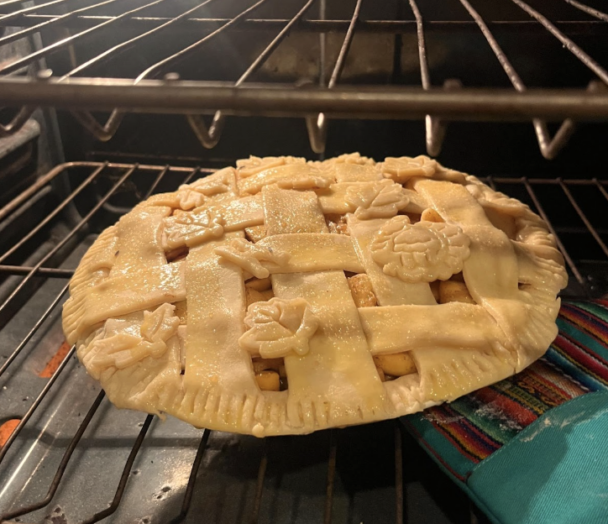
Pie is truly one of my favorite foods because it is one of those rare desserts that somehow works for everyone. It can be sweet or savory, fruity or custardy, delicate or indulgent. My mom, for example, avoids desserts that are too sweet, so I was able to make a pie she loved by tweaking my crust to be buttery and crisp rather than sugary and by using her favorite Granny Smith apples for a tart filling with just a touch of sweetness. This year, I even used the spare pie dough to cut out tiny leaves and a turkey to top the lattice—the pie looked as festive as it tasted. While the question of the perfect pie will always be up for debate, what can come down to a science is the perfect pie crust. All it takes is good butter, proper lamination, and a stubborn commitment to keeping everything aggressively cold.
Katherine Hernandez is a member of the class of 2028 and can be reached at khernandez@wesleyan.edu.





Leave a Reply