
State Department Bars Two International Students From Entry to United States
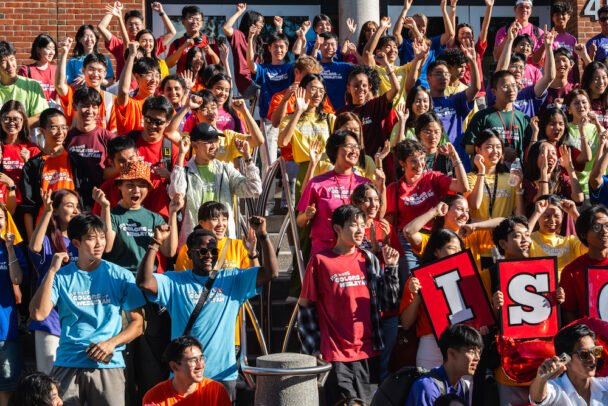
According to the Office of International Student Affairs (OISA), two international students were unable to begin their studies at Wesleyan University due to the Trump administration’s crackdown on the issuance of student visas.
In an email to The Argus, Director of International Student Services Morgan Keller declined to share the students’ country of origin.
According to Keller, the students’ admission has been deferred to the 2026–27 academic year by the Office of Admissions and OISA.
The Trump administration has taken increasingly stringent measures to restrict student visas. In an executive order signed on June 4, 2025, President Donald Trump indicated that he would bar or restrict the entry of individuals from 19 nations to the United States.
Student visas, including F-1 and J-1 visas, have faced even broader pushback from the federal government. Unlike a presidential travel ban, which can be challenged and struck down by a court, federal law gives the U.S. Secretary of State broad discretion to revoke student visas. F-1 visas are the most common visa type for full-time degree-seeking students in the United States, while students on short-term exchange programs obtain J-1 visas.
According to Inside Higher Ed, over 1,800 students have lost their visa status since the administration took office in January.
The federal government has introduced increasingly intrusive measures to screen student visa applicants, including requiring applicants to make all social media profiles public and answer an obligatory question about social media presence in their application form. F-1 and J-1 visa validity periods have also been shortened, in some cases allowing only a three-month period for a single entry into the United States (although students may stay in the US past this period provided they adhere to federal rules and institutional guidelines).
On top of State Department-imposed requirements, Trump’s travel ban has had a significant impact: Students from the nations targeted by his order cannot apply for a visa.
OISA described how these restrictions have led fear to permeate throughout the international student community.
“I would prefer not to name their countries as they come from nations with very little representation within Wesleyan’s international student community, which could make them identifiable to their peers,” Keller wrote.
Despite the barring of the two students, the Trump administration’s recent measures have not had a structural impact on Wesleyan’s international student admissions process, University President Michael Roth ’78 said. A vast majority of returning international students have been able to return to campus, although some had to miss days at the start of the semester due to visa delays.
“Except for the red-listed countries that had no visas at all, [international student numbers] were pretty close…to what admissions expected,” Roth said. “So we didn’t see, as far as I know…government-induced attrition or decline.”
Nevertheless, many students are cancelling travel plans and staying within U.S. borders due to heightened uncertainty.
OISA has been in regular contact with international students about changes implemented by the Trump administration and has held town halls and personal advising sessions to answer student questions. In June, Roth held a webinar for international students and faculty to answer questions about changes to the visa process.
OISA is also a member of NAFSA: Association of International Educators, a global organization promoting international education and exchange that has provided updates on changes to the F-1 and J-1 visa processes.
“Through NAFSA, we have a national and global community of fellow international educators who are constantly sharing information and resources as we all navigate together these unprecedented challenges affecting international students and scholars in the U.S.,” Keller wrote.
However, some international students have expressed a wish for more consistent communication.
The International Student Advisory Board (ISAB), a student-run campus organization, works alongside OISA to keep track of changes and communicate student concerns.
“Although we are affiliated with the office, we prioritize student concerns and advocate for students in an anonymous fashion that protects all parties involved,” ISAB Co-Chair David Calderon ’26 wrote in a text to The Argus.
Restrictions on student visas are one facet of the current administration’s larger effort to restrict the inflow of international students to American universities. In June, Harvard University sued the Trump administration following a proclamation that all international students attending Harvard would be denied a visa. A judge has issued an injunction preventing the administration from conducting a blanket denial, but the case has not concluded yet.
Wesleyan has not yet been directly targeted by the Trump administration. Roth has emerged as a vocal critic of Trump. In an interview with The Argus, he called Trump’s deployment of the National Guard and Immigration and Customs Enforcement to U.S. cities “un-American, anti-democratic, and authoritarian.”
On campus, some international students are taking the new changes in stride.
“For better or worse, students now seem to have adapted and plan around these uncertainties,” an international student who wished to remain anonymous told The Argus.
But many students remain deeply fearful that engaging in any sort of resistance to the Trump administration could land their student visa in hot water.
“It feels like the idea of the international student is fading,” a second international student said.
They wished to remain anonymous, fearing for their safety.
Leo Bader can be reached at lbader@wesleyan.edu.
Leave a Reply