
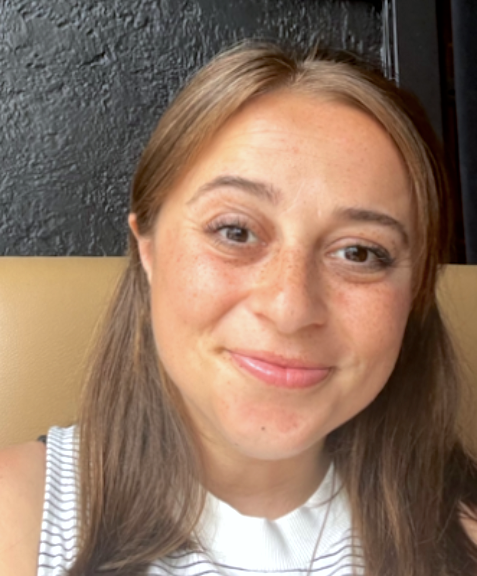
Office Hours: Lauren Silber on Writing, Affect Theory, and What We Can Learn from Failure
Lauren Silber is an Assistant Director of Academic Writing and an Associate Professor of the Practice in Academic Writing at Wesleyan University. The Argus sat down with her to speak about affect theory, her work with the Center for Prison Education (CPE), and what we can learn from failure.
The Argus: What’s your favorite class that you’ve taught at Wesleyan?
Lauren Silber: That’s tricky, because I usually get very excited about whatever class I’m teaching. Currently, I’m teaching a class called All the Feels: Affect Theory and Cultural Studies (WRCT 302), which I really love. It’s an advanced affect theory course. This marks my fourth or fifth time teaching it, and the last time I taught it was actually through the CPE, in the men’s facility. It’s really exciting to teach it back on the main campus and have this kind of comparison between what it’s like to teach a bunch of incarcerated students and then teach students on the main campus. I also really love teaching a first-year seminar called Why You Can’t Write (WRCT 114F). And I think the reason why I love teaching it is because students usually sign up to take it to figure out how to be better at writing, and then they leave the class realizing that they’re already a writer, and they have their own voice and their own way of communicating.
A: What drew you to affect theory?
LS: When I was an undergrad at the University of Connecticut, I got interested in Holocaust literature and culture, which taught me about memory and trauma. I thought I was going to study that at grad school, but my focus shifted to affect theory. For me, it really allowed me to continue thinking about memory and trauma and these individualized emotional experiences. It also allowed me to bring in the more sociological and political aspects that I was interested in and [understand] how feelings also structure our world. In terms of teaching [affect theory], I’d say the first two days of class are always about what happens in therapy. And then we [would realize] that we’re not clinical psychologists, we’re not in the psychology department, we’re not neuroscientists, we’re not cognitive scientists, and instead, we’re theorizing between the humanities and the social sciences, and the sciences. Teaching [these ideas] on the main campus is always exciting. There’s always a lot of interest, and we get a really interdisciplinary class, which is exciting. A lot of people who are interested in feelings, a lot of people who, like myself, have big feelings, don’t always know what to do with them. But then we kind of move and talk a little bit more about power and structure and discourse and rhetoric, and we remind ourselves that emotions are not just inside of us. Teaching that course in a prison was humanizing in a lot of ways. I think it was also jarring for some of the guys, especially because it’s a different kind of masculinity in a prison than you might see on the main campus. So talking about emotions is very different.
A: How did you get involved with the CPE and the Ford Fellowship program, and what have these experiences taught you?
LS: When I got to the University, I was really excited by the prospect of working with the CPE. Before coming [here], I taught non-traditional students—adults, primarily who were working full time and taking classes—so I was excited to work with a more non-traditional student population, and it felt good to be working and bringing education into these prison settings and treating people like people. I’ve been really lucky to teach with the CPE. This year, I’m really lucky that the Ford Fellow, Sarah Huang ’25, had worked with the CPE program before and she actually TA’d my All The Feels class when I taught it inside [the prison]. We both have this desire to continue working with the CPE and I was able to find some funds, thanks to Academic Affairs, to bring the writing support that students on the main campus have to the students at York and at Cheshire [correctional facilities]. We’re piloting that [program] this semester; Sarah is offering three hours at each site every other week—about six hours of writing support. We’re trying to see how it goes and hopefully apply for grants and continue to expand the options [of] writing support [for] incarcerated students.
A: You’ve described your work across Feminist, Gender, and Sexuality Studies (FGSS), English, American Studies, and Education Studies as connected through a fascination with stories. How do you help students recognize the power of narrative in their own academic or personal writings?
LS: I’d say that question doesn’t have an answer. It’s more of a practice, so I think it’s something that I have to engage students with every single time that we’re talking about their writing. It’s something I’m thinking a lot about with AI right now: the ways in which AI can help us bypass that question of “What do our narratives mean to us?” We don’t have to ask that question if we use AI to fill in the blank for us. But I think for me, I really ask students a lot of questions. We do a lot of reflection, and I really try to push and prompt them to think about why their writing is coming out the way it is, and if they’re making choices about their writing and their narratives, or if they’re just kind of going with whatever comes out first, because it’s the easiest and they can hit submit. I like asking a question as simple as, why is paragraph three not paragraph seven? [It’s] something very practical, but to me, that’s a moment to be like, why is this the structure of your writing? Do you have a purpose for why this unfolds? What are you attached to? You’re attached to, I don’t know, an A, [your] grade, so you’re trying to reproduce writing that will get you that. I think asking those questions of students regularly helps them figure out why they’re writing what they’re writing.
A: In your work with supervising writing tutors, how have you observed narratives become a transformative aspect of peer to peer support, particularly in revealing everyday power dynamics?
LS: What’s really nice about the peer-to-peer writing support is that it’s not evaluative. I feel like we can be this third space on campus where someone can meet with their peers and get feedback. And they can also complain, they can gripe, and they can panic. They can be their honest selves. Not always—this is an optimistic dream scenario that this happens—but I think in being able to be present, be in the moment with someone else who’s willing to meet you there and help you with the next step, whatever that might be, I actually do think that’s pretty transformative.
A: When did writing become a meaningful part of your life?
LS: I think that being good with words was definitely a narrative that I had of myself, mostly from the outside in. I liked reading a lot when I was really young, and I think as I grew up, parents [and] people around you tell you, “Oh, you’re the writer, you’re the language person. You’re so good with words,” and then you kind of gravitate towards that. I love language. Particularly as an art form. I don’t necessarily think I’m a great writer or even a great speaker or lecturer or anything like that. I find the process pretty intimidating. I think it’s the static nature of it, putting something down in print or saying something out loud in a class where people are taking notes, and it makes something that, to me, is a more fluid process, hardened into this artifact that I don’t feel as comfortable with. I like studying it more than I like producing it.
A: How did you end up at Wesleyan?
LS: My story is not that magical. I finished grad school, and I got a job at Wesleyan. I didn’t even know what Wesleyan was. When I interviewed, I had never heard of Wesleyan. I wish I had when I was younger, but when I was younger, the internet was still new, so I only knew the colleges my guidance counselor told me about.
And when I got this job, I took it, and I guess the better story is why I stayed. I [had] never been to a private school before. I definitely didn’t go to a small liberal arts college. I never really had the experience I’m now providing for my students. And I really see the benefit [in] small liberal arts classes. [I] love that I get to know my students. I love that when I write recommendation letters, I can write three-page letters, because I really know them and I remember them. And I think that has kept me at Wesleyan, and the ability to kind of experiment. You know, we’re a small enough school where I can pilot a writing support program in a prison. Wesleyan has a lot of things that are good and bad, as you probably know. But I like the idea that there’s a lot of opportunity here for connecting the students on a real level.
A: You’re working on a book about fiction, specifically fiction written by immigrants in the U.S., and I’m curious what drew you to the topic and what you have discovered through your research.
LS: Yeah, I love that question, because I’ve been working on this book forever. #Writingneverends. It’s hard because I am a professor in practice, so I do a lot of teaching and administrative work, and research is actually not why I’m at [the University]. So everything that I’m doing is in addition to my day-to-day work. But I was really interested in immigrant fiction. Like I said, I studied genocidal literature, and I was interested in Jewish American literature. And as I studied more of that, I realized that wasn’t really the direction I wanted to go. I was just much more interested in immigration and the idea of belonging, and I felt like that was [a] concept that I could really see in these texts, and that I could try to not unearth, but maybe vocalize or amplify by reading these texts. And [with] the more research I’ve done, the more reading I’ve done, and especially the more teaching I’ve done, the more certain I am that this post-Cold War, but pre 9/11 moment of time is a really interesting moment for understanding what was happening.
This interview has been edited for length and clarity.
Bennett Enright can be reached at benright@wesleyan.edu
Lula Konner can be reached at lkonner@wesleyan.edu

Leave a Reply