
The Idiot Box
Welcome readers to this, the starting gun for The Idiot Box Column. With your help, it’ll begin with a bang. Really, what better way to kick things off than with a crowd pleaser: “Mad Men.”
As an aid to those who don’t watch the show, I’ll brief you: picture a jar of honey in your head. Now, mentally flip it upside down and focus on the honey dribbling down the sides of the jar. Picture each ripple, each contour, the syrupy, the thick, dense sweetness of it all. That’s an episode of “Mad Men:” glacially slow and oh-so-sweet.
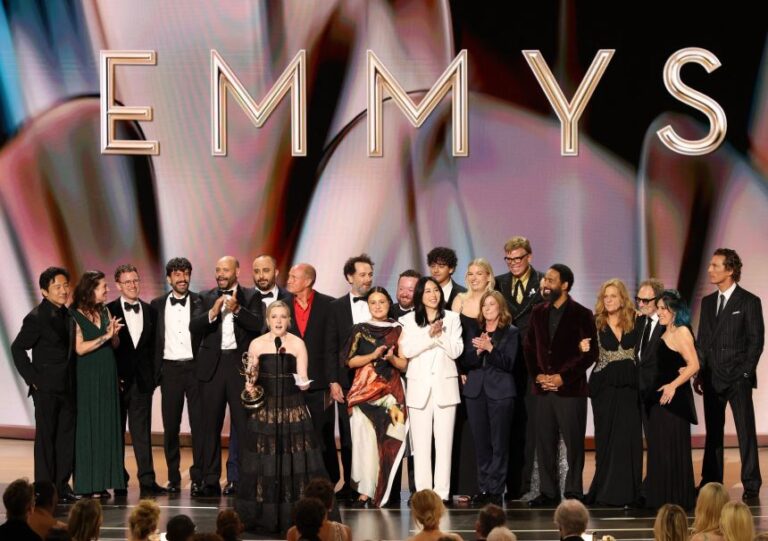
See, “Mad Men” has been on for about three and a half seasons now. I don’t want to bore you with numbers, but it’s popular (ok, just one boring number: the first three episodes of season 4 were the three most downloaded TV shows on iTunes at once). While it doesn’t pull network TV sized ratings every week, it’s competitive as hell in its corner of the universe (Sundays, 10 p.m., AMC). And did I mention the Emmys? Critical acclaim out the arse. It is factually the best show on TV.
Everyone’s watching it. Creator Matthew Weiner ’87 knows everyone is watching, waiting for a crack in the armor. And to my relief, there weren’t many coming.
Note that I didn’t say that there weren’t ANY cracks, meaning you knew I’d open my trap to discuss what I thought ranged somewhere in between tacky, cute, and allegedly serendipitous: having the episode where Don Draper wins an award (spoiler: he’s good) on the same night as the Emmys. And even having a spot queued up during commercials to congratulate the show for winning? It all seems to resemble a form of self-gratification too taboo to mention in polite company.
Overall though, in its fourth season the show is still living up to its high standards, juggling all the different layers of intrigue and bouncing them off each other nicely, from each character’s story, to the story of the advertising firm, all the way out to the story of the 60’s era. It weaves them nicely, too. “Mad Men” is doing a mostly amazing job of progressing, which is sort of another axis to judge on, keeping episodes, seasonal arcs and the entire show all moving together. I have to mention that it seems like the show is trying too hard to keep the original cast around (Cosgrove… really?). The exception to this parenthetical aside is Duck Philips, who is an awful character, but a great “Ghost of Christmas Future” for Don.
Even with the wicked “stop and smell the roses” speed, we’ve finally started getting to the 60’s people wrote about in history books. We get a mention of Don buying his daughter Beatles records for Christmas as well as characters in underground clubs smoking reefer and soaking up the counterculture.
“Mad Men” has an all-star cast and they get to trot it around like a prizewinner at a dog show. The beauty of an ensemble cast (or cheap technique for lazy writers, depending on how you look at it) is being able to pair characters off and have them bounce off each other. Weiner recently gave us a nigh-perfect episode that paired off (arguably) the show’s two central characters: Don and upstart copywriter Peggy Olson. It was amazing to think that, roughly forty-five episodes into the show, this combination hasn’t been given much screen time together, but there they were in all the glory the small screen (smaller screen if you count me watching via laptop) could provide. When just locking two characters in a room can provide for compelling television, that’s a damn fine show.
Season four keeps up the show’s pivotal ambiguity. The people are mostly bastards, conning, and masking backstabs with insincere grins (Pink Floyd fans can conjure up the cover to “Wish You Were Here”). Although they’re flawed, they’re living with themselves after everything they do.
The latest season of the show also does wonders to bring balance to the force known as Don Draper. If you’ve heard of him outside the confines of the show, it’s as a badass, a veritable Casanova/Batman cocktail. His character in season four issues a challenge to this stereotype, as if Weiner is afraid of his star getting pigeonholed. We witness Don Draper strike out with the ladies, time and time again. We see him get lazy. We see cracks in his “cool” persona. We see his descent into alcoholism (and for the amount people were drinking at the time, drinking enough to be an alcoholic is a feat). This brings me to another point (it’s almost as if I planned the order I’d list those in to make for a seamless transition) and that point is how “Mad Men” deals with alcohol. Few other things seem to capture people’s relationship with the vice. The show is too intelligent to fall into the trap of being heavy-handed. Alcohol is a force not for evil or for glory, but a force for people. It tastes sharp on the way down, lacerating the taste buds, but still it exudes a warmth that keeps people coming back. Such pretty prose serves to describe the show too, with its rich color scheme and razor sharp detail. Light that Lucky Strike, pour out the tumbler of scotch and suit up and tune in.




Leave a Reply