
“Kitchen Poems” combines theater, storytelling, cooking
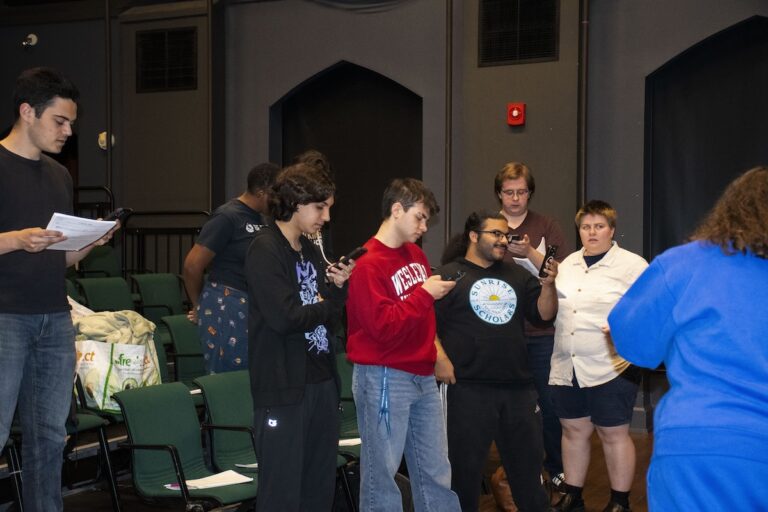
Domestic comforts and naturalistic poetry came together in the winding, brilliantly constructed Second Stage production “Kitchen Poems,” written and performed Nov. 8, 9, and 10 by Kailie Larkin ’09 and Susanna Myrseth ’10. Stories, built into definition through movement, poetry, and activity, ran the gamut of shapes and spaces, settling into “power lines carrying high voltage current between continents and kitchen tables.”
Throughout the course of the hour-long performance, Larkin and Myrseth moved through a calendar year of seasons, intertwining an autobiographical storyline with poems by the likes of Mary Oliver, among others, and recipes from “The Joy of Cooking,” all read aloud.
The two interacted in a variety of ways, teaching each other how to make bread (“There is no recipe / You just have to feel it”) and learning each other’s histories (“My mother’s bones ache for mountains she left years ago”). Together, they created opportunities for open dialogue while working collectively to find their own spaces within their families’ larger histories, and to find them in the greater context of the practice of storytelling.
Beginning with overlapping personals accounts that riff off of each other, Larkin and Myrseth constructed a framework to contain a multilayered story, building the set with apple peels and walls out of sticks and bed sheets as an illustration of the evolution of their collective work. As the play (written as an epic poem of sorts) progressed, they formed single thoughts that built into greater networks of ideas within their respective histories, setting groundwork through statements like: “My family knows a lot about leaving, / about holding tight to stories / for lack of solid ground on which to lay them down.”
Throughout the course of the play, Larkin and Myrseth created their own interpersonal discourse, asking each other questions (“What is it to move gently through the doorways we open to ourselves?”) and navigating the space that is created by building relationships through the sharing of narrative. This sharing was most apparent when Larkin asserted, quietly but firmly, again and again: “I wish I could throw you out of my kitchen,” invoking aspects of vulnerability that arise in the sharing of stories, cleverly paralleled with the identity of the kitchen as a space conducive to storytelling.
The finale of the play created “a recipe for being wide awake,” merging the construct of cooking with the narrative that they have created to create the product of their combined work, the final step: “Pour all ingredients into a metal bucket scoured clean / bring slowly to a simmer over the heat of two cupped hands.” By the end of the performance, Larkin and Myrseth had created a full web of methods to share stories that make the theater itself profoundly and very comfortably domestic, full of the presence of a home and the human presence that it contains.


Leave a Reply