
Fire drill leads to Nicolson pot bust and student arrest
At a university that has been dubbed number twelve on Princeton Review’s 2008 “Reefer Madness” College Ranking list, one sophomore’s arrest for possession of drug paraphernalia and less than two grams of marijuana after a Tuesday night Nicolson fire drill may come as a shock to some.
“The system totally messed around with me,” said the student, who wishes to remain anonymous.
According to the student, who recounted the details of his arrest just hours after being released from jail, he and some friends were smoking marijuana in his double when the fire alarm was sounded for a routine dorm fire drill. As he left his room, the student also left both his marijuana and a smoking pipe on his desk, in plain view of a fire inspector who was knocking on all the doors and looking inside every room.
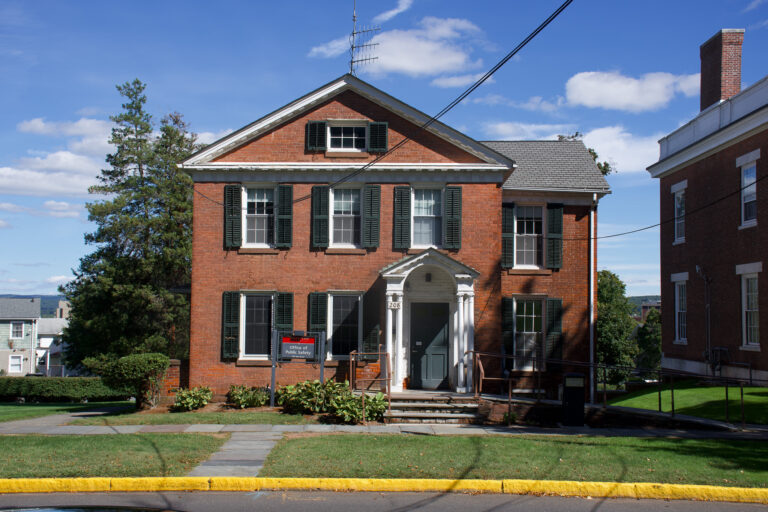
According to Director of Public Safety David Meyer, when the fire inspector saw the marijuana on the desk, she contacted Public Safety, who then contacted the Middletown Police Department.
Forty minutes after deciding to leave the vicinity of the dorm because he “figured that it’d be a better idea to go instead of having to deal with [the fire drill],” the student received a call on his cell phone from his Residential Assistant. When he returned to his dorm room, four Public Safety officers and one Middletown police officer were waiting.
After being told that he was under arrest, the student was handcuffed outside of the Middletown Police car, and was taken to jail. There, he went through the booking process and called his lawyer, spending a total of two and a half hours in jail. The student says that, although the police officer who arrested him treated him well, the whole process seemed out of hand.
“He was pulling that stuff like, ‘This is just my job, [and] it’s what I have to do,’” the student said. “[But] you don’t arrest people for having that little pot in their room.”
Although a similar event occurred in February of the last school year, the student arrested in that incident was in possession of nearly seven times the amount that this student had in his dorm room. Last year, this student claimed, others had been let off with far lighter consequences.
“I’ve seen, witnessed, and heard about so many other people in the past year that have gotten busted with like an ounce in their rooms, had the police come, and did not have to go to court, not have to go down to jail and get handcuffed,” he said. “All of a sudden I guess this year they’re cracking down and I don’t know why.” It was the student’s first drug-related offense, and according to the Wesleyan University standards of conduct on illegal drugs and alcohol, the consequences for a first offense do not include police referrals.
“For minor violations, the student may receive a disciplinary warning via a simplified procedure,” it reads. “For serious violations, the student may receive sanctions as outlined under ”Second Offense.’“
The punishment for a second offense violation is ”a period of disciplinary probation and an educational assignment,“ along with a call home to parents and legal guardians. Neither penalties for a first offense or second offense mention going to court or completing community service, yet the student faces both of those possibilities if he doesn’t want the offense to appear on his record.
Despite the guidelines for first and second offense violations, there is an additional statement that seems to validate the possibility of a police referral in any situation, including first and second offenses.
”Whenever the University determines that a student has violated one of the standards, it will consider as a possible sanction referral of the matter to law enforcement officials for prosecution,“ the code reads.
When asked about the punishment for this student, Meyer replied that punishment is up to the Student Judicial Board.
”[Public Safety] just does the reporting,“ he said. ”If there are any drugs, we call the police.“
”These incidents occur throughout the year,“ he added.
Meyer’s suggestion to students is that, when it comes to marijuana, they ”don’t do it at all [because] it’s illegal.“
The arrested student says that he would ”love to have [the law] changed,“ and feels that the punishment he received ”absolutely“ does not fit the crime. Nor will the law deter him from smoking marijuana, although he is still considering whether or not he will continue to keep marijuana in his room. Whatever he decides, he says he has certainly learned from his experience.
”I guess you just have to be more careful nowadays.




Leave a Reply