
Trustees debate campus issues
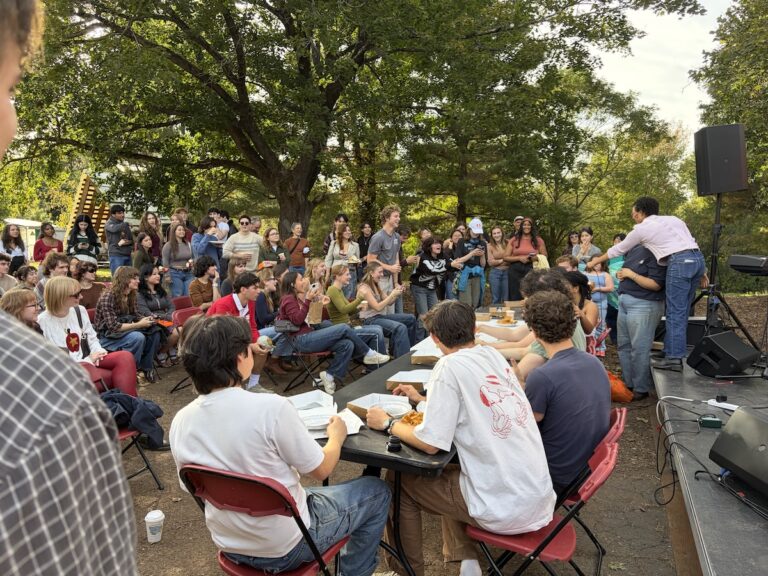
On Friday, Feb. 23, members of the Board of Trustees greeted students in the Zelnick Pavilion during the first of last weekend’s efforts by the Board to reach out to students. The meeting was intended to allow board members and students to jointly voice concerns and offer evaluations of progress and possible solutions.
Prominent topics explored during the afternoon’s discussions centered on improving campus climate, Early Decision (ED) policy and supporting the sciences.
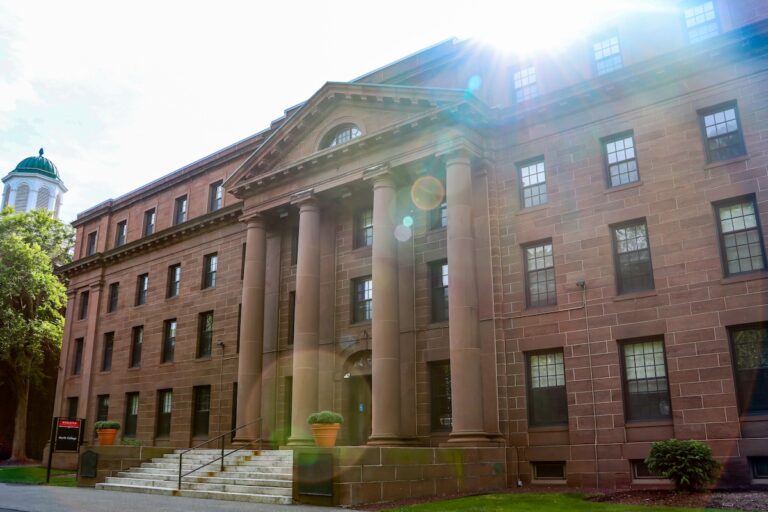
A major area of dicussion was the campus’ political climate, both in general and specifically in reference to the recent act of intolerance in Clark Hall. Board Member Michael A. Donnella ’76 commented on the need for inclusive communication following such incidents.
“I think it’s really important that you have to set the right tone, but it has to be everybody,” Donnella said. “It really almost has to be self-policing.”
Erica Pasciullo ’07, a former Clark RA, agreed that communication was an essential strategy for fostering a positive and accepting campus climate.
“Reslife responded really strongly [to an alleged hate-related incident when I was an RA in Clark two years ago],” she said during the discussion. “I think merely discussing it was productive. If nothing else, it helped everyone realize that regardless of one’s beliefs, here at Wes, respect for one another is important.”
In addition, trustees and students discussed how ED policy affects the student body.
In particular, ED admittance was deemed vital to building a group of dedicated students. Admissions will continue admitting around than 40 percent of the class through ED, hoping to solidify a strong core group of students who will contribute to the campus during and after their four years at the University.
Students, however, expressed worries about future regular decision admits. Several expressed concern that the freshman and sophomore classes include more students who placed the University as a second choice, and whether that has affected the political climate on campus.
Donella said that Wesleyan’s reputation for liberalism was a self-fulfilling prophecy.
“Frankly, one of the reputations of this place, one of the positives and negatives, is that it’s all liberal,” Donella said. “But I really don’t know if it’s all that different from many other peer colleges. Maybe here [the climate is] a little more [liberal], but the problem is that it becomes self-fulfilling.”
The trustees also discussed the updated Science Strategic Plan. Participants talked about how to integrate science more thoroughly into campus life and encourage a more analytical manner of thinking—regardless of the number of science majors.
Other issues touched upon were strengthening the University community, the opening of the new Usdan University Center, and the status of the endowment.
Leave a Reply