
Woodframes dim the lights
At the start of the spring semester, the Environmental Organizers Network (EON) initiated an energy-reduction competition among the senior woodframe houses. The house that reduces its energy the most compared to the previous semester contest will win $40 per person to spend during reading week at Eli Cannon’s or any other Middletown establishment.
“EON had been talking about a dorm competition for a few years,” said EON member Amanda Hungerford ’07. “But the actual energy use could be measured in the wood frame homes.”
According to Hungerford, every one of the woodframe houses was automatically entered, and all aspects of their energy, including water, heating, and electricity, are being monitored.
The “Do it in the Dark” guide, compiled by EON, states that in 2006 the University emitted approximately 34,071 tons of CO2 from stationary sources alone. This is the equivalent of what 3,500 SUVs emit in a year.
“Although senior houses board less than a quarter of the Wesleyan population, they consume roughly 40 percent of the residential energy,” said EON member Greg Silver ’10.
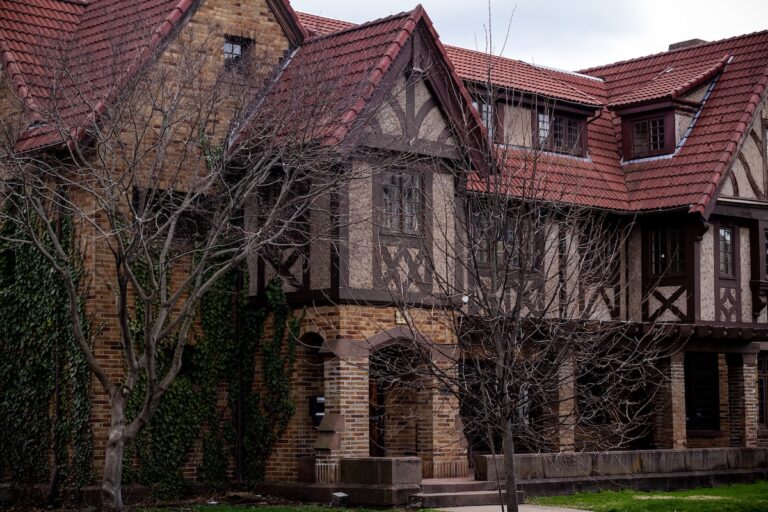
The woodframe houses are particularly inefficient due to the fact that they are old and therefore constantly losing heat.
“I know we were losing the battle last week when our thermostat was at 72 and the house was at 66,” said competition participant Jeni Morrison ’07.
Many seniors are taking action to reduce their personal energy use.
“I think that we’re generally more aware of our energy consumption and carbon footprint because the contest is going on,” Morrison said. “We’re better this semester about keeping lights off in common areas when we’re not around and turning off the lights in the bedroom too. I’m taking shorter showers.”
In order for seniors to keep track of their progress, energy result updates will be published in The Argus.
“Peter Staye, the associate director of utilities management, will collect the energy statistics for every wood frame building for every month,” said EON member Julien Burns ’10. “EON and Physical Plant will then calculate the percentage in energy use between this semester and last semester.”
So far, students have been very receptive to EON’s energy-saving efforts.
“Within an hour of creating a facebook group advertising this competition, so many people signed up,” Hungerford said. “Everyone has been really enthusiastic.”
Silver agreed, applauding students’ commitment to environmental issues.
“Wesleyan has a really aware student body. What we are doing at EON is representative of that,” he said. “This is an exposé of what Wesleyan students and administrators are capable of saving. In the end students will have proved what they are capable of.”
In order for the program to successfully make a difference, EON requests that seniors really become conscious of their energy use on a daily basis. The group encourages students to turn off lights, save water, keep windows closed in the winter, keep the thermostat at a reasonable temperature, and turn off computers when they are not in use.
EON is currently planning a number of other energy saving events.
“We hope to have Wesleyan host a summit meeting for all colleges in New England in order to set stringent sustainability standards for each school that participates,” Silver said. “This will help create a standard for the New England liberal art schools to abide by in terms of their energy consumption.”
EON also plans to unveil the “Earth Tub,” a large compost bin that will collect all the compost that has been gathered at different dining sites around campus.
The group believes they must involve themselves in larger University projects in order to make a significant impact in energy conservation on campus.
“EON is actively participating in projects for the new science center,” Hungerford said. “We also have a member on the presidential search committee. This will ensure that our next president is environmentally friendly.”
However, many students also expect to see more, progressive action on the part of the administration.
“I hope that the University is considering any new structures to replace older, less efficient housing, that they use the prototype [housing] to go beyond and make an inspiringly deep investment in carbon reduction,” Morrison said.


Leave a Reply