
Students meet trustees at mixer in Zelnick
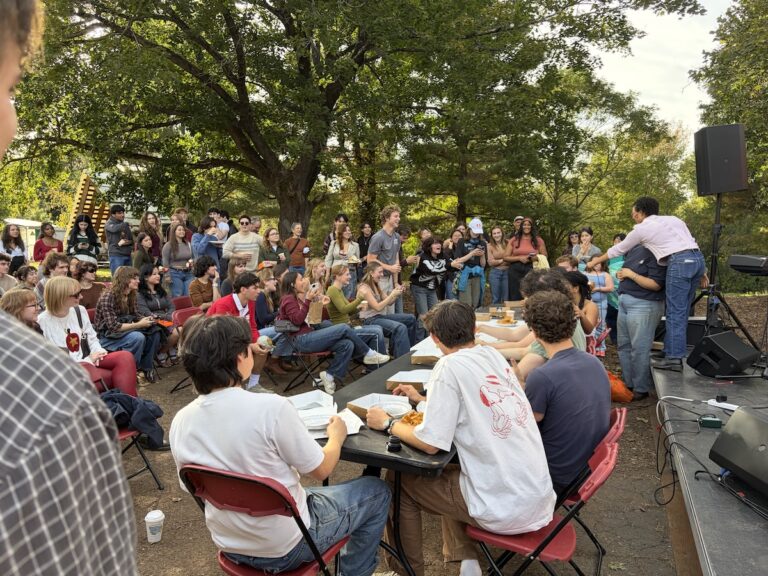
On Friday, Nov. 17, members of the Board of Trustees mingled with students in the Zelnick Pavilion, punctuating several days of deliberations on a range of campus issues. Students came to get a sense of who the trustees are, to raise concerns, and to promote policy agendas. And some came, ukuleleS in hand and shoes nowhere to be seen, to dance.
“The board is extremely receptive to our ideas, and is helping out on some fronts,” said WSA President Zachary Kolodin ’07. “However, the fact that they agree with us on any given issue doesn’t mean they are going to be willing to open Wesleyan’s wallet any more than they already are.”
Decisions are often made, trustees said, between initiatives, projects, or areas that each hold merit. The priority of a given issue often dictates the financial attention it is given.
“Money is the biggest constraint to progress on student life issues,” Kolodin said.
For some, such as WSA SBC Chair Nicole Ippoliti ’09, this means going outside of the regular administrative channels and soliciting the board directly.
“My main goal concerning the Board of Trustees meeting was trying to get The New York Times Readership Program endowed,” Ippoliti said. “As the Dean’s Office is continuing to make budget cuts, the likelihood of the readership program’s survival is quite slim. As a result, we thought the best solution would be to seek the help of some of the board members so that they may be able to provide some financial support in order to keep the readership program alive.”
Ippoliti said she is satisfied with the results of the meeting and thinks trustees are receptive to her concerns. Other issues included faculty compensation, financial aid, the direction of the academic curriculum, admissions, fighting racism, and environmental sustainability, according to Kolodin. Some members of the Catholic Student Organization also came to advocate for the restoration of a full-time Catholic chaplain.
“Some [trustees] were definitely receptive in that we’re pleased with the result and will continue discussion with the trustees,” said Tom Crosby ’07, who co-heads the CSO. “The Catholic Student Organization was pleased that trustees seemed to recognize that this was an issue of supporting diversity on campus.”
In particular, the Environmental Organizers Network (EON) was well represented at the meeting, handing out informational briefs and highlighting the importance of building the new science center to high environmental standards.
“I would like to see productive steps taken after the mixer, now that the administration and trustees know that students are really interested in the design of the new science center and a sustainability oversight committee,” said EON member and WSA Representative Annie Fox ’07, who added she could not speak for all of EON. “I hope they will take steps to make sure there is student representation in the design process for a new building and work with steps to create the committee.”
Chair of the Board of Trustees Jim Dresser echoed statements that President Douglas Bennet has made on the new science facility. He said that designing an environmentally friendly science center is an issue on which the administration and the students are in complete agreement. The architect hired for the science project was selected based on a record for environmentally sustainable designs.
There are not immediate or obvious solutions to every concern students have raised, trustees said. As trustees juggle the competing needs of different financial commitments, issues involving redistributing large amounts of money have been controversial.
“The role of the student representatives is to participate in the conversations in trustees’ committee meetings on an equal level with the trustees themselves, though without voting power,” Kolodin said. “We try to make trustees aware that their budget decisions have tangible consequences for student life.”
Leave a Reply