
Kosher dining services on overdrive for Passover week
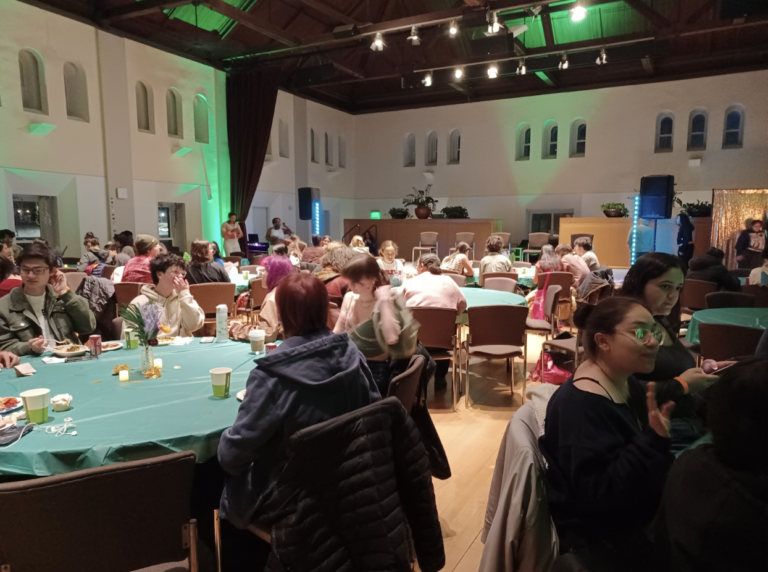
It’s 12:30 on a Thursday afternoon and Jennifer Spada, the Kosher Kitchen’s new head cook has her hands full. The recently renovated dining area is in full swing for Passover, when the many Jewish students keep kosher. Jennifer scurries around behind the steaming trays of matzo ball soup and horseradish, chatting up the students and adding to the lively ambiance of the usually quiet basement cafeteria.
During the Passover holiday, all foods must not only meet the day to day regulations of Kashrut that restrict which animals may be consumed, how they are slaughtered, and forbid meat to be eaten with dairy. Food must also be void of any leavened bread or products using yeast, in remembrance of the unleavened bread that, according to the Jewish myth, the Israelites took when fleeing Egypt.
“This is my first time cooking for Passover,” Spada said. “I’m not Jewish, but Rabbi [David] Leipziger trained me to cook for Passover meals. It’s been great. The kids have been wonderful and this morning the rabbi stopped in and gave me a bowl of tulips.”
Like the freshly-painted walls or the pastel couches, Spada is a new addition to the Kosher Kitchen. Over the past few weeks, she has had plenty to keep her occupied. The Kitchen has been unusually busy. During a typical lunch hour, the Kosher Kitchen receives twenty diners. During Passover, that number grows substantially.
“We had a hundred people here last night,” Spada said. “For the Passover meal Monday night we had 127.”
In order to ensure the Kosher Kitchen upheld the rules of Kashrut, Leipziger oversaw a professional team who cleaned the entire kitchen and disposed of all non-kosher items for the Passover holiday. Donna Raviv ’06, one of the students who helped redecorate the Kosher Kitchen when it was renovated a few months ago, said preparing for Passover was no simple task.
“In general, keeping kosher means paying attention to certain animal products,” Raviv said. “But during Passover there are extra measures that need to be taken, particularly with bread and other leavened items. When describing all this it sounds like there’s so many things you can’t eat, but it’s really very manageable.”
Ari Fagen ’07, a student who has kept kosher all year, certainly agrees.
“The Kosher Kitchen provides a great atmosphere,” Fagen said. “I eat there regularly, especially since it was redone. They have a pretty high variety of choices, and it’s much more like a cafeteria than a basement now.”
In addition to a good place to grab a quick meal, the Kosher Kitchen has been a boon to the Jewish community on campus. The occasional Hebrew lesson is conducted in the dining area, and frequently, Leipziger brings in a guest speaker.
“The Jewish Renaissance Fellows meet there frequently to give talks,” Fagen said, referring to a student group designed to integrate Jewish freshmen.
The Kosher Kitchen is not the only on-campus dining facility that has had to make extra preparations for Passover. Two blocks away, the Bayit kitchen provides a more domestic atmosphere where students can prepare their own meals using kosher ingredients. Gabe Tabak ’06, a Bayit resident, helped prepare the kitchen for Passover.
“All the equipment was cleaned and we added more tables and chairs,” Tabak said. “We’ll probably get more people at the Bayit on the weekends when Kosher Kitchen is closed.”
Because each student is responsible for his or her own food preparation, the Bayit kitchen has taken a few extra precautions. On the front door is a sign reading, “Wait! Is that food kosher for Passover? If not, keep it out of here!” Inside, there are more posted instructions, as well as several non-kosher cabinets and a refrigerator, all sealed with duct-tape. Sinks are color-coded in order to assure meat utensils are not washed with dairy utensils, and above the fire extinguisher are step-by-step instructions on what to do if non-kosher food finds its way into the kitchen.
“The religious strictness is pretty high,” Tabak said.
Back at the Kosher Kitchen, Spada offered a student an extra helping of matzo brie.
“We’ve added a lot of vegetarian and vegan options to the menu, but I’m always open to suggestions,” Spada said.
The preparations for Passover have been thorough, and the number of students seeking kosher dining increased this month, but Spada feels more than ready to meet the challenge.
“Come on down, even if you’re not Jewish,” Spada said. “It’s all great food.”



Leave a Reply