Category: Opinion

  • Our Little Dark Age: TikTok, Technology, and the Archival Danger of the Digital Era

    Our Little Dark Age: TikTok, Technology, and the Archival Danger of the Digital Era

    c/o Sam Hilton
    c/o Sam Hilton

    The term “Dark Age” is a controversial one in the field of history. Many have used the phrase pejoratively to imply that the Middle Ages in Europe were more barbaric and horrible than Classical Antiquity or the Renaissance between which they were sandwiched. Others argue there is no such thing as the “Dark Age,” and that it’s revisionist to use the term to describe this historical period.

    Personally, I subscribe to the commonly held belief that the term “Dark Age” can be used to describe not a decline in quality of life, morals, or innovation, but rather a darkness of the archives resulting from a lack of consistent written sources. Whether or not the extent of this darkness in the European Middle Ages is overblown is well above my pay grade. In any case, the term can be useful when describing an era of lost information that makes a historian’s work all the more difficult.

    Now, to reference some notable Wesleyan alums, I fear we’re in the midst of our own Little Dark Age. One of TikTok bans, privately owned information, and technological obsolescence.

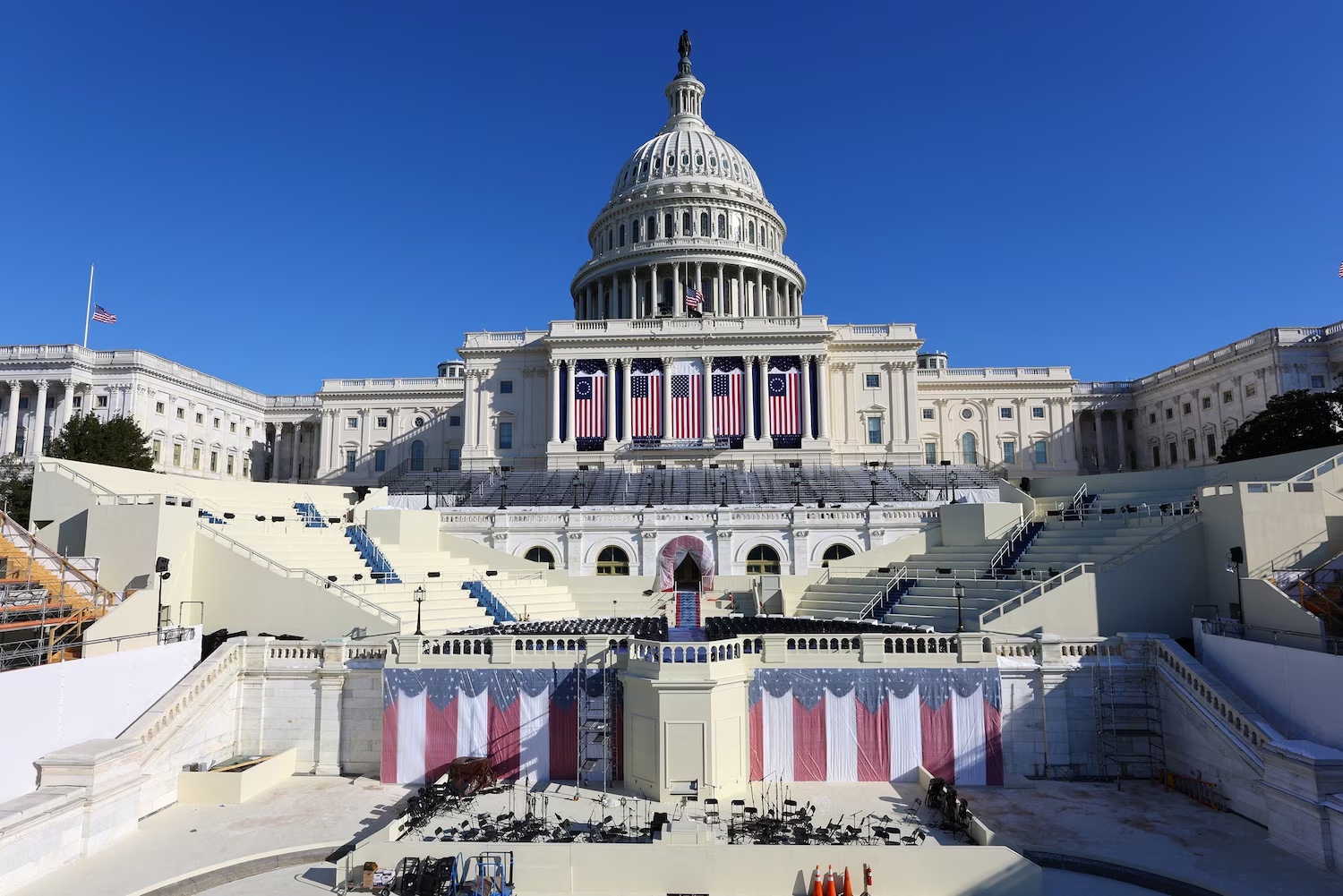
    TikTok, the short-form video app that is used by a third of Americans and over half of U.S. adults under 30, dominated a few news cycles and much of social media discourse in the lead-up to its possible ban on Jan. 19, 2025. As we now know, the ban lasted only a few hours before the app returned with a message to its American users.

    “Thanks for your patience and support,” a pop-up upon opening TikTok read. “As a result of President Trump’s efforts, TikTok is back in the U.S.!”

    Ignoring the obvious Trump brown-nosing that TikTok CEO Shou Zi Chew has undertaken to keep his app afloat, the momentary scare gave me a great deal of pause.

    As I have previously written about in The Argus, I have a minor obsession with maintaining a robust digital archive of my life. Call it crazy, call it smart, call it whatever you want, but when the TikTok ban loomed, I had this horrible feeling in my gut.

    Information in the digital age is largely privately-owned and fleeting. There are a few sources that keep it for public use—the Internet Archive in particular, which has come under scrutiny from copyright lawyers in recent times, is a fantastic resource—but the vast majority of the Internet is subdivided into private ownership. And if information is owned, it can be erased, distorted or controlled. Take, for example, TikTok. Our data may be our own on a technical level, sure, but functionally TikTok has total control over that information.

    I even downloaded my TikTok data before the brief ban went into effect, only to find that much of it didn’t go back further than last July, and all of it was almost entirely interlaced with links back to other TikTok videos. So, for example, if it told me what videos I had liked, it would list the date that I liked something and a link to the TikTok. No information such as who had posted the video, when it was posted, what the caption read, etc. If TikTok went down, this info would be basically useless.

    In the introduction to his book, “The Archived Web: Doing History in the Digital Age,” Professor Niels Brügger, Head of the Centre for Internet Studies at Aarhus University in Denmark, describes the way that Whitehouse.gov changes from president to president, with new information added, and old information lost, each time.

    Brügger says there are three takeaways from this deletion and alteration of the government website: first, that in the last 30 years, the internet has become a central and inherent part of human life, and will be therefore invaluable to studies of our culture in the future; second, that the web is volatile and subject to alteration or deletion at an unprecedented scale when compared with traditional media; and third, that the web itself is not an archive, but rather must be archived by someone else (a person, institution, group, etc.).

    Think of TikTok here. Obviously, had the ban gone into effect long-term, the app would’ve been available in many other countries, but imagine if that weren’t the case. Imagine if one day TikTok were to just delete or restrict their servers, ban all users, and give everyone an error message. This app that boasts over a billion users and has been a central forum of culture for the last five years would just be gone as if it never existed. Sure, there would be some compilations on YouTube, but what if the same happened to YouTube? Or to the Internet Archive? What good would the TikTok data I downloaded be if it linked to nowhere?

    Or, if you want to zoom even farther out, imagine it’s the year 2500. The internet as we know it is long-dormant—something’s replaced it, or a solar event knocked it out, or some other evolution in technology made it obsolete. How would a historian know what was happening in our lifetimes? Historians up to now have relied on physical documents and artifacts to study the past. If almost all of the media we’re creating now is born-digital (created on, and intended for consumption on electronic devices), how will a historian in 500 years without the internet be able to study our lives?

    This isn’t some hypothetical scary scenario, either. In his article “A new Digital Dark Age? Collaborative web tools, social media and long-term preservation,” Professor of Digital Heritage at the Glasgow School of Art Stuart Jeffrey argues we have already seen the first Digital Dark Age.

    Data has been and continues to be corrupted by degrading DVDs and magnetic tape, hundreds of information storage technologies such as floppy disks or Jaz drives have become obsolete, software that allows us to access data is either owned and controlled by corporations or becomes inaccessible as technology improves, and inadequate metadata leaves us wondering where information that we have maintained actually came from.

    All of this only threatens to worsen with time. Jeffrey notes that social media is uniquely hard to archive and, while his piece came out in 2012, before the massive dominance of social media we see today, his analysis remains applicable. When technology for the creation of media outpaces the means of its preservation, information is lost to time.

    This goes beyond cultural-historical artifacts such as social media, which is already infamous for having been carved up between billionaires like Mark Zuckerberg and Elon Musk. More and more news organizations and academic journals solely publish online now. Communications such as emails, texts, and voice memos are stored on servers that belong to Google, Apple, and Microsoft. Think of how many documents only exist on Google Drive, OneDrive, or iCloud.

    If one day Google’s shares tank, the company goes bankrupt, and no one sees fit to buy their file storage, that information could just vanish in a moment. Or, someone pushing an update to Microsoft Office Suite could accidentally keystroke away thousands of files. Or maybe it becomes as simple as Apple deciding their historical data storage is too large, so they start purging iMessage logs.

    I can’t predict the likelihood of these events happening, but I can say they’re far from impossible. And if they happen, there’s little to no recourse users have to get their data back.

    I won’t lie—I live in fear of this information disappearing. In case it wasn’t apparent from the tone of this piece or the content of my previously mentioned article on my personal surveillance state, I love to know things and hate to forget them. What I hate even more is if everyone—even history—forgets.

    But forgetting is not guaranteed. The field of digital preservation grows every year, and will become especially vital as the new Trump administration might seek to revise history to fit its ideological retelling of the past. There are organizations—governmental and nongovernmental—dedicated to storing digital data and maintaining clear records of where it came from, who made it, and what it is.

    Still, I would feel remiss if I didn’t also recommend an individual course of action. In an age where more people are becoming aware of how fallible the institutions we rely on are, I cannot in good conscience tell you, “Don’t worry, someone else has got it handled.”

    My advice is to save as much of your own data as possible. Even if it’s on a digital source, if it’s yours—not in the cloud, not on a school or company account, but in your files—you have a much better guarantee that this data will last. If you get a new computer, save as many of the old files as possible to the new hard drive (or to another drive; although be wary of the dangers of obsolescence there).

    Importantly, if you’re like me and are facing graduation soon, download as much as you can from institutional accounts. The files from my four years in college that are stored between Wesleyan’s OneDrive, Google Drive, etc. are precious to me. I want to keep them as long as I possibly can.

    My final, and perhaps most important, piece of advice is to document the world around you as you experience it on paper if you can (digitally if you’d really rather; see entire article above). Keep a diary. Make photo albums and scrapbooks. Draw and write and print your life. The stories of our time may fall to decay eventually, but they are precious nonetheless. So long as you don’t forget, you stave off being forgotten.

    Sam Hilton is a member of the class of 2025 and can be reached at shilton@wesleyan.edu.

  • You Don’t Need That Much Water: An Open Letter to the Carriers of the 128 oz. Water Bottle

    I was in class playing Tetris and tuning out a nearby sophomore’s bad opinions on the Global South when my eyes strayed to the monstrosity atop his desk. More than the generalizations this man was making, I was offended by the colossal size of his water bottle. I actually don’t know if I can even call it a water bottle, as the size and shape of this receptacle were more akin to something Donkey Kong might hurl at an unsuspecting Mario than any kind of known hydration technology I have ever seen before.

    In the beginning, there was the 32 oz. water bottle. Despite the capacity and potential for hydration that this device held, the world’s water junkies decided it was not enough. Then came the 64 oz. bottle. Bigger. Better. Gone were the days of a standardized test being interrupted by the clang of a Hydro Flask on a linoleum floor. With the advent of the 64 oz. water bottle, any student unlucky enough to swipe this tankard off of their desk mistakenly would never see it again, as its extreme density would immediately plummet it through the floor of the classroom. But alas, just as Icarus saw the beauty of the sun and decided to stray closer, the world’s water consumers put their heads together and devised the invention of a water bottle larger than the average American child. The 128 oz. Now, instead of opting for a chic, slender, metallic cylinder, the more hydration obsessed individuals of our college community are opting for a water bottle so ludicrously capacious it might be more aptly put to use aboard the planes conducting water drops in Los Angeles.

    How have we strayed so far as a society that this volume of water is seen as necessary? As far as I understood, the entire point of purchasing a reusable water bottle is that you intend to reuse it, not to carry all of the water that you will need for the rest of your time on earth on your back. Is it now too much of an inconvenience to even fathom the concept of refilling?

    I exited my class, pondering this great sociological malaise, and walked towards the water fountain to fill my normal-sized 20 oz. bottle. To my great chagrin, however, I found myself standing behind the man whose opinions I had been tuning out moments before. As I waited for him to refill his barrel, the sun rose and set. Babies were born. People died. By the time he was done, I didn’t recognize my own face in the mirror anymore. I was older. Changed.

    The question I pose to the carriers of this monstrous cauldron—why even carry a water bottle at all? I’m genuinely curious. What kind of jungle voyage are you preparing for? Are you afraid some apocalyptic scenario is going to befall our University and you will have to rely on the water supply you have on your person alone to bathe in for the next couple of months? Why even carry a water bottle in the first place? Why not steal away in the dead of night, remove your city’s water tower, and affix it to your back? Regardless of the answer, this has to end. For your convenience, I have devised for you a nifty quiz to determine whether the size of your water bottle is appropriate:

    A) Would you have to check your water bottle as luggage if you intended to take it on a standard commercial flight?

    B) Would the act of hitting someone on the head with your water bottle be enough to immediately render them two-dimensional, if not send them plummeting downward through the earth’s crust?

    C) Do you regularly have to affix your water bottle to the roof of your car when traveling long distances?

    If you answered yes to any of the above, you have to stop. It’s gone too far.

    The time is now. The place is Wesleyan. Ladies and gentlemen, we have to be the change. I beg of you. Carry a normal-sized water bottle.

    Eliza Bryson is in the class of 2026 and can be reached at ebryson@wesleyan.edu.

  • The Solution to a Declining Birth Rate? A Radical Change for the U.S. Education System

    The Heritage Foundation, infamous for their role masterminding Project 2025, is a prominent conservative think tank based in Washington, D.C., and a key driving force behind much of the right-wing agenda that defines conservative politics today. Examples of their policy prescriptions include limiting access to abortion and birth control, ignoring climate change concerns, and opposing legal protections on the basis of gender and sexual orientation, among others. This leads me to an article published by the Heritage Foundation in November 2024 titled “Education Policy Reforms Are Key Strategies for Increasing the Married Birth Rate,” authored by Jay Greene and Lindsey Burke.

    The article nonsensically ties religiosity and fertility rates together, claiming that those who are more religious tend to have more children, while those who aren’t religious don’t have as many, or don’t have any at all. The article quotes Lyman Stone at the Institute for Family Studies, claiming that “low fertility rates among the non-religious and their growing share of the population” account for “virtually 100% of the decline in fertility in the United States from 2012 to 2019.” While it is true that some religions, especially some denominations of Christianity, encourage members to have children, non-religious people cannot be entirely to blame for decreasing fertility rates.

    There isn’t one singular, unified reason why people are deciding to not have kids, and it is not possible for one group in the United States to be solely responsible for the entire declining birth rate. According to the American Psychological Association, there are a myriad of rationales for why individuals are either pushing off having children or deciding not to have them at all. This includes the current social, political, and economic landscape, threats of climate change, and lack of systemic support. Furthermore, while the Heritage Foundation doesn’t specify what religion they are speaking to when claiming that religious people tend to have more children, it is pretty obviously directed to Christianity, as many of their policies are geared towards the political views of Christian nationalists.

    The next section expands on the foundation’s political views, advocating the creation of policies designed to increase access to private religious education, with the goal of making it as accessible as public secular education. The article claims that expanding “[e]ducation savings accounts, tax-credit-supported private school scholarships, and vouchers” will make these types of schools more available as a choice for families. The Heritage Foundation claims that by promoting religious education, religious beliefs will fuel an increase in marriage and fertility in the United States.

    The problem with this is that the Heritage Foundation’s plan to put private, religious schools on the same plane as public schools would threaten to transgress the First Amendment’s intended separation of church and state. 

    In the following section of the article, the authors make the claim that the pursuit of higher education (university, grad school, etc.) delays family formation. While this is generally true, as most individuals wait to have kids until after they have completed their education, Greene and Burke blame the federal government for this delay. They posit that federal subsidies and funding which allow for many middle-class and low-income individuals to afford schooling are the problem because they encourage further education post-university, such as masters and grad school programs.

    Keep in mind that according to the Education Data Initiative, around 62% of all high schoolers end up enrolling in undergraduate programs, meaning that the majority of individuals graduating from high school pursue a college education, showcasing a broad desire to go to university and a need for federal subsidies. Moreover, 17.13% of postsecondary students are enrolled in graduate programs, far from the majority of college graduates, so this cannot possibly be the factor that is preventing people from having children. However, the Heritage Foundation clearly disagrees. Their most prominent suggestions are for the U.S. to, first, adopt universal school choice, pushing an agenda that promotes a certain lifestyle with an emphasis on having children; second, curtail federal higher education subsidies by eliminating grad PLUS loans; and third, end student loan debt cancellation.

    First of all, universal school choice is already a controversial model, because it would allow for private schools, including religious schools, to take public tax dollars while being able to reject certain students. While public schools must accept every child in a district, private schools are under no such obligation. Second, limiting federal higher education subsidies will only hurt lower- and middle-class families, for whom these funds are necessary in order to continue their education tracks. Again, only about 17.3% of college students go on to graduate school, so eliminating PLUS loans is not only unnecessary but also detrimental to those who do want to pursue higher education.

    Lastly, the Foundation also suggests ending student loan cancellation, because, as they write, “[i]t is expensive, regressive, and unfair to those who repaid their loans…. Moreover, debt amnesty further encourages young Americans to enroll in college or graduate school, confident that debt cancellation history will repeat itself….” This completely ignores the fact that, according to the Education Data Initiative, the average student is saddled with $41,520 in combined public and private loan debt and, despite some cancellation initiatives, the overall student loan debt in the U.S. is still almost $1.7 trillion. In the eyes of the Heritage Foundation, they could have stayed home, gotten a job, gotten married, and had kids instead of going into higher education.

    While some (like the Heritage Foundation) may point to student debt as another reason to not pursue higher education, the real issue here is that the price we are paying for it in the United States is much too high. We shouldn’t be putting people under economic duress for attempting to receive an education that has a high potential to help them in the future. Plus, wouldn’t canceling debt encourage people to have children, especially if the main issue is finances? No debt could mean an opportunity to have kids, while also receiving an education beforehand, and not choosing between one or the other.

    All in all, instead of more comprehensively addressing the problems that actually prevent Americans from having children, such as economic hardships, climate change, or even just the societal burdens and pressures that come along with childbirth, the Heritage Foundation proposes a plan that is not-so-subtlety laced with their own bias to push their overall conservative and religious agenda.

    Julia Podgorski is a member of the class of 2028 and can be reached at jpodgorski@wesleyan.edu.

  • On the Grammys: Give Beyoncé Her Dues

    In the run-up to the Recording Academy’s 67th Grammy Awards, there was plenty of online discourse around the night’s biggest category: Album of the Year. In a particularly contentious year, Beyoncé beat fierce competition with André 3000, Sabrina Carpenter, and Grammy favorite Billie Eilish for the prized award.

    Though some critics favored Swift’s “The Tortured Poet’s Department” for the award, her album failed to make the cut despite the Recording Academy’s historical preference for the pop princess. Swift’s recent album was mediocre and failed to showcase her unique lyrical command (like in “Folklore”) or sonic mastery (like in “1989”). If Swift won the award, she would’ve broken her own record for most Album of the Year wins by a single artist, after claiming it previously with “Midnights” (2023). Despite addressing social issues such as female domesticity and Matty Healy, the album, on all grounds, was not her most successful.

    The expectation for Swift to be awarded in these categories is a blatant display of the acclaim which white mediocrity garners, and the ability for white artists to dominate in music institutions through the consistent refusal of Academy voters to award Black artists.

    Grammy nominations and wins not only distinguish artistic merit, but shape genre categorization, music discourse, and oftentimes the career successes of the artists they honor. The awards signal who should be favored in the institution of mainstream music. Artists like Brandi Carlile, Billie Eilish, and Olivia Rodrigo have become omnipresent in the music industry with the support of the Grammys, and it is an expectation that these artists will continue to define music culture.

    However, pop music is—and will always be—a genre-blind term that encompasses all music dominant in mainstream culture. This term has been loosely used to describe all genres from the jazz music of the ’50s and hard rock from the ’80s. This ambiguity, however, has allowed the Recording Academy to set systemic barriers that permit white artists to continuously dominate what is deemed “pop music” and, consequently, what is considered popular. In the four main categories—Album of the Year, Record of the Year, Song of the Year, and Best New Artist—white artists almost always dominate the nominations and win the categories, and the Recording Academy often relegates the work of non-white artists to categories such as “Urban” and “Contemporary,” which have no inherent distinctiveness besides the artist’s ethnicity.

    “I shouldn’t even be in this category,” Tyler the Creator said when accepting the award for Best Rap Album.

    Other artists, like The Weeknd, Jay-Z, and Kanye West, have chosen to boycott the Grammy Awards at times throughout their careers to protest what they see as the blatant racism of the award process. Despite Beyoncé being the most awarded artist in Grammy history, only four of her awards are not in the category of “Urban” or “Contemporary.” This is another display of the Grammy’s ability to control the narrative around popular music and withhold the success and artistic excellence of Black artists.

    This debate was highlighted in December 2023, when Beyoncé was awarded Billboard’s “Greatest Pop Star of the 21st Century.” Many fans, particularly Swifties, were furious, claiming that Taylor Swift’s chart success, award wins, and critical reception eclipsed those achieved by Beyoncé. This debate does not strictly center on talent, but raises questions about how we view art in both a critical and commercial sense, what we deem as popular music, and how we define artistic merit.

    The music industry has groomed us to distinguish the music of white artists as inherently “pop,” and this categorization not only affects what we define as desirable and popular, but also what we applaud for artistic merit. The Recording Academy’s failure to award Black artists in these categories directly produces a culture that looks to white artists as emblems of musical excellence and cultural standards, thus influencing music fans to neglect the artistry of non-white musicians. The constant comparison of Beyoncé and Taylor Swift, and the ability of Swift to often dominate these conversations, are reflections of the discriminatory practices that the Recording Academy has perpetrated for decades.

    Despite this history, Beyoncé’s win should not be viewed as an apology from the Recording Academy for their neglect throughout her multi-decade career. The win should be purely seen as an award for the merit and excellence of the album, one that is fully deserving of the Grammy’s top award.

    Alexa, play American Requiem.

    Carter Appleyard is a member of the class of 2027 and can be reached at cappleyard@wesleyan.edu.

  • Pillow Talk: What is “Good Sex”?

    Welcome back! While we would not consider winter break a particularly sexy time, as many of us tend to spend every waking moment with their relatives, we hope everyone had five weeks full of rekindling high school flames or long-distance campus relationships. As faithful sex columnists, we spent the break trying not to use sex-related terms in the many rounds of Bananagrams our respective families forced upon us. With all the time we had to ponder the wonderful world of sex, we discovered that we both had one burning question: What exactly is good sex? And how do we have it?

    Sexual interactions are difficult to quantify in a uniform way, so studies typically look at penile-vaginal intercourse (PVI) exclusively and measure its quality through frequency and sometimes orgasm count (typically with a focus on male ejaculation). This suggests that sex is still measured around the assumption that its ultimate goal is reproduction. However, if we asked a typical Wesleyan student why they have sex, we can all assume with a good level of certainty that they are not going to say that it’s to make a baby. So if we aren’t having sex solely as a means of reproduction, why is it being studied that way?

    We are sexual scientist amateurs, but since the whole premise of this column is our unsolicited advice, here is ours on how to have good sex. First, we believe in eliminating the idea that there is a right amount of sex. Frequency alone is an outdated metric if the duration of the sexual encounters is not also considered. Let’s say you’re in a straight, monogamous relationship and you’re having PVI three times a day, but each encounter only lasts nine minutes from beginning of foreplay to the end. Since it takes a person with a vagina in this type of relationship on average about 14 minutes to reach orgasm—and a person with a penis five to seven minutes to reach ejaculation—statistically, it is likely that one person would be unsatisfied in this sexual relationship. But because you are having sex so frequently, researchers would assume your relationship is very fulfilling. However, satisfaction of an encounter is very specific to the people who are having the sex. We believe that taking into account both frequency and duration of sexual interactions would give researchers a clearer picture of if the sex is satisfying for all participants.

    Second, good sex does not start and end when the physical sex does. There are many other forms of intimacy that can lead to sexual and relationship satisfaction, such as behaviors promoting emotional connection (like gentle kissing and saying “I love you”), romance (date nights and getaways), and mood setting (dimming the lights and playing music in background). Outside of PVI intercourse, think about exploring a wide variety of sexual acts (including use of sex toys), and communicate frequently with your partner about your sexual relationship.

    This is all to say that there is no right amount or kind of sex to have. Scientists may try to assign an exact number of sexual encounters to achieve satisfaction or try to tell you how long it should take for you to reach orgasm, but the reality is that you and your partner(s) should be establishing open lines of communication so your sex lives can change with you. Wesleyan is a high-pressure environment, and this can have serious effects on your sex lives. Do not let other people dictate the amount or type of sex you are having. Take time to think about which relationships (sexual or not) are most fulfilling and prioritize them.

    Putting off homework by putting out,

    Dill and Doe

  • An Eventful 20th: My Approach to News in Another Trump Term

    On Jan. 20, 2025, Donald J. Trump was sworn in as the 47th President of the United States. Jan. 20 was also my 20th birthday. For nearly a decade, Trump has arguably been one of the most prominent figures in American politics, beginning with the launch of his first presidential campaign on June 16, 2015. That’s already half of my life, and we just signed up for four more years.

    In 2016, in preparation for my 12th birthday, my family had already begun making plans to travel from California to D.C. to attend the inauguration of our 45th president, whom we believed would be former U.S. Secretary of State, Hillary Clinton. In the wake of the election, my family was in shock. I remember little of that birthday, but I do remember watching part of the inauguration proceedings from a televised broadcast in my 6th grade history class.

    As the election neared this past November, I began allowing myself to hope that this time would be different, that for my 20th birthday, we might get to celebrate the election of the first female U.S. president. I began entertaining the prospect of traveling to D.C. again, this time for the inauguration of former Vice President Kamala Harris. Obviously, these hopes were crushed once again. This time, however, the shock had worn off. The politics of Trump have become mainstream, and his victories have lost the shock value they once held.

    In the face of the constant stream of breaking news that has followed Nov. 5, it comes as little surprise that so many of us feel a sense of helplessness about what can be done to mitigate the possible consequences of the emboldened Trump administration. After years of nonstop news—from Trump’s first term, to COVID-19, to the conflicts in Ukraine and Gaza—many of us were already exhausted. The 2024 election was just the final straw. 

    On the 20th, I decided to avoid the news for as long as possible—Trump and his day-one actions were not going to be my core memory that day. Instead, I spent time with my family, baked a cake, read a book, and stayed away from my phone until later in the day. In the late afternoon, I caved and began reading the formidable amount of news I had missed, but I succeeded in enjoying a mostly Trump-free day. I’m glad I did.

    Now, as the end of Trump’s second week in office approaches, the news has become even more inescapable. It has become difficult to use the internet at all without seeing a mention of some new egregious action from the new administration. Perhaps this overwhelming flood of executive orders and proclamations is by design: if the Trump administration takes action on dozens of fronts at once, we can’t possibly respond to them all. On this point, they are correct; trying to process each and every move of the Trump White House individually (while also having a life) is a fraught endeavor.

    We live in an age of information, and for better or worse, we can precisely control where we get our news and what our news feeds focus on. Considering the state of today’s world, I think it’s perfectly acceptable to craft your internet presence in such a way that allows you to interact with the news on your own terms. Interact with the news in ways that will ensure you learn about developments you care about, but don’t flood your notifications or social media feeds with the newest controversy. It is obviously important to stay conscientious and take action when possible; however, that doesn’t have to equate to allowing the news to invade all parts of our lives. There are plenty of ways to stay informed which are less intrusive than getting notifications or reading the news all day. This could look like anything from a daily podcast, like The Headlines by The New York Times to a newsletter online, or even the news as posted in highlights on social media.

    Trump may have won the presidential election, but he is not entitled to our attention every day at every hour. There are ways to stay informed and take action without letting him absorb every part of our lives for the next 1,450 days, and there is no shame in taking a step back when necessary. If there’s one thing we’ve learned from the first Trump administration, it’s that he won’t be giving us any breaks—we’ll have to find our own moments of solace.
    Peyton De Winter is a member of the class of 2027 and can be reached at pdewinter@wesleyan.edu.

  • Don’t Deport International Students Who Praised Hamas

    Last spring, I wrote in The Argus: “I think that Israel has a right to exist as a Jewish state and a right to defend itself from terrorist groups such as Hamas and Hezbollah.” 

    So why am I opposing the part of President Donald Trump’s recent executive order to revoke student visas for international students that advocate for designated foreign terrorists and other threats to our national security? After all, advocates for Hamas, a barbaric terrorist organization that murdered more than 1,200 Israelis on Oct. 7, 2023, or Hezbollah, which once bombed a Jewish Community Center in Argentina, hold a viewpoint that is antisemitic, offensive, and noxious. The answer: free speech. 

    In the 1919 Supreme Court decision Abrams v. U.S., Justice Oliver Wendell Holmes, Jr., introduced the marketplace of ideas theory to American legal jurisprudence, emphasizing the vital role of free speech in our society. 

    “Persecution for the expression of opinions seems to me perfectly logical,” Holmes wrote. “If you have no doubt of your premises or your power, and want a certain result with all your heart, you naturally express your wishes in law, and sweep away all opposition…. [But] the ultimate good desired is better reached by free trade in ideas—that the best test of truth is the power of the thought to get itself accepted in the competition of the market, and that truth is the only ground upon which their wishes safely can be carried out.” 

    The marketplace of ideas theory is the cornerstone of a free society. Citizens should be presented with a multitude of different ideas, and those ideas should be discussed and debated. Ultimately, the best ideas or viewpoints will win the day: survival of the fittest. And bad ideas—like supporting terrorists—will lose. Proving this, a poll shows once again that TikTok is not real life: only 21% of Gen Zers said they support Hamas over Israel. 

    Furthermore, free speech allows us to see where individuals and the world stand. Greg Lukianoff, a free speech advocate and the President of the Foundation for Individual Rights and Expression (FIRE), refers to this theory as the Iron Law. This theory holds that it is more important to know where people and their communities stand on issues than trying to hide from reality. 

    If someone is open about their offensive or antisemitic viewpoints, such as support for Hamas or Hezbollah, that is at least a starting point for reform. This transformation, however, comes through dialogue, not the suppression of differing views. Take Daryl Davis, an activist who travels the United States and engages in direct conversations with members of the Ku Klux Klan. His experiences show that dialogue has the power to change minds and foster understanding.

    “To understand someone, you have to talk with them,” Davis said. “I never respected the things the Klan members said, but I respected their right to say them, and over time, through the power of conversation, I helped change their minds…. When two enemies are talking, they aren’t fighting; when the talking ceases, the ground becomes futile for violence.”

    Even if someone rejects reform and remains dogmatic about holding deeply offensive views, it is better they are open about that then to covertly hold them. These are the same people who may run for political office, work as journalists…or become administrators at Columbia.

    I want to know who the Nazi in the room is so I know not to turn my back to them,” Harvey Silverglate, the co-founder of FIRE has said.

    Revoking the visas of international students who voice support for Hamas or Hezbollah could have unintended consequences. It may drive their pro-terror speech underground, making the possibility of changing these hateful views even more difficult. In fact, it could increase support for Hamas on college campuses among American students, who cannot be deported. Efforts to silence certain perspectives often unintentionally provide a boost for those views. The classic example is when Barbara Streisand unsuccessfully tried to censor a photograph of her beachfront home on a database in 2003. By trying to censor a photograph that very few people would have originally seen, she gave it an encore that made millions of people interested in seeing it. Hello Dolly indeed!

    You may notice one phrase that I have not used at all in this piece: the First Amendment. Federal law already attaches conditions to student visas, which includes a clause that allows them to be revoked, if they espouse support for terrorist organizations. Legal scholars are conflicted on the legality of this provision; arguments on both sides are convincing. But regardless of these constitutional concerns, the executive order should not go into place because it directly conflicts with the purpose of free expression on campuses. If there is any place where a variety of viewpoints should be shared—even if they are offensive, wacky or nonsensical—it should be on a college campus. If someone does not like it then they should heed the advice of Justice Louis Brandeis, who remarked, “The remedy to be applied is more speech, not enforced silence.” 

    If an international student provides material support to a terrorist organization, engages in discriminatory harassment or any other serious criminal act, they should face criminal charges and revocation of their visa. But not for their speech.

    Blake Fox is a member of the class of 2026 and can be reached at bfox@wesleyan.edu.

  • Does the American Association of University Professors (AAUP) Still Stand For Free Speech at Wesleyan? I Investigated

    Academic freedom is the bedrock of higher education in the United States. It means that both students and professors have the freedom to pursue research, explore topics in the classroom, and state their views extramurally without fear of retribution—even if those are controversial. 

    Perhaps no organization has done more to protect academic freedom than the American Association of University Professors (AAUP). The AAUP is a national organization that has more than 450 local chapters, including one at the University, which exists to promote academic freedom and shared governance for faculty on campuses. 

    The AAUP’s 1915 Declaration has long been considered the gold standard on academic freedom. In fact, the University cites the AAUP’s 1940 Statement of Principles in its faculty handbook! Many would say they could be considered the most distinguished organization when it comes to historically protecting academic freedom. 

    But recently, questions have emerged about if the AAUP still stands for academic freedom, as they have embraced academic boycotts and diversity, equity, and inclusion (DEI) statements in the hiring process. Carry Nelson, the organization’s president from 2006 to 2012, has accused the organization of “abandon[ing] academic freedom.” 

    So what is it? Is the AAUP still the standard bearer for academic freedom? Or has their support for the cause gone the way of the Dodo? To investigate, I spoke with the University’s AAUP chapter and other members of the University community.

    Academic Boycotts

    Originally, the AAUP took a position in opposition to organizational boycotts of any academic institution in any country. 

    “We reject proposals that curtail the freedom of teachers and researchers to engage in work with academic colleagues,” their 2005 statement on the subject read. 

    So, while academics could individually boycott a country if they pleased, the AAUP said that systematic boycotts at the academic level were not acceptable. Then, in August 2024, they reversed that position. Given the timing, this was widely seen as the AAUP giving the green light to boycott Israel—although the policy would apply to other countries. 

    In an email conversation, Wesleyan AAUP co-president and Assistant Professor of History Jeffers Lennox, speaking on behalf of the University chapter, said they also support academic boycotts. He did note that the chapter’s members have a variety of views on academic boycotts.

    As an organization, however, we support the national position because, above all else, we aim to protect academic freedom and the mission of higher education,” the University chapter of the AAUP wrote in an email to The Argus. “When states act in ways that prevent academic freedom (by censoring academic speech or destroying systems of higher education), we support calls to boycott those states.” 

    While the University AAUP chapter argues that academic boycotts actually protect academic freedom, others disagree. Special Counsel for Campus Advocacy Robert Shibley, who works at the Foundation for Individual Rights and Expression (FIRE), a non-profit that self-describes itself as an organization “to defend and sustain the individual rights of all Americans to free speech and free thought,” referred to academic boycotts as “fundamentally incompatible with academic freedom.” After the AAUP revised its stance on academic boycotts, Shibley defended individuals’ personal rights to engage in boycotts but condemned systematic boycotts.

    The academic boycotts of primary concern arise when individual academic institutions, their subdivisions, or professional organizations enact systematic boycotts to which their members are expected or required to adhere, or that impede individual scholars from engaging with boycotted counterparts,” Shibley wrote. “Indeed, these systematic boycotts themselves interfere with the individual rights of faculty to decide which peers to engage or avoid.”

    Alternatively, the University’s AAUP does not believe a systematic boycott would interfere with academic freedom.

    We are not concerned at Wesleyan that a boycott would prevent educational programs because individual students or faculty could decide not to participate,” the University AAUP wrote. “As noted in the AAUP’s statement, individual faculty or students should not face discipline ‘for participating in academic boycotts, for declining to do so, or for criticizing and debating the choices of those with whom they disagree.’” 

    However, some in academia have voiced fear that a systematic boycott would have a chilling effect on students and professors who may want to engage with those countries. 

    In the past, the AAUP worried (rightly) that academic boycotts are a tool that muzzles dissenters,” President of the National Association of Scholars Peter W. Wood wrote in an article about the AUUP’s new stance on academic boycotts. “Those who disagree with the tactic are, if not silenced, at least put under considerable pressure to shut up and conform to the views of the dominant group.” 

    Similarly, former president of the AAUP Carry Nelson and Professor of Political Science at the University of Minnesota Ronald Krebs raised unease that some academics could “use their position and prestige to prevent others from securing needed grants and publishing contracts” unless they support certain academic boycotts.

    “Boycotts do not target individuals doing academic—no single scholar or student would be boycotted simply because they work in or on a state that is subject to a boycott,” the Wesleyan AAUP stated. “Only institutions and individuals representing such a state would be included in a boycott.” 

    Mandatory Diversity, Equity, and Inclusion (DEI) Statements in Faculty Hiring and Evaluation

    In recent years, diversity, equity, and inclusion (DEI) statements have become a growing part of the hiring, retention, and tenure process for university faculty members. These statements usually ask applicants how they will advance the school’s DEI initiatives in the classroom and on campus and any previous experiences where they have fought bigotry.

    “How does your research engage with and advance the well-being of socially marginalized communities?” Harvard DEI statements read“Do you know how the following operate in the academy: implicit bias, different forms of privilege, (settler-)colonialism, systemic and interpersonal racism, homophobia, heteropatriarchy, and ableism? How do you design course assessments with EDBI [equity, diversity, inclusion, and belonging] in mind?”

    The University uses a variation of a DEI statement in its hiring and tenure processes.

    As part of the application process, we ask applicants to describe how they will embrace the college’s commitment to fostering an inclusive community,” a representative for the University said.

    Supporters of DEI statements believe they ensure that faculty members will create a safe and inclusive learning environment for students and advance the values of DEI on campus from their positions. 

    The Wesleyan AAUP supports the use of DEI statements in hiring to help ensure that our faculty not only reflects the diversity of our society but that it is committed to the University’s efforts to address systemic inequities for all members of the Wesleyan community,” the AAUP wrote.  

    Harvard Law Professor Randall L. Kennedy, who described himself as being on the “left” and clerked for Supreme Court Justice Thurgood Marshall, disagrees. Kennedy has said these statements strongarm prospective candidates into “play[ing] ball—or else.” 

    “Playing ball entails affirming that the DEI bureaucracy is a good thing and asking no questions that challenge it, all the while making sure to use in one’s attestations the easy-to-parody DEI lingo,” Kennedy said in April. “It does not take much discernment to see, moreover, that the diversity statement regime leans heavily and tendentiously towards varieties of academic leftism and implicitly discourages candidates who harbor ideologically conservative dispositions.” 

    Others agree with Kennedy.

    “Promoting respect and inclusion at universities is important, but DEI statements can create an institutional culture in which students and professors are encouraged to conform to a certain set of ideological principles,” free speech advocate and leader of an open expression club at the University of Michigan-Ann Arbor Meryn Dziemian said. “There are other ways to foster diversity besides implementing ideological litmus tests and compelling speech from university actors.” 

    The Wesleyan AAUP does not believe DEI statements compel specific speech.

    Asking candidates to provide documented evidence of their contributions to equitable and inclusive education is not incompatible with the principle of academic freedom,” they wrote. 

    However, a 2022 survey by FIRE found that 50% of professors–including 90% of professors identifying as conservative–believe that DEI statements are ideological litmus tests. At least, in some cases, they are right. One faculty search at the University of California-Berkeley rejected 75% of applicants based on their DEI statements and irrespective of their teaching or research abilities. Professor of History at UC Berkeley Daniel Sargant has said these statements have resulted in “institutionalizing a performative dishonesty” where applicants are more focused on using the politically correct verbiage rather than stating how they might academically contribute to their institutions.

    I spoke to Justo A. Triana, a Cuban-American author and advocate for the First Amendment. 

    “DEI statements are one of those well-intentioned ideas that not only fail to achieve their goals but actively harm the very people they are supposed to help,” Triana said. “Requiring them encourages the hiring of individuals from only one side of the political spectrum—or even worse, those willing to lie to secure a job. In any case, the result is a faculty that is either politically homogeneous or dishonest, and no student—regardless of skin color—would benefit from that.” 

    In a recent editorial in Inside Higher Ed, former chair of the AAUP committee on academic freedom and tenure Joan Scott wrote that DEI statements advance “diversity and equality [which] ought to be at the center of university policy” and argued opposition to these statements are “in the name of absolutist individualism that is ideological.”

    Scott contended that the AAUP’s recent stances, including on DEI statements, are necessary in part because of the election of Donald Trump as president and, while referencing a recent article by President Michael Roth ’78, said that “the mission of the university is [now] under threat.”

    But a student at George Washington University, Aadithya Gulyani, argued that he just wants to hear different perspectives from his professors and DEI statements often prevent that.

    “I came to university to encounter new ideas, not just ones I was already familiar with, or only [those] that other students [are] ‘comfortable’ hearing,” Gulyani said. “There is already so much ideological conformity and self-censorship in the student body; the only chance to hear new ideas would be to hear from professors at the top of their fields. However, DEI statements in faculty hiring gatekeep students from [hearing] different perspectives as they are used as a litmus test to see if faculty subscribe to a particular set of hotly contested views.” 

    The Wesleyan AAUP seemed to allude that DEI statements could be misused, which is why they support implementing them only with faculty input.

    “Broader institutional DEI statements, when crafted with the input of faculty, help ensure that universities reflect the society from which they draw students and colleagues,” the Wesleyan AAUP chapter wrote. “DEI statements must be the product of strong co-governance, which goes hand-in-hand with protecting academic freedom.”

    Vice President of Campus Advocacy at FIRE Alex Morey disagrees with their logic. 

    The AAUP [suggested] faculty rights be subject to popular vote,” Morey said. “Colleges can prioritize diversity, but not by letting a majority of faculty pick the approved view.” 

    Perhaps academia is shifting against the perspective of DEI statements in hiring. Just yesterday, the University of Michigan banned DEI statements in hiring; most of the 2,000 faculty members surveyed said it forced them “to express specific positions on moral, political or social issues.” This year, both the Massachusetts Institute of Technology (MIT) and Harvard University’s School of Arts and Sciences also decided to end this process. 

    Triana argued that meritocracy, not DEI statements, should be the future standard for hiring faculty. 

    “If you want to ensure your faculty reflects the diversity of our society (not just the surface-level diversity of skin color, but the meaningful diversity of thought), a good first step would be…[to] prioritize merit as the central criterion for hiring,” Triana said. “Meritocracy—the system historically championed by minorities and opposed by racists—is the only standard that does not discriminate on the basis of race or ideas. It’s time for our institutions to realize this.”

    Blake Fox is a member of the class of 2026 and can be reached at bfox@wesleyan.edu.

  • Beyond the Academy: Wikipedia as a Model of a Better Future

    It’s that time of year when we all start treating Wikipedia like a guilty pleasure. It looks something like this: final paper number three. You need that historical context from an easily decipherable source, and you’ve spent so many hours on Google Scholar already; you open Wikipedia, read a few pages with gluttony, and return to your paper with the information you needed. You might not know how to cite it or how to cover the Wikipedia trail so that your professor could never know about your antics, but you at least have some clarity.

    We’ve all been there. But there is some irony to our attitude towards Wikipedia, considering our anti-academy, pro-subjectivity worldviews. Or at least, those anti-academy, pro-subjectivity worldviews many of you say you have. To me, Wikipedia is the embodiment of this, providing us with an alternate means of producing knowledge and a canon that is, honestly, exciting and hopeful.

    A lot of today’s critiques of academia and the academy revolve around the idea that the academy has created a false understanding of Western ideas as being the objective truth. Many criticize the objective voice of the white, European perspective—indigenous, pre-colonial, and non-European modes of knowledge, ways of knowing, and systems of being are disregarded under the claim of a single, objective way of being applicable to all. And many connect the academy and the voice of academia to this, as the academy produces the knowledge, theory, and thinkers that give us ways of understanding the world. When the academy has a singular perspective, worldviews beyond this perspective are obscured, leading to the same issue we talked about previously.

    This is pretty obvious to most Wesleyan students. But from this critique of the academy, I see Wikipedia as an alternative with immense possibilities. Wikipedia de-centers the notion of a single objective truth by design, instead creating a crowdsourced encyclopedia that relies on a volume of perspectives, rather than perceived “reputability” of a single perspective, an idea that can obscure non-dominant perspectives and silence both dissent and marginalized voices. Wikipedia instead invites all to contribute, building information through collaboration, and the combination of hundreds of perspectives that can create more holistic truths through accumulation.

    Much of the issue with the presence of the academy and its control over our collective worldview is the assumption that an objective truth exists. Critiques of academia often focus on the assumption that modern academic knowledge is the objective truth and that the canon and academy exist to define and create objective truth—this, of course, minimizes so many other truths under the notion of a singular objectivity. Wikipedia’s inherent ability to undermine the idea of a singular objective truth gives it a lot of power. The design of Wikipedia, constantly creating a database of information sourced from its millions of users, privileges no singular perspective above the rest, democratizing information and de-centering the notion of a singular, truthful narrative.

    I see Wikipedia as an imperfect, yet somewhat radical, alternative to the academy. It offers us a way of accessing knowledge no longer dependent on the construction of a canon or notions of objective truth based on a white male academy. Wikipedia gives us a democratic alternative to the exclusivity of academia that is non-hierarchical and privileges no information above any other. So perhaps instead of framing Wikipedia simply as a necessary evil, we can think of its design as perhaps something commendable. No, it is nowhere near perfect, but it offers us the possibility of new ways of producing and accessing knowledge. Through its democratizing design, it offers us the possibility of imagining a world beyond the canon, where knowledge is non-hierarchical and there is no one truth to be found.


    Akhil Joondeph is a member of the class of 2026 and can be reached at ajoondeph@wesleyan.edu

  • Pillow Talk: Dill and Doe’s Holiday Gift Guide: Get Fa La La La Laid

    With the holidays fast approaching, and this being our last column of the semester, we put together a general gift guide to make sure your meeting under the mistletoe is perfect. These are not just gifts for a partner; this guide can also work as the starting point for your wish list. Whether you choose to use your new goodies alone or with someone else is entirely up to you.

    1. Toys

    Perhaps the most obvious recommendation that we have, as your trusted sex columnists, is a sex toy. As we discussed in our article, Phone a Silicone Friend: Finding The Right Sex Toy For Your Sex Life, sex toys come in many shapes and sizes to best enhance your sexual experiences. Next time you Scrooge, notice what parts of sex your partner likes the most and look for a sex toy that can enhance those sensations. There are sex toys that can simulate oral sex, hit your g-spot, or generally do things that our bodies simply can not. Our personal recommendation to pass on our holiday cheer is to invest in an air pulse vibrator (if you or the gift recipient has a clitoris). While these gadgets do sport a higher price point, we can testify that they are worth the investment and can be purchased at your neighborhood drug store! Your pharmacy will have a decent selection without any awkward online cart receipts.

    If you and your partner want to branch outside of what can be sourced from your local CVS and explore the vast, kinky world, consider a joint trip to a sex shop near you. While it may remove the element of surprise about what exactly is waiting to be unwrapped, it means that you are getting what you and your partner know you actually want. And we all know the real gift is in how you use your new purchases. If you have already talked about wanting to explore certain things in the past, but lack the materials needed, take this as your sign to finally dip your toe in. Talk with your partner about what senses they want to heighten in the bedroom and fantasies that they have had. This may be just the thing to get your partner screaming, “all I want for Christmas is you!” 

    2. Set the Mood

    We all know you have a candle hidden in your dorm room, so why not invest in one that will help get you in the mood? Scents are extremely subjective, but a good smell can help alleviate stress and get your eggnog flowing. Add your own personal touch to the gift, if it’s for a partner, by taking note of what scents they like—and know it is likely not Axe Body Spray. If you’re at a loss, we personally love clean, crisp smells such as grapefruit or bergamot. If you are not willing to risk the wrath of your Residential Advisor with a fire violation, there are some decent room sprays out there that are up to code. However, they’re very hit or miss, so we suggest smelling them in person when possible. 

    If a smell is not enough to light the candles of your menorah, some lingerie might be just the thing this holiday season. This gift requires a bit more work; you must know your partner’s size, style, and comfort level with a sexy gift like this one. If you have checked all those boxes, and checked them twice, then there is a range of fun sets and individual pieces that you can get or wear for your partner. Lingerie can also be for you and you alone. We all know there is nothing sexier than wearing a matching set on a weekday. Make yourself the gift under the tree, get unwrapped.

    3. Connection

    Gifts that will pleasure your partner can go beyond those related to your sex life. Connecting to your partner on an emotional level can deepen your relationship and even improve your sex. Think about common interests that tie you together, and invest in a shared experience. We have gifted each other concert tickets or gone on a weekend getaway to celebrate large milestones in our relationship. There may not be anything tangible to place under the tree, but quality time with your partner or spending time with yourself is something that should be valued more. If you and your partner’s cup of cocoa is seeing those presents stacked up under the tree, you can still give a gift that will connect you by getting items that you can enjoy together. You can have your own personal book club and get two copies of the same book or, if you are a crafty elf, you can make a two-person game just for them. 

    Whatever gifts you decide on this holiday season, make sure that you are considering your partner first. If you follow our advice, you are sure to have a not-so-silent night or stay warm for all eight nights.


    Roasting chestnuts over each other’s open fires,

    Dill & Doe