Author: Lewis Woloch

  • A New Haven Pizza Roundup

    A New Haven Pizza Roundup

    c_o Sally PizzaNew Haven pizza, though less famous than New York-style or Chicago deep dish, is truly the best. This “apizza” is characterized by a thin crust—a perfect combination of chewy yet crisp—often accompanied by a sweet tomato sauce, fresh tomatoes, or even clams! Though Frank Pepe Pizzeria Napoletana, AKA Pepe’s, is credited with starting New Haven pizza, Sally’s Apizza and Modern Apizza are acknowledged to be the other two members of a holy trinity of pizza parlors. There’s even a few other contenders, like the trendy restaurant that goes by the name of BAR. According to a surprisingly detailed Wikipedia entry, Frank Sinatra preferred Sally’s, while Ronald Reagan preferred Pepe’s. 

    My family has always been a Pepe’s family. My mom grew up in New Haven and would take any excuse to bring my family to the location in the Chestnut Hill mall, just 10 minutes from where I grew up. Every time I visited my grandparents in New Haven, we always made a calzone stop at Modern, which is the only one of the aforementioned pizza parlors to offer these pockets of delicious goodness. I have always had a special place in my heart for Pepe’s, so with the help of my editor, Lewis Woloch ’24, I set out to determine which pizza reigns supreme in New Haven (since I do not agree with Ronald Reagan in many other matters). 

    Issie’s Reviews

    Sally’s Apizza:

    One Saturday evening in April, I rallied three of my friends to trek to Wooster Square—New Haven’s Little Italy—to join me on my quest to declare a New Haven apizza champion. After waiting outside in line for an hour and a half, we finally got seated at a booth in Sally’s Apizza. There was a cozy atmosphere: Various pictures and newspaper articles littered the walls and there were a few colorful lamps overhead. We waited around 30 minutes for our pizza to come out, piping hot. We ordered the garden special pie (fresh tomato, zucchini, onion, and basil with a mozzarella base) and a choose-your-own with sausage, onion, and mushrooms on a classic tomato base. While my ravenous appetite may have factored into some bias, Sally’s pizza was incontestably delicious. The tomato sauce was perfectly sweet and savory, the fresh zucchini and tomatoes added freshness to the cheesy base, the onions were crunchy, and the crust was perfect. I ate these hot pizzas so fast the roof of my mouth was burned for a week. You know the battle was worth it when you have the scars to prove it.  

    Pepe’s Pizza:

    The next weekend, I took a trip to Pepe’s to see if it could top my Sally’s experience. Though I opted for takeout to avoid the line, the joy I experienced was on par. I ordered the sausage, onion, and mushroom pizza with a mozzarella base. The crust was tangy in the best way, and the pizza’s excellence was fortified by the perfect caramelization of the onions and the umami depth of the mushrooms. Overall, an incredible experience. 

    At the end of the day, these pizzas were matched in quality and flavor, so I’d base my decision on whichever has the shortest line! I’d recommend bringing your 3-4 friends and making a day out of it. Get one tomato-base pie and one fresh pie with a white base to really get the most out of your experience. 


    Lewis’ Reviews

    Modern Apizza:

    Sadly, while I planned to go to this acclaimed spot, the immense crowds prompted my father and me to head back to Brooklyn instead of sticking around for a late dinner. Based on the one time I went here three years ago, during my freshman year, I can semi-confidently say that the calzones are great and the pizza is even better, which adheres to Issie’s family’s opinion too. 

    BAR:

    Compared to the famous trio of Sally’s, Pepe’s, and Modern, BAR, a brick oven pizza joint right near Yale’s campus, doesn’t quite have the same history or hype. However, their pies, as well as the restaurant space itself, emanate new-age vibes, vying for a place among the pizza greats of New Haven. 

    While the loud, boisterous atmosphere reminded me of a recent trip to Frank Pepe’s, BAR attempts to set themselves apart through an appeal to youth culture. Their website advertises the “Bru Room,” in addition to a dance club open on Fridays and Saturdays. While my specific visit was alongside a large group of Yale professors (don’t ask why), most of the crowd was on the younger side. When I asked for a coffee, the waiter gleefully informed me that they only serve alcoholic drinks and soda. While waiting for the pies to arrive I began to worry: Did the name reflect an alcohol-first, pizza-second mentality? Did the restaurant place an importance on any sort of Italian heritage?

    The arriving fleet of enormous pies soon convinced me otherwise. The large group I was with ordered a variety of pizzas with a wide range of toppings: eggplant, tomato and basil, bacon, and something that tasted suspiciously like mashed potato. Doing some research after the fact, I realized that BAR allows for full customer customization of their pizzas: They actually don’t have any concoctions of their own and just provide the base pies and an illustrious list of toppings on their online menu, which explains why some of the pizzas our party was eating were a little strange. Overall, I appreciated the crispy eggplant combined with the sweet and savory sauce, and the house salad was surprisingly nuanced and delicious. Yet BAR itself was hard for me to conceptualize as a true, pizza-driven establishment, and for that reason, I may stick to the usual suspects the next time I’m in New Haven.

    Isabel Kapner can be reached at ikapner@wesleyan.edu.

    Lewis Woloch can be reached at lwoloch@wesleyan.edu.

  • A Food Editor’s Take on the Costa Rican “Casado”

    A Food Editor’s Take on the Costa Rican “Casado”

    c_o Lewis Woloch Casado LargeDuring my 10-day vacation in Costa Rica, I probably consumed 10 pounds of rice, 10 pounds of beans, and 50 million plantains. That’s an exaggeration, but as a voracious lover of Latin American cuisine, I couldn’t help but gorge myself on the delicious bounties that the home country of the casado had to offer. The casado is a dish that every restaurant has, but it’s hard for the home cook to replicate since there seems to be no set way to make it. The basic parts are rice, beans, some kind of meat, a salad, maybe some avocado, an egg, and if you are lucky, a few crispy, sweet plantains.

    On the last night of my wonderful spring break vacation, I attempted to make my own casado, cutting a few corners in terms of traditional Costa Rican ingredients but remaining, for the most part, true to the hole-in-the-wall restaurants that we frequented. I did change the chicken section, because when I actually cooked the meal, I had only bone-in drumsticks on hand. They made a great broth, but all I could do with the meat was shred it and mix it in with the rice. Boneless chicken thighs are easier to deal with and very flavorful, so I suggest using those over any other cut of chicken. I made the rice and beans according to my own tastes and the sauces I had available, but substitutions can be made in terms of ingredients and method. For example, I kept the beans intact, but they could easily be refried as well. Finally, the toppings are at the discretion of the cook, but the red cabbage texturally complements the soft rice and beans, and the avocado and plantains are just damn tasty. The recipe below is the result of my efforts.

    Casado de Pollo

    Ingredients

    Serves 6-8

    Rice:

    • 3 cups of medium-grain rice, rinsed until the water runs clear
    • 2 green bell peppers, diced
    • 1 large onion, chopped
    • 1/2 cup ranchera sauce (a common staple in Costa Rica, a smooth salsa can be substituted)
    • 4–5 cups of chicken broth
    • Salt and pepper, to taste

    Beans:

    • 2 cloves garlic, finely chopped
    • 1 tablespoon paprika
    • 2 teaspoons cumin
    • 2 tablespoons Salsa Lizano (worcestershire, soy, or lemon with a bit of salt can be substituted)
    • 3 cans black beans, plus the liquid

    Chicken:

    • 6 boneless, skin-on chicken thighs
    • Paprika, cumin, chipotle powder, salt, and pepper to taste
    • 3 tablespoons olive oil, plus some extra for the salad

    Accompaniments:

    • 1/4 cup chopped cilantro
    • 3 large, sweet plantains (they should have black spots all over)
    • 2 avocados, thinly sliced
    • 1 small head of red cabbage, shredded
    • Lime wedges
    • Your favorite hot sauce (habanero goes nicely)

    Instructions

    1. Create a spice rub in a small bowl for the chicken, mixing with about a tablespoon of olive oil to create a loose paste. Rub all over the chicken thighs and let rest until you lose patience. (Or if you want to maximize flavor payoff, anywhere from 2 hours to overnight).
    2. In the meantime, get the rice started by sautéeing the peppers and onions in a wok, steel pan, or any large cooking vessel with a bit of olive oil over medium-high heat. 
    3. Cook the veggies until translucent and a few onions are starting to brown, salt heavily, and then add the washed rice. Let the rice fry in the pan for a minute or two, then add in the ranchera sauce and stir to coat all the grains.
    4. After stirring, add chicken broth, about a cup at a time. You may want to add more at first, just to make sure none of the rice burns. After the first few cups of broth start to boil, lower the heat, and continue adding more broth when the last batch has dissipated.
    5. Keeping an eye on the rice, heat up another tablespoon of oil in a skillet (cast-iron works here, but not for the rice) and then add the chicken, skin side down. Cook over medium heat to avoid splattering and flip after five minutes, making sure the skin has gotten crispy.
    6. While the chicken and rice cook, start the beans by sautéeing the garlic in a small pot with a bit of olive oil. Cook until golden brown, being careful to not burn, and then add the rest of the bean ingredients, making sure to stir thoroughly to combine everything. Lower the heat and stir every few minutes to make sure the beans aren’t sticking. 
    7. Once the chicken is cooked through, transfer it to a cutting board and chop it into bite-size pieces. The rice and beans should be finished around the same time. Add the chicken to the rice to heat it up again. 
    8. Use the chicken skillet to fry your plantains; the sweet ones need some olive oil (about 1/4 cup or a little less) and should be sliced into 1-2 inch circles and fried till dark brown.
    9. Arrange the chicken, rice, beans, and plantains on a large plate. In a bowl, mix the cabbage with a drizzle of olive oil and a pinch of salt and find a nook to nestle the light salad, preferably next to the rice. Top with more lime juice, cilantro, avocado, and hot sauce. Dig in (eat slowly to avoid severe heartburn, something I unfortunately did not do).

    Lewis Woloch can be reached at lwoloch@wesleyan.edu.

  • Ragù Relay: A Conversation Between Co-Editors

    Ragù Relay: A Conversation Between Co-Editors

    c/o Gemmarosa Ryan, Food Editor
    c/o Gemmarosa Ryan, Food Editor

    I get to campus a week early. My thesis demands my attention. It’s 20 degrees Fahrenheit and there’s not a soul around. Weshop is closed, so I must make do with my haphazard Trader Joe’s run and the contents of my freezer. There are two pounds of lamb stew from last semester’s meat co-op, two large bulbs of fennel, and a bag of parsnips. I start to piece together what I could make, slowly arriving at the soundest conclusion: ragù. I’ll throw it together in the morning, and when I return from my solitary Olin excursion, I’ll just have to get the pasta water to a boil. Nothing is more comforting after a long day of academic toil.

    Chef G’s Lamb Ragù With Parsnips, Fennel, and Dill

    Ingredients

    Serves 6–8

    • 1 and 1/2–2 pounds lamb (stew meat)
    • Kosher salt
    • Black pepper
    • Olive oil
    • 1 bulb of fennel
    • 1 large parsnip
    • 1 white onion
    • 1/2 bunch dill
    • 1 cup white wine
    • 3–5 cups chicken broth
    • Pasta of choice

    Instructions

    1. Season your lamb with salt and pepper (roughly 1 teaspoon kosher salt per pound of lamb). This is preferably done the night before, or a few hours before cooking.
    2. Preheat oven to 275 degrees Fahrenheit.
    3. In a large Dutch oven over medium-high heat, add olive oil. When hot, sear the lamb in batches, taking care not to overcrowd the pot. 
    4. Once browned on one side (3–4 minutes), remove the lamb from the pot and set aside. 
    5. Chop the fennel, parsnip, onion, and dill.
    6. Add another tablespoon or two of olive oil to the pot. 
    7. Add the chopped vegetables, excluding the dill, and season with salt. 
    8. Sweat the vegetables until translucent and fragrant (3–4 minutes). 
    9. Add dill and cook for another minute. 
    10. Using an immersion blender or food processor, blitz the vegetables until smooth. The mixture should be a pale green with flecks of dill. 
    11. Add the mixture back to the pot over medium heat. 
    12. Add in the white wine, scraping the bottom of the pot with a spatula to release the brown bits at the bottom.
    13. Once the wine has evaporated (roughly 2–3 minutes), add the lamb back in with an accompanying 3 cups of broth. 
    14. Close the Dutch oven with a lid and place in the oven. 
    15. Cook the lamb for roughly 3 hours, or until the meat is tender and falling apart.
    16. Check the pot every hour to make sure it is liquid enough, adding broth if the mixture looks too dense.
    17. When finished, serve over pasta.

    Lewis’ Lamb and Beef Ragù With Fusilli

    This recipe was adapted from both Gemma’s initial lamb ragù project and a recipe from Food & Wine, proving the point that recipes, concoctions, and all attempts at creating food are always at the whim of the chef. A recipe, especially one found online, should only be seen as a loose guideline, and the more adept you become at cooking, the more you can experiment. I didn’t have enough lamb stew meat, so I cubed up a strip steak, which I seared along with the lamb. I also had a bunch of half-dried basil that had been in the fridge for a while, so I tied it all up with a rubber band and let it steep in the sauce, taking it out after a few hours. 

    Ingredients

    • 1 pound lamb (stew meat)
    • 1 pound beef, cut into similar-sized pieces
    • Kosher salt
    • Black pepper
    • Olive oil
    • Red pepper flakes
    • 5 cloves garlic, chopped
    • 2 large shallots, chopped
    • 1 red bell pepper, diced
    • 2 stalks celery, diced
    • 2 tablespoon tomato paste
    • 1/2 cup dry red wine
    • 1 can diced tomatoes in juice
    • 2 cups chicken broth
    • 1/2 bunch basil

    Instructions

    • Season the lamb and beef with salt and pepper (roughly 1 teaspoon kosher salt per pound of lamb). This is preferably done the night before, or a few hours before cooking. 
    • In a large Dutch oven over medium-high heat, add olive oil. When hot, sear the meat in batches, taking care to not overcrowd the pot. 
    • Once browned on one side (3–4 minutes) remove the meat from the pot and set aside. 
    • Add another tablespoon or two of olive oil to the pot. 
    • Add the chopped vegetables and season with salt, pepper, and red pepper flakes. 
    • Sweat the vegetables until translucent and fragrant (3–4 minutes).
    • Add in tomato paste and cook for another minute. 
    • Add in the red wine, scraping the bottom of the pot with a spatula to release the brown bits at the bottom, and then pour in the tomatoes, crushing up the larger pieces.
    • Once the wine has evaporated (roughly 2–3 minutes) add the meat back in with an accompanying 3 cups of broth and the basil package. 
    • Stir vigorously, pop a lid on the Dutch oven, and reduce to a medium-low simmer. 
    • Cook the meat for roughly 4 hours, or until the meat is tender and falling apart.
    • Check the pot every hour to make sure it is liquid enough, adding broth if the mixture looks too dense.

    Recipe writing is an act of resilience, confronting a list of ingredients and making do with what you have, your skills, your resources, and your time. No recipe can be replicated perfectly. Recipes demand to be personalized and adapted. Reconfiguration is integral to their reproduction. A cook who strives for imitative perfection is a cook who will never be satisfied, a person who will not know how to weather storms both in and out of the kitchen. Recipes are harbingers of change: they warp and craft time through visible production. To contain a recipe is to try to stunt the flow of time. The sooner we stop deceiving ourselves about that possibility, the sooner we can integrate resilience into our broader approach to life. 


    Lewis Woloch can be reached at lwoloch@wesleyan.edu.

    Gemmarosa Ryan can be reached at gryan@wesleyan.edu.

  • Haven Hot Chicken’s Newest Location

    Haven Hot Chicken’s Newest Location

    C/o Haven Hot Chicken
    C/o Haven Hot Chicken

    I will admit, I was surprised to receive an email inviting me and a guest to a media event for a Haven Hot Chicken opening in Middletown with samples of free food. It was the kind of thing that seemed too good to be true…or maybe it was just because that kind of thing hadn’t happened to the Food Section of The Argus so far in its one-year resurgence.

    To top it all off, the cuisine in question was Nashville hot chicken! In the origin story for this dish, a cheating husband returned home one night to a deviously seasoned, ultra-spicy batch of chicken prepared by his wife, who was seeking revenge. To her dismay, the husband loved the chicken, reveling in the extremely high spice content mixed with the hot oil.

    I quickly texted my lovely co-editor Gemmarosa Ryan ’24, and when the day rolled around, we found ourselves strolling up to a small, brightly lit restaurant on Main Street, just off of Washington Street. The staff for the event, which included the manager of this new restaurant (their sixth!), the PR rep, one of the owners of the franchise, and a professional photographer, were all incredibly attentive and kind. Even though the event was sparsely populated, a sense of excitement and fervor hung in the air, mingling with the scents of spicy Nashville rub and the wafting oil cooking the chicken and fries.

    Co-founder Jason Sobocinski explained to Gemma and me the origin story of this upscale chain restaurant. It revolves around the founders’ love for Nashville hot chicken and their desire to share the classic sandwich, as well as other specialties like loaded fries and a limited-edition kale salad, across Connecticut. Now that the chicken spot has had so much success, they are placing more of an emphasis on philanthropy around Connecticut, especially in the towns where their restaurants are located.

    Gemma and I lingered around the establishment, chatting with various members of the team and, more importantly, waiting patiently with watering mouths for our humongous order of food to be ready. When we finally dove in, it was a fried-chicken lover’s paradise: bite-size pieces of chicken coated in ranch and their special “Rob” sauce atop fries; fat, juicy tenders; and the king of it all, a massive Nashville hot chicken sandwich. Seconds after I bit in, I felt like I could breathe fire, yet somehow I couldn’t stop eating.

    I didn’t stop until my mouth was literally burnt to a crisp, feeling like the main character from the origin story of Nashville’s famous chicken told to us by Sobocinski. Though I never thought that I would thank a cheater, I am genuinely grateful for this adulterer and the wonderfully aggressive chicken he inspired.

    Lewis Woloch can be reached at lwoloch@wesleyan.edu.

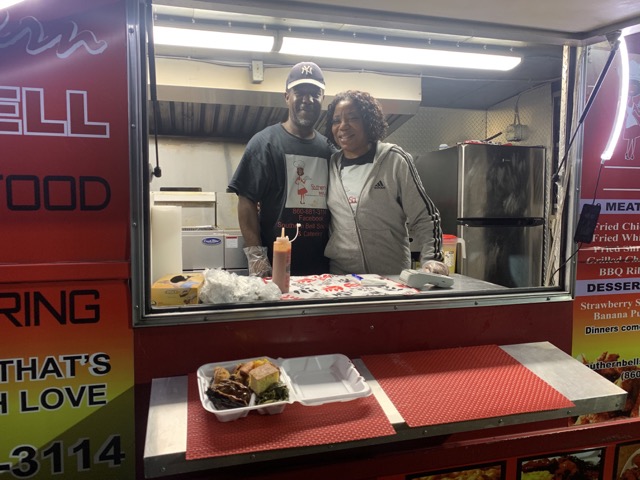
  • Southern Bell Soul Food: An Exciting and (Somewhat) New Food Truck on Campus

    Southern Bell Soul Food: An Exciting and (Somewhat) New Food Truck on Campus

    c_o Lewis Woloch Soul Food Medium 2
    c/o Lewis Woloch

    When I first caught a glimpse of the Southern Bell Soul Food Truck sitting a few spots behind our notorious Mamoun’s Falafel, I was struck with a wave of excitement. Was this truck new? Does Mamoun’s have some more competition? Turns out, Southern Bell has been around for a few years now, already making its mark on the Wesleyan campus with home-cooked Southern delights like fried chicken, yams and collard greens, and even some killer BBQ ribs.  

    Owned and operated by the husband-wife team Fred and Tomorra Williams, this up-and-coming weekend dining option offers a personal, homestyle eating experience that will leave your belly full and your taste buds tingling. The truck’s offerings aren’t the most conventional college-campus late-night cravings, but the love, passion, and tradition that seeps into every bite of Southern Bell’s food makes it a noteworthy choice for any student looking for a hearty meal at any time of night.

    On an unseasonably warm Saturday night a few weeks ago, I stood at the window of the Southern Bell Food Truck and chatted with Fred and Tomorra about the background of their food, their business model, and the reasons why they came to Wesleyan. The two of them have been in the catering business for eight years doing various gigs around Connecticut, and before Wesleyan their primary stomping grounds were at the stadium of the Hartford Yard Goats, a minor league baseball team. 

    They found out about the lucrative opportunity of parking their truck on the Wesleyan campus three years ago through executive assistant to the Vice President for Communications Evelyn Bozeman, and immediately set their sights on acquiring the necessary licensing to operate in Middletown. It was the perfect opportunity since baseball slows down in the fall, right when students start coming back to school.

    “We did a catering, and then we tried it here one night [on the truck], and it was fabulous,” Tomorra said. 

    The food itself is what makes Southern Bell such an exciting experience, giving students a taste of genuine home cooking that might be harder to find at other campus dining options. To streamline the serving process on their truck, most sides are cooked at their certified kitchen in Hartford and kept warm on the truck, as is the case with their smoked ribs and grilled chicken. That way, Tomorra can get the food out faster to hungry students. But rest assured, there’s no loss of quality. 

    When I tried the soul food sampler that Fred and Tomorra graciously plated for me a few weeks ago, everything tasted like it had just come out of the oven. The fried chicken wings, fried on the truck, were crispy and seasoned to perfection, while the juicy pork rib I scarfed down left my mouth aching for more. Fred insisted that I combine, in one bite, a piece of fried chicken (topped with hot sauce, of course) with yam and some collard greens. I obliged and also created a few more combinations of my own. The cornbread was perfect with a tender piece of BBQ chicken, while the mac and cheese was taken to the next level after being mixed with some collard greens (broth included). 

    Many recipes come from Tomorra’s grandmother, including their famous yams. It turns out my use of the collard green juice is right on par with the eating expectations of the owners; they explained to me how sometimes people order mac and cheese with a side of yam juice! The lovely sweet potatoes have even been known to engulf and mystify taste buds.

    “One of the owners of the Yard Goats told me ‘I hate when those [yams] come on my plate at Thanksgiving, but yours, I have to give you kudos…. I actually love yours,’” Tomorra said.

    Fred and Tomorra have their personal favorites. Fred, in line with his suggestion of combining the different items, likes the combination of mac and cheese, yams, and fried fish. Tomorra’s favorite, on the other hand, are the ribs, which she was eager to tell me are “jerked,” or smoked with jerk seasoning.  

    c/o Lewis Woloch
    c/o Lewis Woloch

    “There’s so many different cultures,” she said. “I use Jamaican seasoning for the jerk, I have so much Goya. For seasoning, you can pull from every different culture.”

    To appeal to the vegans and vegetarians of Wesleyan, Tomorra has recently tried to incorporate some new dishes like a vegan eggplant lasagna onto the menu, and she claims that it is helping in an overall push to cook healthier. However, there are only so many changes that they can make without upsetting their most loyal customers. 

    “Every time I change [the menu], and they come here, people are like, ‘Well we’re not looking for that, we’re looking for soul food,’” Tomorra said.

    It’s obviously a task that requires striking a balance, but Fred and Tomorra are both here for it. They were keen to reiterate throughout our conversation how grateful they are for the position they now find themselves in on Wesleyan’s campus. They love all of the interactions they’re able to have with students.

    “The love is here too,” Fred said. “The students, they tell us all the time, ‘Thank you for being here.’”

    It’s clear that the two of them adore what they do for a living, which infuses their food with a special type of love that brings it to the next level. The couple has been together for 25 years, and the truck is just another segment of their journey together.

    “We relax, we watch football on Sundays,” Tomorra said. “This is our life.”

    Unfortunately, there have been times for the two food truck owners when things haven’t been as seamless or easygoing. Fred explained how, in the past, they’ve found it harder to establish themselves, whether it be in catering scenarios, at events, or just going with the truck. 

    “We’re a small Black-owned business, so a lot of times, people will try to criticize you for anything…but being [at Wesleyan] was the best thing that happened for us,” Fred said.

    The graciousness that Fred and Tomorra have for their current situation manifests itself in their desire to give back to the community. They want to help out disadvantaged students at Wesleyan, whether that be by providing someone with a job on the truck or simply finding a way to give out the leftover food they have every night. The latter goal extends to Middletown residents too.

    They are also looking for someone to create a website for them; Tomorra has already jumpstarted social media accounts on Instagram and Facebook but knows that she could use a second pair of eyes (or fingers!) when it comes to curating the type of media presence Southern Bell wants to have online. Fred also stressed the power of social media for their brand.

    “It’s definitely a chain reaction,” he said. “One person posts the food, and a person will get it and share it 17 times.”

    With regard to Southern Bell’s goals for the future, the truck itself will be sticking around for a while more. 

    “I’m not sure if I’m ready to handle the monster of a restaurant,” Tomorra said. “So, this pretty much is my gig.”

    Ultimately, what the husband-wife team hopes to achieve is creating their own line of frozen food one day. This reflects their charitable goals, since one of the draws of having their own products in grocery stores is that people on snap benefits or food stamps would be able access to their delicious food. As Fred put it in a text message to me a few days after our interview, a frozen food line would make it so anyone could enjoy Southern Bell Soul Food in the comfort of their own home.

    As we finished the interview and I was getting ready to walk home with a container of chicken wings in hand, one of the cooks from Dope Fried Chicken came over to chat with Fred and Tomorra. They cracked a joke or two about the “man in front” (the falafel truck) and then chatted about how business had been of late. When I introduced myself as a reporter for the student newspaper, the cook was quick to endorse Southern Bell’s food, saying how he loved the mac and cheese. He also reaffirmed that Fred and Tomorra are wonderful people, which was just another example of the amazing culture that reverberates around the Southern Bell Soul Food truck. When the competition from down the street is pouring on praise, you know they must be doing something right. 

    Lewis Woloch can be reached lwoloch@wesleyan.edu.

  • Editors’ Picks: Our Favorite Spots To Eat Outside of Middletown

    Editors’ Picks: Our Favorite Spots To Eat Outside of Middletown

    It’s our job as food editors to guide the general public at Wesleyan toward the best dining opportunities, and so without further ado, here are our two favorite picks for a sit-down meal outside of Middletown.  

    c/o Willow Saxon
    c/o Willow Saxon

    Otto Pizza:

    In the warm, cozy town of Chester, Conn., lies a pizza restaurant, too far off the beaten path to be well-known by Wesleyan students, but delicious enough to warrant at least a little attention by the more ambitious foodies of our campus. Otto Pizza is a must try, and not just because of taste alone, even though the fennel salad and margherita pizza lie forever embedded in the memory of my taste buds. The charming brick-oven style restaurant offers the full package: a prime location in Chester’s downtown area; a sleek, modern dining concept with an open kitchen; a seasonal, upscale yet homey menu; and the perfect beer and wine pairings. And if all this wasn’t enough, when spring comes along, Otto opens up an outdoor tent with specialty offerings like barbecue and lobster rolls. 

    The town of Chester itself is worth a visit regardless of your pizza yearnings. For those with access to a car, it’s a quick 20-minute drive away on the highway (free parking included in a lot that’s a five-minute walk away) and can offer a much-needed break from the trek down to the regular Main Street spots in Middletown. In the fall and early winter especially, the town is the perfect autumnal getaway, complete with tree-lined streets, lovely little shops, and a strong sense of holiday spirit. Otto Pizza is the pinnacle of these strong sentiments, with a dining experience perfectly adaptable to a romantic date night, dinner with your parents, or a group pizza outing. 

    Regardless of your party size, the best bet is to share a salad or two while carefully perusing the pizza selection. The menu is carefully curated and culinarily impeccable; it’s small and straightforward enough that you won’t get overwhelmed by a million different iterations of pizzas, but can still experience a multitude of flavor combinations. The aforementioned fennel salad is to die for with a mouth-watering combination of a bright lemony vinaigrette, earthy walnuts and mushrooms, and salty parmesan all sitting atop a bed of thinly shaved fennel. For those averse to greens, there’s often a rotating burrata dish as well.

    The pizza at Otto, which stands up to even the most coveted of NYC brick-oven pizzerias, is split between red and white sections. And before you question the validity of a whole section dedicated to pizzas without tomato sauce, you need to taste their mushroom and parmesan cream concoction. They even have a bacon, fried egg, and potato rendition that’ll put any breakfast to shame. On the red side, the classic margherita, done up with dollops of stracciatella, hits the spot with its perfectly sweet and savory tomato sauce, while options like eggplant with scamorza (a cousin of mozzarella) or a bacon and fried egg topped white pizza up the ante even further. 

    The ambience inside the comfy-yet-done-up interior of the restaurant almost mirrors that of the town: the servers are beyond friendly and very receptive to recommendations or wine pairing requests, and their open kitchen allows you to watch your pizza enter into the depths of Otto’s massive brick oven from your seat. Your lovely server will often try to offer you dessert, usually a gorgeous square of soft, luscious tiramisu…if the pizza hasn’t made too much of a dent in your stomach, then full steam ahead. And once all of this is done, and the check is paid, arguably the best part of the whole Otto experience comes around. You get to slowly amble out the door and back through the twinkling lights of Chester to the parking lot, with a happy, delirious smile plastered on your face and a stomach stuffed to the brim, yet still craving one more slice of margherita. You can find the menu here.

    Atmosphere: Casual with an elegant vibe

    Noise Level: Low during weekdays, lively chatter on weekends

    Recommended Dishes: Fennel salad, Caesar salad, Margherita pizza, pepperoni pizza, bacon and egg white pizza, four cheese pizza

    Drinks and Wine: Craft beer, wine, cocktails 

    Price $$$ ($25–30 per person)

    Open: Dinner every night, lunch on Saturday and Sunday

    Reservations: Not accepted


    c/o Willow Saxon
    c/o Willow Saxon

    Pho & Grill: 

    It’s with great reluctance that I divulge the existence of Pho & Grill to the general public, for its seats are few and its food phenomenal. Only an eight-minute drive from campus, Pho & Grill is the best restaurant you will find in the five-mile radius around Wesleyan. Nestled unassumingly between fast food chains and beauty parlors, it’s surprisingly some of the best Vietnamese food around.

    “I go to Pho & Grill on a biweekly basis,” Willow Saxon ’25, a longtime Pho & Grill patron, said.  Most times it’s with my friend, who has a peanut allergy, despite the kitchen being full of peanuts. We both agree that it’s worth the risk to his life…It’s just that good.” 

    As you enter the locale, you can expect to be greeted by the owners and seated at one of the long wooden tables, each equipped with their own rotating rack of accoutrements. The spices include sriracha, hoisin, fish sauce, and white pepper, to name a few.

    Scents from the kitchen waft coyly into the dining room, and from certain seats you can see the origin of the smell: large cauldrons steaming in the kitchen, dispersing that unmistakable smell of a pho broth that includes star anise, clove, and cardamom rendered doubly potent by their mingling with beef fat.

    Quell your anticipation with one of their appetizers. I suggest the Gha Gio Tom (shrimp & pork egg rolls) or the Goi Cuon Tom (shrimp fresh spring rolls), depending on your entree preference. (The egg rolls are found on several of the vermicelli dishes.)

    c/o Willow Saxon
    c/o Willow Saxon

    The plethora of mouth-watering options always makes choosing an entree impossibly challenging. If it’s cold and rainy, Pho is the soundest option, whether it be the classic Pho Dac Biet (Combo Pho), topped with a combination of rare flank steak, well-done brisket, tendon, and beef balls, or the Mí Gá (chicken with egg noodles), a Vietnamese chicken noodle soup that comes in a glistening chicken and pork bone broth and filled with springy egg noodles, lettuce, and impossibly indulgent fried onions, and pork rinds. But whether you choose to get the more classic beef option or the sickness-curing chicken soup, all Pho comes with an accompanying mound of bean sprouts, basil, limes, and jalapeños.

    The crown jewel of this establishment, however, is with no doubt the Bún Thjt Heo Nuong Cha Gio (number 21 for the regulars), which is a vermicelli dish topped with lemongrass grilled pork and aforementioned egg rolls. It’s a dish that appears often in my daydreams, noodles glistening with homemade fish sauce and topped with lettuce, cucumbers, carrots, and a non-negotiable portion of roasted peanuts. It combines all the strong suits of the restaurant into one divinely constructed bowl. You can find the menu here.

    Before you call it quits, make sure you glance at the glass display case next to the register. If you’re lucky, it will be filled with sesame balls, plushly fried dough with a mochi-like texture, that are often sold out. Paired with a pot of jasmine tea, these rotund revelations will give you the strength needed to leave the comfort of the dining room and brave the winter chill that awaits you outside its doors.

    Atmosphere: Comfortable and casual, with no need to dress up

    Noise Level: Low during weekdays, lively chatter on weekends

    Recommended Dishes: Bún Thjt Heo Nuong Cha Gio, Pho Dac Biet (Combo Pho),  Mí Gá (chicken with egg noodles), Com Ga Nuong (grilled chicken with rice), Gha Gio Tom (shrimp & pork egg rolls) 

    Drinks and Wine: Thai iced tea, taro milk tea, pot of jasmine tea (no alcohol served)

    Price $$ (around $20 per person)

    Open: Daily except Tuesday

    Reservations Accepted, but not necessary


    Lewis Woloch can be reached at lwoloch@wesleyan.edu.

    Gemmarosa Ryan can be reached at gryan@wesleyan.edu

  • A Flavor of Campus Dining

    A Flavor of Campus Dining

    c/o fipconstruction.com
    c/o fipconstruction.com

    Campus Dining in a Nutshell

    As we all acclimate back to the Wesleyan campus lifestyle and find ourselves sarcastically exclaiming to our friends in Usdan, “Ah, I missed Mongolian stir fry,” I thought I’d throw my own two cents into the mix. Now, I definitely am not the premier food authority on this campus, but as the editor of the Food Section, I deserve to have and publish my opinions and overviews of all the different dining options that our campus offers. 

    Usdan:

    The one meal that has never failed to excite me in my four years at Wesleyan is the Thursday-night bacon, egg, and cheese sandwiches from our beloved main dining hall. Others might have their own unexplainable weekly favorites, like Wednesday’s grilled cheese or Monday’s performance bowls (rumored to enhance performance in any single field by 200%). I never really hear people talking about Fish Fridays, but then again, what makes this “fresh fish of the day” any different than Swings salmon? Usdan is bound to fill up your stomach expeditiously, and the overarching flavor that finds its way into every dish could be seen as suspicious. Still, it’s loyal, filled with your friends, and offers a surprising variety of dishes, especially during lunch. 

    Summies: 

    Before I start, I need to let everyone know that the turkey-chipotle avocado is gone, and in its stead is a turkey Cuban sandwich! I have neglected my duties as a thorough food reviewer and have not tried it yet, but the thought of a new item itself is exciting enough. For Butts first years, Summies is a necessity that can’t be overly relied upon, as one will risk complete disillusionment halfway through the semester. It’s a back-and-forth battle. For upperclassmen, going to Summies is like meeting up with an old friend after years and years: you’re astonished to see them again but then realize it’s for the better that you parted ways. Overall, the late-night breakfast burrito hits the sweet spot of Saturday night craving, the salad-in-a-wrap hack emboldens Summies veterans, and the burgers are always above average. 

    Swings: 

    Complete with all the American classics and some surprisingly innovative specials, this 30+ year Wesleyan institution is appreciated by all (but especially by the athletic side of campus). During lunch hours, many find their perfect sandwich combination through the well-stocked Swings sandwich station or enjoy innovations like the birria tacos or clam po’ boys. Dinner gives way to classic pasta dishes like pesto penne or the infamous grilled salmon dinner. And if you want a hearty brunch on the weekend, the breakfast pail stuffed to the brim with hash browns, eggs, and breakfast meat will hit the spot. Swings is an institution above all else, unchanging in its college food that still fits the Wesleyan archetype, with falafel, seitan, and tofu available to substitute in most dishes. The fresh fries are addictive, the booths are cozy, and you will miss it all in some way when you go home over winter break. 

    (Chef G Secret Menu Item: If tuna doesn’t make you queasy, you can ask for a tuna melt any time, any day. Simply modify your grilled cheese! Ask for it on rye with cheddar, tomato, and tuna.)

    Red and Black:

    Opened by Swings’ owners about a decade after the original restaurant, this café-style restaurant is only open for breakfast and lunch and offers many similar items to Swings with a few twists. First, specials reside almost solely in the sandwich department, with grilled cheese variations reigning supreme and egg dishes making occasional appearances. Delicious smoothies are offered, with a necessary build-your-own option, something the recently opened athletic center mini-café has yet to include in its equally pleasing smoothie menu. Red and Black is a bit farther off campus but is still a great place to get some work done with a coffee. (There are daily drink specials.) Another fan favorite is the cold peanut noodles (which are really just streamlined Swings Wednesday night soba).

    Story and Soil:

    To the dismay of many early risers and breakfast lovers, Story and Soil’s delicious selection of breakfast sandwiches, bagels, and burritos has only been available after 11 a.m. for the first couple weeks of school. However, this is subject to change as Wesleyan’s premier higher-end café enters its third year of operation. The sandwiches/burritos are small in size but bold in flavor, with gourmet combinations like smoked chicken salad and espresso BBQ sauce, or chorizo, black beans, and aioli. Coffee or tea lovers can up their game with a Spanish Latte or a Golden Milk, as seasonal specials also find their way into the rotation. Story and Soil feel like an off-campus restaurant, making it all the more exciting that it accepts points; it’s a nice way to treat yourself on the weekend without spending real money. 

    Star and Crescent:

    This “student eating club” is the best way to feast on homemade but upscale family-style dishes without actually having to cook yourself. Like Story and Soil, it’ll break a first year’s budget of points, but it’ll be well worth it. Star and Crescent operates like a pop-up: It only offers dinner on Mondays and lunch and dinner Tuesday through Thursday, with a singular dish for each meal along with a freshly made dessert (Friday lunch is an all-you-can-eat buffet of leftovers). The extra care necessary to create 200 plates of Korean beef salad or a curried lentil soup with flatbread means that you must settle for whatever they offer. But it’s never settling since Star and Crescent has been known to leave you licking your plate and praying your lunch date will return with you next week. Eating in the ADP dining room, too, is a calming change from the hustle and bustle of Usdan, as is being waited on…albeit by your friends.  

    Note to the wise: On nights with salmon, you should arrive at 5:15 p.m. if you want a spot at 6:00 p.m. It’s a drop akin to the iPhone in 2007.

    Usdan Café and Pi

    For those amongst us who need their stomachs filled without the frill of lunchtime social hour, Usdan Café and Pi are the places to go. Pi has pseudo-frappuccinos and smoothies, recalling memories of middle school Jamba Juice and Starbucks outings. For those who prefer their food solid, the bagels at Pi are a favorite, and Usdan Café has an ever-expanding range of sushi, salads, wraps, and charcuterie boxes (Lunchables). Pi can always turn into more of a social outing, but the Café is perfect for the quickest grab-and-go on campus.

    Lewis Woloch can be reached at lwoloch@wesleyan.edu

  • Eating on 4/20: A Review of Food at Wesleyan on My Most Gluttonous Day

    Whenever April 20th rolls around, I find myself with a bad case of the munchies—especially when I’m at Wesleyan. It’s hard to understand, but it just happens that way; I’m pretty hungry most other days of the year too, but 4/20 just sends my stomach and bowels into oblivion.

    When I woke up a mere five days ago (and after engaging in a few, maybe just one specific activity), I was at a crossroads: Where am I going to eat my first and most important meal of the day? The hunger that was beginning to possess my body. I was becoming so ravenous that a tiny Story and Soil sandwich wasn’t going to cut it, nor was I going to settle for a mundane Usdan lunch. Indeed, it was time to pull out the special card, only to be used on special days. Using my full body force to roll over, I leaned over towards my friend and said: “We’re going to Sarah’s.”

    Sunglasses were placed over our eyes, the car engine was started, and we sped over the bridge into Portland, CT. Upon arrival, I drained a full glass of water; my mouth was incredibly sticky from the piece of gum I had been chewing. After some deliberation, my eating partner and I settled on the best course of action: we would share waffles (with chocolate chips, bananas, AND berries) and a veggie scramble (add cheddar and bacon). The kind waitress was beginning to give us a few odd glances at this point. 

    Fast-forward two hours: I’m lying face down on my bed with Twitter sitting inches away, praying that my watch slows down so I can finish the bag of spicy-hot Cheetos before my 2:50. I lift only my head up every few seconds to shove another handful of those crunchy red devils down my throat, wiping the excess dust shamelessly on my sheets. The remains of the savory, bright, loaded scramble sit in my stomach, churning around with the incoming Cheetos and the digested pieces of tender, perfectly sweet waffles. I start to plan out my bathroom break that I’ll need to take during my English class, and then, obviously, begin to think about what I want for dinner.

    I slog ever-so-slowly through my class, eagerly awaiting the unspecified event that will soon come exactly at 4:20, and onwards, until my stomach has ballooned to a point where I get carried away by the wind like Aunt Marge. The glorious moment comes and goes, and I face yet another crossroads: Swings…or Star and Crescent. It’s a difficult choice for me. On the one hand, I know that Chef Hannah Godwin-Pierce ’22 has flair and style, and can put together some pretty classy dishes and condiments. The idea of her all-you-can-eat yakisoba/mac and cheese bar made my mouth water with such fervor that I almost dropped the…well, never mind. Yet, there is always Swings, good ol’ Swings, that can deliver you a whopping 4/20 punch that may literally knock you unconscious. 

    The 4/20 Swings pail is infamous, for some good reasons, and for some not so good ones too. It contains all the most delicious food groups (from healthiest to unhealthiest): avocado, pulled pork, chicken, fried chicken, fried ravioli, fries, and something else fried, and then you start to lose track of what you are even eating. The most risqué individuals cover the whole thing in gravy. The hard part of the pail is the aftermath…you usually have to allocate at least 2 hours for toilet time throughout the ensuing night. For this very reason, and because I was already feeling a bit packed up, I chose Star and Crescent, hoping that the portions would be sizable, but not obscene.

    What I didn’t anticipate was the serve-yourself aspect of the operation. I blacked out upon entering Alpha Delta Phi, and when I emerged back into the sunlight, my mac and cheese was drenched in so much chili that I couldn’t even see the pasta. To be frank, the blackout basically continued until I finished my night class at 9:20. What I remember is brief, but impactful: The pieces of hot dog that found their way into the mac and cheese sauce, the Cheetos I sprinkled on top for decoration, and the mysterious white patties that appeared amongst the chili, tasted like glue, and made their way into my stomach nonetheless.

    After my class I was nowhere near hungry, yet somehow I found myself in the aisles of Wes Shop. Honey-mustard pretzels found their way into my backpack, as did microwavable popcorn. During debatably my most shameful hour, I ate the entirety of the bag of pretzels in five minutes (only one of which wasn’t on the way back from Wes Shop), and “shared” my popcorn with a few friends. It feels fitting to end the story on this downtrodden note, since that’s how my day ended. I lay on my back trying to fall asleep, while my stomach rumbled beneath me. Oh, my poor toilet….

    Lewis Woloch can be reached at lwoloch@wesleyan.edu.

  • An Delicious Evening With Bryant Terry: Chef, Activist, Author, Community-Builder

    An Delicious Evening With Bryant Terry: Chef, Activist, Author, Community-Builder

    c/o Lewis Woloch, Food Editor
    c/o Lewis Woloch, Food Editor

    On Wednesday, March 29, The College of the Environment hosted “An Evening With Bryant Terry,” inviting members of the community to a cooking demo, dinner, fireside talk, and book signing with Terry, a vegan chef, activist, author, and community-builder. Last week, our food team attended the event, tried the food, and conversed with Terry, learning more about his life and his relationship to food.

    The Event: An Evening With Bryant Terry

    Large round tables laden with rows of polished silverware and pristine white tablecloths filled the room. At the front was a stage and a counter covered with a cornucopia of seasonal vegetables and fruits. A makeshift kitchen consisting of a hot plate and a few assorted utensils sat behind. This was the scene for Bryant Terry’s dining event hosted by The College of the Environment and executed by Bon Appétit last Wednesday in Beckham Hall.

    Director of the College of the Environment Barry Chernoff began the proceedings by introducing Terry to those who had managed to secure tickets to the coveted event. As an author, artist, food justice and sustainability advocate, publisher, and more, Terry is far from just a vegan chef. Over the course of the event, Terry debuted several recipes from his new book “Black Food: Stories, Art & Recipes from Across the African Diaspora” (2021), pairing each dish with a song he associated with the food. 

    c/o Lia Franklin, Features Editor and Assistant Food Editor
    c/o Lia Franklin, Features Editor and Assistant Food Editor

    After a short bout of technical difficulties, Terry started his cooking demonstration with a dish of curried tofu and mustard greens. From the moment he began, it became clear that for Terry, cooking is not just a practice but an act of radical protest and cultural remembrance. He sang songs he heard in his grandmother’s kitchen growing up, reflecting on the sights and smells of her Southern farmhouse.

    Between cooking tips—never forget to press your tofu—he explained the importance of cooking with fresh and local produce as well as the barriers that low income and people of color in the United States often face when trying to access these resources. As the delightful odor of fried garlic and mustard seeds graced our nostrils, he explained what originally brought him to cooking: the Black Panther Movement. He was inspired by their free breakfast and lunch programs and notably, their critiques of the American food system.

    Now down to the meal. First up was the curried tofu, infused with mustard seeds and mixed with stewed greens. With a sharp, bitter, spicy, and creamy flavor profile, this vegan concoction was delectable and was one of best bites I’ve had on campus this year. It didn’t take me long to empty my plate and wipe it clean with the pretzel bread with which we were provided.

    c/o Lia Franklin, Features Editor and Assistant Food Editor
    c/o Lia Franklin, Features Editor and Assistant Food Editor

    As we waited for the next course, I sipped on the hibiscus and ginger infused beverage. Perfectly sweet and biting, it was akin to the kombucha I often purchase from Weshop. Before I could finish my glass, plates of fennel and citrus salad were placed on the table in front of me. Complete with dates and a citrus vinaigrette, the dish was crisp and refreshing. This was followed by a second appetizer of citrus and garlic-herb braised fennel. With two perfectly charred quadrants, this dish offered a completely new take on fennel and was unrecognizable from the previous course. Beneath the fennel was an intensely flavored sunchoke cream that had been mixed with plantain powder and had the consistency of grits. 

    By the time the main course arrived, we were positively stuffed but ready for another delicious bite. Diners like me were treated to a bean bean burger made of whole royal corona beans, mixed with tomatoes and broccoli rabe, and topped with a parsley persillade. While the combination of flavors proved to be somewhat bitter, I appreciated the heartiness of the plant-based burger as well as its garlicky herbaceous spread. Let’s just say, I ate every bite.

    As we all know, there is always room for dessert, especially when it comes in the form of an oatmeal lace cookie and vanilla bean ice cream. Creamy, crunchy, and cinnamon-y: the dessert was the perfect sweet treat to complete the lengthy meal. Five sets of cutlery later, the meal had finally come to a close. 

    With that, my stomach was full and my mind was abuzz with Terry’s radical ideas on food culture in America. Students, faculty, Middletown residents, and guests alike sat together talking about the meal they had just shared and the knowledge they had just learned. The whole experience was a practice in community, and food was what had brought us together. 

    Lia Franklin can be reached at lfranklin@wesleyan.edu.  

    A Conversation with Bryant Terry

    Earlier this week, I had the pleasure of getting to know Bryant Terry, the renowned chef and food justice activist. Besides being a successful cookbook author and inspirational figure within the culinary world, Terry possesses a wealth of knowledge and passion when it comes to unpacking the relationship between cooking, food, race, and class. Despite all of his many accomplishments, Terry remains incredibly humble, giving credit to his mentors, like Alice Waters, and acknowledging his place in history.

    “People have been doing this work for decades well before I did, and I think it’s always important for me to, you know, recognize that I’m standing on the shoulders of so many who’ve come before me,” Terry said. 

    Terry, a Memphis native, described many of the formative experiences he had while visiting relatives on their farms throughout the South. It was there that he learned to love the land he was raised on and value his connections to agriculture. 

    “I’d say my paternal grandfather spending time in his garden was one of the main things that helped me feel connected,” Terry said. “I used to hate being in the hot sun and weeding, you know, his garden and shelling corn peas and shucking corn and all that…but I understand now, especially as a parent, that my grandfather was imparting skills that would be life changing. And so I do credit my grandparents for so much of the work that I’m doing.”

    Sadly, his family doesn’t own this land anymore, which is reflective of the decreasing numbers of Black farm-owners in recent years. From predatory action by the USDA to rapid urbanization, farmers of color are quickly disappearing from the American South. Terry highlighted that by 1997 there were fewer than 20,000 Black farmers, a sharp decline from the one million Black farmers cultivating land during the 1920s. He stressed the importance of putting the power back in the hands of the people, a process that begins with controlling the production of the food we consume. 

    While his style of cooking is vegetable-based and many of his cookbooks intertwine veganism with food justice and sustainability, Terry rejects the label of “vegan chef.” His work amounts to much more than just a vegan or vegetarian diet; he seeks to emphasize healthy diets that are based around community organizing and farming in a way that connects people back to their land. Terry ultimately wants to connect complex justice initiatives back to a simple pleasure that we can all share: eating.   

    “I felt like the conversations often started with the very heavy intellectual ideas around food or public policy,” Terry said. “I always argued that we needed to start where we can meet everyone, which is something that’s more practical, more sensual, you know, everybody loves to eat.”

    Looking at the bigger picture, Terry aims to focus on systemic issues. Although he noted that community action is vital, federal regulation is key to shaping the way our small farms can get traction in a corporation dominated market.

    “For these larger political goals that I have around improving our food system, ensuring that everyone has access to healthy, fresh, affordable food, ensuring that the subsidies aren’t just going to the big multinational corporations, but are actually going to the small midsize farmers who actually need it,” said Terry.

    To achieve this, Terry emphasized the need for unconventional thinking and working outside of our current capitalist structure. That said, he made a point of stressing that we must first work to meet the basic needs of people.

    “How can we help support people who just need their basic survival needs,” asked Terry. “You know, I think about the Black Panther Party for self-defense, who’s a big inspiration for my work. They were clear that until you meet the basic needs of people living on the margins, who cares about revolution? Who cares about changing the system when I can’t even feed my baby, when I don’t have a vehicle to go to the doctor?”

    Talking to Terry was inspirational because of his ability to make a meal about so much more than food. Still, at a base level, his food conveyed how it all ultimately comes back to what’s on people’s plates. His intersectional discussion of food justice is intertwined with his variety of interests outside of cooking. Terry’s new project revolves around his new art studio and desire to create art that reflects and visualizes sustainability issues and solutions. And while he may step away from the publishing world to focus on his new passion for art, that isn’t to say that more cookbooks aren’t on the way, so stay tuned for the next vegan-cooking masterpiece by Chef Bryant Terry. 

    Lewis Woloch can be reached at lwoloch@wesleyan.edu.

  • From “Uni” to “Erizo”: Cross-Continental Culinary Exploration and Intergenerational Bonds

    It’s quite easy for me to pinpoint why I wanted to start a food section in The Argus (besides the fact that I needed to bolster my slightly lacking resume): it was because I love food. Specifically, I love eating food. A friend recently remarked to me that she’s never seen someone eat the way that I do, and I took it as not just a compliment but as an affirmation that my life is on the right path. Food is my simplest pleasure. Yes, I do like to cook, but whether the food I eat comes from my own cast-iron pan, from the wok at a Thai restaurant, or from an “asado” in Argentina holds less importance than the literal process of deciding what I want to eat, engaging with the scenario in which I am eating, and then taking the utmost pleasure from every bite I take until my plate is wiped clean. Not eating until you’ve cleaned your plate is sacrilegious in my eyes. 

    The women in my life have predominately influenced and guided me on my journey to becoming an intense lover of food—most importantly my mom and grandma. Between the two of them, I can’t begin to count the number of meals I’ve eaten out to the point where I’ve left the restaurant with an oversized stomach and a huge smile on my face. I’m incredibly lucky and privileged to have had these experiences, making it all the more important to me that I actively pursue this love of food which has been cultivated both for and by me. Ultimately, I ended up cooking with my mom the most when I was younger, but I really share my massive appetite and explorative approach to eating with my grandma.

    As the matriarch of a Jewish family made up of three children and seven grandchildren, my grandma was always head honcho when it came to cooking on the Jewish holidays. Roast chicken, matzo ball soup, gefilte fish, and Thanksgiving stuffing were among her specialities. But she wasn’t authoritarian in her rule of the kitchen. My mom would often take care of the vegetable dishes, alongside my uncle helping with the brisket on Passover and my grandpa handling the latke frying duties during Hanukkah. When my grandpa passed away ten years ago, I immediately stepped up and took on latke responsibilities, which delighted my grandma beyond comparison. It was the first of many notable food collaborations we would have in the future, both inside and out of the kitchen.    

    As I’ve gotten older, my grandma and I have developed a certain repertoire in the way we eat together. I’ll shoot her a text asking to get a meal, and she’ll respond in seconds with a place and time already picked out. We cover a variety of cuisines across Manhattan and sometimes even Brooklyn, but arguably my favorite outing with her is sushi. Around the corner from her apartment on the Upper West Side lies her favorite spot, Sushi Yasaka, a beautiful, traditional Japanese restaurant where I tried “uni” for the first time in my life. For those unfamiliar, “uni” is the reproductive organ of the sea urchin, mainly seen in the U.S. as a Japanese delicacy served over rice but also found in many other coastal regions of the world. For two prolifically ravenous eaters like myself and my grandma, “uni” represents a departure from our usual mountains of food. It’s more of an experience than a food, where you have to savor your bites, talk about the flavors of the sea creature, and moan about how delicious it is. We would always get other types of sushi, but the “uni,” which my mom is a huge fan of as well, usually stole the show.  

    During my travels around South America after my semester abroad in Argentina, I encountered the best seafood I’ve ever had in my life on an island in Chile. It wasn’t necessarily that the crabs and mussels and salmon were of the highest quality, or paired with the finest ingredients, but that they had been harvested from the island itself. Prepared in traditional Chilean styles, they were served to me by Chileans who clearly took pride in their seafood and the dishes created from what they had caught that day. I tried an innovative salmon and potato hash from a gastropub, a local restaurant’s traditional crab “chupe” (a dip-like stew), and my friend’s host mother’s homemade salmon ceviche. But the crowning dish of my three days on the island was the sea urchin, similar in every sense to the “uni” my grandma and I would share at that sushi place, besides the name. In Chile, it was called “erizo.”    

    One afternoon, I was walking around near the harbor, killing time before a boat tour, when I stumbled upon a series of ceviche stands, seemingly operating to serve a light, accessible lunch to people working near the harbor. It wasn’t the kind of place for a wandering American, yet my advanced level of Spanish and obvious knowledge and interest in their seafood prompted a conversation with the woman working at one of the stands. I asked her if she had any “erizo,” knowing that this ocean delicacy was popular in Chile. And while this woman didn’t have any on hand, she talked to a guy who talked to a guy, and the next thing I knew a full purple sea urchin was being harvested in front of me.

    What was then given to me for only eight U.S. dollars was a pint container filled with the succulent, creamy morsels of sea urchin, nestled in their own juice, topped with chopped fresh chiles, a squeeze of lime, and a handful of red onion and cilantro. It could be called a ceviche, but was really just piles on piles of “erizo” with a few accompaniments. The size was a tad bit smaller than that of Sushi Yasaka, but it was still packed with flavor. In the past, I had only ever eaten one piece at a time of this sea urchin, setting my grandma back about 10 dollars a pop. Now I had upwards of 30 little guys swimming around in my container, and my taste buds were doing wet somersaults in my mouth as I sat down on the dock. I ate the “erizo” slowly at first, savoring each piece, and then ate faster, and then had to slow down as my stomach gurgled incessantly. The blend of pure sea urchin flavor (buttery, saltwater-infused goodness), acid, and crunchy onions and peppers was incomparable. I even risked potential food poisoning the next morning when I saved the dregs of the pint container to eat on a 12-hour bus ride. Those sea urchins couldn’t be wasted.      

    When I recounted this story to my Grandma, she was not only overjoyed in that typical grandmother kind of way about me calling her, but she could also tell how significant my story was for our relationship. My experience had linked our own respective food identities together while also exemplifying how influential it had been for me to travel around a new continent on my own. I had tears in my eyes when I hung up the call, tears which returned after we finished the greatest (and only) “omakase” meal of my life. “Omakase,” a Japanese word which means “I’ll leave it up to you,” is basically a chef-created tasting menu, one which my grandma decided would be the perfect dinner date for us after I returned to New York. After my Chilean “erizo” experience and years of Sushi Yasaka, it was time for us to level up. 

    Now, “uni” and “erizo” have become one and the same for me, connected by both their journeys through my intestinal organs as well as the way I shared my consumption of them with my Grandma. The “omakase” we ate together was one of the best meals we had ever shared, and I even allowed her to embarrass me in only the way a Jewish grandma can by bragging to the Mexican sushi chef that I went to Argentina, and then making me speak Spanish with him. When the “uni” dish came, plated simply with rice and yuzu, my Grandma and I didn’t waste time marveling. We dug right in, and in a matter of seconds the “uni” had vanished. Only now was the conversation allowed to begin.


    Lewis Woloch can be reached at lwoloch@wesleyan.edu.