A few years ago, it seemed pretty clear to me that the superhero movie bubble would burst. While superhero movies broke records at the box office, audiences would inevitably lose interest in them, and the genre would go the way of the western.
That hasn’t happened.
Instead, it seems that the opposite of what I predicted is coming true. Superhero movies are perhaps more in-demand now than they ever have been. Marvel’s “Avengers: Endgame,” for example, has recently made over $2 billion in just under two weeks; it’s on track to become the highest grossing movie of all time, usurping James Cameron’s “Avatar,” (a mediocre movie beloved by no one and remembered only for its box office returns). These past two years alone have seen comic book movies, anchored by characters who are either obscure or ridiculous, become sizable hits. “Aquaman,” for example, is a movie about a guy whose powers involve talking to fish and grossed over $1 billion. (No, seriously, “Aquaman,” made that much money). There are more superhero movies coming out later this year and next (such as “Spider-Man: Far From Home,” in July, and “Wonder Woman 1984,” in June of next year) which seem similarly destined to break the bank.
On the one hand, as a fan of these movies, this has been an exciting development. The massive box office receipts guarantee more superhero movies to be made in the future, including both sequels to movies I already liked, and new and intriguing franchises.
On the other hand, as a moviegoer, this is a worrying development. Superhero movies, those produced by Marvel Studios in particular, have become a kind of cultural monolith. They’re practically guaranteed to succeed, as people line up in droves (myself, unfortunately, included in said droves) to see them, overlooking other releases. Disney and Warner Brothers, the producers of Marvel and DC movies, wield a staggering level of power over the global box office.
There aren’t any major signs that they’ll lose their grip on audience’s wallets, either. There have been some recent superhero flops (“Justice League,” was an embarrassment, but that was back in 2017), but not enough consecutive flops to suggest a genuine lack of interest in superhero movies.
It poses some major dilemmas for the future of cinema, which are already playing themselves out. Blockbusters which dare to be original or experimental become a major risk for studios to take. Some, such as “Blade Runner 2049,” (a personal favorite of mine), have already failed to connect with audiences despite critical acclaim. None of which is to even mention the continued decline of mid-budget movies, a phenomenon set to worsen. After their merger, Disney has decided to shut down one of 21st Century Fox’s production companies, “Fox 2000,” which specialized in mid-budget movies such as “Hidden Figures,” and, “The Devil Wears Prada.” The odds of Hollywood producing another classic like “Prada,” have dramatically decreased.
It is possible that superhero movies, and their reign over Hollywood, will eventually crumble. Maybe not this year, maybe not next; but at some point in the future, we will collectively grow tired of watching Oscar-nominated performers dressing up in spandex and punching CGI bad guys. Maybe that’ll happen and Hollywood will be forced to create new, original movies. Or, maybe it won’t, and this is just the beginning of the age of superheroes. I’m beginning to worry it’s the latter.
Henry Spiro can be reached at hspiro@wesleyan.edu and on Twitter @JudgeyMcJudge1.
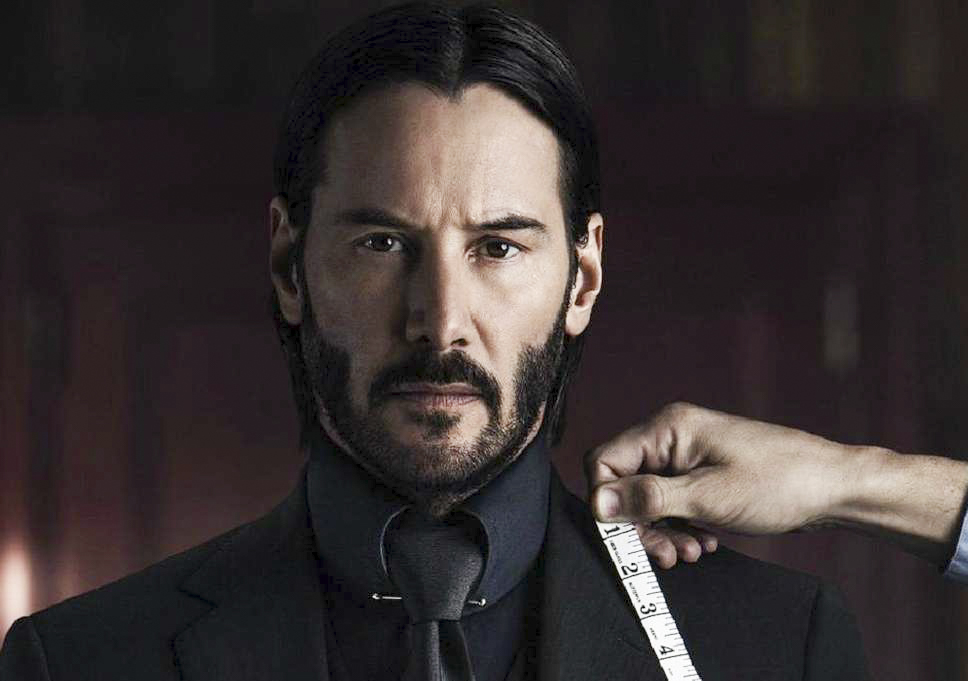
In honor of “John Wick: Chapter 3–Parabellum” opening in theaters on May 17, The Argus has decided to reflect on the original film in the franchise, 2014’s “John Wick.”
Much has been written about the remarkable fight choreography of “John Wick,” but less about its screenplay. This is perfectly understandable: Directors Chad Stahelski and David Lietch drew upon their many years of experience as stuntmen to craft exhilarating action sequences, which unfold with long, unbroken takes, allowing the audience to watch every stunt unfold in real time; it’s not a generic revenge flick about a retired assassin, but something far more exhilarating. So it’s no wonder the film’s action sequences draw so much attention. But, consequently, the film’s smart storytelling has been largely overlooked. A big reason why the film works so well is how it introduces its titular protagonist.
“John Wick,” begins with a brief prologue. It is nighttime, and we watch as a beaten-down car crashes. A man in a suit stumbles out of it, badly injured. He pulls out his cell phone (similarly beaten up) and watches a video of himself and another woman (Bridget Moynahan) having a romantic walk on the beach, just before he passes out. The film cuts to a montage of a bearded Keanu Reeves watching the same woman collapse, be hospitalized, and eventually die. It is clear, at this point, that the man in the car crash is John Wick, that the woman in the video was his wife who died by the point of the crash. Chronologically, the crash appears to happen well after Wick’s wife’s death. We do not know much about Wick, but we do know that he is condemned to a tragic, violent fate.
As it turns out, before her death, Wick’s wife paid for a puppy to be delivered to John, set to arrive at their house after her funeral. (In a movie franchise about an underworld of assassins with their own currency and hotel chain, maybe the least believable plot thread is that someone could pay for a puppy and have it delivered after they die.) Wick and his new dog, Daisy, bond; Wick drives his vintage mustang around. There are a solid 10 minutes or so of the film, which promises to be an action movie, where the camera watches Keanu behave like a depressed hipster. Somehow, it all works, demonstrating the grief that Wick is experiencing and justifying why he’ll soon go on a revenge spree.
The cause of his quest for vengeance, too, is a small stroke of genius. Wick isn’t trying to avenge his wife, as she’s already passed. Instead, he avenges the puppy she gifted him. The film’s narrative begins in earnest when a group of mobsters break into Wick’s home, stealing his car and killing Daisy in the process. The detail that it’s his dog, not his wife, whose death provides the perfect pretext for Wick’s forthcoming killing spree. There are few things more devastating than the death, let alone the murder, of man’s best friend. It is thus impossible not to root for Wick as he fights to avenge his dog.
But the best introduction to Wick, and his prowess as an assassin, comes later, in an understated scene. It’s not even in the scene where the head of the Russian crime syndicate in New York, Viggo Tarasov, tells his son Iosef, the man who killed Wick’s dog, that Wick isn’t just a retired assassin, he’s the best assassin there ever was. (Michael Nyqvuist, who plays the Russian mobster, sells the hell out of the line, “[Wick] wasn’t exactly the boogeyman…. He’s the guy you send to kill the fucking boogeyman.”)
No, the scene which best hints at Wick’s capabilities is an earlier one. Viggo speaks, over the phone, to a car dealer who punched Iosef in the stomach for trying to sell him Wick’s stolen car. At this point in the story, Viggo’s identity (as both crime lord and father of Iosef) have not been revealed. The Russian mobster is filmed from behind; we cannot see his face, only his imposing stature and luxurious suit. But these details, along with his deep, growling voice, are enough to suggest that this is a powerful man, one who is not to be crossed. When the car dealer tells Viggo that Iosef stole Wick’s car and killed his dog, Viggo has one simple response: “Oh.”
His shock and fear at the repercussions of Iosef’s decision are demonstrated with a single word. Viggo, this seemingly powerful man, has been brought to his knees by the mention of one man’s name. We haven’t yet seen Wick in action, but Viggo’s one line of dialogue tells us all we need to know about him: John Wick is one scary guy.
“John Wick” succeeds in large part due to its terrific fight choreography, but the introduction and re-introduction of the titular character adds to the thrills of action scenes. We are told, from the beginning, that Wick is a powerful, scary figure. When we finally see him fight, his actions meet our expectations. Wick isn’t the most deeply written character, and he could’ve easily been a one note, generic movie assassin. But due to his skillful introduction, he’s one of the most memorable protagonists of any recent action movie.
Henry Spiro can be reached at hspiro@wesleyan.edu and on Twitter @JudgeyMcJudge1.
Brooke Kushwaha ’20: So, we recently have come under fire for how we handle our theater reviews, which is interesting because, as someone who’s been under fire for theater reviews in the past, it’s almost never because we’re too measured with our opinions.
Henry Spiro ’19: Yeah, it’s strange…. It’s always been a challenge for me to review Wesleyan shows because it’s like, ‘Oh, I might know some of those people, but I also have a lot of opinions on them,’ and I’m not sure if I only wanna say nice things or if I wanna say entirely how I feel.
BK: I’ve never let that stop me…. I think for me, I did a lot of journalism in high school, and it was a very different environment where you had to write something nice no matter what, like, no matter what you thought of it, you had to basically be propaganda for the school that I went to because they very much saw themselves as a reputation-oriented institution. It was freeing to come to Wesleyan and be aware that you could insult something, or just speak honestly about it, without dealing with the repercussions of the administration…. It just felt like a huge freedom to me to just pan something or speak negatively about anything.
HS: I mean, in high school I didn’t do journalism, but I did do a lot of theater, so I can understand if you’re a performer and you’re not a professional but you’re putting a lot of work into this, that it can be kind of hard to read someone say, ‘Your performance wasn’t good, your production wasn’t good.’ But at the same time, yeah, it is kind of unreasonable to say we have to be nice to you. I think the purpose of criticism isn’t just to be critical of people but to have open and honest discussions about art, whatever that art may be.
BK: One thing I’ve noticed is that no one ever cares when I write a good review, ’cause I have done that…. Sometimes I even had a review where everyone who worked on it was upset, very vocally upset, and I stood by my firm opinion that they wasted my time.
HS: I think that’s the right thing to do.
BK: But then I’ve had other situations where I have not had members of the crew approach me at all, but it’s had repercussions of people kind of…just piling on and becoming mean spirited. And I realized it’s one thing to be kind of self-serving and indulgent and another thing to be constructive.
HS: There’s always an impulse when you see something you don’t like to just really go off and come up with your most creative and intense insults and just go with those. I usually do that when I review movies.
BK: I mean those people are making millions of dollars anyways.
HS: Yeah. I don’t really feel too bad if I hurt their feelings. If it’s someone you know, or someone you know’s friends, maybe then you wanna be more cautious but you don’t wanna be dishonest.
BK: That was something I realized shortly after I was writing theater reviews…. I never felt unqualified to write about those things, but I did feel like I was missing a perspective, how much work goes into those productions. And so I did put up my own production, and I now know it, and I feel like that gives me immunity now. I’ve been there, and also my show was reviewed by The Argus, and I put myself in that position, and it’s a very vulnerable position, and I now respect that position a lot more.
HS: At the end of the day it comes down to when you see a show, how do you feel about it. It’s not right to lie about that just to console someone.
BK: So, Henry, you actually recently wrote a very in-depth, thoughtful review of “Endgame” without mentioning any spoilers (because I asked you not to spoil it for me). It was actually so insightful, and it was kind of amazing. We’ve been criticized in the past of being very summary-heavy in our reviews, and you had zero summary. Honestly, it was a very nice review, and I was very impressed by that feat. I think you rose to the challenge.
HS: Thank you very much! Yeah, it was a weird to write, ’cause even the first twenty minutes of the film has stuff that wasn’t in the trailers at all. So I kind of just had to write my broadest, most general feelings on the movie. It was a challenge to approach that.
BK: Well, this will be your 100th article, and a lot of those articles have been reviews. How do you feel coming out of it?
HS: I’m actually gonna miss having a space to write reviews. I didn’t think I was gonna say this a while back, but now that I am actually confronted with graduation, I think I’m gonna need to have a movie review blog.
BK: Do you have a Letterboxd?
HS: I did, but I deleted it because of disinterest. I think I’m gonna have to bring it back.
BK: You heard it here first folks! Follow Henry’s Letterboxd!
Remember “Iron Man”? The 2008 film seems, compared to the movies currently produced by Marvel Studios, rather quaint. After all, the central conflict—in which industrialist Tony Stark (Robert Downey Jr.) struggles to end his company’s role in arming both sides of the war on terror—is incredibly insignificant compared to the battles fought in more recent Marvel Cinematic Universe (MCU) outings. Nowadays, the fate of all of humanity isn’t even as high as the stakes can get. One of last year’s MCU flicks, “Avengers: Infinity War,” ended with half of all life in the entire universe turning to ash. The squabbles within “Iron Man” are frivolous by comparison.
Yet, the newest addition to the MCU, “Avengers: Endgame,” is as much about the fate of the universe as it is the fate of Stark and the other early Marvel Heroes. “Endgame,” serves as a quasi-conclusion to the MCU. The franchise will go on, given that it regularly rakes in billions on an annual basis. But this incarnation of the series has come to a close; think of it as the season, but not series, finale of a TV series. It’s a deeply flawed movie, but a fitting send off.
I won’t spoil much about the plot (as even the first act of the film has plenty of terrific surprises), but “Endgame” picks up in the immediate aftermath of “Infinity War.” At the end of that movie, Thanos (Josh Brolin, giving an impressively nuanced performance shaped by some even more impressive special effects) succeeded in his plan to obtained all six of the infinity stones (the titular plot devices), and wiped out half of all life in the universe. The Avengers lost, not just the battle but their fellow fighters. At the start of “Endgame,” the Avengers almost immediately begin plotting how to undo Thanos’ destruction. The surviving Avengers, including (deep breath) Iron Man, Captain America (Chris Evans), Thor (Chris Hemsworth), Hulk (Mark Ruffalo), Black Widow (Scarlett Johansson), War Machine (Don Cheadle), Nebula (Karen Gillan), Hawkeye (Jeremy Renner), and new addition Captain Marvel (Brie Larson), embark on an adventure that will consume the span of an entire three-hour (and one minute)-long movie.
One of the most impressive feats of the film is that, despite the staggeringly large cast, each actor gets a moment to shine. Screenwriters Christopher Markus and Stephen McFeely succeed in letting their large roster of characters grapple with both the larger battle against Thanos, and their own internal conflicts. Downey Jr. is the film’s true standout, giving his best performance as Iron Man yet. The best elements of the character—namely, his blend of arrogance, anxiety, and an obsessive desire to be the hero—are on full display here. The same can be said of the other Avengers, as both the screenplay and the actors are able to fully realize their characters. Gillan is the other standout, as she’s a talented comedic actress who’s only just given substantial screen time as Nebula.
The film is tasked with more than just balancing a series of great performances, and its these other areas that the movie becomes more of a mixed bag. This is an elaborately-plotted movie, with a lot of moving parts that manage to stay in harmony. But it’s also a film with numerous plot holes and contrivances; it establishes strict rules only to break them moments later. There’s a final battle which is spectacular to watch, but feels narratively unnecessary. Directors Joe and Anthony Russo are occasionally over-indulgent, letting comedic bits and other scenes drag for longer than need be. Perhaps the film’s biggest problem is that, despite this struggle being a fight over the entire universe, there are long stretches in which the film lacks any real tension.
The storytelling is a lot looser here than it was in “Infinity War,” (made by the same writers and directors) but it’s hard to say which film is better. “Infinity War” had more satisfying moments and a tighter narrative, but its pacing was so relentlessly fast that watching it feels like being on a two-and-a-half-hour roller coaster; watching “Endgame,” by contrast, gives breathing room. But the two films complement each other nicely, with narrative and thematic parallels that work effectively. The two halves make a satisfying, but uneven, whole story.
That’s the case of the entire MCU, really. Its films vary wildly in quality, and the movies don’t always successfully work (the aforementioned infinity stones, for example, are an extremely dull plot device whose appearances have been the low point of several Marvel installments). Within this absurdly ambitious franchise is a relatively satisfying, moderately unified story, one which appropriately reaches its finale in “Endgame.”
The stories of the original Avengers come to fitting, though occasionally unsatisfying, ends. Each of the original Avenger’s personal conflicts are concluded in a manner that seems retroactively inevitable; their stories could not have ended any other way. Some of those endings aren’t particularly gratifying, but only because not all of the MCU’s characters are all that compelling. A few periphery characters were never fully defined, and consequently, it’s hard to get too wrapped up in their grand finales. A great conclusion cannot make up for a middling beginning and middle. Thus, ultimately, “Endgame,” cannot undo the mistakes of its predecessors.
Fortunately, the MCU has enough great characters to make up for the weaker ones. More than seeing how all its various narrative threads tie together, the true source of satisfaction of the MCU has been its flawed but heroic leads. Stark’s arrogance and self-sacrifice; Captain America’s relentless determination to fight the bullies; Thor’s solid stature and quivering insecurity; the heroes of the MCU have been defined by their mix of grandeur and flawed humanity. It’s these personalities, and their respective overarching conflicts, that have made the franchise so successful over the years. Any fan of the MCU will be more than satisfied in seeing how these weary heroes finally find peace. “Endgame,” is an imperfect film, but a perfect conclusion.
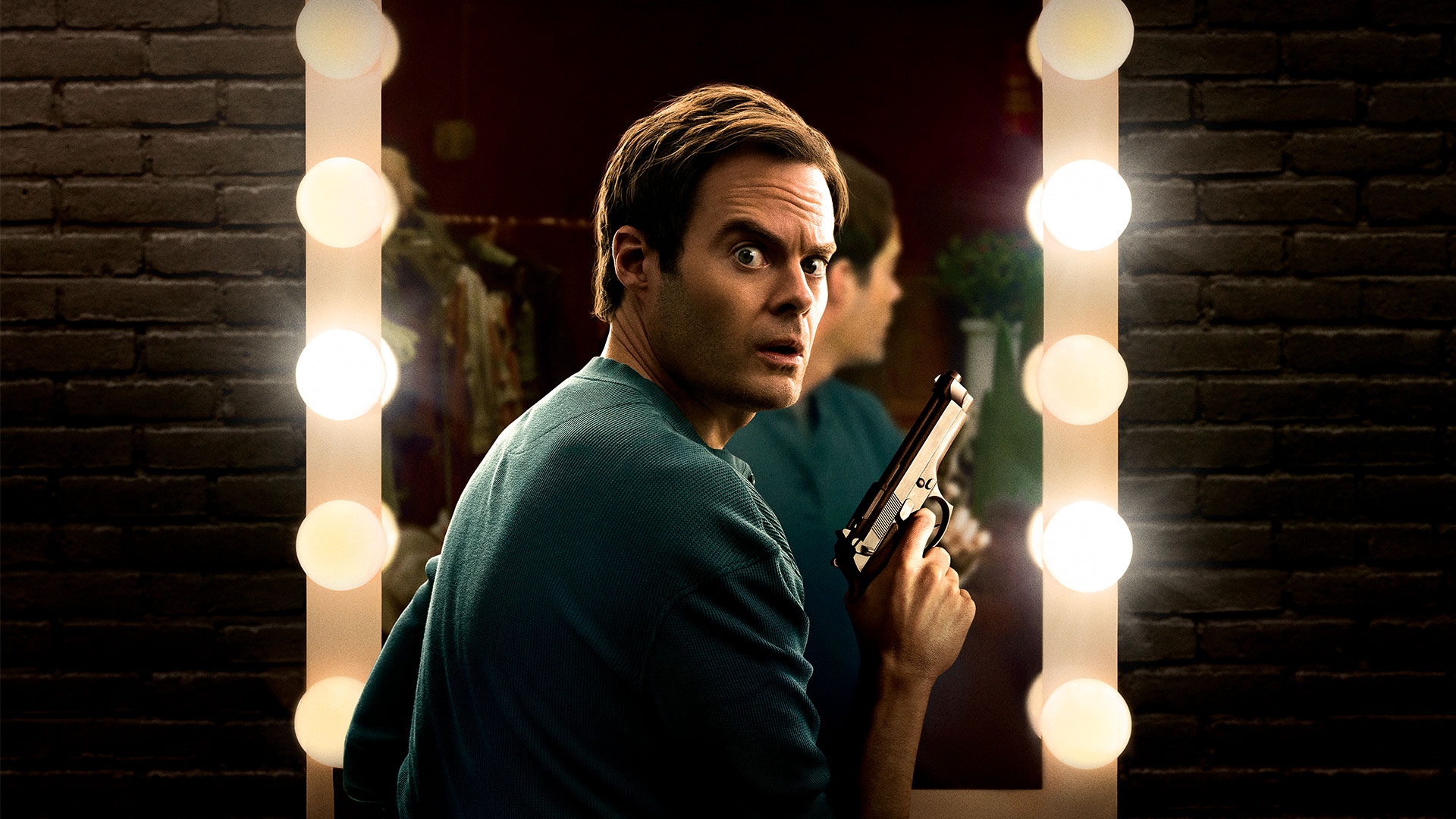
When “Barry” finished its first season last year, it ended as one of the best new shows on television. Even with the talent behind it, including Bill Hader (as the lead actor, a writer, showrunner, and other behind-the-scenes roles), Alec Berg (a co-showrunner with Hader, best known for “Silicon Valley”) and even Henry Winkler (better known as The Fonz), the show’s premise seemed like a better fit for a Hader-led “SNL” sketch than a fully-fledged HBO production. The series follows a hitman (the titular character, as played by Hader) in his attempts to leave his murderous job behind him and become an actor. In the wrong hands, the show would’ve been a single joke repeated ad nauseam, the silliness of a hitman trying to become a performer being the only punchline.
Fortunately, the first season of “Barry” was much more than that. It was a show that balanced darkness with goofiness, featuring psychologically complex characters grappling with profound themes. Hader and his writers created the next great TV anti-hero, an evolution of characters ranging from Tony Soprano to Don Draper and Walter White. Barry is a deeply violent man, but in his desire to leave his murderous endeavors behind and start a better life, it’s impossible not to root for him.
The Season 1 finale seemingly closed the door on any possibility of Barry achieving the life he wanted. For a brief moment, Barry seems to have everything he wanted: Freed from his commitments to the Chechen mafia, and having started a relationship with his crush Sally (Sarah Goldberg), everything seems to be looking up. All of that is ruined when Detective Janice Moss (an excellent Paula Newsome) puts the pieces of the puzzle together and realizes that Barry was the killer she spent the entire season looking for. Upon confronting Barry, he responds to her in the only way he knows how: Firing off a few rounds from a pistol he hid nearby.
Season 2 picks up in the aftermath of this disaster, some months later. Barry is still clinging to his dreams of being an actor and escaping his past, but the dream life he’s established for himself is falling to pieces. His former ally, the Chechen mobster NoHo Hank (Anthony Carrigan), has resurfaced and demands Barry’s assistance. Barry’s acting coach Gene Cousineau (Winkler) is in a state of deep depression, as he was in a budding romantic relationship with Janice and has consequently lost all motivation to teach his acting course. In a desperate attempt to hold onto what little he has left, Barry convinces Gene to continue teaching. The catch: Each of his acting students must write and perform a monologue based on a traumatic memory. For Barry, that means re-visiting his time as a Marine, a would he would rather leave unexamined.
Perhaps the most strikingly impressive aspect of the show is how it balances profound darkness and goofy humor. For example, NoHo Hank is an impeccably silly character, from his cheery attitude and love of musical theater, to his fantasies of intellectually besting Thomas Friedman. NoHo Hank is ridiculously silly. But when he shows up outside Barry’s acting class, he is no longer a joke. The threat NoHo Hank poses to the life Barry has created for himself, and to the lives of his fellow actors, is very real. NoHo Hank then manages to simultaneously be comedic relief and a serious antagonist, a balancing act few other shows could pull off. There are countless other examples of silliness balanced with seriousness in the show. The most recent episode features Sally’s tense confrontation with her abusive ex-husband, and an actor struggling to convince Gene that he was abducted by aliens. It’s nothing short of miraculous that those two scenes can naturally co-exist within the same show.
Part of that is due to the outstanding cast. Hader has found a career-defining role with Barry. His performance is often understated, expressing incredible pain and anxiety with a simple glance or shudder. When Barry does break down, Hader is similarly outstanding. His anger and anxiety are painfully real. The supporting cast similarly shines. Like Hader, Goldberg must similarly portray an emotionally damaged character. Her depiction of Sally demonstrates the actress’ impressive range, from grappling with her character’s traumatic past, to her egocentric tendencies. As Gene, Winkler shines in portraying a deeply selfish, cynical man. Winkler does not let Gene’s self-centered inclinations entirely define the character; in his hands, Gene is a man with deep-seeded suffering, in addition to being a jerk. Carrigan’s performance similarly adds nuance to NoHo Hank, a character who would be a one-note joke in the hands of a lesser performer. Instead, he’s a multi-layered and hysterical character.
The same could really be said of “Barry” as a whole. Its premise seems like that of a much simpler show. Instead, the show is a surprisingly deep and thoughtful character study, an exploration of how the past affects the present. Traumas loom large over the characters of “Barry,” and everyone’s looking to outrun them. The tension between the character’s desire to overcome the burden of their past selves and the show’s refusal to reward these aspirations is the source of some powerful storytelling.
Whether or not “Barry” eventually rewards its characters’ hopes, or continues to deny them, is beside the point. The end of this season could very well repeat the same thematic point it made at the end of last season, with Barry and his friends again denied the chance to escape their pasts. It doesn’t matter whether or not the show continues its cynicism or has an optimistic streak. What matters is that, regardless of endgame, “Barry” is one of the most powerful, and funny, shows currently on television.
Henry Spiro can be reached at hspiro@wesleyan.edu and on Twitter @JudgeyMcJudge1.
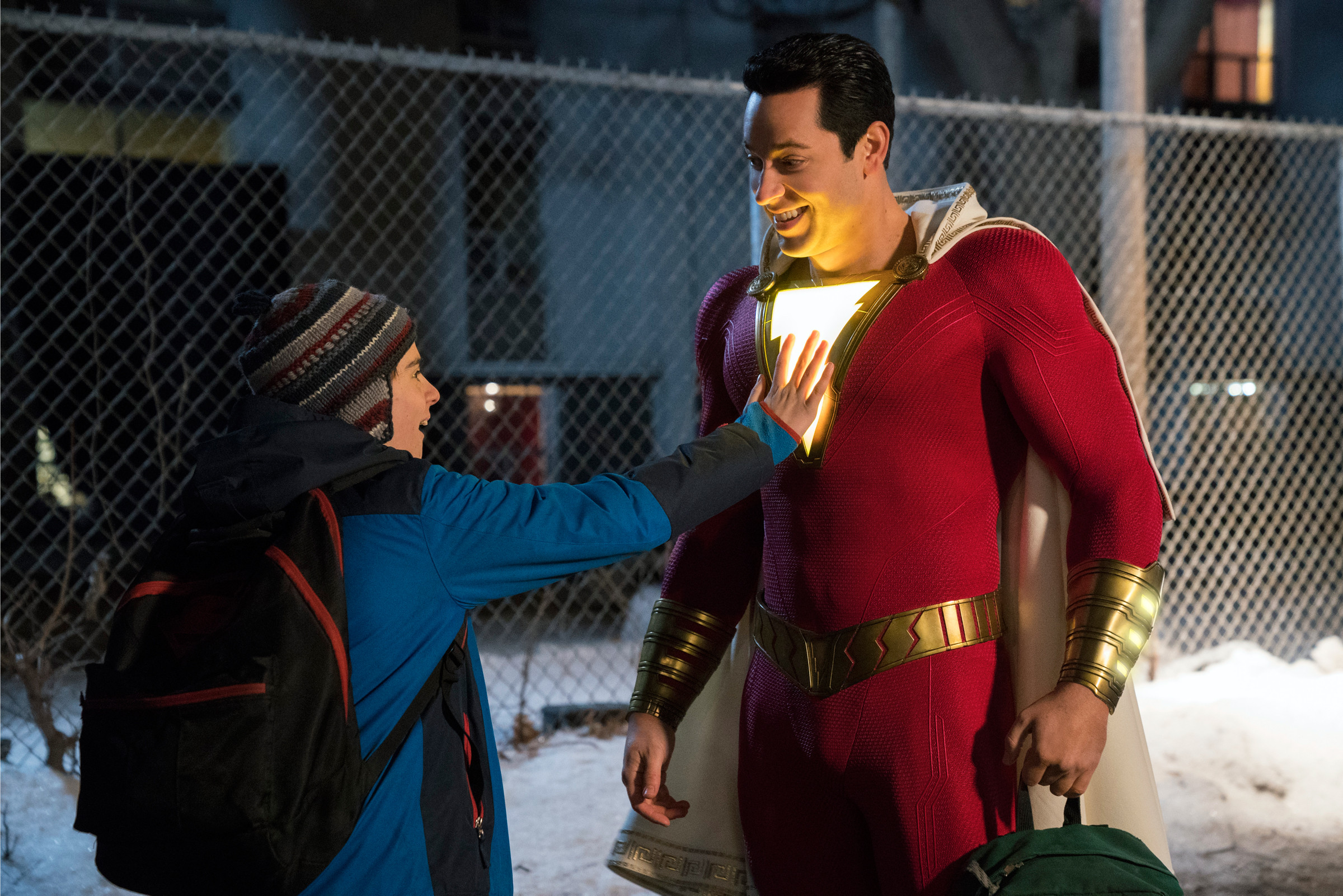
Going into the theater, I thought that I knew what to expect from “Shazam!” It would be a silly, lighthearted superhero flick. It would feature a great leading performance from Zachary Levi, a wonderfully goofy actor whose work I’ve admired since the later 2000s when he starred in the TV series “Chuck.” I expected, in other words, a pretty fun time at the movies. And to a large extent, I received exactly that.
But, late into the film, I was caught completely off guard. It veered into surprisingly heavy territory, bluntly addressing the kind of themes and conflicts that kids’ movies usually sugarcoat or avoid entirely. I won’t say much about what actually happens; to do so would spoil a terrific scene. It’s a shocking moment, both for being a surprise plot twist, and for the emotionally intense territory it enters. I will say this: I cried.
Yes, during a movie so silly, and so aware of its own silliness that it features an exclamation point in its title, I was moved to tears. To be clear: My tears say more about the movie than they do me. “Shazam!” is, on some level, exactly what I expected: A delightful, funny, superhero movie. It’s also a deeply moving and thoughtful story about a subject Hollywood usually botches by artificial sentimentality: Family.
The story follows Billy Batson (Asher Angel), a troubled teenage orphan living in Philadelphia. When he was a young child, his mother lost sight of him at a crowded carnival. Since then, he’s been searching for his lost biological mother while hopping from foster home to foster home. He’s placed in a new foster home with a warm and loving family, and a potential friend in the form of Freddy Freeman (Jack Dylan Grazer). Shortly after defending Freddy from school bullies, Billy is magically whisked off to the lair of a dying wizard (Djimon Hounsou). Searching for a new heir, the wizard offers to bestow his powers upon Billy. All Billy has to do, in turn, is utter the wizard’s name: Shazam. (The film, to its credit, is just self-aware enough to make fun of this profoundly silly name). When he does, Billy finds himself in the body of a muscular, adult superhero (Levi), with a grab bag of powers. By repeating the wizard’s name (Shazam!), he can switch between this adult body and his regular self.
From there, the story follows many of the same beats as other superhero origin stories, but with a smart mix of schmaltzy sentimentality and goofy humor. Credit must be given to screenwriter Henry Gayden, who enlivens clichés with relatable humor. While he may look like a grown adult, Billy, in his superhero form, is still a child. Consequently, he acts like any kid would, if suddenly granted powers. Freddy records Billy’s attempts to figure out and understand his powers, and (in a particularly entertaining montage), uploads them to Youtube. They buy beers, enter strip clubs, and do a whole host of other things that kids aren’t allowed to do. The film is fulfilling a requirement of every superhero origin story–that moment where the hero experiments with and learns about their powers–but does so with an entertaining twist; the superhero is a child, living out his fantasy of being an adult.
The other origin story cliché that the film enacts, less successfully, is that of the villain. Theoretically, the film has a perfect antagonist in Thaddeus Sivana. Like Billy, he too has a rough relationship with his family; in his case, his aggressive and mean-spirited father and brother. As a child, he too was sent to Shazam’s lair, but denied powers, as he failed to demonstrate his purity of heart. Now, as a grown adult, he seeks the magical abilities he was denied as a child through villainous means. In other words, he should be the perfect foil to Billy: suffering through similar traumas which shape them in different ways.
In practice, however, Sivana is one-note mediocrity in writing and performance. The script never allows Sivana to show any real emotion, any of the pain simmering over the course of his life. Mark Strong’s performance doesn’t alleviate the problem, either. Strong leans into the soulless anger of his character so much that Sivana becomes just another angry bad guy for the hero to eventually defeat, with no inner life to call his own.
Sivana, fortunately, is the exception and not the rule. The rest of the cast and characters are excellent. Levi, as mentioned, is fantastic. He builds off of the performance ticks he honed years back in “Chuck.” There, he played a bit of a man child who has a super computer embedded into his mind; now, he plays an actual child given actual superpowers. The transition is seamless: Levi fully captures the glee and terror Billy experiences over his newfound alter ego. As the young Billy, Asher delivers a solid performance, bringing a weighty angst to the character, though one can’t help but wish that he was a little goofier to match Levi’s performance. Yet the film’s true standout is not Levi, but Dylan Grazer. Freddy’s a lovable person who’s ignored and bullied by his classmates due to his disability, and, appropriately, Dylan Grazer brings a mix of beaming charisma and quiet loneliness to the role. He’s more than Billy’s sidekick; he’s the movie’s scene stealer.
The relationship between Billy and Freddy, two foster family brothers, provides a solid backbone. This is a film that isn’t subtle in its messaging about family. It begins with Sivana in conflict with his family members, then segues into Billy’s own troubles with his missing mother and the many times he’s fled foster homes. There are visual callbacks throughout the film to Billy losing his mother, including a third-act final battle set at a carnival. It’s pretty rare that a superhero movie’s climactic action is entertaining; usually, it’s just a bunch of bombastic CGI effects and loud sound effects. But “Shazam!” avoids this trap, grounding its finale in the film’s main theme. One moment at the carnival may or may not have brought me to tears a second time.
“Shazam!” is as silly a movie as one would expect, but it’s also an emotionally smart film. In approaching the topic of family, it doesn’t shy away from darker, discomforting truths, nor does it avoid wearing its heart on its sleeve. It’s a cheesy, schmaltzy movie, but it works all the same. More than its protagonist’s powers, the film’s thoughtful re-imagining of tired clichés is its real magic.
Henry Spiro can be reached at hspiro@wesleyan.edu and on Twitter @JudgeyMcJudge1.
“The Matrix” is the kind of lightning-in-a-bottle movie that shouldn’t have worked; yet, somehow, all of its various, elaborate pieces fit together nearly perfectly. It’s been over twenty years since the film was released (its anniversary was last Sunday, March 31), yet it still holds up remarkably well today. Lana and Lilly Wachowski, the writer-director duo behind the flick, only had one other film to their name: A low-budget thriller named “Bound,” which was produced for $6 million but only made back $7 million. There was no reason why the inexperienced pair should have been able to pull off a sci-fi blockbuster; there was even less reason to believe that they could make something as absurdly high-concept as “The Matrix” work. Somehow, they did more than making it work.
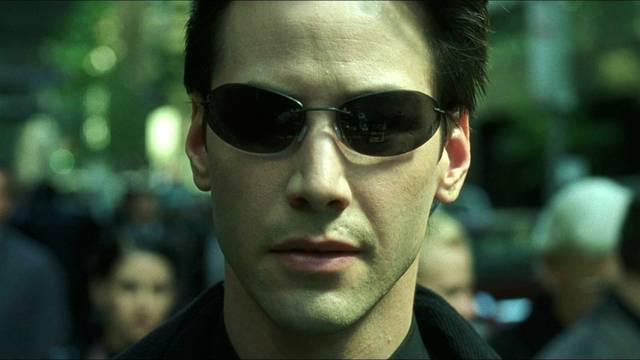
Not all of the film’s success can be credited to the Wachowskis; much of it must go to the cast, which includes several actors who weren’t the filmmaker’s first choices. Keanu Reeves is often criticized for his blank-faced demeanor, but here, his absent-minded expressions are perfectly befitting of Neo. He’s the audience stand-in, as incredulous and confused as we are by everything strange thing around him. Alongside him is the equally-well-cast Laurence Fishburne, whose calm charisma turns Morpheus into an authoritative and intriguing mentor figure. One shudders to imagine how the film would have turned out if the Wachowskis got their first picks for the roles, with Will Smith portraying Neo and Val Kilmer as Morpheus. Smith’s flamboyant charisma would have derailed the entire project; Kilmer’s steeliness pales in comparison to Fishburne’s.
But the film’s perfect casting extends into the supporting roles. As Agent Smith, the film’s primary antagonist, Hugo Weaving blends smarmy obnoxiousness and intense rage to create a terrific villain. Carrie-Anne Moss brings a stoicism and intensity to her role as Trinity, one of Morpheus’ followers. “The Matrix,” simply put, is an aptly cast film.
Beyond the cast, the film also boasts an impressive script. While some of the imagery and philosophical ideas of the film remain prevalent in modern culture, the finer details of the plot are somewhat forgotten. To recap: Hacker Thomas Anderson, operating under the nickname Neo, crosses paths with Morpheus, a suspected terrorist who reveals to Neo that reality may not be what it seems. He offers Neo a choice: take a blue pill and return to his former life, forgetting what has occurred; or take the red pill, and learn the truth. Neo takes the latter and awakens in a horrific, liquid-filled pod; it is then revealed that this is reality. The world he was living in was actually the Matrix, a computer simulation established by machines intent on enslaving humanity. Neo, according to Morpheus, is “The One,” a prophesied figure who will liberate humanity from the machines.
c/o empireonline.com
It’s a gleefully high-concept story, one which blends ancient mythological archetypes with modern social issues. The narrative is a retelling of what Joseph Campbell called “the hero’s journey,” a narrative which repeats itself across countless cultures and time periods. It’s a narrative deployed in stories ranging from those told in Ancient Greece, to “Star Wars” and “Harry Potter.” Within this archetypal narrative, a hero ventures forth from his everyday life, encounters some kind of supernatural forces, defeats evil, and returns with newfound powers.
It’s the basic narrative of “The Matrix.” Neo ventures out of his normal life to discover his reality is an illusion, perpetuated by those seeking to control humanity; within the Matrix, he discovers newfound powers (from learning Kung-Fu, to running on walls), and by the end of the film, defeats the oppressive Agent Smith and returns to the Matrix promising to use his newfound abilities to oppose the machines.
But the film goes beyond the usual tenets of the hero’s journey; it’s also a story that speaks directly to modernity, using science fiction to address social issues that are even more relevant today. There are shades of Marxism, among other philosophies, within the film’s set-up. The machines created the Matrix to blind humanity to their enslavement, giving them the illusion of freedom: a set-up which has echoes within Marxist theory about how capitalism deludes workers into believing they are free. Just as the human machines are a human invention, so too is capitalism, according to Marx. Neo and his compatriots could also be viewed as early fighters of an allegorical communist revolution, rebelling against their machine overlords to free humanity. There are many other philosophies within “The Matrix,” far too many to properly summarize and discuss here. The main takeaway is that “The Matrix” speaks to contemporary issues of societal power, oppression, and more, and that it weaves these themes into the hero’s journey. It’s a story that’s both as old as time, and one speaking directly to the time in which it came out. The fears surrounding technology the film tackles have only grown since 1999 with the rise of absurdly powerful social media and Silicon Valley corporations. The Wachowskis, in other words, were well ahead of their time.
On a directorial level, the film is impeccable. The action scenes are remarkably meticulous, boasting careful, deliberate use of slow-motion, combinations of shootouts and heightened fistfights, and intelligent editing. There is an effortless, deliberate flow as the film shifts from slow-motion shots of characters flying through the air, to fast-paced martial arts brawls. The Wachowskis even went so far as to invent a new kind of special effect, “bullet time,” in which dozens of cameras are arranged in a circle and capture still frame shots at a rapid pace (several frames per second). These shots are then compiled together and edited to create the illusion of a moving image, one in which the camera appears to move around objects that appear to be moving in slow motion. It’s the effect that can be seen in an iconic moment, in which Neo bends backwards and effortlessly dodges bullets fired at him. These effects and others have aged shockingly well: a testament to the Wachowskis’ talents. Countless blockbusters since then have tried (and often failed) to replicate the action stylings of “The Matrix”; what they lack is not the contents, but the thoughtful approach the Wachowskis brought to every frame.
All the best qualities of “The Matrix” can be found in its climactic scene, a showdown between Neo and Agent Smith. Neo is killed by Smith, but, in accordance with his prophecy, comes back to life with newfound powers. He quickly defeats Smith in a fistfight (after scene after scene of Neo struggling to go toe-to-toe with him) and destroys him in an explosion so dramatic, the entire room reverberates around them. When one of Neo’s allies in the real world asks what’s happening, Morpheus responds succinctly:
“He is the one.”
The final scene is emblematic of everything that makes “The Matrix” great. On an obvious level, it’s the fulfillment of the hero’s journey, the satisfying moment in which “the chosen one” fulfills their destiny. On a thematic level, it represents the successful rise against societal oppressors (it’s not a coincidence that Smith and the other agents dress in suits like soulless bureaucrats). Stylistically, it has all the hallmarks of the Wachowski’s action stylings. We watch Neo slow, and eventually stop, bullets in their tracks; there’s a hand-to-hand fistfight between him and Smith, and much, much more. And it’s a scene sold perfectly by Reeves and Weaving, the former with his effortless confidence, and the latter with his outrage and horror.
In the twenty years since the film’s release, Hollywood has tried to replicate its success. Various blockbusters have borrowed from its gritty tone, philosophical aspirations, and general sense of style. Some of these attempts have been better than others (Zach Snyder’s obnoxious use of slow motion and pretentious pseudo-philosophizing ranks him among the worse of the film’s imitators), but no film has ever recreated the miraculous greatness of “The Matrix.” Not even the film’s two sequels could match the original, as the Wachowskis buckled under their desire to out-do the action scenes of the original. “The Matrix,” then, is best understood as a one-of-a-kind film. It’s a movie whose cast is so outstanding, whose story is so thoroughly engaging, whose aesthetics are so uniquely original, that nothing can really ever match it. It’s a glitch in the simulation, and one that’s not likely to repeat itself.
Henry Spiro can be reached at hspiro@wesleyan.edu and on Twitter @JudgeyMcJudge1.
The ending of “Us,” Jordan Peele’s second feature film, dramatically alters the meaning, both literally and figuratively, of everything that came before it. All the themes, conflicts, expositions, etc. must now be viewed in a new lens. Peele ends “Us,” in other words, with an ambitious curveball. Unfortunately, said curveball is nearly the film’s undoing. Peele fails to balance thematic ambiguity with the social commentary that he’s clearly striving for. It’s a movie that could be about class in America, the nature of the soul, religious prophecies coming to light, and more. It could also be about none of those things; the ending doesn’t clarify the film’s themes so much as it does expand and, unintentionally, obfuscate them.
But I’m getting ahead of myself. For much of its runtime, “Us” is an outstanding film, one of the best horror films in recent memory. The performances are terrific from top to bottom, with Lupita Nyong’o’s dual performance being a particular standout. Peele’s direction is pitch-perfect, with a striking attention to detail and a masterful grasp of horror tropes. Its narrative, despite its clumsy conclusion, proves to be intriguing and engaging throughout.
The film begins in 1986, with a young girl and her parents at a beachside boardwalk. The girl wanders off from her parents and into a hall of mirrors. She is eventually greeted not by her reflection, but by an exact clone of herself. She’s forever traumatized by this moment, no longer able to even speak. Years later in the present day, the young girl, named Adelaide Wilson (Nyong’o), is now a mother of two, enjoying summer vacation with her husband Gabe (Winston Duke) and their two children (Shahadi Wright Joseph and Evan Alex). The pair return to the beach where Adelaide was once traumatized, meeting up with their friends (Elisabeth Moss and Tim Heidecker) and their two twin daughters (Cali Sheldon and Noelle Sheldon). A series of strange coincidences leads Adelaide to believe that her double, the person whom she saw as a young girl, may be coming back to haunt her. She’s right, in a way: A family that looks exactly like the Wilsons appears and forces their way into the Wilsons’ house. The doppelgängers, dressed in red jumpsuits and carrying gold scissors in a hand embellished by a leather glove, have something planned for the Wilsons.
c/o Universal
It goes without saying that the doppelgänger family is played by the same actors as the main family, a choice that could backfire without a cast ready to rise to the challenge. Thankfully, Peele has assembled a remarkably talented collection of actors. Nyong’o is the obvious standout. As Adelaide, she smartly portrays a woman facing startling trauma, a determined and compassionate mother, and an all-around tough fighter. But her performance really shines as Red, her terrifying doppelgänger. Adopting a coarse voice with unnerving vocal tics, Red is a horrifying force of nature; the scariest moment of the film comes not from any of the deaths or dreadful suspense built up before them, but from a scene in which Red explains her traumatic backstory. The rest of the cast does great work, too: Duke is wonderful at home as the goofy dad of the family, Moss and Heidecker are terrific comedic relief, and even the child actors rise to the occasion of their emotionally complicated roles.
It helped, presumably, for the cast to have a master director like Peele behind the camera. With “Get Out,” Peele showed the world that he has an eye for horror and an ability to craft startling, unsettling imagery. With “Us,” he demonstrates that “Get Out” wasn’t lightning in a bottle. His every shot feels deliberate and thoughtful, with impeccable attention to detail. Eerie sound effects and music choices permeate the film, turning classic songs into foreboding or darkly ironic warnings of the chaos to come. But more than his ability to expertly build tension, Peele demonstrates a remarkable knowledge and understanding of the history of horror films. He pulls inspiration from films as different and historically distanced as Alfred Hitchcock’s “The Birds” and Wes Craven’s “A Nightmare on Elm Street.” He not only understands how auteurs like these construct a scene, create a villain, etc., but deploys these same techniques himself. In other words, Peele demonstrates that he is, perhaps, the next great filmmaker of the horror genre.
If only his writing could live up to his direction. For the most part, his screenplay is both innovative and traditional. It takes an original, compelling premise and melds it with the tropes of home invasion thrillers. It finds creative, and appropriate, ways to inject humor into otherwise unsettling moments.
But it almost completely falls apart in the film’s third act. Once the truth of the doppelgängers is unveiled, the film runs into a number of issues. On a literal level, the premise is suddenly full of plot holes and logistical impossibilities. These could be forgiven, as Peele wants us to overlook these issues in favor of thematic meaning. If only the film had something coherent to say. Unlike “Get Out,” which had a clear, powerful message behind it, the message of “Us,” is both open-ended and grounded in a social critique. It’s a film that is riddled with multiple meanings and interpretations and is clearly centered on a polemical take on the sins of the America (it’s not a coincidence that “Us” is also the initials for United States). But Peele’s desire for an open-ended message is at odds with his desire to make a point. The film is therefore both too ambiguous and not ambiguous enough; neither a polemic nor a film for the audience to interpret for themselves.
It is strange to conclude that “Us” is “merely great,” but that’s the only proper way to describe it. The film is staggeringly close to being a masterpiece; for much of its runtime, it’s practically perfection. But Peele veers way off the rails in his grand finale and, in the process, diminishes the greatness of the film that came before it. Yet, the performances and pitch-perfect direction mean that not even a disastrous climax can destroy “Us.” More than a great movie, it’s a sign that Peele is destined to join the ranks of the horror auteurs who so clearly inspired him.
Henry Spiro can be reached at hspiro@wesleyan.edu and on Twitter @JudgeyMcJudge1.
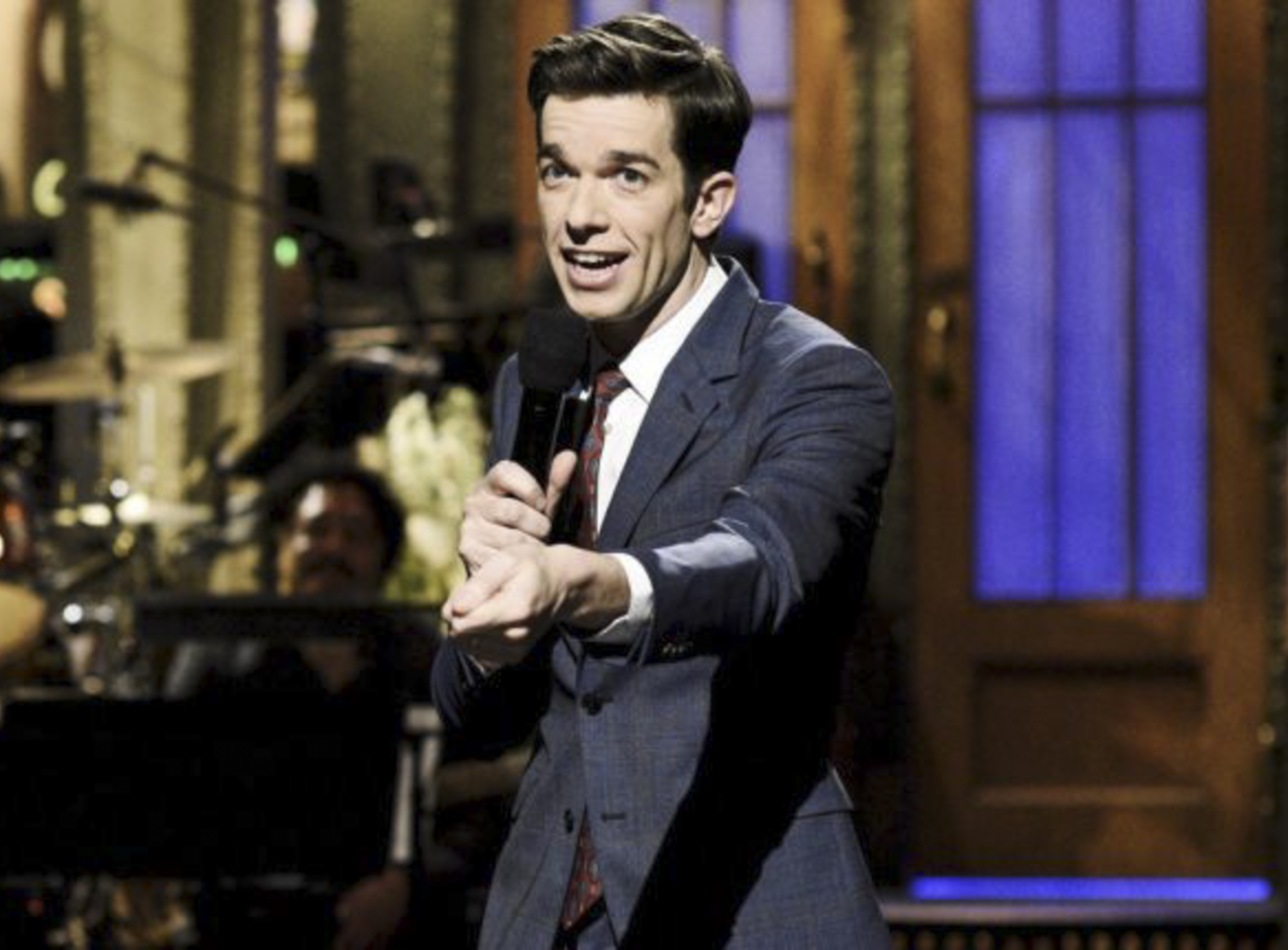
It’s pretty commonly acknowledged that “Saturday Night Live” hasn’t been at the top of its game recently. It wasn’t long ago that it was stacked with several heavy-hitting cast members, like Bill Hader, Kristen Wiig, and Fred Armisen, just to name a few, and consistently delivered laughs. Even after those members left, the show still remained a source of sharp, pointed political satire, often aimed directly at Donald Trump, the then-presidential candidate. But nowadays, a great, or even good, sketch is becoming more and more rare. “SNL”’s most recent episode, hosted by John Mulaney, was a welcome escape from these problems; but, at the same time, it also highlighted so much of what is wrong with SNL’s current season.
It’s not exactly a surprise that as host, Mulaney was outstanding. He’s become one of the biggest and best comedians of the moment, but he got his start as a writer on “SNL,” co-creating some of the most beloved sketches of the mid-2000s. It was Mulaney who spearheaded the iconic Weekend Update character Stefon, in collaboration with Bill Hader.
But plenty of other recent hosts have had no shortage of charisma; what distinguished Mulaney’s hosting gig wasn’t just his own talents, but that the show actually decided to utilize them properly. Take the “What’s That Name,” sketch, a gameshow in which contestants must correctly guess the name of close acquaintances whose names they absolutely should know, but absolutely don’t. Mulaney’s incredulous and perpetually annoyed persona was leveraged perfectly by the show, as he became increasingly aggravated and powerless before Bill Hader’s gameshow host.
But it’s increasingly uncommon for “SNL” to actually play to a host’s personality in their sketches. Oftentimes, the host is lazily assigned either the role with the most lines, or cast as the straight man to play against the zaniness of some other cast members. Sometimes, they’re given the opportunity to play satirical versions of their most famous characters (Jason Momoa as Khal Drogo, Claire Foy as Queen Elizabeth, etc.), but it rarely feels like the writers ever have a serious grasp of their host’s capabilities.
The political humor of this episode was also a step up from previous ones, though it also highlights the very problems with how SNL has been approaching the Trump Administration. In the cold open, the show took aim at Michael Cohen’s public hearing. Ben Stiller reprised his guest role as Cohen, though, surprisingly, the focus was hardly on him. Instead, the spotlight was on Rep. Jim Jordan (played in a surprise appearance by former cast member Bill Hader), as he repeatedly struggled to defend Trump in light of, well, reality itself. The sketch was hardly “SNL”’s best political satire, but it was an improvement over most of their recent offerings. It took some solid jabs at Cohen’s disastrous actions, and the absurdity of believing the president isn’t wildly corrupt.
But, above all, it was actually pretty funny—something that cannot exactly be said about a lot of the political humor this season. Alec Baldwin’s Trump impression has become utterly insufferable. It was funny and shocking when the now-president was merely a candidate, and Baldwin’s aggressively exaggerated facial expressions, hoarse voice, and fake wig reflected how silly Trump seemed back then. Now, after seemingly countless sketches, in which Baldwin’s impression hasn’t changed or evolved in the slightest, any satire directly involving Trump has become intolerably unfunny.
Other political sketches have similarly relied on broad caricatures of political and media figures who are, well, broad caricatures of themselves. I’m sympathetic, to an extent, towards “SNL”’s current political problem. The people who run our government, and the Fox news propagandists who support it—they’re all pretty ridiculous on their own. Satirical comedy is often based on heightening the absurd elements of reality—taking real political moments and exaggerating them for laughs. In today’s political climate, everything is already so ridiculous, that it’s hard to exaggerate political absurdities much further. It’s hard, for example, to make Michael Cohen any sillier than he already is; the same is doubly true of our president.
But there is a limit to my sympathies. As “SNL” has proven, repeatedly, that it is capable of properly satirizing the current political moment, it has been just as wildly inconsistent in its ability to do so. A sketch involving Dianne Feinstein aggressively talking down to children about the Green New Deal is a perfect example of this (although it was tragically cut for time during Mulaney’s episode). Feinstein, played by longtime cast member Cecily Strong, begins by trying to reason with some children advocating for the Green New Deal, just as she did in a viral video on Twitter. Then, she gradually becomes more and more aggressive towards the children, eventually cursing them out. It’s a sketch that takes a specific political moment and gradually heightens it; rather than come out swinging with another insufferable Trump impression, or uninspired, imprecise mockery of one of the president’s cronies.
The rise of Youtube and other social media platforms has increasingly led to the possibility that “SNL” would become outdated or irrelevant. If everyone has the capability of creating their own viral comedic sketches, then why is a weekly sketch show necessary anymore?
And yet, there’s something about the sketch comedy of “SNL” that cannot be recreated elsewhere. There’s the talented cast, each with their own charms, talents, and specific impressions/character types to pull out each week; the appeal of the theatrical sets and costumes; and the thought and creativity that can be put into each sketch. (Having a host, on the other hand, could easily be dispensed with, especially given the show’s penchant for cameos from celebrities who aren’t hosting). But still, “SNL” has been dragging its feet for a while now, only occasionally giving us an episode like Mulaney’s. If it wants to keep its cultural relevance, it needs to step up its game.
Henry Spiro can be reached at hspiro@wesleyan.edu and on Twitter @JudgeyMcJudge1.
Does anybody remember “The Artist”? That homage to vintage Hollywood? You know the one—filmed in black and white, entirely silent, lots of delightful dance numbers? The cutesy throwback to when films weren’t so obnoxiously loud?
No? You don’t remember it? But that’s entirely impossible. “The Artist” took home the Oscar for Best Picture; it was the best picture of 2011! It bested Spielberg and Scorsese! It must be iconic, memorable, influential; it must have all the hallmarks of great cinema. The Academy of Motion Pictures and Sciences said so!
Ok, I’ll drop the sarcasm. Nobody remembers “The Artist,” at least not in the way that a classic work of art is remembered. I mostly remember it now as charming. I also remember, with a tinge of bitterness, that I was wrong, and my father was right about it. I thought, at the time of its release, that it was deserving of Best Picture; my dad, accurately, predicted that it was hardly worthy of such a title, and would be soon forgotten.
That’s the fundamental problem with The Oscars: They don’t really understand what makes great cinema, but pretend that they do regardless.
The misunderstanding cuts deep. One need only look at the Academy’s recent decision to cut the presentation of Cinematography and Editing awards from their televised ceremony, showing snippets of the winners’ speeches later in the evening. It was a decision which was reversed, of course, but only after enormous outrage and protest from filmmakers such as Scorsese, Quentin Tarantino, and Spike Lee. The Academy’s stated goal was to “recognize and uphold excellence in the cinematic arts,” and yet, they chose to publicly overlook the work that is foundational to filmmaking. To quote Seth Rogen’s succinct statement on the matter:
“What better way to celebrate achievements in film than to NOT publicly honor the people whose job it is to literally film things.”
Their decision to undo this disastrous choice is beside the point; that the Academy would do so to begin with shows how profoundly little they understand about filmmaking, or at least, the appreciation of it. The absence of certain categories also speaks to this problem. There is, for reasons that I cannot comprehend, no category honoring the people who perform stunts. The people who literally put their lives on the line for the production of cinema, who sometimes do lose their lives in such a pursuit, are wholly overlooked by the group supposedly supporting cinematic excellence. An honest appreciation of cinema requires an appreciation of not just the glamorous celebrities, but the fascinating auteurs behind the camera, and the less-appreciated roles fulfilled by people just as dedicated as those in the spotlight. That the Academy fails to actually honor everyone involved in the production of a movie shows how much of a sham they truly are.
But the problems run deeper still: The very core of their mission, to determine which filmmakers are the best of their craft in a given year, is completely naive. A committee of voters fundamentally cannot determine what the greatest movie of a year is. Film quality is a subjective issue, within the eye of the beholder. Moreover, there is only one effective means of determining the greatness of a movie: the test of time. The movies which, countless years after their release, are still discussed and dissected; These are the movies which can be counted as, in some sense of the word, great. But great is not an objective standard; it merely means that they are influential, powerful movies, and remain so even as society and its tastes evolve. It is fair to argue that some movies are, indeed, better than others; that they are great artistic achievements. But to believe it is possible to perceive the greatness of a movie within a year of its release is patently absurd. (It is nearly equally absurd to believe that every single year there are movies of true greatness released, but I digress.)
At is very core, The Oscars is not about celebrating great movies. The Academy does not truly appreciate great cinema, nor am I entirely sure if that is their ultimate aim. By and large, The Oscars is a celebration of celebrity and the excitement of competition. It is the red carpet ceremony, in which we fawn over the elaborate dresses of famous actresses; it is seeing the most public faces in Hollywood unenthusiastically rattle off some kind words about an awards category; and above all, it is the thrill of watching, in anticipation, to see who will ultimately come out victorious in this elite gladiator sport, masquerading as an ode to the movies.
If you don’t follow my argument thus far, ask yourself this: Of all the movies released in 2008, which do you remember most? Which has remained the most influential on Hollywood today? Which, if any, do you still re-watch? Odds are, you didn’t answer “Slumdog Millionaire.” But The Academy certainly did.
Henry Spiro can be reached at hspiro@wesleyan.edu and on Twitter @JudgeyMcJudge.