
Author: Emmy Hughes

  • New Optical Telescope to Join University’s Astronomy Department

    A new telescope, recently purchased by the University’s Astronomy Department, will replace the department’s older telescope that was irreparably damaged. The new telescope will be used for observational research, teaching, and outreach. Though the telescope was initially meant to be installed over spring break, the COVID-19 pandemic forced delays. Faculty hope that the telescope will be installed this summer.

    The new telescope is a compact, 24-inch diameter telescope from the instrument manufacturer PlaneWave. It will be housed in the small dome atop Van Vleck Observatory, which was been home to a series of other telescopes operated by the University’s Astronomy Department.

    This includes the earliest telescope owned by the University, purchased in 1836. The telescope—called the Wilbur Fisk Telescope, after the former professor and University president—was removed and placed on display in 1986. An additional half-a-century-year-old telescope is currently housed in one of the additional domes at the observatory and is used for research and student training. A radio telescope is also operated by astronomers at Wesleyan.

    This new telescope will fill an important niche. After the retirement of the Wilbur Fisk Telescope, each of the subsequent telescopes housed in the Van Vleck dome eventually needed replacing. John Monroe Van Vleck Professor of Astronomy Bill Herbst explained the progression of telescopes in that space over the years, beginning with the Fisk Telescope.

    “[The Fisk Telescope] was replaced, sometime in the 1980s by a 10-inch telescope that had previously been owned by an amateur astronomer in Middletown,” Herbst wrote in an email to The Argus. “That telescope, in turn, was replaced by a 16-inch telescope that served us for many years and, now, the [new] 24-inch [diameter telescope]. This will be the first telescope in that location with the capability to perform professional quality research, and we are very excited to be getting it.”

    Recently, the need for a new telescope became particularly potent. Associate Professor of Astronomy Seth Redfield explained that the 16-inch telescope formerly operated by the Astronomy Department became incapable of tracking or pointing effectively and subsequently was rendered mostly unusable. Thus, finding and purchasing a new telescope became both necessary, and exciting.

    “We were so excited to find out…that we could purchase a telescope that large that’s 24 inches in diameter, and put it in that dome at the top of the stairs, and we could use it both for research and for the student observing and for the public outreach as well,” Redfield said. “An unfortunate event of something breaking led to us exploring this really exciting opportunity.”

    The telescope, which cost a total of approximately $130,000, was purchased through a combination of funds provided by Astronomy Department faculty grants, the University, and gifts from alumni. Redfield explained that in recent years, the cost of high-quality telescopes has gone down, which allowed for this purchase.

    This new telescope is optical, meaning it operates using visible light, rather than other wavelengths of light such as infrared. Optical is a favored wavelength range because visible light penetrates the earth’s atmosphere down to the surface, without much absorption by atmospheric molecules. The new telescope is also an imaging telescope, meaning it takes pictures. This is useful for a variety of research projects that University professors are currently engaged in, ranging from studying stars to galaxies.

    “I’ll be able to search for new planets, and confirm and monitor ones that other people have discovered, and we follow up on,” Redfield explained. “Bill [Herbst]’s work will continue, where he can monitor very young stars, and observe their unique behavior, as a young star with a disk around it or something [like that]. [Associate Professor of the Practice of Astronomy] Roy [Kilgard] is interested in imaging nearby galaxies, and kind of looking for big structures that are really faint, but give us a clue to the history of the…interactions that galaxies have with each other. You need a big area to see them because they’re huge structures, but you also need a lot of time, because they’re faint, so you kind of build an image over many nights essentially. So it’s perfect for this kind of telescope.”

    Kilgard spoke more specifically to his research interests, explaining that this new telescope, given its robotic capabilities, is especially well-tuned to capture transient events happening in the cosmos. Kilgard is interested in capturing visible light counterparts to detections of gravitational wave anomalies. This is applicable to events such as merging black holes or merging neutron stars. While black holes do not emit their own light, neutron stars—which are formed from the gravitational collapse of a star—do emit light. The new telescope will be able to capture these events in visible light, which can supplement gravitational wave detections. This can help researchers learn about the formation of some of the elements that make up the solar system.

    Kilgard also explained that the University is in a good position for making these kinds of detections, because we fill a niche of the night sky.

    “Where Wesleyan is situated, we’re so far east, because New England juts out from the East Coast, that we have this kind of almost unique slice of time that we own, after the sun has risen at the next further east observatory at the Canary Islands,” he explained. “And so we’re very well positioned to do follow up of sources in a particular slice of time.”

    In addition to filling a variety of critical research needs, this telescope can also be operated remotely. Redfield explained that once some of the necessary equipment is retrofitted, students will be able to operate the telescope from their dorm rooms, or really from anywhere around the globe.

    “[The new telescope] is capable of doing completely autonomous observations,” Redfield explained. “So that means it has a weather station, it assesses whether conditions are right, [and] it has an all-sky camera. It can tell, ‘Do I see stars?’ If the weather’s good and it sees stars, it can open the dome up itself, and orient itself, and start taking observations. If clouds come in or if it starts raining, it closes up. And if it clears up at 3 a.m. it’ll open back up again.”

    This is especially useful for a school located on the East Coast of the U.S., which does not have the advantage of continuously clear skies that observatories in the Southwestern U.S. or Chile have. Since the telescope can operate itself given observing instructions, it will be able to take advantage of differing optimal conditions over the course of an evening, preventing astronomers from needing to stay awake until conditions are right.

    As a consequence of this and the telescope’s additional functions, Herbst notes this telescope will be an excellent tool for teaching.

    “It is right on campus, is obviously modern, using the latest technology, and can be operated in both manual and automatic modes,” he wrote. “It will be a great resource for incoming majors and even advanced non-majors who just want to learn more about the use of telescopes and the exploration of the sky.”

    The telescope will also be used for outreach programs, which the Astronomy Department hosts regularly.

    “This telescope will be an important component of our strong outreach program, in which thousands of visitors each year get to look through a telescope, see our lovely observatory and its exhibits, and hear a brief, understandable lecture on some recent advances in our knowledge of the universe,” Herbst wrote. “Astronomers at Wesleyan, both student and professional, love sharing their passion for the sky with interested members of the Wesleyan and Greater Hartford communities. This new telescope will add to the tools we have to make our science come alive for others.”

    Redfield remains hopeful that the telescope will be installed this summer.

    “I’m really hopeful that it’ll happen this summer,” he said. “We were going to have a First Light Party. And we still will, but it’ll just be a while.”


    Emmy Hughes can be reached at ebhughes@wesleyan.edu or on Twitter at @spacelover20.

  • University Launches E2020 Initiative to Promote Wesleyan Engagement in 2020 Election
    University Launches E2020 Initiative to Promote Wesleyan Engagement in 2020 Election

    c/o http://engageduniversity.blogs.wesleyan.edu
    c/o http://engageduniversity.blogs.wesleyan.edu

    The University is launching an initiative called E2020 to promote civic engagement in the 2020 election. The program has two major facets: financial support for students who wish to participate in election campaigns or other political work, and the creation and promotion of civic-oriented courses in the University curriculum.

    The intention of the program is to actively engage members of the University in work in the public sphere, according to Interim Provost and Senior Vice President for Academic Affairs Rob Rosenthal.

    “This is part of a major thrust of the University, the engaged University, that students, and faculty and staff too, should be engaged participants in public life,” Rosenthal said.

    The program was announced on Dec. 2 in an all-campus email signed by Rosenthal, Director for the Jewett Center for Community Partnerships Clifton Watson, and University President Michael Roth ’78. In addition to the announcement of the creation of the program, the email stated that students would be able to receive financial support for political work over winter break. This could involve working for an individual, on a specific issue or campaign, registering voters, or something else affiliated with the election cycle.

    The University has previously provided financial aid to students who wish to engage in political work. Watson, who is involved primarily in student engagement within this initiative, worked on a similar, smaller scale project out of the Jewett Center in the fall of 2018, which offered students grants to work with political campaigns over fall break. Watson emphasized that E2020 would be a much larger version of that program, and would aim to make political engagement accessible.

    “Students will submit a budget—there are a few requirements for the application—but one of which is students submit a budget for the work that they would like to engage in, which would include costs associated with travel, food, lodging, et cetera,” Watson said. “But we certainly want to ensure that this process is one that can be accessed by folks who have to keep an eye to earning wages, we want this to be one that can be accessed by students of various socioeconomic backgrounds, so we want to ensure there’s a way for folks to recoup potentially lost wages, if they were interested in engaging in this process.”

    Students who submit an application and budget, whether for the winter term or future terms, can then receive funding that will allow them to pursue work related to the 2020 election. According to Rosenthal, the funding for the initiative will come from a donor who is interested in the idea and has pledged money for it. Rosenthal added that the project would not use University funds, and if more money was needed, it would be solicited from additional donors.

    An additional part of the E2020 plan is the creation and promotion of courses that have an orientation toward the 2020 election, none of which have yet been formed. Rosenthal emphasized that service-learning courses—which are courses that engage students in both theoretical work and practical work within the community—would be ideal for this project. However, he said that not all courses that would fall under this initiative would need to be service learning and courses could come from across the curriculum.

    “What I’m working on…is to get faculty to offer many more courses that speak to the election in any way,” Rosenthal said. “Ideally, they’ll be a lot of service learning courses…where students are actually doing something, as well as learning something, or courses with some sort of participation. We hope to have some courses that we call ‘harvesting courses,’ so if you go off, say in the summer, and you do a month of campaigning, then there’s a course when you come back that uses that experience as part of the material that you’re discussing. And we hope to get a very wide range of courses.”

    These courses could include a computer science course on encryption, or a course in the English Department on novels about the public sphere or contentious political races. Rosenthal said that it’s up to students and staff to design what they’d like to see within this program, and that the process will require creativity.

    “We’re really pushing everyone—students, faculty, and staff—to be as creative as possible,” he said. “It just seems such a momentous time, no matter how you feel about the issues, it’s really a momentous time.”

    Watson spoke to some of the intentions of the program, highlighting the role of civic engagement within a University setting.

    “We want to bring attention to the critical importance of students being engaged in the political process,” he said. “And so, our work throughout the year really supports this notion of encouraging students to engage civically in a way that really strengthens the civic fauna of our community. We recognize that the political process is one of the ways people are civically engaged. We recognize that as a critical component of civic engagement, and we want to ensure that we never lose sight of its importance. And I think our work is reflective of that throughout the year, but I think this is a really important way for us to sort of display that those principles are really important to us, across the political spectrum.”

    Roth, Rosenthal, and Watson all emphasized that the intention of E2020 is not to push students in a particular political direction. The program instead is aimed at providing students with the means and motivation to civically engage with their communities, specifically within the next 11 months of this election cycle.

    “I’m not saying everybody should go and work for one kind of candidate, that’s not my role,” Roth said. “My role as a teacher and as the president of Wesleyan certainly includes trying to facilitate student involvement in this political cycle, and beyond.”

    Rosenthal and Watson spoke to some of the potential challenges of the program. Rosenthal said that one of the difficult aspects may be encouraging students to perform political work far from Wesleyan, in areas where work may be more critical for a particular campaign or issue. Though Watson anticipates difficulty in getting the word out to potential applicants, he’s been encouraged by the fact that applications had already been submitted by Wednesday, Dec. 4, just two days after the program’s launch.

    “I think this is perhaps relatively new for us, and so I think the challenge of getting the word out across campus—so that a broad section of the student body is aware that this is an opportunity—is certainly something that will be a challenge,” Watson said. “I think we’re off to a good start, though….We’ve gotten, I think to date, already four applications in [for the winter].”

    Rosenthal and Roth see E2020 as a potential blueprint for other schools.

    “If this works well, we’re going to start talking to other colleges and universities and saying they could be doing this too,” Rosenthal said. “Maybe they’ll be a 100,000 students out there in the 2020 election who might not have been.”

    Roth expressed a similar goal.

    “I think it’s going to take a big effort from everybody,” Roth said. “I’m hoping this is not going to be 20 to 50 students. I’m hoping it’ll be a lot of people. And I hope—this is maybe a little immodest—but I hope other schools will say, ‘Oh look at Wesleyan. We can do that.’ At UConn, we can do that, at Michigan, we can do that at Wisconsin. That would make a tremendous difference, potentially. And not telling people what party to go to, but just making it easier for people to say that elections matter.”

    Applications for funding for the winter session are available online and will be open until Friday, Dec. 13.


    Emmy Hughes can be reached at ebhughes@wesleyan.edu or on Twitter @spacelover20.

  • What Do We Really Like?

    What Do We Really Like?

    I don’t know much about opera. I don’t know much about Broadway, either. I listen to the former; I don’t often listen to the latter. I mean, when I say listen, this essentially amounts to letting xyz recording play in the background while I do other work. Most of the best operas are in German or Italian (or sometimes French or Russian), so I never really understand what anyone is saying in them. There are often subtitles available, but again, I’m not usually someone to listen closely. At least not all the time. Sometimes, I do listen closely, but I don’t really understand anything formally about how these pieces are put together. One can detect the form of the individual numbers—sonata, rondo, etc.—but how it all fits together into a coherent dramatic work stumps me now and always has. Sometimes I think about reading a book about opera. I own two—well, when I say own, what I mean is that I came across two wrinkled old editions of a mass-market literary companion to the medium. I found them at a table on the fourth floor of Fisk Hall where the German department appeared to be giving away the contents of a small library. (If you’re interested, they’re mostly gone now, save for a few German language editions of Brecht’s plays and other miscellaneous criticism.)

    But I haven’t read any of those books, neither the ones on opera nor the others that I, owing to my general lack of restraint, took over the course of the next four months. I’m sitting here in my room writing this, and lying on my shelf is: “Ten Short German Novellas”; “Budenbrooks”; “The Death of Tragedy” by some man named George Steiner; and a collection of German poems in translation. The cover of the last is blue, and the font is the sort of serif font you don’t see any publisher willing to put on a book, either for consumption by the general public or by academics.

    All of these books sit on my shelf. All of these numbers from operas sit in my YouTube history. And I wonder: What on earth am I ever going to do with them? With the books: Will I ever read them? With the pieces of music: Will I ever dive deeper into them? With the books, any further action, beyond the occasional scanning and then putting down is somewhat less likely, as I tend to read more fiction than I can stand during my English classes in the semester, and returning home for break often find myself so fatigued and exhausted that I can scarcely manage more than one novel in a month. But with the operas, because of the easier prose style of musicians as opposed to literary critics, there is more hope. But not much more.

    Here’s the thing: I don’t really know if I like opera. I mean, I appreciate it. But it raises an interesting question: If I have all these books on the subject, but never read them; and if I listen to these works of art online, but in a cursory manner that requires nothing more than to click on the videos YouTube suggests to me, not having to pay anything for a Spotify subscription in the process, if that’s all I’m doing, how can I know if I truly like or don’t like something whether that be art, or anything else for that matter?

    It’s a pressing question, because I think so often we find ourselves, in this world where so much is easily accessible—whether that be the droves of music, from the most gratuitously popular to the most ostentatiously obscure available on YouTube, or the novels, playscripts, “high-brow” films, etc. that this college seems to constantly throw at us with a vigor that always astounds me, especially when I consider how little of it I would have come across had I not, by a great many contingencies summarized more as “luck” than “hard work,” wound up going here (exactly what contingencies we have no time to discuss)… 

    I realize at this point that I have lost the origin of my sentence, and wandered off on a productive, if unrelated and (for the reader) syntactically infuriating thought. The question now becomes: if I could not come to admire something without all this institutional force getting behind me, without all this community of support (workshops, clubs, free giveaways, effusive professors, etc.) assisting me in the process of developing such admiration for opera or fiction or whatever, can I really be said to love it? 

    In other words, can my interests in xyz subject area be said to be the natural thing for me, if I have not encountered it on my own, without any assistance or guidance; and without anyone smoothing the path for me. That last bit really gets to me: We all talk a great deal of sacrifice and commitment; but few of us have been Quentin Tarantino (to use a well-known and probably apocryphal example) working at a video store for five years until he could “break into the business.” And it makes you wonder: If so many, left to their own devices, would hardly have gotten as far as they have, what an army of “true” talent, true passion, is being lost! And, perhaps more profoundly: What a strange thing it is to live in a culture controlled by those who, without help, would amount to little more than mediocrities but which, one way or the other, whether you think it detestable or not, often wind up not being hacks.  

    This is a strange line of reasoning, and probably not one worth pursuing. At least not in the way I have articulated it. But the basic idea is worth considering, if only for its (probably miniscule) “grain of truth”: If I have found myself a fan of something, if I have found myself attached to something, but only because of the precise luck of other people having made that attachment possible, and not because of my own volition or natural aptitude, is it wise to say that I am authentically the fan of this or that? It is a question that scares me, though it probably shouldn’t. And to a certain extent I worry that, in having it published in this paper, I may seem judgmental (“a culture controlled by those who, without help, would amount to little more than mediocrities”); because many of my previous articles (the one on Canada Goose stands out in this regard) have taken that bent—have come off as wildly serious and angry and all the rest, have made me appear insensitive or a bad person (or so people have told me). But I leave it here for you to read, because it is a question that has become something of an obsession; and because, again, I lack restraint. 


    Trent Babington is a member of the class of 2021. He can be reached at tbabington@wesleyan.edu or on twitter @trentbabington.

  • Global Changes in Recycling Markets Impact Wesleyan and Middletown

    Global Changes in Recycling Markets Impact Wesleyan and Middletown

    c/o wnpr.org
    c/o wnpr.org

    Recycling—a common practice on campus, in Connecticut, and globally—is known for its environmental and sustainable benefits. But in last couple years, it has also become unsustainably expensive, with the recent crash in recycling markets.

    The University has been directly affected by the crash in recycling markets. In 2013, the University decided to purchase large balers, which crush materials to be transported and sold, to bale cardboard. The price at which the University has been able to sell baled cardboard, however, has gone down dramatically in the last few years.

    “When we purchased them in 2013, the price of cardboard—like the price of any material, it’s a commodity, it changes over time—we were seeing $80, $90 per ton in terms of the amount that we would get,” Sustainability Directory Jen Kleindienst said. “The highest that we saw, we got $140 per ton. With the crash of recycling markets, even though it is a clean material, I don’t think we’ve seen it go over $10 per ton in the past six months.”

    This is a small example of the wider problem.

    “It’s not a Middletown problem or a Connecticut problem, it’s a U.S. problem,” Kleindienst said.

    These changes are due to two main factors. The first is the national emphasis on switching to single-stream recycling. This model, in which all recycled objects go into the same bin, has ultimately caused an increase in contamination. The second problem comes in tandem with the first: China’s decision in 2017 to severely restrict import of recyclables into the country. Ultimately it is a self-feeding system that causes larger-scale economic shifts to impact local communities, and vice versa. The University, Middletown, and recycling plants in the area are struggling to keep up.

    But on campus, recycling seems streamlined, at first glance. When a student throws something into a recycling bin, a custodian will eventually empty that bin and bring the recyclables to a larger bin, located in a central campus location such as Usdan or Exley. There, custodians are asked to empty bags filled with recyclables into one of the large containers. Once the recyclables are in the containers, a hauler will come to pick up the recycling.

    Some parts of the University—including HiRise and LoRise apartments, senior houses, and some other campus locations—are included in Middletown’s Sanitation District, and the waste and recycling for these locations is managed by the city. But because of the sheer amount of waste that the University produces, the municipal waste service offered by the City of Middletown is unable to collect for the entire campus. The University, to make up for this, contracts a private waste collection service.

    Up until September of this year, that service was Dainty Rubbish—a family-owned waste management business, perhaps most recognized by their powder-blue garbage trucks with the phrase “Garbage is Beautiful” emblazoned on the rear. According to Kleindienst and Associate Director of Facilities Management Jeff Sweet, Dainty Rubbish was recently bought out by the larger waste-management group AllWaste. AllWaste is now responsible for the removal of garbage and most forms of recycling on campus, which is then taken to processing plants. There, the recycling is sorted by type of material. It is crushed and compacted, and then, if all goes well, it is sold on the recycling market.

    Of course, this only works for non-contaminated loads, free of non-recyclable materials such as food waste or regular garbage. Contaminates are removed in two different ways. Most commonly, contaminated items are removed at the recycling plant. This is often done by workers, who sort loads of recycling manually as items move on a conveyor belt. Machines, too, will sort recycling into various categories, including even different types of plastics.

    “Everything that the trucks [bring] basically just [gets dumped] into a giant room, so there are just mounds of recycling, with plenty of trash mixed into that recycling,” Kleindienst explained. “Things in groups get whisked up onto conveyor belts. They actually go down a conveyor belt. There are people standing on the sides of the conveyor belt physically pulling off items that don’t belong in any of the recycling streams.”

    The second way a load can be determined contaminated is prior to arrival at the plant. This is at the discretion of the company collecting the load—in the University’s case, either AllWaste or the municipal collectors. If a collection company determines that a load contains more than a certain percentage of garbage, the load will be determined contaminated and everything in it will be sent to a garbage dump. Keith Santos, the point of contact for AllWaste for Wesleyan University, confirmed that their litmus is about 10 percent, as stipulated by Connecticut state law.

    Sweet described the impact on the University when a load is contaminated.

    “That decision is made in the field,” Sweet said. “It’s simple as, that tonnage gets recorded on our waste, and not on our recycling.”

    The actual 10 percent litmus test is more of a guideline, primarily because the determination of whether loads are contaminated is purely visual. Contamination can sometimes be a proxy for plastic bags more than anything else, Kleindienst explained, and some of the subtler ways a load is contaminated often goes unnoticed. Santos also confirmed that AllWaste looks for 10 percent contamination but cannot determine exact percentages.

    Additionally, percentages at which a load is considered contaminated can vary. A representative of the Materials Innovation and Recycling Authority (MIRA), which is based near Hartford, explained that their typical litmus for contamination is 5 percent.

    “Typically we will send a notice out if it’s above 5 percent,” Contracts and Procurement Manager Roger Guzowski said. “If we survey something and it’s greater than 5 percent, we will send a notice out to the hauler.”

    Contamination of full loads is perhaps rarer than one would think. Kleindienst said that in each year, only about one or two loads from the University are diverted to waste. Sweet also mentioned that ever since the University has moved to empty recycling into the containers rather than dump it in with plastic bags, contamination has gone down.

    On a city-wide level, contamination also remains fairly low. Recycling Coordinator for the Public Works Department of Middletown Kim O’Rourke spoke to contamination levels in the city.

    “I would say residentially…I think our contamination level is under 5 percent,” O’Rourke said. “When people have dumpsters, that’s when it shoots up. Because when they see a dumpster, they feel like they can throw anything in it.”

    According to data provided by O’Rourke, of the tonnage of recycling collected from July through September 2019—which amounted to 180 tons—13.73 tons were determined contaminated. These contaminated loads required that Middletown pay additional charges for recycling totaling $841.37, in addition to the $12,492.80 for the cost of recycling in the city over that time period.

    Of course, most loads of recycling have some amount of contamination. This often takes the form of unclean recyclables, or other bits of trash that end up in recycling due to a phenomenon known as “wishful recycling.” Both Kleindienst and O’Rourke mentioned the phenomenon, explaining that people place items that cannot be recycled in the recycling bin because they think they ought to be recyclable. In the University’s case, this often takes the form of cups from Pi Cafe (most of which are compostable, not recyclable).

    “People are putting things in their recycling that shouldn’t be there, because they wish that they could go there,” Kleindienst said.

    O’Rourke also went into detail about the effects of wishful recycling, noting that ultimately, this does more harm than good.

    “People wish, ‘It should be [recyclable],’ so they put it in the cart, but actually that’s a really bad thing to do,” O’Rourke said. “Because that’s one of the problems that we had in marketing our recyclables, and [by] we, I mean as a country. It wasn’t clean. There was so much junk going in there.”

    The problem of recycling contamination at the University and in Middletown reflects national-scale contamination that has ultimately had a cyclical effect on local recycling. In 2017, China decided to restrict import of almost all kinds of recycling and trash and cracked down on contamination restrictions, with a new limit of .5-percent contamination—a number that has been characterized as nearly impossible to reach. China’s decision is in part because of the sheer amount of recycling and in part because of the high level of contamination. China found that much of the purchased recycling ended up filling landfills. Prior to the 2017 decision, China accepted half of the United States’ exported recycling.

    Santos, in an email to The Argus, noted how difficult it is to meet China’s new regulations, speaking from the perspective of AllWaste.

    “While everyone would love ZERO contamination, it’s just not practical,” he wrote. “It’s a % by volume not weight which is <10% by CT State law, whereas China has fully banned mixed recyclables and allows only 1 [pound] of contamination on a 2,000 [pound] Bale of material, an impossible feat to achieve (.05%) so they’ve basically closed their borders for recycled material from the US (down 99%) reduction from prior year 2018.”

    This decision has had a significant effect on the current recycling economy. The United States isn’t currently equipped to face the demand that recycling takes. For the University, Middletown, and their recycling plants, China’s decision has had tangible economic effects. MIRA Operations Manager Virginia Raymond noted the decline in the recycling market, attributing it both to China and to the turn to single-stream recycling.

    “The prices for pretty much all recyclables across the board have declined significantly,” Raymond said. “Certain materials are marginal at best, if not total losers. I would say from my perspective—and again I’m not necessarily speaking for MIRA—yes, prices have fallen. No question about that, even for what has historically been the most profitable.”

    O’Rourke spoke to the specific economic effect on Middletown.

    “It is affecting us because we used to get paid for the materials, now we are paying for it,” she said. “And Middletown’s a funny town because we have a downtown area where Wesleyan is, there’s an area, which Wesleyan is within, called the Sanitation District, and that serves our city. You know, we collect the trash, we collect the recycling, and that’s in the budget. So we now have to budget for the recyclables where we didn’t before.”

    These changes have also had effects on the likelihood of recycling. Kleindienst said China’s decision has destabilized the recycling economy, making it difficult to tell how much is actually recycled.

    “With the global crash of recycling markets, a lot of things have decreased substantially in value, and so there is currently no guarantee that most things that you recycle will get recycled,” Kleindienst said. “I have no way of knowing what is or isn’t actually being recycled right now.”

    The other major recent impact on recycling processes has been the national shift to single-stream recycling, which itself is interwoven in why China decided to restrict recycling imports. This form of recycling, when recyclables are not sorted at home, has caused an increase in contamination.

    “I think one of the things that has hurt recycling is single-stream,” Raymond explained. “It has increased the amount of contamination that we see in the recyclables. I think that, as much as anything, is a real component of why the prices aren’t as high as we used to be.”

    Kleindienst also spoke to this problem.

    “Single-stream recycling…is probably the worst idea we’ve ever had,” she said. “Conceptually, sounds great. But practically, if you decide that you think your coffee cup here is recyclable, and there’s still coffee in it, and you put it in…things get damaged, and they lose value. So that’s one of the reasons that I understand why a lot of recyclers in China, especially, have said, ‘We’re not taking American recycling, because it’s essentially garbage. It’s not clean, it’s not well-sorted. We can find our own materials domestically.’”

    Ultimately, the shifting dynamics in recycling markets internationally necessitates an infrastructure change in the United States.

    “The problem is now everybody is trying to market the materials domestically, and there’s only so many places to go,” O’Rourke said.

    Kleindienst and O’Rourke argue that change also needs to take place on an individual level.

    “One of the things that has come out of this is all of us, all of the municipalities are trying to educate people on what goes in the bin,” O’Rourke said. “Really, what goes in the bin. So we are really spending a lot on time on that, trying to get the word out: ‘Please pay attention to what you’re doing.’”


    Emmy Hughes can be reached at ebhughes@wesleyan.edu and on Twitter @spacelover20.

  • McAlear v. Wesleyan Proceeds With First Pretrial Hearing
    McAlear v. Wesleyan Proceeds With First Pretrial Hearing

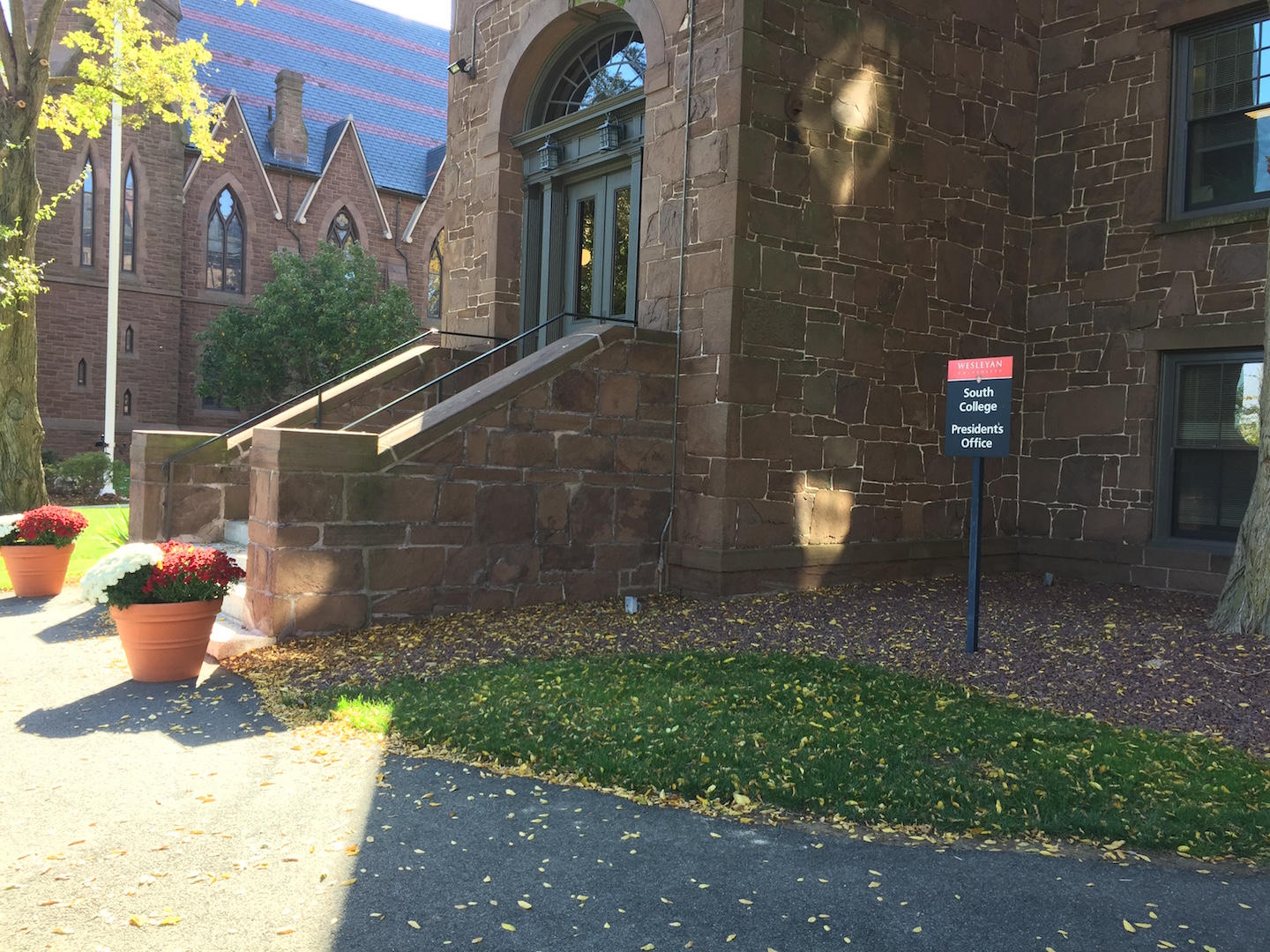
    The preliminary hearing for the case of Michael McAlear v. Wesleyan University took place on Tuesday, Oct. 29 at the Superior Court of Waterbury, Conn. No additional counts in the complaint have been stricken, and the case will move forward to further pretrial litigation.

    The case centers on posters first circulated in the fall of 2016, which displayed the face and name of Associate Professor of Molecular Biology and Biochemistry Michael McAlear, in addition to two other University professors. A sentence reading, “Reject sexual predators emboldened by institutional power,” was printed above the names and images of the three professors. McAlear’s complaint alleges that, by failing to defend him when posters circulated bearing his likeness, the University is liable under breach of contract, recklessness, and defamation per se (defamation alleging a crime involving moral turpitude, i.e. an act that is morally unscrupulous and intrinsically bad). Counts of negligence and negligence of emotional distress were withdrawn from the original complaint in August 2019 after the University argued that negligence can only be awarded punitive damages if an employee loses their job, which did not happen in this case. 

    The hearing was conducted by Judge Linda K. Lager as part of the Waterbury judicial district’s Complex Litigation Docket (CLD), a division of the Waterbury Superior Court responsible for adjudicating cases that involve charges for which there is no legal precedent in the state. The case was transferred to the CLD on Sept. 10 at the request of University attorney Patricia E. Reilly, as a claim involving the aiding and abetting of defamation has never been made in Connecticut.

    In addition to the issue of aiding and abetting in defamation, the hearing focused on discussion of the allegations claiming breach of contract and recklessness.

    Judge Lager began the hearing with discussion of McAlear’s contractual claims, focusing on the contention over coverage of reputational damages under contractual law. While McAlear’s attorney, Thomas Minogue, argued that losses to McAlear’s reputation could entitle him to additional damages, the University argued that reputational losses would fall under the breach of contract allegation, and therefore McAlear would not be entitled to separate damages.

    Judge Lager additionally pointed out that the case upon which Minogue relies, West Haven Sound Development Corp. v. West Haven (1986), states that the damages in a breach of contract claim are intended to place the party in the financial position he would have held had the contract been upheld. Since McAlear continues to hold the tenured position guaranteed by his contract, Lager questioned the validity of Minogue’s claims for consequential damages, as based on the standard established by West Haven.

    Lager also questioned the reasoning behind McAlear’s assertion that the University was responsible for breach of contract, as she could not discern what action the University had taken to violate their contract with McAlear.

    Minogue asserted that the University’s inaction, specifically its failure to protect McAlear, would count as action in this case.

    “The University did nothing about it,” Minogue said. “That constituted a breach of the contract to protect him.”

    Another point of contention was the alleged recklessness on the part of the University. The University argued that McAlear did not provide any legal standard to support his claim that inaction could be reckless. Since a claim of recklessness requires proof of a specific action, McAlear’s claims would constitute negligence rather than recklessness, and thus would not constitute an additional claim.

    Reilly further argued that, as negligence cannot arise in the context of ongoing employment contract, recklessness cannot follow, stating that recklessness is essentially “negligence plus.”

    Judge Lager responded that she did not agree with the University’s interpretation of recklessness, saying that recklessness involves a wanton disregard of the plaintiff’s safety, rather than the failure to insure it. 

    “Recklessness is an independent cause of action, in my view,” Judge Lager said. “It is often tagged onto negligence counts with no additional allegations to support recklessness, but recklessness itself is conduct that is willful or wanton. It is much more than negligence or gross negligence. It is conduct that indicates reckless disregard of someone else’s rights or consequences of the actions…. They stand independently.”

    Judge Lager clarified that this was not a confirmation of proof of recklessness.

    “At this point in time, I’m not determining whether or not the plaintiff can prove recklessness, only whether the allegations in the complaint are sufficient for recklessness,” she said.

    Minogue claimed that the University’s failure to stop the publication of the posters did indeed constitute a reckless action, as he alleged that the University knew that the claims on the posters were unsubstantiated.

    “The overriding fact is, Wesleyan knew, actually knew, that that description of the professor is false,” Minogue said. “That goes through the whole event. And when you add that to the list of conduct that gives rise and provides a factual basis at this stage in the proceedings, maintain a count of record, you have to build that into it. They knew it was false, and they let it go for 13 months, at least.”

    Reilly neither confirmed nor denied that the University knew the claims were false, proceeding instead into the allegation of aiding and abetting. As Judge Lager explained, the legal standard for aiding and abetting is threefold: A crime must be committed, the defendant must assist in this crime, and the defendant must act with intent and the knowledge that their action is wrong. Since the claim of defamation per se assumes that the crime of defamation has occurred, the issue at hand was whether the University substantially assisted the students responsible for the posters, as well as whether the University acted with specific intent. 

    Minogue argued that by failing to restrict student access to specific printing facilities, the University made it expressly possible for students to print the defamatory posters.

    “There really would be no defamation—period—if Wesleyan had not supplied the students with an office, a typewriter, a computer, a copier, all the materials necessary to compose and circulate these posters,” Minogue said.

    Lager acknowledged that while the factuality of claims was not at issue during the preliminary hearing, Minogue’s argument lacked strong reasoning. 

    “We live in a world where everybody has access to paper and computers and duplicating machines, so that’s a little bit of a stretch,” Lager responded. 

    Lager declined the University’s request to strike McAlear’s claim of aiding and abetting defamation. The case will proceed under a revised complaint, and is scheduled for further pretrial litigation on Dec. 5. 


    Emmy Hughes can be reached at ebhughes@wesleyan.edu and on Twitter as @spacelover20

    Erin Hussey can be reached at ehussey@wesleyan.edu and on Twitter as @e_riss.

  • U.S. Educational Engagement with China: Looking at Three Universities’ Attempted Ventures
    U.S. Educational Engagement with China: Looking at Three Universities’ Attempted Ventures

    The decision whether or not to move forward with a joint venture in China is one that many U.S. universities have faced. 

    This includes Wesleyan, which considered but will no longer be pursuing a joint-venture campus in China, as President Michael Roth ’78 announced in an all-campus email on Oct. 24.  The decision comes after a month of conversation about a potential joint venture, including a rally against the joint venture and also the passage of a Wesleyan Student Assembly (WSA) resolution requesting more transparency from the administration.

    Three other U.S. institutions that considered ventures in China are linked by concerns around academic freedom. Notre Dame University’s joint venture campus never came to fruition, Cornell University ended their partnership with Renmin University after six years of running a joint program, and Duke University opened their venture in the Jiangsu province of China in 2014. 

    Director of the Center for Global Studies Stephen Angle, who has been involved in conversations about the potential Wesleyan joint-venture campus in China since they began in February, highlighted the difficulty of forming a joint-venture campus that aligns with the standards of the partner institution. Angle said this was discussed when he went to a conference at Duke Kunshan University—Duke University’s joint venture in China—this past week. 

    “From people I talked to at Duke Kunshan, this issue of alignment between the international and U.S. partner is absolutely fundamental,” Angle said. “It’s difficult to make one of these things work. There’s a lot of challenges—a lot of opportunities but a lot of challenges—but you need to have the partners working towards the same goal in order to make it work…. [President Roth’s] judgment was that it was looking like we were too much out of alignment.”

    Duke Kunshan University, in partnership with Wuhan University and the regional government in Kunshan, China, first welcomed students in 2014. 

    Duke was focused on a few key opportunities in opening the campus in China, namely improving their international standings and expanding their research opportunities, then-provost Peter Lange said in an interview with The Argus. Though academic freedom had been a central concern, negotiations reached a point where Duke’s administration felt confident in the assurances of academic freedom that China’s Ministry of Education had agreed to. 

    “We wrote very specific provisions into the documents that needed to be mutually signed by the Chinese authorities and by us—going all the way up to the Ministry of Education—and so the Ministry of Education had to sign off on the set of provisions around academic freedom that had been stipulated,” Lange said. 

    Duke Kunshan initially started with a graduate program and opened to undergraduates in Fall 2018. Members of Duke’s Academic Council, made up of representatives for faculty interests, raised concerns before approving the creation of an undergraduate program by a margin of roughly three to one in November 2016, as reported by The Duke Chronicle. The main sticking points were if the education granted by the institution would warrant the “Duke” stamp on a degree, the costs of the venture, guarantees of academic freedom for both students and faculty, and how the university would proceed if academic freedom was violated. 

    “The exit strategy, really, eventually, ends up being we just withdraw,” Lange said. “It’s not terribly complicated, you just have to be ready to accept that that could happen. You should not go into such a project without some acceptance of that as being a potential consequence.”

    Duke faculty also emphasized that issues with academic freedom could actually be a motivating factor in establishing a campus in China. 

    “Not only do we have an opportunity to establish an institution that expresses the values that we are committed to in a country that may, or may not, need the kind of exemplar that we could produce,” said R. Taylor Cole Professor of Philosophy Alexander Rosenberg at the 2016 vote. “But for ourselves, and for the purpose of faculty governance at this university, to have an institution about which our faculty is concerned and committed will provide a test for faculty governance at Duke.”

    Creating the program was a monumental task. Lange spoke with The Argus about two key difficulties that Duke’s administration encountered in trying to form Duke Kunshan University. 

    “One, learning how to operate in a different culture and higher education system—and obviously with a different language,” Lange said. “And the second was that none of us had ever created a university from scratch, and there are just an immense number of relatively small but important issues that need to be addressed as you go forward. So the combination of those two made it a real challenge.” 

    Duke ran into several problems as the venture developed: Its original partner, Shanghai Jiao Tong University, fell through in the summer of 2011, and the campus’s opening was delayed by two years to 2014 due to various construction and negotiating issues

    But they emerged with a university that has started its second year of undergraduate programming and its fifth year of graduate programs in several fields. Duke also broke ground on an expansion of Duke Kunshan’s campus in August 2019, showing an ongoing and active investment in the project.

    The decision to begin the program was nearly a decade ago. Lauren Carroll, a Duke alumna who reported on the venture for The Duke Chronicle, speculated about whether or not the venture would have proceeded as it did, had the idea been announced today.

    “Given all the concerns about Hong Kong and stuff like that, I wonder if the alums or current students would have bigger concerns about it—it’s possible—but at the time it was all vague concerns about academic freedom, vague concerns about the cost, or stretching the university too thin, or worry about the university’s reputation,” Carroll said in an interview with The Argus. 

    Notre Dame University’s failed joint-venture campus with Zhejiang University is an example of concerns about academic and religious freedom significantly factoring into the perspective of the campus community. Opposition to the campus, which was proposed in 2014 and abandoned in April 2016, came from vocal students and faculty expressing concern over religious freedom and academic freedom. Likewise, the response of student government representatives from Notre Dame demonstrates that administration transparency regarding the potential joint venture was at the forefront of the student government’s concerns, much like a recent resolution passed by the WSA. 

    The partnership was proposed via a report circulated in October 2014, according to Notre Dame’s student newspaper, the Irish Rover. The original plan was for Notre Dame to form one of six joint colleges or institutes on a new international campus in Haining, China. (According to the website of the international campus, the three current international partners are Imperial College London, the University of Edinburgh, and the University of Illinois.) 

    Reporting on the potential campus reveals tensions among faculty, students, and the administration regarding the formation of this joint venture. A faculty meeting on Dec. 4, 2014, featured the diversity of perspectives on the potential campus from faculty members at Notre Dame. Reactions ranged from outright condemnation of the program to interest in expanding Notre Dame’s global presence.

    In the Wesleyan full-faculty meeting where administrators presented on the potential joint venture, Chair of the College of East Asian Studies Mary Alice Haddad said that professors were mostly interested in learning more about the potential campus.

    “I don’t think there were a lot of fixed judgements in the room,” Haddad explained. “A few people had already decided. I think more people were like, ‘We need to know a lot more,’ before they could form an opinion about the subject.”

    Wesleyan does not have a religious affiliation, but for Notre Dame, questions of the campus’s Catholic religious affiliation were at the forefront of concerns. In the faculty meeting, members of Notre Dame’s faculty asked about academic freedom and religious freedom on the potential campus. Faculty members noted the resurgence of destruction of churches in Zhejiang province in 2014, as well as general concern about practices of Catholicism.

    A year and a half after the report was circulated throughout campus proposing the partnership in China, Notre Dame’s Student Union Senate passed two resolutions directed at the administration. The first resolution called for a member of the administration to update student senators with information regarding the partnership’s status once per semester, and the second resolution requested the formation of an advisory committee of faculty, staff, and students. These requests parallel those made by the WSA in an Oct. 13 resolution: that two students sit in on private deliberations and that further transparency be offered from Wesleyan’s administration, by releasing all documents relating to the joint venture.

    A student senator at Notre Dame in 2016 elaborated on the responsibility of the senate in an article in the Irish Rover, particularly noting the importance of transparency. 

    “It is our responsibility as students to hold the administration accountable and request transparency to include all members of the Notre Dame community when considering this partnership,” said Michael Finan, a sophomore at the time who co-sponsored the resolutions.

    Nothing ultimately came of the resolutions; plans for the joint-venture campus were cancelled soon after they were passed. A letter sent out to faculty of Notre Dame on April 11, 2016—while not offering concrete reasons for discarding the plans for the campus—indicated that advisors in the Church, business, and academy communities had advised against it.

    While the Notre Dame program never came to fruition, issues of academic freedom cropped up for one program that had been well established, in the case of the Cornell-Renmin program. In late October of 2018, an exchange program between Cornell University and Renmin University in Beijing, China, was suspended. 

    According to Associate Professor of International and Comparative Labor Eli Friedman, who oversaw the program, the decision to cut ties with Renmin University was due to the school’s violations of academic freedom.

    The exchange program, which began in the summer of 2013, involved sending 8 to 10 students each summer to Renmin to study, while Cornell’s School of Industrial and Labor Relations accepted two to three students from Renmin to study, according to the Cornell Daily Sun. Both forms of exchange were suspended.

    In an article in the New York Times, the suspension of the program is described as specifically in response to Renmin’s punishment of student activists who protested for better protection of low-income workers in China. This movement began in the southern province of Guangdong, and spread to college campuses across China, including Renmin. According to Friedman, and as reported in the New York Times, Remnim compiled a blacklist of student activists, and allowed protestors to be sent home and monitored by national security officials. This, Friedman noted in the article, was not acceptable by Cornell’s standards of academic freedom.

    In an interview with The Argus, Friedman explained that a primary reason Cornell decided to suspend the program was due to an account that was posted online by a student from Renmin University who participated in the protests.

    “While she was at her hometown, [the student] said that she was followed by plain-clothed policemen the whole time,” Friedman explained. “And then she was preparing to board a train to go back to Beijing to return to school, and when she got to the train station, a group of—she presumes to be plain-clothed police officers—but, you know, men who were not in uniform—surrounded her and then transported her against her will.”

    By her own account, the student was taken to her home and placed under involuntary house arrest. Friedman explained that from his perspective, it appears likely that the men were members of China’s national security, which had been concerned with the recent student protests for labor protections for workers. The student then received a letter from Renmin University.

    “The university presented her with a document, demanding that she say that she would no longer speak out on these issues, and that if she failed to sign the document, that she would be expelled,” Friedman explained.

    Cornell reached out to Renmin for comment regarding the student’s story, and Renmin was not forthcoming with information, according to Friedman. As a consequence, Cornell suspended the program.

    Friedman noted that the maintenance of academic freedom in the Cornell-Renmin exchange program had a legal basis and was included in the agreement signed between the two universities.

    “Prior to the suspension, I sort of hinted at the fact that we were considering suspending,” Friedman recalled. “I sort of said, ‘For Cornell it’s very important that our partners maintain a commitment to academic freedom,’ which by the way is in the memorandum of understanding that we signed with them—there’s protections for academic freedom with them—there’s a legal basis there.”

    Back at Wesleyan, the administration is no longer pursuing the potential joint venture, but Angle says that Wesleyan is still looking to expand its global presence.

    “I continue to think—and I believe President Roth also continues to think—that Wesleyan being engaged in educational opportunities in China is important for a lot of reasons,” Angle said. “And we’ve announced this much, much smaller, much less ambitious, but still interesting program, of having a Wesleyan faculty member teach at Fudan University next summer.”

    Roth emphasized that in spite of the choice to not pursue the joint-venture campus, the administration would continue to take opportunities to expand beyond the Wesleyan campus.

    “We have learned much from this process, and we will continue to seek ways to enhance the value of a Wesleyan diploma by expanding the reach of our academic programs, and by empowering our students, faculty, staff and alumni to do meaningful work on our campus and beyond,” Roth wrote. 


    Emmy Hughes can be reached at ebhughes@wesleyan.edu and on Twitter @spacelover20.

    Hannah Reale can be reached at hreale@wesleyan.edu and on Twitter @HannahEReale.

  • Wesleyan Stops Pursuing Joint-Venture Campus in China
    Wesleyan Stops Pursuing Joint-Venture Campus in China

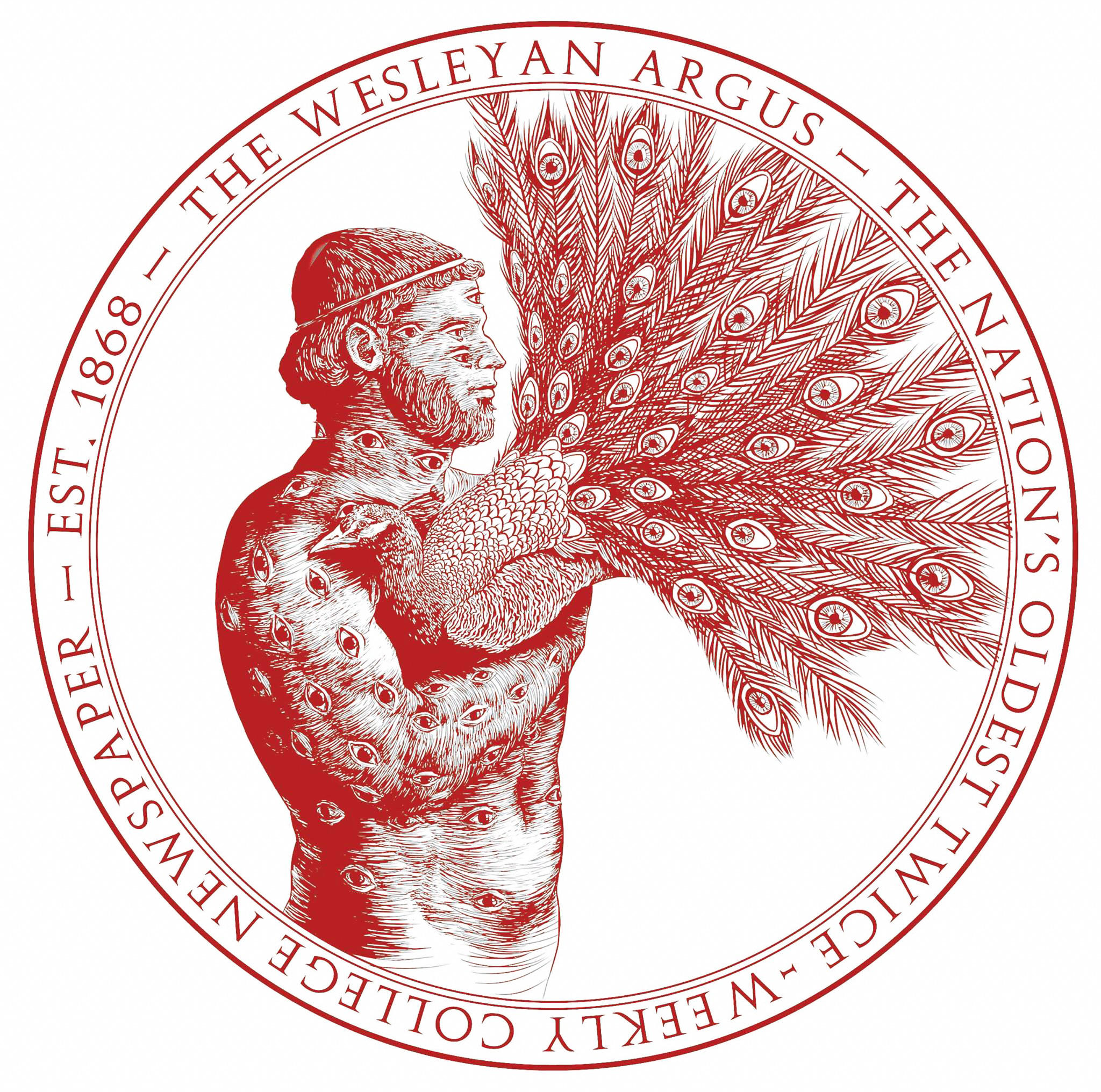
    Wesleyan is no longer considering a joint venture campus in China with the private Chinese corporation Hengdian Group, President Michael Roth ’78 announced in an all-campus email sent out the morning of Thursday, Oct. 24. The decision comes after his annual trip to East Asia, during which he met with representatives of Hengdian Group.

    “[A]fter meeting with those involved in the potential joint venture during my trip, I can now report that we have decided not to look into this opportunity any further,” Roth wrote in the email.

    University Director of Media & Public Relations Lauren Rubenstein explained that the administration’s decision was due to a disagreement over the role of the liberal arts in the project.

     “It became clear that they were less interested in a liberal arts approach than we initially thought,” Rubenstein wrote in an email to The Argus.

    Director of the Fries Center for Global Studies Stephen Angle said that Hengdian Group was looking to fund more of a film institute than a liberal arts campus.

    The proposed joint venture campus would have constituted a partnership between Wesleyan, Hengdian Group, and the Shanghai Theatre Academy. Hengdian proposed the venture to Wesleyan in February 2019. The focus of the campus, according to administrators, would have been a liberal arts education centered on Wesleyan’s film program. 

    The public response from students was largely negative. About 70 students participated in a rally on Friday, Oct. 11, in support of Hong Kong and to protest the joint venture, and the Wesleyan Student Assembly (WSA) passed a resolution asking for more transparency from the administration. 

    Roth addressed the potential program in an Oct. 11 blog post, highlighting academic freedom as a key element in Wesleyan’s decision-making.

    “We set the bar very high for new initiatives, and most of the ideas we consider don’t meet our high expectations,” he wrote. “Our conversations about a possible campus in China are still in the very early stages. Obviously, there are serious concerns about academic freedom and a host of related issues.”

    Nine days later, Roth responded to a question about the potential joint venture in a presidential reception in Taipei, Taiwan.

    “The question is: What if we had 3,000 students in China for Wesleyan?” he said at the Oct. 20 event. “Could we teach those students the way we teach those students in Middletown? That’s obviously a very tough question to answer positively, and if we can’t answer that question positively, we won’t do this project…. So we’re talking with them. I think it’s more likely that we won’t do it, for all the reasons you can imagine, but I think dismissal is something that we should avoid. Consideration is something we should pursue, and so we’re just considering this.” 

    Ensuring the goals of Wesleyan’s liberal arts education aligned with that of the potential joint-venture campus was a priority of the administration, Roth wrote in the all-campus email.

    “Further conversations with those who proposed the partnership have made it clear that our respective goals could not be sufficiently aligned—not to mention the questions we had around issues of academic freedom and the implications for our home campus,” he wrote.

    Wesleyan has also cancelled the town halls that were planned for Wednesday, Oct. 30, to more broadly discuss the potential joint venture with students and faculty. Roth will be present at a WSA General Assembly meeting, which is open to the campus, after the November board of trustees meeting.

    This article has been updated with additional information about why the University is no longer pursuing the joint venture.

    Jocelyn Maeyama and Serena Chow contributed reporting.


    Emmy Hughes can be reached at ebhughes@wesleyan.edu and on Twitter @spacelover20.

    Hannah Reale can be reached at hreale@wesleyan.edu and on Twitter @HannahEReale.

  • New Temporary Hut Outside of Alpha Delt

    New Temporary Hut Outside of Alpha Delt

    Amidst the culture of curiosity cultivated on Wesleyan’s campus, one question has come to surface on everybody’s mind: what is that little hut with 3 walls, 1 opening, and a roof made out of “schach” doing on the green outside of Alpha Delt? The answer to this astute and thoughtful question is as simple as it is exciting: it is the Wesleyan Jewish Community’s sukkah in its ***brand new location****!!!!

    A sukkah is a temporary ‘home’ built for the Jewish holiday of sukkot. The structure is used to recall and commemorate the Jewish peoples’ 40 years of wandering in the desert after being freed from slavery in Egypt. There are many components of the week-long holiday, but spending time in the sukkah is perhaps the most significant. Doing literally anything inside of there counts as a mitzvah, or good deed.

    This year, the Wesleyan sukkah is in an extra central, supremely lush location! The WJC will be hosting a number of events in it, including a sleepover (10/14), a dinner and open-mic (10/15), and more. All are invited and encouraged to attend, and/or visit the sukkah on their own time! Decorations will be hung soon.

    More information on sukkot happenings is available here: https://www.facebook.com/groups/wesleyanjewishcommunity/


    Adina Gitomer is a member of the class of 2020.

  • Climate Strike Today

    Climate Strike Today

    Young people everywhere are sick and tired of the lack of progress being made on pressing environmental issues, most especially climate change. They recognize that climate change will directly impact their generation, and are inspired by young people like Greta Thunberg, who are taking a stance and demanding political action. We need our politicians to make climate change an urgent priority and put it at the top of the agenda, not the bottom of the agenda. Today, Friday September 20th, is the first of eight days of global climate action, timed to coincide with the United Nations Climate Action Summit in New York. Climate strikes are taking place in cities across the country and the globe. We are writing to encourage everyone to lend their support to this call for action. We hope you will stand in public support of ending the endless bickering and beginning a coordinated global response to the increasing threat posed by climate change. Alongside a coalition of other Connecticut climate action groups, there are over 50 Wesleyan students striking today in Hartford, organized by the Sunrise Movement Middletown hub. At the state house, they are demanding that Connecticut’s governor Ned Lamont and state legislature declare a climate emergency for the state of Connecticut. There are also climate events taking place on Wesleyan’s campus. President Roth has written to the campus community, announcing events that we encourage you to attend: • 12–2 p.m. Global Climate Rally (Usdan courtyard): Speeches by student groups and other members of the Wesleyan community, followed by an on-campus march. • 4:30 p.m. (Exley 150): Climate Rant by Professor of Physics Brian Stewart (who will also convert his 1:20 p.m. class into a climate teach-in at Exley 150) • 6 p.m. (Church St. or Washington Ave.) Candle Light Vigil We also think you should make an effort to raise your level of awareness. It is a delicate balancing act to hold on to one’s hopes for the future while learning about the true nature of the threat we face.  But we think that failing to inform ourselves and engage in robust discussion of the issues is precisely how we have gotten into our present predicament.  Although the facts are grim, there is hope. If we come together and take direct action, we can shift the agenda and change things. Young people who are mobilizing on the climate crisis have power. You will find links to a wide variety of information about climate science, the damage climate change has already inflicted, and the response needed from us in an article posted on the Middletown Eye at https://middletowneyenews.blogspot.com/2019/09/global-climate-strike-friday.html .

    In solidarity, Jackie Duckett ’20, Sunrise Movement Middletown coordinator Brian Stewart, Professor of Physics

    Jackie Duckett is a member of the class of 2020. Brian Stewart is a Professor of Physics.

  • Student Curators Offer Tours of University’s Museum Collections

    Student Curators Offer Tours of University’s Museum Collections

    Ava Nederlander, Photo Editor
    Ava Nederlander, Photo Editor

    Student curators at the Joe Webb Peoples Museum of Natural History gave tours of museum collections last week in conjunction with the ongoing efforts to revitalize the University’s natural history museum. The tours took students through displays in the Exley Science Library, the Shanklin second floor collections, and the mineral museum on the fourth floor of Exley. Curators intended for the tours to introduce students to the breadth of the museum’s collections, while also highlighting ongoing restoration efforts.

    After discovering vast collections of objects from the University’s former natural history museum stored in the tunnels beneath Foss Hill and the sixth floor of Exley, members of the Earth and Environmental Sciences Department (E&ES) have been working on identifying, cataloguing, and restoring the University’s found materials. A number of casts, taxidermic birds, fossils, and additional natural objects have already gone on display; these materials were showcased on the tours.

    According to Andy Tan ’21, one of the assistant curators, the tours are also a means of demonstrating to students that these materials are not simply for display—they are also a resource.

    “[The museum] is one of the unappreciated student resources on campus, which is why we are doing this orientation tour,” Tan said. “To introduce this as a resource for students to do anything with the collection—if they want to do an art project, any history assignment, any kind of research assignment that they have in mind—they can think of the museum as a potential source of ideas for their classes.”

    The tour began in front of the Glyptodon cast, which stands at the entrance to the Science Library. Tan, who is one of the students at the forefront of this restoration work, explained that the Glyptodon—a relative of the modern armadillo—was the first piece to go on display in the recent restoration efforts. Along with assistant curator Yu Kai Tan ’20, Tan helped to restore the Glyptodon, which included reuniting the tail with the shell, and finding a skull and feet.

    Ava Nederlander, Photo Editor
    Ava Nederlander, Photo Editor

    Tan noted that the Glyptodon was part of the Orange Judd Hall of Natural Sciences, formerly housed in Judd Hall. The museum opened in 1871 and contained a collection to rival that of top natural history museums around the country. In 1957, when the museum was officially closed, the Glyptodon cast was one of the pieces to go in storage. It remained there ever since, until it was recently resurfaced.

    After highlighting the Glyptodon, the tour moved to the dinosaur feet preserved in mica-flecked sandstone located on the walls of Exley. Professor of Integrative Sciences and Smith Curator of Paleontology of the Joe Webb Peoples Museum of Natural History Ellen Thomas noted that one of the footprints is the holotype—meaning the type specimen for a species—for Eubrontes giganteus.

    “[Fossil footprints] are treated as if they were a real organism, so there’s a genus and a species,” Thomas said. “And so in many cases, you don’t know what organism goes with the footprints…. And so they have the normal taxanomic assignments, and so that means they have official genus and species names. And so in Connecticut, and in Massachusetts actually, this is the same geological structure, those were discovered early on by someone called Hitchcock. He thought at first that they were giant bird footprints, if you look at the three prongs. And so many of them were described by this guy…and this is actually the holotype.”

    The tour then moved into the Science Library, where a more recently designed display called the “Tree of Life” stands at the entrance. This display is organized to demonstrate that the traditional Tree of Life organization—with “Man” on top—is not representative of the planet’s biodiversity. The display emphasizes organization by “protostomes” and “deuterostomes,” the former meaning mouth developed prior to anus, and the latter meaning anus developed prior to mouth. The display includes materials representative of a variety of species, both modern and ancient, with small insects pinned throughout the display.

    The tour then moved to the second floor of Shanklin where other displays stand in a more traditional museum organization. On display are taxidermic birds, fossils of fish, eggs, and skeletons preserved in alcohol. Tan noted that one of the displays, which is currently in progress, will highlight the effects of storage on the specimens. The purpose of this exhibition will also be to display the history of keeping collections, in tandem with the collections themselves.

    “We are trying to design an exhibit on broken stuff from the collection, due to the years,” Tan said.

    During the final stop on the tour, the Joe Webbs Peoples Museum of Natural History on the fourth floor of Exley, Andy Tan, along with Yu Kai Tan, noted some of the future goals of the museum restoration efforts. The fourth floor museum contains the University’s mineral collection, as well as a number of fossil trilobites, crinoids, and fish species.

    While this museum has been maintained for a number of years, curators hope to continue expanding the reach of the University’s collections. In addition to the display of broken museum materials, future plans for restoration include a display in Olin, and a restoration of the tree ring display near the entrance to Pi Café.

    “We don’t know if it’ll come to fruition, but in Olin, there’s three cases: We’re thinking of doing one fossil, one biological, and one mineral,” Tan said.

    In the meantime, Tan emphasized that the museum will continue to work on opening up collections to students across disciplines.

    “We think that no field should be isolated,” he said. “I think a museum in that sense is a collage of arts, of natural sciences, of bookkeeping, data…so that we shouldn’t be just a distinct field, everything has to happen in a relationship with other fields.”


    Emmy Hughes can be reached at ebhughes@wesleyan.edu or on Twitter @spacelover20.