
Sharpe discusses latest novel, influences
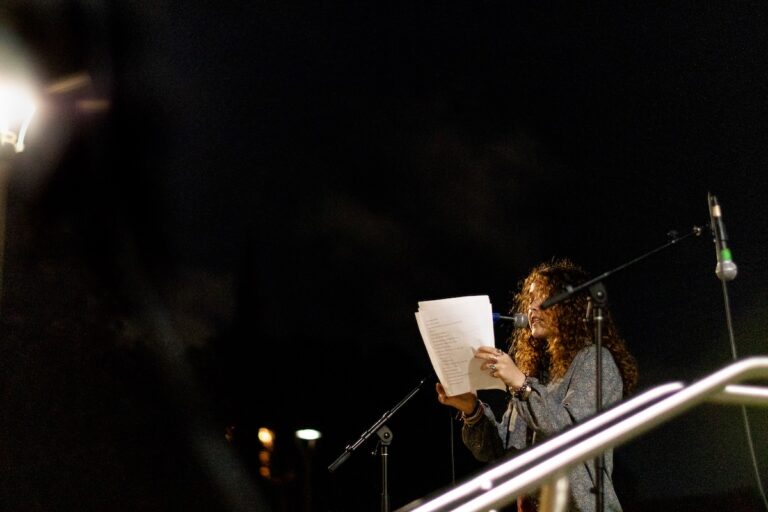
Matthew Sharpe, Wesleyan writer-in-residence and professor of English, will be reading an excerpt from his new novel and third book “The Sleeping Father” on Friday at 8:30 p.m. at Russell House.
The novel, which was published by Soft Skull Press last October, examines the life of a depressed, divorced dad of two teenage kids. One day, the father accidentally combines Prozac with another incompatible depressant, sending him into a coma. He recovers from his coma, but has suffered brain damage. As a result, his two teenagers are left to rehabilitate their father.
This past February, Sharpe’s new book was featured on NBC’s Today Show’s book club.
“The [segment] went by really fast,” Sharpe said, adding that the interview lasted a total of six minutes. “I had about two weeks to anticipate it. It was hard to pay attention to my day job. There were two clauses in the contract: one, that I was not allowed to tell anyone. The other was that for any reason, NBC had the right to cancel or postpone the appearance of the author.”
Sharpe admitted that he was anxious not necessarily to be on television, but for his publisher, who had printed an extra 30,000 copies of the novel in anticipation of Sharpe’s NBC appearance, a huge investment for a such a small firm.
The marketing term for “The Sleeping Father”, Sharpe said, was dark comedy.
“A good book for me is one that is beautifully written and adequately addressed the complexities of the human heart and the intensity of life. That can happen in any genre,” Sharpe said. “A genre is a nice way to classify, but it doesn’t tell the whole story.”
Sharpe himself has an interesting story of how he chose to be a writer.
Sharpe joined the English department staff this past year, teaches Techniques of Fiction Writing and Advanced Fiction Workshop.
From an early age, Sharpe was inclined to be a writer.
“When I was 10 years old, I wrote a short story that I though was pretty good, and my mother liked it and my teacher liked it, so I thought, ‘Alright, maybe I’ll do this writing thing, but only if it gets easier’,” Sharpe said.
But according to Sharpe, he went through a spell of cynicism, and gave up his early ambitions of being a writer to pursue what he thought at the time were more practical vocations.
“There was a time when I tried to get into engineering. When I was a little older, I had a sense that the writing life would be hard and that maybe I wouldn’t be looked on upon with a great deal of respect by people if I just said that I’m a writer,” Sharpe admitted.
But Sharpe said that he stuck with his inclination to be a writer. After college he did some freelance writing for US entertainment magazine, who hired him six months later as an editorial assistant manager. After working with US magazine for close to two years, Sharpe grew dissatisfied with his job.
“I got into a huge fight with the production manager because she had went out for ice cream without telling me, and I walked out and slammed the door and stood there in the middle of the room,” Sharpe said. “That’s when I realized that something was terribly wrong; I was not doing the thing I wanted to do with my life.”
After leaving US magazine, Sharpe returned to doing freelance writing for magazines. Eventually he would end up attending graduate school at Columbia University, where he received his Master in Fine Arts.
“The first story I tried to write during the period of the early 20s was a detective story, and it was because I was reading a lot of detective stories” Sharpe said, who named Raymond Chandler and Dashiell Hammett as literary influences during this time in his writing career.
Literary imitation, Sharpe says, is something that he tries to make his writing students more aware of. For Sharpe, fledgling writers are always haunted by their favorite writers, and they emulate their favorite authors even when they are not aware that they are doing so.
“I ended up going to graduate school at Columbia University to get my M.F.A. […] and when I look on my master’s thesis, I see that it is a kind of apprenticeship to a bunch of different writers I admire. I didn’t realize it then, but when I look at it now, I see my Virginia Wolf story and my Chekhov story,” Sharpe said.
Sharpe, who began writing in earnest with short stories, has never published his first attempt at a novel, an experience which he confessed was devastating at first. He has since come to terms with it.
“A number of issues that come up in writing a novel don’t come up in writing a short story,” Sharpe said. “One of them is just working on a single project for two years; that is very taxing, especially if you haven’t done it before […] Another is that you have to maintain your own interest in your work, let alone the reader’s interest. The transition is like this: you’ve built a couple of tree forts, and now you’re going to build a mansion.”
Since appearing on the Today Show, Shape says that “The Sleeping Father” is really getting recognized more and more by the general public. Sales on the novel have increased and a European publisher has also purchased the rights to his book. Sharpe added that a Hollywood producer has optioned the rights to the book as well.
“All of that came out of a short television appearance. It’s amazing what a little television can do,” said Sharpe.
Sharpe is currently working on a new novel loosely based on the early episodes of European settlement in North America.

Leave a Reply