
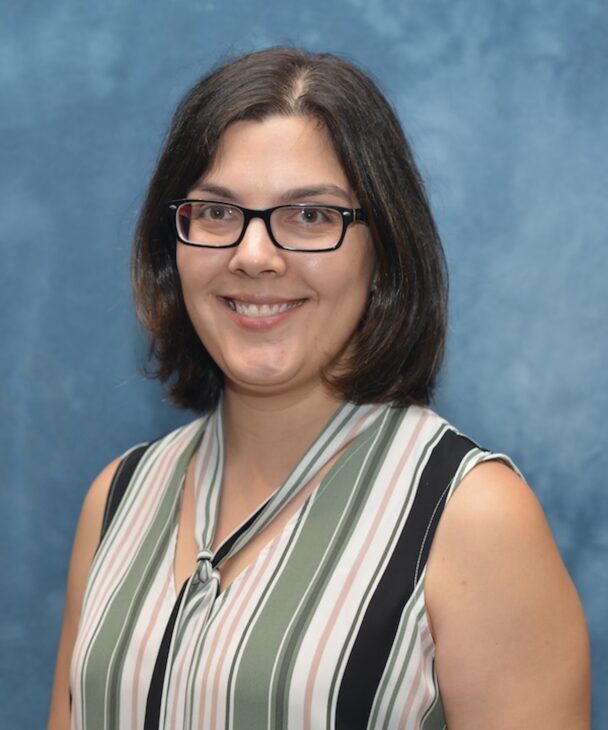
Professor Cori Anderson on Making STEM Accessible, Communicating Complex Ideas, and the Importance of Faculty Governance
Welcome back to Office Hours, a series brought to you by the Features section! In these articles, Argus writers speak to faculty, staff, and members of the administration about their interests, classes, and lives on and off campus.
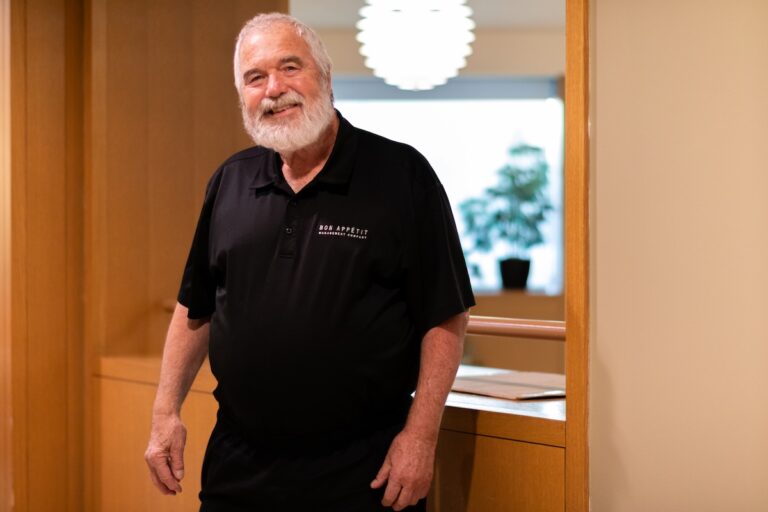
First-year biology students might already be familiar with Cori Anderson, a Professor of the Practice in Molecular Biology and Biochemistry who has been teaching at the University since 2018, but her pedagogy and passion for learning extend far beyond the lecture hall. This week, The Argus sat down with Anderson to discuss her love for teaching beyond research and how her involvement with the University’s faculty governance impacted her role as a professor.
The Argus: When did you realize that you wanted to pursue a career in teaching?
Cori Anderson: It really became clear when I was an undergraduate myself. The adjustment from high school to college was tough, and adjusting to the pace and rigor of college classes was a challenge. In the second year of my undergraduate program, I took a research-intensive class, and I hit a roadblock where I questioned whether science was what I wanted to do. But I had a wonderful faculty member who sat beside me, and listened, and worked through challenges with me, and supported me through that hard moment. She told me to not abandon my love for science. Because of the foundational and impactful experience I had with my own undergraduate professors, I wanted to create that open and supportive learning environment for students to realize their goals and their potential.
A: As a professor who does not conduct research, how does your work differ from your colleagues who do?
CA: Wesleyan has made a decision in the Natural Sciences and Mathematics division that many of the departments have to reduce the number of teaching professors so they can focus more of their time in the laboratory. For somebody like me, who’s a professor of the practice and who doesn’t run a research program, I have a much higher teaching load compared to my tenure and tenure-track colleagues. That allows me to be teaching more courses and spending more of that one-on-one time with students in the classroom setting.
A: How do you work to support STEM students at Wes?
CA: One of my core teaching assignments is my Principles of Biology I (BIOL181) series. Every Fall, I instruct a good portion of our first semester first-years, and that’s a real critical time window for students. I have found over the years that my ability to truly support students is somewhat limited in the classroom because there is so much content we have to get through. But there is a good degree of support that I can offer in office hours and one-on-one meetings.
But I was noticing that students were often having struggles similar to ones I had with the academic adjustment to college life, and in talking to some of my colleagues in our sister departments, it became clear that these were shared struggles in other introductory STEM courses as well. So for the past three years, Professor of the Practice in CIS Anthony Davis and I have been co-teaching Success in STEM Seminar (CIS 101) to set students up for success and give them tools that we broadly saw students needing. We decided to offer this course to fulfill a need that we saw in our first semester first-year students: aiding the challenging transition to college. The course addresses questions like, “How do I manage my time? How do I prioritize everything I want to do?”
A: How would you characterize your teaching style? What makes it unique?
CA: I really emphasize the application of course material. I try to move students beyond memorization and being able to write down a definition to really analyze and interpret either data presented in a question or the effects of a mutation on a process. That’s really where we see true understanding of how something works. The other thing I emphasize for students is the skill of being precise and concise in how they write, because so much of science is communication of ideas. You are doing novel work, and you’re not just memorizing something; you’re creating the knowledge. Flexing that mental muscle early is important, and being able to effectively communicate what you find is also so important.
A: Could you tell me a bit about your interest in faculty governance?
CA: I’ve actually just rotated off some of our faculty committees. In the two years prior, I served as a representative on our Compensation and Benefits Committee. Within this committee, we addressed health and retirement benefits. I also served as a faculty representative to the board of trustees Finance Committee. The board of trustees was really fascinating because it is more long-range focused, and I was able to understand the long-term goals of the institution related to financial planning, properties, and endowment. I sat on our Faculty Executive Committee, which focuses on planning what we’re going to discuss at different faculty meetings, as well as allowing the chairs of all of the faculty committees and our academic deans to gather and bring matters of importance to the forefront. There’s certainly a time commitment to being a member of this faculty, but I find it rewarding to serve in various capacities, and have learned a lot about the institution. In the future, if I’m elected again onto any other committees, I would welcome the service.
A: Why did you choose to pursue these roles?
CA: I was elected to the Compensation and Benefits Committee through an open election. So I did not run. I had, however, served on the Executive Committee of the American Association of University Professors (AAUP) that formed on campus a few years ago. On the committee, I worked on preserving academic freedom and instilling principles of shared governance. Through those activities, people knew my name, and I think it contributed to getting elected.
A: How has your experience in advocacy impacted your role as a professor?
CA: My service on faculty governance committees hasn’t necessarily changed my teaching directly, but it has allowed me to advocate for what I think is best for students. We can discuss certain pedagogical supports or structures that need to be in place, and we are constantly talking about how we advise students and how we structure majors. Being able to be in those conversations is the best way to help shape change that you want to see.
A: What do you love most about teaching?
CA: It’s energizing and rewarding to be able to partner with students in such a formative stage of their academic lives. I truly want to create the best educational experience possible for our students and be that anchor point for them if they are struggling.
This interview has been edited for length and clarity.
Hana Futai can be reached at hfutai@wesleyan.edu.

Leave a Reply