
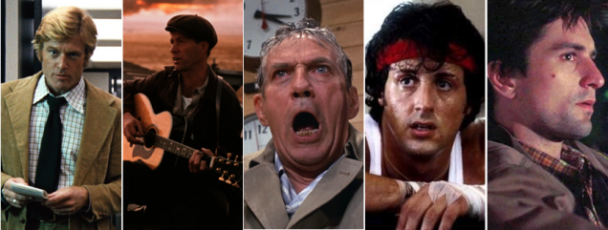
Five Films From 1976 That You Should Check Out
1976 was 50 years ago, and I’m sorry to make any Gen Xers feel old, but math doesn’t lie. To commemorate what may be the best year in movie history (in my humble opinion), I’m ranking the year’s top five films.
5: “The Bad News Bears” (Director: Michael Ritchie)
If you want a glimpse of how your parents talked in middle school, this movie’s for you. Every line uttered by the bossy, loudmouthed shortstop Tanner Boyle, for instance, would probably make the Tipper Gores of this generation pass out. Nevertheless, “The Bad News Bears” is a hilarious and profoundly touching story about Morris Buttermaker, a washed-up former minor league pitcher and alcoholic pool cleaner, as he coaches and bonds with a team of misfit kids.
4: “Silver Streak” (Director: Arthur Hiller)
You may not have heard of “Silver Streak” before. While it doesn’t carry the same iconic weight as some of its contemporaries like “Animal House” (1978) or “Slap Shot” (1977), it delivers some of the decade’s finest comedic performances. Granted, the first half of “Silver Streak” is somewhat dull. Gene Wilder carries a solid, quasi-Hitchcockian thriller with a couple of chuckles along the way. But once Richard Pryor arrives about halfway through, “Silver Streak” transforms into an unrivaled laugh riot, with a thrilling, action-packed plot full of twists and cons galore.
3: “The Little Girl Who Lives Down the Lane” (Director: Nicolas Gessner)
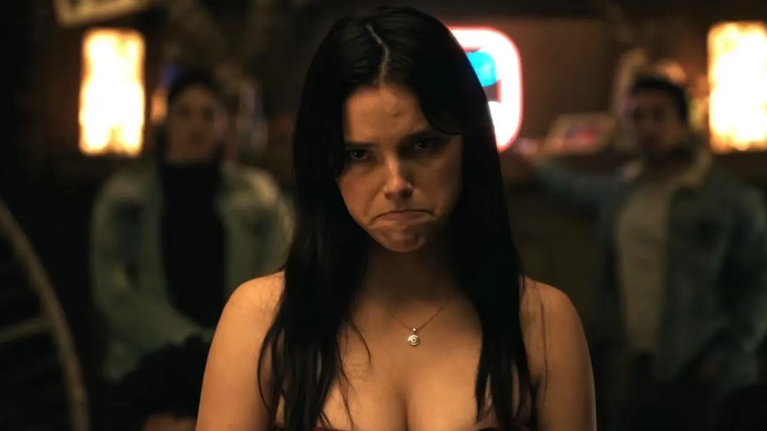
I have an enormous soft spot for 1970s Canadian films. From “Black Christmas” to “The Silent Partner” to this little horror/mystery gem, the nice guys up north were cooking up some low-budget bangers over the decade. “The Little Girl Who Lives Down the Lane” follows 13-year-old Rynn Jacobs (played by Jodie Foster, who also starred in the wacky musical “Bugsy” and the critically acclaimed “Taxi Driver” in 1976) as she navigates life in her creepy small town full of secrets, often finding herself confronted by her neighbor, Frank Hallet, played by a very creepy Martin Sheen. “The Little Girl Who Lives Down the Lane” is another twisty ride, and Jodie Foster gives one of her most subtle, yet most powerful performances of her career.
2: “Seven Beauties” (Director: Lina Wertmüller)
Lina Wertmüller’s “Seven Beauties” is one of the most fascinating character studies I’ve ever witnessed. It’s common for a film to show a character’s downfall from grace and prosperity. The twist in “Seven Beauties” is that its main character Pasqualino, a smarmy Italian pimp played with equal parts charisma and intensity by the magnificent Giancarlo Giannini, never had a trace of dignity to begin with. “Seven Beauties” explores Pasqualino’s brutal downfall from a glib and slimy hustler to a ruthless murderer to a mentally destroyed Holocaust survivor. Wertmüller glides through these stages of Pasqualino’s life with comedy, drama, black humor, and even erotic elements, all of which she directs with confidence and poise. “Seven Beauties” is the fourth of nine movies in which Wertmüller and Giannini collaborated, and their synergy is unmatched.
1: “Rocky” (Director: John G. Avildsen)
Many movie aficionados label “Rocky” as cheesy and unsophisticated. However, I think it’s a universal tale of overcoming obstacles, and stands as one of the few movies that can move anyone, regardless of background. Additionally, I consider “Rocky” one of the greatest character studies of all time. The film begins with a down-on-his-luck boxer who is lonely and weighed down by a difficult past, including his parents abandoning him. Over time, the film’s titular character, Rocky Balboa, becomes determined to “go the distance,” motivated by his manager’s encouragement and the chance to prove himself. “Rocky” is a timeless classic and remains one of the most enduring, intense, and powerful sports films of all time, even fifty years after its release.
Brendan Kelso can be reached at bkelso@wesleyan.edu.



Leave a Reply