
Grow at Wesleyan: Intercultural Identity, Intersectionality, and Community at ISO
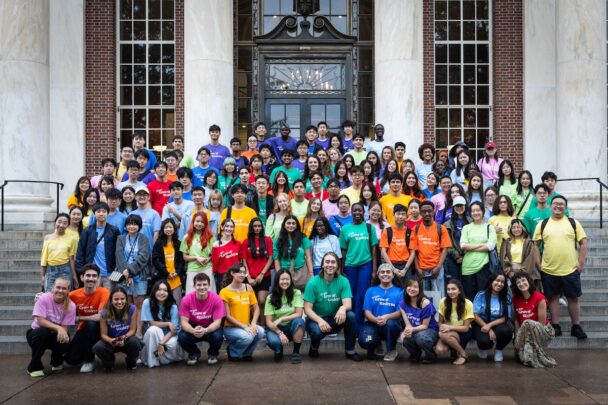
From Friday, Aug. 28 to Tuesday, Sep. 1, 106 international students from 36 different countries were welcomed to campus by the Office of International Student Affairs (OISA) to begin the Fall semester. International students comprise 12.7% of this year’s incoming first-year class.
International Student Orientation (ISO), spread out over five days, consisted of two move-in days, a settle-in day, and two days of orientation programming. Programming featured workshop sessions on maintaining visa statuses, navigating the University’s academics, and understanding new University policies around artificial intelligence. The OISA collaborated with on-campus initiatives and offices such as the Writers Room, WesWell, Counseling and Psychological Services, and First Things First, an orientation program for first-generation/low-income students.
This year’s ISO, following last year’s example, featured a theme: “Grow at Wesleyan—Rooted in Who You Are, Growing into Who You’ll Be.” In accordance with the theme, ISO intern Gray West ’28 assigned a native New England plant to each of the eight groups. Interns organize ISO along with the full-time employees of the OISA over the summer and serve as the primary point of communication for all incoming international students before their arrival.
“My idea for the theme really stemmed from all of the amazing sustainability initiatives we have on campus and the incredible green space that we have,” West wrote in a message to The Argus. “I really liked the elongated metaphor of growing your roots and blooming at Wesleyan. Especially under the circumstances of holding an international identity at Wesleyan, it’s important to not ignore your background but to utilize it here to continue to grow as a person, a student, a peer, and [an] active Wesleyan community member.”
West also emphasized the importance of improving the experience for international students transitioning from ISO to New Student Orientation (NSO), when they join the rest of the incoming class.
“We really wanted to [remove barriers] through emphasizing intercultural identity, intersectionality, and ensuring every student was prepared to transition to Western academic settings,” he wrote. “I think we achieved a lot this year in this regard, but there is always more work to be done to ensure every student feels safe, supported, and ready for the school year.”
In the evenings, ISO participants were given the opportunity to engage in activities such as dodgeball, bracelet-making, and board games with their new peers. These breaks were built into the schedule to facilitate more interaction between participants amidst a hectic introduction to the University.
“ISO gave me the chance to absorb the concept of being in an [entirely] new country before absorbing the fact that I was in an [entirely] new school as well,” Amani Nyonyoozi Tumusiime ’30 wrote in a message to The Argus. “ISO was much less overwhelming than NSO and let us form closer connections before being thrust into Wesleyan.”
Orientation leaders also shared West’s sentiment, describing ISO as an integral part of an international student’s first year on campus. The students highlighted the importance of building community and friendship amidst the Trump administration’s changes in policies for students on F-1 and J-1 visas. This includes a new limitation on F-1 visa students’ time in America, which is now a fixed period of time not to exceed four years, as opposed to the previous “duration of status” regulation, which allowed for a flexible expiration date as long as students maintained their legal status and academic progress.
“I believe the most important part of ISO is finding and building community,” ISO leader Nirvaan Mehta ’27 wrote in a message to The Argus. “ISO has always done that, and this year was not an exception. What is different is the context we as international students now exist in. I think that this context casts a shadow over ISO and the college experience for new students coming to this country, and also impacts which students choose to come to this country.”
Other leaders reflected on the way that ISO offers participants a safe space to experience life in the United States and build new connections before the beginning of the academic year.
“I think it’s so important for ISO to be the first impression [that] international students have of Wesleyan, because during those [five] days they get a sample of all the excitement and fun Wesleyan has to offer, while still being in a safe space where no one will make them feel weird about not being used to life in America,” ISO leader Beatrice Carpinella ’29 wrote in a message to The Argus. “It’s nice to feel welcomed even as a domestic student, but I think for international students it’s especially crucial, because we might [graduate from] Wesleyan and not be surrounded by people who are happy we’re here anymore.”
Akari Ikeda can be reached at aikeda@wesleyan.edu.
Leave a Reply