
Didion vs. Babitz: Anolik Presents a Promising but Lopsided Biography
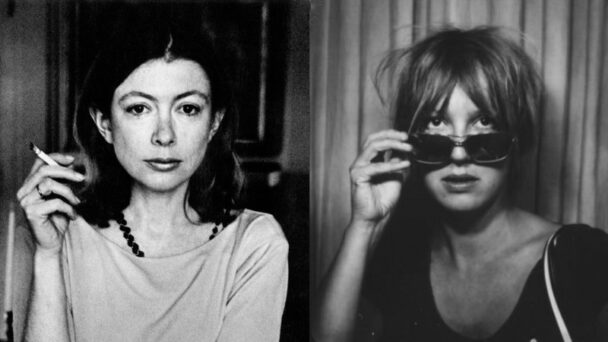
Lili Anolik’s joint biography “Didion & Babitz” follows the complicated relationship between two prolific Californian writers, Joan Didion and Eve Babitz. At least, that’s how the book is advertised.
Perhaps a better name for this book would be “Didion vs. Babitz,” because it’s closer to the truth of what Anolik does: She pits two female writers against each other for seemingly no reason other than to boost Babitz’s appeal at the expense of Didion’s. Instead of giving each writer her due, in the spirit of a true biography, “Didion & Babitz” instead attempts to uncover Joan Didion’s truth, dissecting her persona at a molecular level while fawning over Eve Babitz. (In fact, Anolik admits to taking Eve’s side in the book.)
The book begins with an unsent letter that Babitz wrote to Didion, disparaging Didion’s criticism of the women’s rights movement in her famous and controversial essay aptly titled “The Women’s Movement.” The polemic was originally published in the New York Times Book Review and later included in her essay collection, “The White Album.”
Babitz’s incensed letter asks Didion if she ever considered that “for a long, long, long time women didn’t have any money and didn’t have any time and were considered unfeminine if they shone as you do…Could you write what you write if you weren’t so tiny, Joan? Would you be allowed to if you weren’t physically so unthreatening?”
One of my biggest criticisms of the book is that—like Babitz—it is especially harsh on Joan Didion. It implicitly argues that Didion owes her success to a man: her former lover, Noel Parmentel Jr., who pushed for her work to be published. There might be some truth in that accusation; indeed, he was a big ally of Didion’s and advocated for her writing.
But in Anolik’s interview with Parmentel, he insinuates that he was the reason for Didion’s success, and that without him she would not have reached the same level of stardom. Anolik seems to agree and suggests that Didion wouldn’t be Didion if it weren’t for him, thereby minimizing the work she did to jumpstart her own career. Through this view of Parmentel’s relationship with Didion, Anolik criticizes Didion for her antifeminism, yet plays into antifeminist rhetoric herself.
Anolik is obsessed with scrutinizing Didion. In fact, Didion’s half of the biography feels more like an investigative report into a famously private writer’s life than an impartial profile. For example, Anolik includes a provocative anecdote about Didion’s sex life with Parmentel, something that Didion would never have revealed on her own.
I wonder after reading this book why people still feel the need to compare these women to each other. One could argue that through a purposeful takedown of Didion, Anolik elevates Babitz, who had been overlooked by the literary industry until Anolik revived her through a Vanity Fair article, which later led to the biography “Hollywood’s Eve.”
And while there are plenty of reasons to criticize Didion, I believe Anolik goes too far and that, in turn, diminishes the quality of the book, turning it into an elongated gossip column.
Julia Podgorski can be reached at jpodgorski@wesleyan.edu.



Leave a Reply