
Week 2 of Studio Art Theses Brings Thought-Provoking Artistic Invention
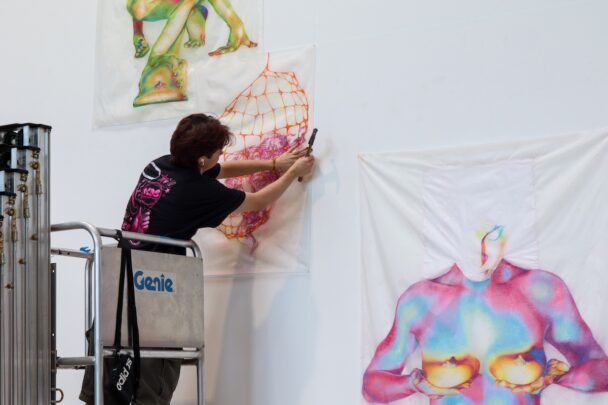
The University’s Ezra and Cecile Zilkha Gallery (Zilkha) held the second week of senior art theses from Tuesday, March 31 to Sunday April 5, featuring Clio Gourevitch ’26 with “Twelve Feet,” Lillian Hoefflin ’26 with “Aura,” Elias Seignourel ’26 with “Pope of the Cave Crickets,” Al Shterenberg ’26 with “Bestow this Degenerate Body,” Leandra Sze ’26 with “Discarnate Bodies,” and Liam Waldman ’26 with “Slump Speech.”
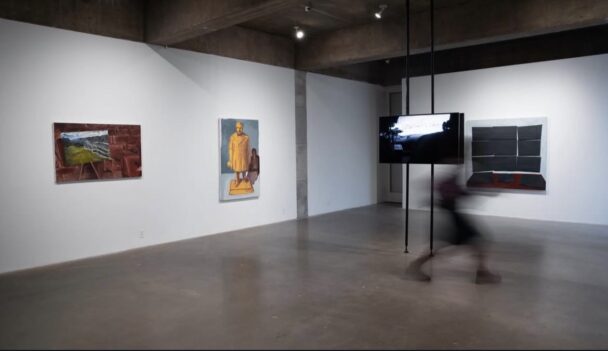
In the first room to the right was “Slump Speech” by Liam Waldman. A TV screen stood in the middle of the room with paintings of politicians, golden statues of men, and a hoard of black dress shoes lining the walls. Here, Waldman depicts the modern surveillance state, the seeing eye, the political distance forced upon its citizens that strikes its audience as particularly true to life. This resonates considering the mockery of human life resonating from America’s current administration’s every choice. In one painting, a man in a crisp white shirt stood on a podium and delivered a speech, his arms raised as though he was conducting the crowd, a depiction of oratory manipulation familiar to any American.
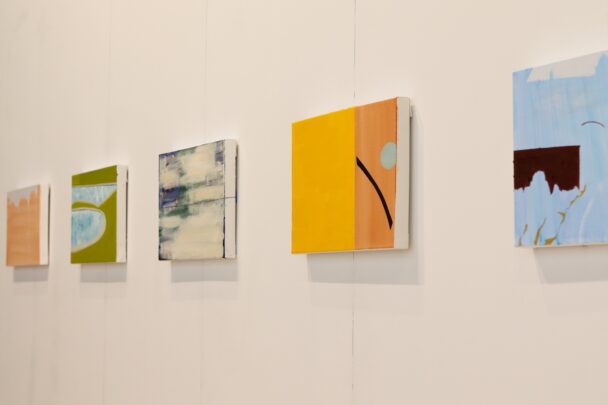
First in the main room was Clio Gourevitch’s “Twelve Feet,” a series of twelve color-blocked paintings with landscape or building silhouettes subtly adorning the pieces. These works were stark and yet faint, abstract renderings of landscape and its many shades.
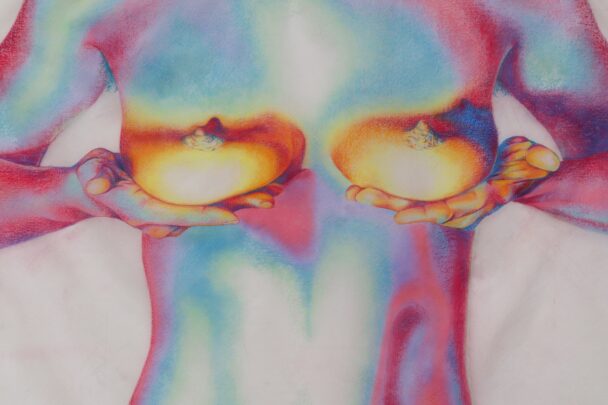
To the left was Al Shterenberg’s “Bestow this Degenerate Body,” prints of human figures on milk-white sheets, wrinkled and placed disorderly on the tall wall of the gallery. The figures were cosmic and melted, their bodies in infrared passion. The positions of the figures were moments in time, their limbs contorted in inhuman positions; one figure held her melted breasts in her hands. The colors popped with pinks, greens, and blues mimicking their bodies as they sit at the point of melting into one another.
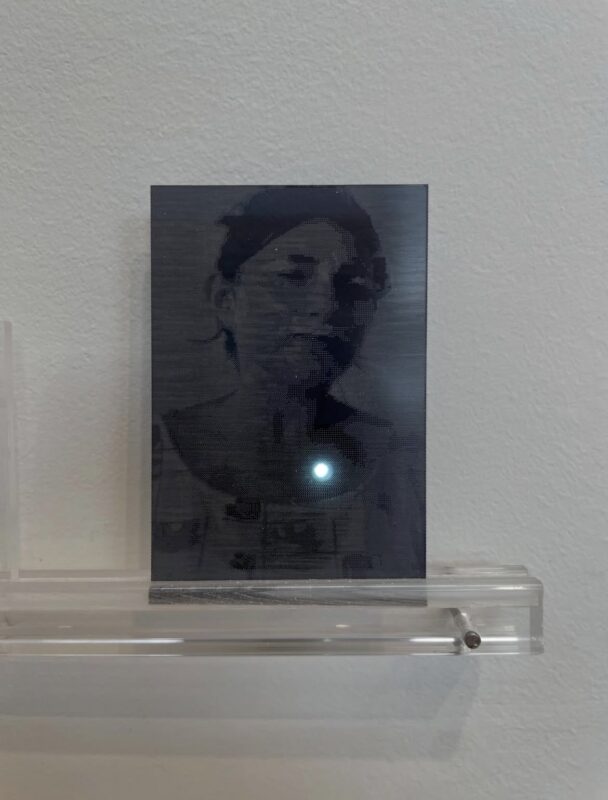
Further to the left was Lillian Hoefflin’s “Aura,” which she herself described on the work’s plaque as being inspired by a feud between 17th-century science fiction writer Margaret Cavendish and Royal Society illustrator Robert Hooke. The piece was made of Bayer filters, photograms, lenses, and other photographic and cinematographic materials. The twelve frames on the wall were laid in a grid formation, the shadows dark enough to obscure their subjects. Squares lined the walls, orderly in shades of gray. A blacklight photograph of a human face with a light in its neck sits perched next to transparent panels with white outlines of pillars.
In an email to The Argus, Hoefflin shared her thoughts on whether she believes that something is inherently more important based on its temporality.
“There is a time-based, or ‘fleeting’ element to making dark room prints and making artistic choices, usually hidden by the seemingly touchless final photograph print,” Hoefflin wrote. “I wanted to use the gallery wall to help people work through that feeling and humanize the image-making process in a time of digital technological progress.”
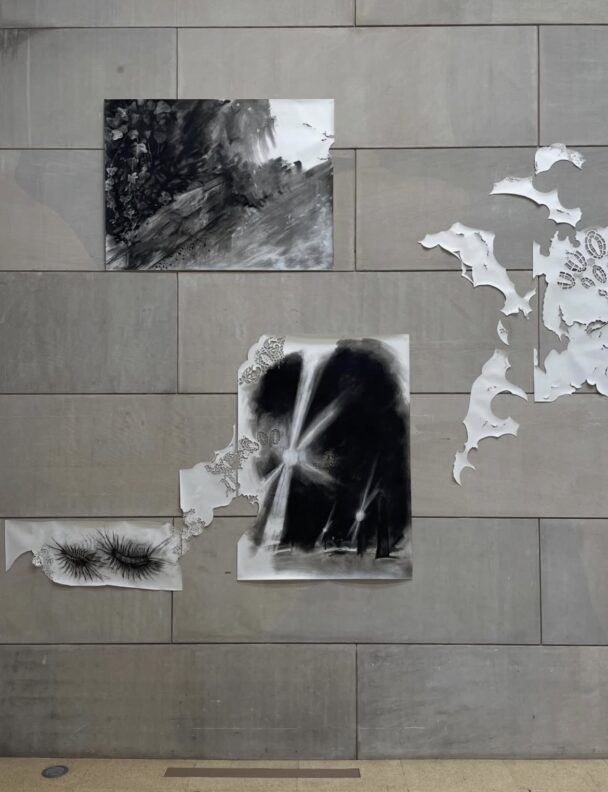
Elias Seignourel’s “Pope of the Cave Crickets” took up the back wall of the room. Rendered in charcoal were crickets, streetlamps, and overhead lights that might flicker the moment you look away, the work dripping off its white background like a fading memory. These were infestations and investigations, sacred moments often overlooked by anybody but the cricket.
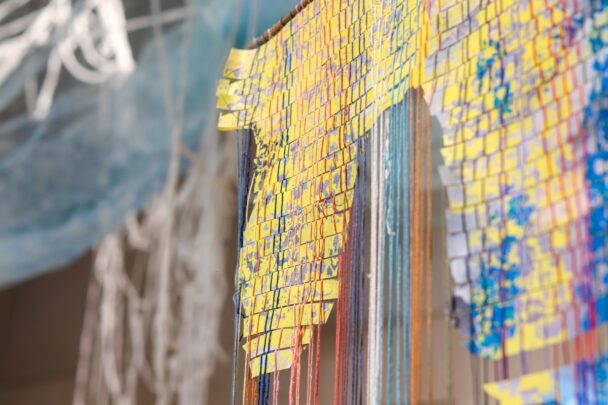
At the back of the gallery was Leandra Sze’s “Discarnate Bodies.” Countless threads and fabrics invisibly hung from the ceiling in a tangled display. Beginning with the title and ending with its relation to the audience, this was a work about contradiction; passersby walked within it, creating a cave out of a net. They marveled at the intersecting threads, a depiction of inseparable connections.
Currently residing at the Zilkha Gallery is the next week of senior art theses! Visit works by Anthony Crossman ’26, Christian Jallo ’26, Katia Michals ’26, Stella Oman ’26, Greta Schloss ’26, and Asher Baron Weintraub ’26.
Isabella Canizares-Bidwa can be reached at icanizaresbi@wesleyan.edu.





Leave a Reply