
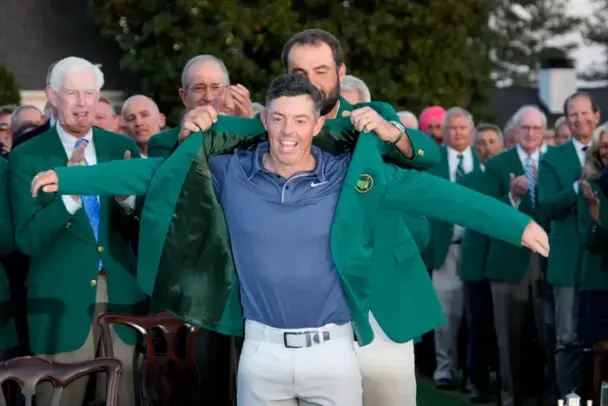
Augusta Has Arrived: Covering the Most Important Headlines Ahead of the Masters and No Clear Story
The Masters has never had trouble finding a story. For a decade, it had Rory McIlroy and the Grand Slam. Tiger Woods and Phil Mickelson always provided intrigue wherever their careers were at. LIV Golf, once a source of constant controversy, has faded into the background of the sport. None of those will be present this year. Scottie Scheffler had Tiger comparisons early in the year, but a string of mediocre starts (by his standard) have muted those. Beyond that, no one has made 2026 theirs yet. One could say that with no clear storyline, there is room for so many, so let’s dive into them.
1. The Year of ???
The last four Masters champions made themselves obvious before they arrived. Scheffler won twice in 2022 and 2024. Jon Rahm had three wins leading into his green jacket in 2023. McIlroy took Pebble Beach and The Players before completing the Grand Slam last year. Nobody has established that kind of form this year. Chris Gotterup is the only player with multiple wins in 2026, but he has recorded just one top-15 since early February. Scheffler leads the Tour in strokes gained (SG) at +2.68 but has finished outside the top 10 in three straight starts after posting 19 consecutive top-10s. With his wife giving birth last week, he will enter Augusta having not played since the Players four weeks ago. We’ll touch on some of the contenders later, but an out of left field winner feels as possible as ever.
2. Firm and Fast
Augusta has received just 8.0 inches of rainfall in 2026, on pace for one of its driest years on record. The forecast this week is sunny and in the 80s. The course could play as firm and fast as it ever has. Augusta is already one of the most demanding courses around the green, but when it’s fast, certain misses force players to scramble for bogey. Even “good” misses are trickier. Thursday afternoon last year saw the course very baked out. Rory and Patrick Cantlay both left their second shots on 15 just off the back of the green. Both hit the chips they intended to, but the ball trundled off the green and into the water.
The 11th hole should be especially interesting to watch this year. It was one of the three greens resodded, meaning it will theoretically play firmer. Scheffler and others have embraced the strategy of bailing out right with their approach no matter what and trying to get up and down. The green runs away from players chipping from the right, and if it’s as fiery as expected, more players might feel forced to be more aggressive with their second shots.
3. The Augusta Filter
No major produces winners from the top of the world rankings as consistently as Augusta. The average Data Golf ranking of Masters champions this century is 14.6, against 28.8 for the other three majors combined. Two things explain that gap, and they work in the same direction
The best players in the world are overwhelmingly the best with long irons. The top five from 200-plus yards over the past 12 months have an average Data Golf ranking of 29.6. From 150–200, it’s 13.2. From 100–150, it’s 108.6. Better players hit better long irons, and Augusta allows this to shine through more, producing 4 more shots from 150–200 yards and 3.2 more from 200+ yards than the average Tour stop.
The importance of putting is also diminished. Putting explains 35% of the leaderboard separation on a normal tour stop, but only 30% at Augusta. Augusta produces more putts inside five feet, where almost everyone converts, and more from beyond 30 feet, where almost nobody does. The mid-range putts—where putting skill actually separates players—show up less often.
The best putters are not typically the best players. The top three in SG putting each of the last five years have averaged an overall rank of 50.2; whereas, the top-three players in SG approach in each of the last five years have an average overall rank of 10.8. The best approach players also tend to struggle with putting. The average putting rank for the top three players in strokes gained approach over the past five years is 92.3. Further, 15 of the last 18 Masters winners ranked outside the top 50 in SG putting in the year leading up to their win. The course is calibrated to reward the skills the best players have and reduce the impact of the ones they don’t.
4. Playing With the Lead
The eye test says players lose leads here often. The back nine is extremely volatile. Water is in play on five of the nine holes, and while both par 5s offer eagle chances, they are just as capable of producing big numbers. Add in the memory of collapses—Jordan Spieth in 2016, Greg Norman in 1996, Rory McIlroy in 2011, Kenny Perry in 2009—and it’s easy to see how that reputation has formed.
However, through 89 editions, 60 times (67%), the player holding at least a share of the 54-hole lead has gone on to win. Over the past 20 seasons on the PGA Tour, that number is just 34.6%. Before McIlroy’s win last year, each of the previous 25 Masters winners were inside the top 10 after 18 holes, and the last eight champions were top five after Thursday. This is because Augusta’s thin margins produce more leaderboard distance than a typical Tour stop, meaning fewer players are realistically in contention by Sunday afternoon.
2026 has been the year of the blown leads, with 7 of the last 10 tournaments featuring multi-shot leads coughed up on the back nine on Sunday, something you can be sure the broadcast will mention this weekend.
Now let’s get into some more player specific storylines.
5. Ready to Rahmble
The only player with more strokes gained than Scheffler in 2026 is Jon Rahm. He has finished in the top two in four of his five LIV starts, with the other being a 5th where he was hindered by his fourth-worst putting performance since 2020. Since joining LIV, however, he has barely been a factor in majors, with a T-7 as his best finish in two years. There is an argument that his major struggles are simply variance across a small sample. But when you only play four events a year that matter, a small sample is all you get.
More interesting than his play is how his temperament has shifted. He is currently in a dispute with the DP World Tour over fines and tournament requirements, which has put his Ryder Cup eligibility in jeopardy. The fiery competitor who won here in 2023 has given way to something more guarded. Disgruntled is probably the right word, though it is hard to know for certain when he only surfaces publicly four weeks a year.
6. Young Guns Arriving
Golf has spent several years waiting for a young generation to arrive and aside from Ludvig Åberg, has mostly been disappointed. The elite amateurs of the last five years—Luke Clanton, Nick Dunlap, Gordon Sargent—have not delivered the way Jordan Spieth, Justin Thomas, and Hideki Matsuyama did in the early 2010s, or Jon Rahm, Collin Morikawa, and Viktor Hovland did later in the decade. Finally, there is some light. Jacob Bridgeman, the 2022 ACC Golfer of the Year, has finished top-20 in all eight of his starts and leads the Tour in strokes gained putting. Akshay Bhatia, who turned pro as a teenager and is now six years in, lost a 54-hole lead at Pebble but came back to win the API in a playoff. Gotterup has two wins.
Data Golf analysis shows players making their first few starts at Augusta tend to underperform expectations. Since 2004, Masters rookies have performed 0.2 strokes worse than expected per round and 0.3 strokes worse in their second start. I believe this reason goes beyond nerves or unfamiliarity with the greens. The modern developmental pipeline rewards speed. On the Korn Ferry Tour and in college, the formula is bomb it, hit a repeatable wedge, and hope your putts fall. On regular PGA Tour stops, it doesn’t change much, but the signature events, majors venues, and especially Augusta eject players who have not figured out how to control their long irons, shape the ball both ways, and think about angles.
The blueprint for figuring it out exists, it requires sacrificing speed. Cameron Young entered his career hitting it 20 yards past Tour average and is now at 7.6, but his game is more well-rounded and he is now ranked 3rd in the OWGR. Min Woo Lee made the same trade, sacrificing distance to turn his approach play from a major weakness into a strength.
Bridgeman and Bhatia are different profiles—neither arrived as bombers—which may be part of why they are already further along and predicted by many to contend this week. The crop right behind them is a different story. The Højgaards, Aldrich Potgieter, Marco Penge, and Michael Brennan all overwhelmingly rely on speed. They can put together a few good rounds, but you can’t expect major success until they hone in the rest of their game.
7. The Long Way Around
Veterans have a history of finding lightning in a bottle on the second week in April. Ben Crenshaw, Tiger, and Jack Nicklaus all won in their mid 40s. Mickelson finished runner up at age 44 and eight years after that at 52. Fred Couples finished T-3 at age 47. Greg Norman finished third at age 44. And last year, Justin Rose, 44, lost to Rory in the playoff.
Adam Scott may still look spry, but he is 45 years old. 2025 was not kind to the Australian. He had his worst strokes gained season since 2009 and didn’t record a single top-10, including his first missed cut at Augusta since that same year. But he has been much better in 2026. He’s up to 32 in the Data Golf rankings and gaining +1.09 strokes on approach, second on Tour behind Collin Morikawa. Much of that comes from the all-important 150+ yards. And even at nearly 46, he’s still among the longer players on Tour, living in the mid-180s in ball speed. Don’t be shocked to see him poke his head out this week.
Another 40-year old showing signs of strong form is Gary Woodland. Woodland has been the best story of the year in golf. He revealed at The Players that he was struggling with PTSD following brain surgery. He went on to grab his first win since the 2019 U.S. Open and earn a ticket back to the Masters. Woodland has always been long off the tee, but at age 41 he is gaining over 20 yards, the highest mark of his career. Woodland’s remarkable story earned him a primetime 1 p.m. on Tuesday interview spot, something everyone should tune in to.
8. Who Won’t Win
I am fading both top favorites. Scheffler hasn’t played in four weeks, his iron play has been over a shot worse per round than his past three seasons, and he enters having just had a child. An uninspiring T46 at The Players was McIlroy’s only start since withdrawing from the API with a back injury. He also has to deal with the emotions and time commitment of being the defending champion. Bryson DeChambeau is another player I am fading. Especially with the greens playing so firm, you can’t afford to continuously hit power hooks, which has been his downfall the past two seasons.
9. Picks
When looking for a winner, my checklist is: elite long iron play, above average distance, good form, and Augusta experience. Rahm and Scott fit my eye, but Matt Fitzpatrick is my official pick.
Fitzpatrick is going to be a VERY trendy pick. He’s playing the best golf of his life. He won his most recent start at the Valspar and finished second at The Players the week prior. The Englishmen’s strength throughout his career has been putting, but he’s actually been average this year. Everything else has picked up the slack, most notably his iron play, where he is gaining over a stroke per round after losing on approach as recently as 2024. Data Golf has him in the 99th percentile from 200-plus yards and 96th from 150-200. He draws it naturally, has developed a cut off the tee, and has made ten straight cuts at Augusta. All the boxes are checked.
Sam Weitzman-Kurker can be reached at sweitzmankur@wesleyan.edu.

Leave a Reply