

NOPE, Sierra Club, Sunrise Wesleyan Gather at Russell Library to Oppose Proposed Gas Pipeline in Middletown
Last summer, Eversource Energy—one of two major Connecticut utility companies—proposed easements for construction of a methane gas interconnection pipeline under the Connecticut River.
The potential pipeline would cut through Middletown’s stretch of the Connecticut Valley Railroad State Park, and is the residual construction phase of Eversource’s broader, multi-phase Southeast Resiliency Project that has built miles of gas pipelines across the state since 2019.
The proposal has faced significant controversy. While supporters have argued that further gas infrastructure is necessary in order to ensure energy security across Connecticut, opponents like the Sierra Club have pointed out that expansion would add unnecessary pollutive risks to the environment and would increase the cost of living.
With the aim of educating the local community on the project’s potential environmental ramifications, No Pipeline Expansion (NOPE) Northeast and the Sierra Club of Connecticut partnered with University members of the Sunrise Project to hold a public forum at the Russell Library on Wednesday, March 25. University students introduced Sierra Club Volunteer and Outreach Coordinator Sena Wazer and NOPE founder Martha Klein, who shared a presentation that introduced the network of existing pipelines in New England and the impacts of methane gas.
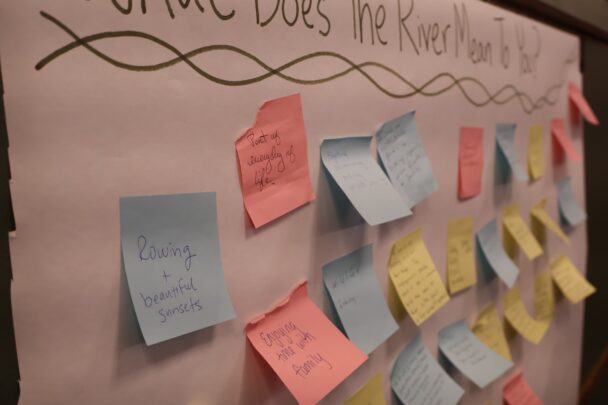
At the beginning of the forum, attendees were given sticky notes and encouraged to write down what they appreciated most about the environment. At the end of the event, they were urged to email their legislators opposing Eversource’s proposal, using their notes as inspiration.
According to the Energy Information Administration, 60% of Connecticut’s electricity comes from methane gas. The toxic gas has been linked to respiratory disease, and is responsible for 30% of global warming since the Industrial Revolution. Additionally, significant portions of methane from pipeline systems leak into the atmosphere.
The speakers didn’t just make an environmental case: Klein and Wazer emphasized that expansion of the pipeline would hit taxpayer wallets hard, noting that Connecticut’s especially high electricity bill totals would likely grow steeper to fund the pipeline expansion.
“We don’t even need this methane,” Klein said. “This is all happening to make money. So I’m going to continue to fight.”
According to the New England branch of the International Organization for Standardization, 60% of the energy generated in Connecticut is from fossil fuels, and a mere 6% from renewable sources.
“So [the energy companies are] making arguments basically about redundancy and about having more gas,” Wazer said. “Our argument would be that we don’t need more gas, and it’s bad for our environment, and so why not expand clean energy?”
There are currently more than 591 miles of interstate pipeline in Connecticut. The Department of Energy and Environmental Protection (DEEP) is responsible for overseeing the introduction of any new lines and has control over implementation. Further, Connecticut civilians are not required by law to be informed that new pipelines are being laid.
Eversource received approval five years ago to enact the Southeast Resiliency Project for “protecting and strengthening the natural gas pipeline system.” According to President of the Chamber of Commerce of Eastern Connecticut Tony Sheridan over 90% of the planned gas pipeline over the state has been completed. The remaining stretch, approximately 3.5 miles between Middletown and East Hampton running below the Connecticut River crossing, is where Eversource has stalled. This is the result of DEEP’s decision to conduct an environmental impact evaluation in conjunction with the Connecticut Environmental Policy Act. An easement in the remaining three miles of Eversource’s project requires an update before the plan can proceed. This is the stretch that NOPE and Sierra Club have been organising against most recently.
Since President Donald Trump took office, previously planned sustainability efforts across New England and New York have been rolled back. Last December, the Trump administration ordered five offshore wind projects that were already in construction—including one being built by Connecticut—to be halted. On Monday, March 22, the Department of the Interior announced that it would refund a French oil company that had secured leases to build wind farms in the Atlantic for almost $1 billion. Governor of Connecticut Ned Lamont has also expressed support for gas pipeline expansion projects in the past, in talks with the Trump administration and New York state leaders.
Efforts to re-center developmental focus on non-renewable energy sources have also received support locally. Last week, Sheridan published an op-ed in the Connecticut Mirror calling for the Southeast Resiliency Project to be completed as soon as possible, citing concerns that Connecticut’s energy security is compromised in the winter due to the increased potential pipe freezing, especially given this year’s significantly colder than average temperatures.
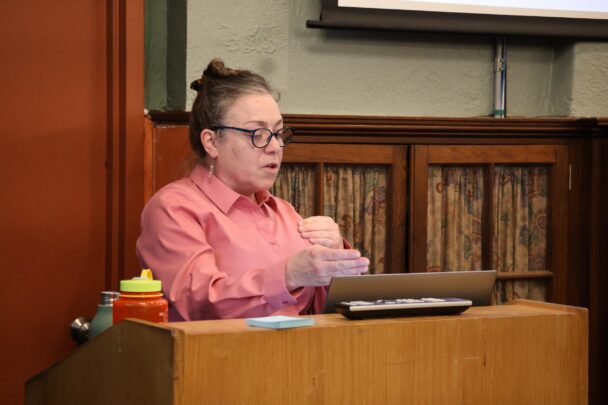
After describing the harmful repercussions on methane, Klein and Wazer walked attendees through the development of the Eversource plan. In August, the Connecticut Department of Energy & Environmental Protection published Eversource’s notice of scoping. A month later, a public scoping meeting was held by DEEP to consider if they should pursue an environmental assessment. But Klein said that few people knew of the meeting in advance.
Ale Philippides ’27 attended as a member of the University’s Sunrise chapter.
“I was really alarmed by how much goes on without our knowledge, and how our money and our land is used in ways that we aren’t even notified of or aware of,” Philippides said.
Middletown small business owner Yasemin Ugurlu, who attended the event, usually keeps tabs on local environmental issues. The pipeline project, however, caught her by surprise.
“We’re located on River Road in Middletown, so we’re right on the river,” Ugurlu said. “We do a lot of cleanups around the river, we’re just constantly engaged in stuff around the river, so I’m shocked that I was not aware, but I’m glad to now be aware, because I’d like to engage our community around it.”
Ugurlu owns Reboot Eco, a zero waste and refill shop. She said that she intends to keep showing up to educational and activism-related events hosted by the Sierra Club in the future.
No specific date has been set for the release of DEEP’s evaluation. Klein expects findings to be presented in March.
In the meantime, the Sierra Club of Connecticut has several events planned to challenge the pipeline.
“Our plan for the future is to keep doing a lot of public education and to keep opposing these projects,” Wazer said. “One of the events that we have coming up that we’re working on, in addition to the pipeline walk [on Saturday, April 11], is a hundred-mile bike ride across Connecticut to oppose fossil fuels. That’ll be coming at the end of May. But we’re doing a lot of work around fossil fuels and opposing those, and continuing to host our coalition.”
Aarushi Bahadur can be reached at abahadur@wesleyan.edu.
Spencer Landers can be reached at sklanders@wesleyan.edu.


Leave a Reply