
The Ethics of True Crime: Unpacking the Morality Behind Our Brutal Fascinations
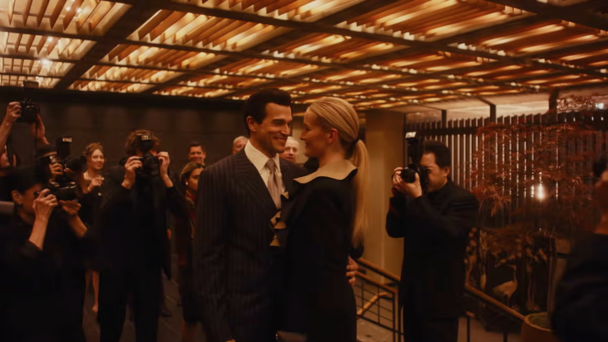
The legend of fashion publicist Carolyn Bessette Kennedy lives on, even 25 years after her passing. From top designers like Phoebe Philo to TikTok followers of the “quiet luxury” trend, CBK has become a role model—iconic for her timelessly chic aesthetic and elevation of neutral colors and classic cuts. So it’s not surprising that “Love Story”—the newly released TV series depicting the romance and subsequent deaths of Carolyn and her husband, John F. Kennedy Jr.—has made waves.
“Love Story” is the latest release by prominent Hollywood producer Ryan Murphy. It joins a vast portfolio of work that notably includes dramatizations of high profile scandals and true crime. This includes “Monster,” an anthology television series about convicted or accused killers, which has so far depicted Jeffrey Dahmer, the Menendez brothers, and Ed Gein. Its fourth season, about Lizzie Borden, is currently in production. Though it has received popular and critical acclaim, reaching number one on Netflix’s global weekly chart, and receiving 31 Emmy and Golden Globe nominations, the show has also drawn mass controversy.
Criticism of the first season focused on its use of horror entertainment tropes to tell a true story, prioritizing Dahmer instead of his victims. Commonly used thriller mechanisms, including long, drawn out noises and ominous, grisly panoramas, create the framework of a story that fetishizes and romanticizes a murderer. (See the TikTok fan edits of Dahmer for proof.) But most importantly it was made without consulting those affected, with a number of the victims’ families publicly objecting to the show.
This issue of consent seems to be the primary predicament of many true crime shows, including the second season of “Monsters.” Portraying Erik and Lyle Menendez, the siblings who killed their parents in 1989 after years of sexual, physical, and psychological abuse, the second installment of the show has been criticized by the Menendez family for taking creative liberties. This includes several unfounded implications of an incestuous relationship between the brothers. In a combined statement, the family affirmed their support for Erik and Lyle, describing the show as “a phobic, gross, anachronistic, serial episodic nightmare that is…riddled with mistruths and outright falsehoods.” According to the family, Murphy never reached out to them, relying instead on the “pro-prosecution hack, to justify…slander…[and] character assassination.”
For his part, Murphy called the response “faux outrage,” claiming that the show “is the best thing that has happened to the Menendez brothers in 30 years in prison.” Though Murphy’s claim is outlandish, considering his lack of interest in contacting the Menendez clan during the show’s creation, it is undeniable that the series shed a light on the case in a new era and for a new generation. Following calls of support from celebrities and the general public, with TikTok hashtags including #freethemenendezbrothers being used thousands of times and accounts arguing for their freedom amassing tens of thousands of followers, they were made eligible for parole, though ultimately denied release.
Despite the backlash, Ryan Murphy persists: “It’s tackling very difficult subjects and I think a lot of people are uncomfortable with that,” he said. “This season really holds a mirror up to people and to society, and it makes a lot of people uncomfortable—I think it’s good that they’re uncomfortable.”
It certainly makes people uncomfortable, but considering the monstrous number of viewers, it seems to be the type of discomfort that appeals to a deep down fascination with human suffering. What fuels the popularity of these shows is a twisted and perverse captivation with the atrocities of physical, sexual, and psychological violence: the grimy details of the victim’s experience and the deepest depths of the villain’s mind. Murphy and his fellow true crime-profiteers line their pockets by manipulating the worst part of the human mind and exploiting the most corrupt stories. What the brutal deaths of Dahmer’s victims and the abuse of Erik and Lyle Menendez boils down to is a violent confiscation of personal autonomy. And by profiting off of their stories without their knowledge, consultation, or consent, show creators do the same. Maybe the “mirror” that true crime “holds up to society” is more reflective of current audiences and our own selves than we realize.
While not exactly true crime, “Love Story” similarly models our brutal fascination with tragedy and brings the debate over the docudrama to the forefront of our minds once again. Thus, since it seems unfair to blanket-villainize the entire genre, perhaps we can establish a litmus test for true crime. Does it fetishize violence? Romanticize the characters? Does it use entertainment suspense tactics to retain audience attention? And primarily, are the victims and their families part of the creation? Judging from the sexual contact, foreboding soundtrack, and very public row between Murphy and Jack Schlossberg (the current Kennedy running for Congress), “Love Story” does not hold up.
Alexandra Lee is a member of the class of 2029 and can be reached at ahlee@wesleyan.edu.



Leave a Reply