
Notes From a Nature Lover
This piece is part of Letters on Pragmatic Hope, an essay series in which Wesleyan professors and administrators reflect on a daunting question: How can students act with purpose and efficacy amid an increasingly authoritarian environment? The series aims to gather responses from a diverse group of Wesleyan faculty, offering a vision for how students can turn despair into pragmatism and action.
We are certainly in a time of shocking assaults on democracy. For many of us it can be hard not to slip into moments of incredulity and, at times, hopelessness. In a room together, commiserating, no doubt each one of us would have a unique offering to the sad and outrageous pile of offenses. It is impossible to keep up, and difficult to fully look away.
In contrast, the Biden years can seem like halcyon days, especially for anyone concerned with environmental issues and their intersection with social justice and human rights. Our country once again joined the community of nations representing nearly all humans in an agreement to cut CO2 emissions. The Obama-era Environmental Protection Agency (EPA) “endangerment finding” that greenhouse gases are harmful provided real guidance.
Massive bipartisan legislation aimed at climate change mitigation and adaptation promised unprecedented shifts that included glimpses of true sustainability; not just movement away from fossil fuels but the start of reparations via environmental justice funding and workers’ rights embedded into plans for high-speed rail. Maybe the worst of tipping points can be avoided? Less likely now with the current administration’s battle cry of “Drill baby drill!”
Daily onslaughts have many of us pining for what we thought was there just minutes before—due process, the assumption of innocence, an EPA with a mission that clearly includes protecting human health from air pollution. It would be tempting and understandable to wish merely for return and restoration.
Daniel Pauly, a marine biologist, in reflecting on traditional management of fisheries, coined the term “shifting baselines” to describe our tendency to calibrate our goals to the near-past, a flaw that has us under-achieving, striving for paucity while we think we are restoring Eden.
Our democracy may not have appeared “authoritarian,” but while our dominant rhetoric celebrates the promise of a good life through hard work and individual merit many of us know the reality to be different. The lived experiences of so many, expressed through interconnected social justice movements, attest to that. As does our relationship with the natural world, determined largely by the needs of corporations and private property owners, and fueled by natural capital extraction, laws that grandfather harm, and an economic system that encourages the myth of happiness through material accumulation. The result has children digging ore from open pits, mountains of our discarded fast fashion littering “far-away” places and an endlessly advertised quest for youth and beauty ensured by products that harm our beautiful youth.
An environmental road trip across the U.S. would include stops at sublime views of rivers restored by the Clean Water Act and long views through blue skies maintained by the Clean Air Act. It would also include petrochemical cities of pipe spires and noisy clouds rewarding mostly less wealthy or BILPOC communities with shorter lives and increased illness (like the seven-fold increase in cancer rates for those living in Louisiana’s Cancer Alley). A detour might strand us in the endless asphalt of suburban sprawl or on highways trying to get there, crowded with cars of single occupants. The other side of a bucolic roadside greenway could host the ragged crater of a sand or gravel operation, or the stubble of a recent clear-cut. Turn the corner again and we arrive at a national park, a place of extraordinary landscapes and world treasures (even while its history includes theft from indigenous peoples).
Environmentalists—activists, educators, policy-makers, regulators, conservation biologists, land managers, trail blazers, etc.—are, I think, experienced and adept at holding these multiple, contradictory and simultaneous truths.
I recall attending a workshop exploring instructor’s roles in navigating reaction to mass shootings; how do we help them the day after? What do we say? It was a somber event. The workshop was coming to a close with a sense of exhaustion. In the quiet, one last student raised her hand. “For those of us who care and work on environmental issues every day is like a shooting,” her voice shaking slightly with nervousness, anger, frustration. “Every day something terrible happens and we just have to act as if it didn’t” (my paraphrase).
Those closest to conserving wildlife may find themselves, at times, “documenting the decline,” a sour unwanted task, a stark contrast to the endless exploration and plenty of previous generations. For those whose baseline smoothly shifts, the absence—of bird song, insect-encrusted windshield, spring-running fish, or native wildflowers—is unnoticed; all is well. For those who remember the world that started with their lives, or who have traveled back in time via natural history writings or in space to the world’s pummeled and still awesome biodiversity hotspots, the loss is palpable.
I’m guessing by now you may be (fairly!) wondering, “where’s the hope part of this letter??” It’s coming. But as James Baldwin said, “Not everything that is faced can be changed, but nothing can be changed until it is faced.”
These same souls, practiced at weathering loss, are often, perhaps surprisingly, incredibly and actively hopeful.
At a regional bat conference, a year after the discovery of white-nosed syndrome, a fungal infection decimating bat populations, researchers shared sad stories of finding the bodies of bats piled on the floors of hibernacula, caves where the small bats huddle (cuddle!) through the winter, and searching for survivors still clinging to its roof. These are professionals. They like data and equipment. They work in labs, set up unwieldy mist nets in the dark, develop software and publish articles. And they love bats. Their conversations move quickly from fungal pathogen taxonomy to tales of the wonderous length of the fishing bats’ legs or the near-misses of bats flying past poised boa constrictors ringing a hidden cave deep in a Puerto Rican forest. Despite declines of more than 90% in some species’ populations, and few potential solutions, the community of bat scientists continue their work. Yes, it’s their profession, but also because if you love something, you keep on.
Perhaps it has something to do with the relationship to the non-human. Both an escape out of the human-only world, and into a world of other wonders. So many amazing places still hold this promise for even a casual visitor (think rainforest, extensive swamp, grand canyons, the Amazon). But even here, now, in our little Middletown, with this winter’s heavy snow. Quieting, observing, we see the bewildering array of non-human footprints straying and tangling across a snowy pond. The snow-burst from a hidden hawk’s sudden flight. The tiny blue-black springtails (“snow fleas”), sunning and procreating, their bodies visible against, but hardly bigger, than the surface grains of snowmelt. The hint of red in an ice-encrusted maple bud.
Environmentalists contending with staggering planetary-scale degradation and small private losses persistently pursue goals far beyond the status quo.
Buildings mimicking termite mounds and regulating increasing temperatures with minimal energy. Construction blocks made of reclaimed plastics that reuse while they remove and replace. Biophilic buildings wrapped in pollution-grabbing skins, enveloping their denizens in greenery. Automated floating screens catching garbage from the mouths of rivers. Rope bridges connecting monkeys to forest fragments, the dangerous road far below. Fungi furniture, and plant-based packaging. Urban guerrillas seed bombing and bench building. Community gardens and pocket-parks carved out of concrete and decades of detritus—growing, nurturing, feeding, and connecting.
Examples, models, nearly whole cities, abound showing us a better way. Anything and everything is possible.
Visiting my daughter in her New York City apartment, a little space with angled windows, we walk two long blocks into Central Park, and from there, to birding heaven. The Harlem Meer, the Loch, the North Woods. Where the breath of humans and other animals mingle with verdant lushness, along with chirps and other exclamations. Here birders pointed out a pair of indigo bunting and we stood together at the base of a huge tree where Flaco, the massive Eurasian eagle owl who escaped from Central Park Zoo and became a world-famous underdog, miraculously holds court.
While some federal commitments to environmental protection are being reversed, environmental activists toil, state by state, on the Environmental Rights Amendment, an effort to amend states’ constitutions with a fundamental right for all residents, including future generations, to clean air, clean water, and a healthy environment. At a recent meeting of those working on a Connecticut version, an activist was asked how long it might take. “Ten years,” was her answer, with a slight shrug. When you love the natural world—and see a better place for humans in it—you’re in it for the long-haul.
I would hesitate to hinder hope with pragmatism, for what is that but anticipatory compromise? Instead, I would suggest that to hope is to be pragmatic. What other way to manage the grief of seeing what you love come to harm? And I agree with writer Grace Paley, that “The only recognizable feature of hope is action.” If you hope, then act.
I would also caution over-burdening action with too careful calculations of efficacy and purpose. Now, perhaps more than ever, is the time to be bold, envision a better way. There are no guarantees in any event. And acting brings hope to others.
There are a hundred ways to care and love, to grieve for loss, and to hope and act. I understand the need for guidance (as I am constantly seeking it, and find it, often enough, in Wesleyan students). So here are some final thoughts:
- Don’t stop caring, so don’t stop acting.
- Act often—A popular quote on social media right now is “Resistance isn’t a moment. It’s a muscle that we exercise again and again.”
- Recognize your power—When do you need to be the one to speak up? When should you support someone else?
- Think big, think small—It all matters (a signature, a kindness, a donation, a protest, a research paper, a meat-free meal, etc., etc., etc.).
- Get from giving—Perhaps this is the secret of sustained action? There’s no virtue in suffering. Act in ways that develop or apply skills, put you in joyful community, let out your need to yell, build your CV, sit you next to an influential or inspiring person or get you free pizza. It’s all good.
- Change the way you make change—Over your lifetime opportunities, demands, and your sense of risk will change. There may be opportunities integrated into your work, periods you need to focus on yourself or a loved one, and other times when community brings you deeper into action.
- Honor who you are—Do those actions that protect your physical and emotional well-being; don’t be afraid to share your decision with those who are less vulnerable, so that they can step up.
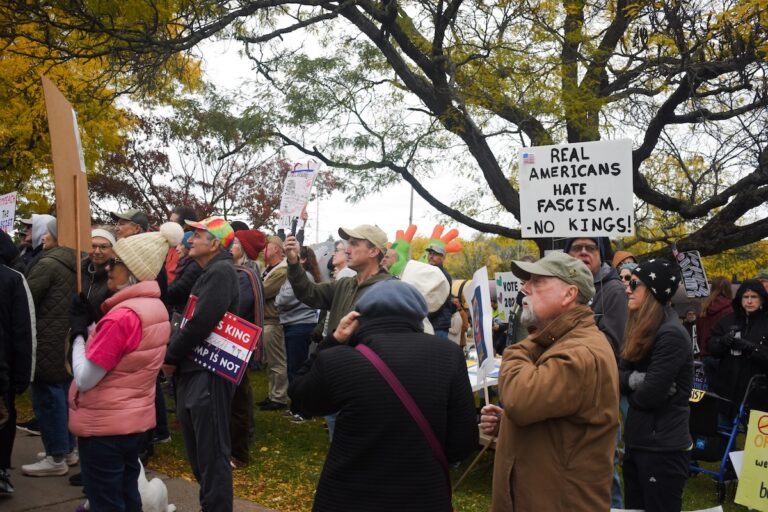
- Say yes—Those who love, grieve and work for change are toiling all around you to give you opportunities to act. They set up those recycling containers, funded that mass transit, organized the workshop and walk in protest with handmade signs. When asked, consider saying yes.
It might be a burden to realize you matter so much, but it is a truth, and in reality, a gift.
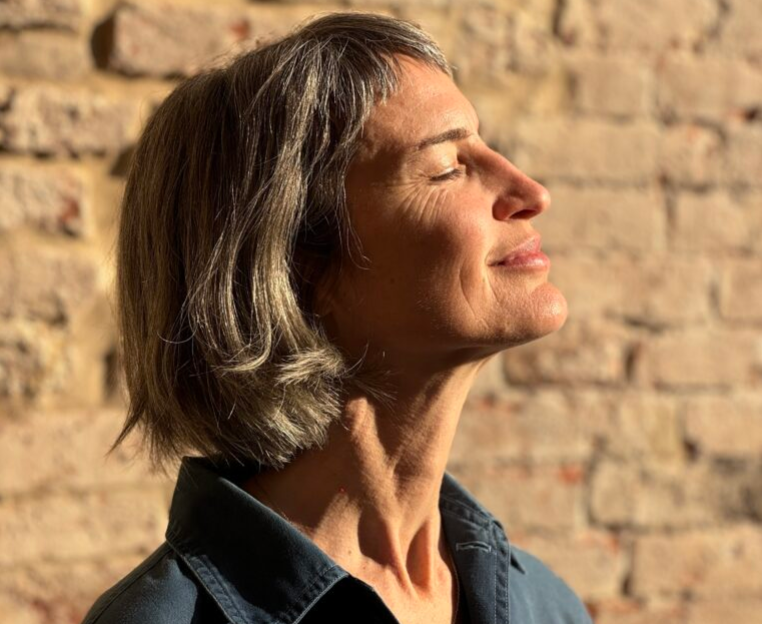
Kate Miller is a Visiting Assistant Professor of Environmental Studies and can be reached at kmiller02@wesleyan.edu.

Leave a Reply