
From the Argives: The Legacy of Wesleyan’s Sign Language House
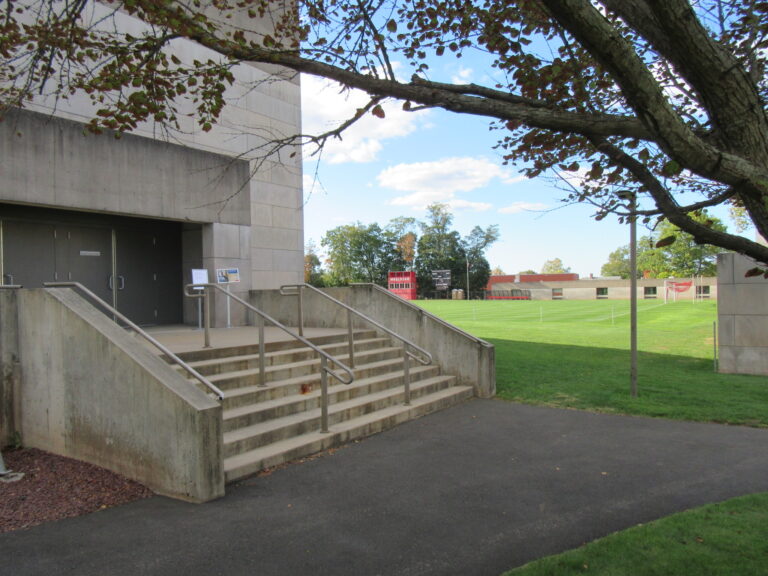
On Lawn Ave., perched on a peak right by the Exley Science Center, sits a house within which silence is the most powerful language. While some students rush past it to get to their classes on time or to pick up their Summerfields order, a small but strong community of students lives in the Sign Language program house, better known as Sign House.
In an effort to make those who use or are interested in sign language feel more connected and engaged with the language, a freshman first imagined this program house in the late 1980s.
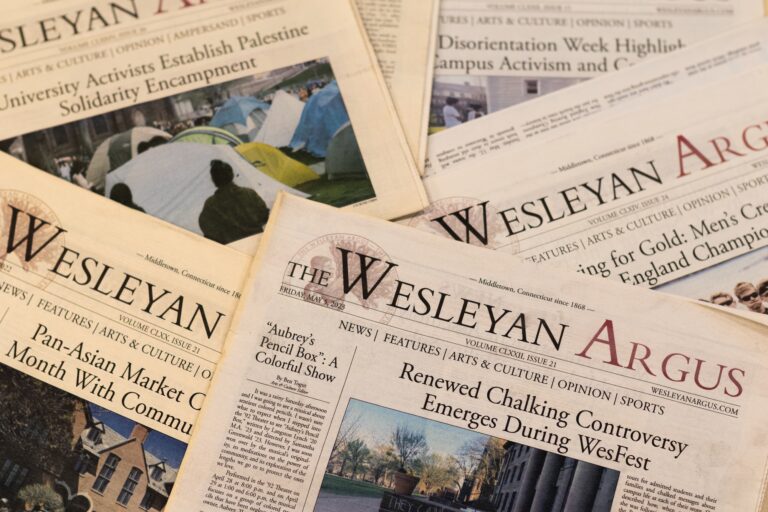
In an Argus article published on Sept. 20, 1988, titled Sign Language House Explores the Silent Sounds of Manual Speech, Marisa Cohen ’89 wrote, “Rob Freundlich ’89 thought of the idea for a Sign Language House in his frosh year, but it took two years for his dream to materialize in the form of the white house at 64 Lawn Avenue.”
Freundlich originally created what is now one of the most sought-after living spaces on campus. While Wesleyan only offers introductory and intermediate-level sign language classes, this subject was once in exceptionally high demand.
“Sign Language at Wesleyan has evolved in the past few years from a small tutorial to one of the most popular classes offered by the university,” Cohen wrote.
This spark of student interest in the language is what inspired Freudlinch to pursue creating a special interest house. In fact, Sign House is the first and, therefore, the oldest program house at the University.
“Last spring [Freundlich] gathered enough interested students to apply for the house, and Freundlich and Harriett Jastremsky ’91 wrote the proposal,” Cohen wrote.
The establishment of the house marked a special recognition for students who struggled with hearing impairments or who were plainly interested in the underrepresented language: recognition that is still prevalent today.
“Members of the Sign Language House stress that their main goal consists of creating a resource center on campus for hearing impaired students and for students who are interested in the study of sign language,” Cohen wrote.
Students made great use of this new opportunity, gathering to practice sign language and to support each other’s journeys in developing their skills.
“For one hour every day, house members communicate only by signing or writing. This hour of silence often takes place during mealtimes, when house members would most likely converse,” Cohen wrote.
This movement to integrate sign language more into our community came from the lack of recognition that hearing-impaired students felt from the administration at the time.
“…‘Wesleyan has never really interacted with the deaf community here,’ according to Freundlich, ‘and for a place like Wesleyan not to do that just doesn’t make sense. Part of the problem is that the deaf community just doesn’t know how to get in touch with Wesleyan.’ House members believe that the addition of the Sign Language House will help alleviate the lack of communication,” Cohen reported.
The creation of the Sign Language House, therefore, aimed to bridge the gap between the sign language community and the rest of the University. However, despite significant efforts, students still felt that the University wasn’t listening to their needs.
“Sign language devotees feel that the program, although extremely popular with students, has not achieved enough respect from the administration. Every fall, hundreds of students try to get into the one introductory class offered, and in the spring semester, students must use their own funds to hire a professor from Hartford to teach a more advanced class,” Cohen described.
Despite the passion for learning displayed in these students’ actions, the University would not take on the cost of hiring a professor to teach a more advanced sign language course.
“Freundlich hopes that the establishment of the house will lead to an improvement of the sign language program,” Cohen wrote.
As stated earlier, the University currently offers only elementary and intermediate classes in American Sign Language, indicating that there has been little improvement since 1988.
While there do not seem to be as many students today who are passionate about taking sign language courses, demand for advanced courses has not been met.
Despite the lack of response from the administration to the students’ desires, the Sign Language House still carries the legacy that Freudlinch envisioned almost 40 years ago: a house of community and safety.
Lara Anlar can be reached at lanlar@wesleyan.edu.
“From the Argives” is a column that explores The Argus’ archives (Argives) and any interesting, topical, poignant, or comical stories that have been published in the past. Given The Argus’ long history on campus and the ever-shifting viewpoints of its student body, the material, subject matter, and perspectives expressed in the archived article may be insensitive or outdated, and do not reflect the views of any current member of The Argus. If you have any questions about the original article or its publication, please contact Head Archivists Hope Cognata at hcognata@wesleyan.edu and Lara Anlar at lanlar@wesleyan.edu.

Leave a Reply