
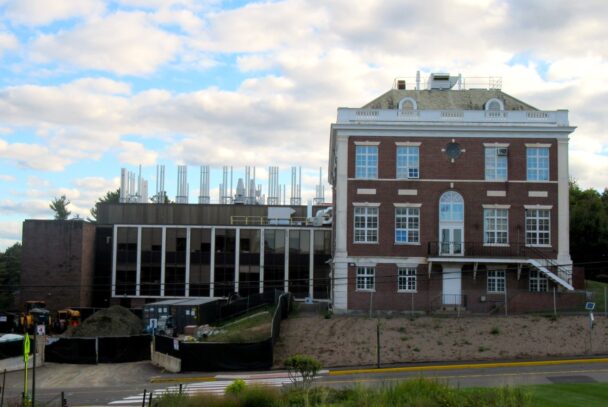
After Nearly Six Decades, Hall-Atwater Laboratory Scheduled To Be Demolished in 2027
After 60 years of serving as a home for Wesleyan scientists, the Hall-Atwater Laboratory is scheduled for complete demolition in the spring of 2027. Hall-Atwater has become the least energy-efficient building on campus over its decades of use, and its design and technologies have been needing an update since 2009.
“Hall-Atwater has far exceeded its service life,” Associate Vice President of Facilities Alan Rubacha wrote in an email to The Argus. “The building envelope, mechanical, plumbing, fire protection, and electrical systems all need replacement. It also uses the most energy per square foot of any building on campus, with an energy use intensity (EUI) of 270. For comparison, the new science building will have an EUI of 84.”
The University hired architectural firm Payette to assess Hall-Atwater, and the firm determined that maintaining the building over the next three decades would cost about the same as constructing a new facility designed to last a century.
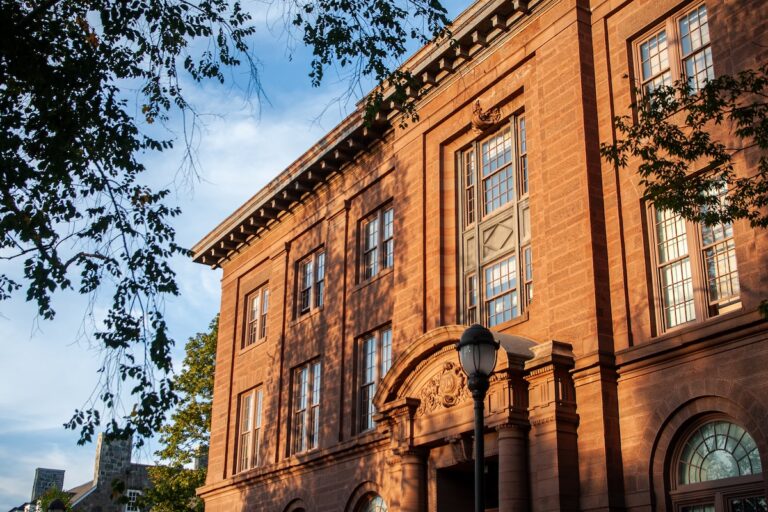
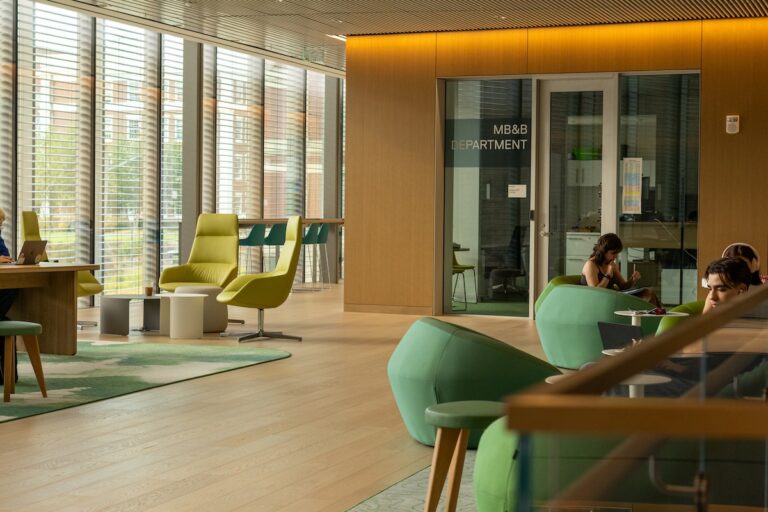
The new science center, which is slated to open in Fall 2026, will be situated next to the old Hall-Atwater and Shanklin complex; the building will be home to labs, classrooms, and offices for the Biology, Chemistry, and Molecular Biology & Biochemistry (MB&B) departments.
“Much of the [initial] conceptual design was focused on considering Hall-Atwater for renovation,” Rubacha wrote. “Ultimately, the 30-year life cycle cost analysis showed that renovating would be more expensive than constructing the new building you see today. Additionally, Hall-Atwater’s shape and low floor-to-floor height make it very difficult to repurpose.”
The layout of Hall-Atwater as it stands today has proven to be a challenge for members of the University’s science community. Labs and resources for specific departments are, at times, located on multiple floors, and the lack of cohesion in the building can hinder the collaboration required for scientific work.
“Hall-Atwater has become somewhat of a patchwork of labs, offices, and teaching spaces that’s been forced to adapt to departmental needs on the fly,” Professor of Chemistry and Integrative Sciences Brian Northrop wrote in an email to The Argus in 2023. “The new science center offered essentially a clean slate.”
Replacing Hall-Atwater was not a recent idea, according to Rubacha. Payette was initially hired in 2006 to design a new Molecular and Life Sciences building with an estimated cost of $160 million. The project was subsequently scrapped in favor of upgrading the existing Hall-Atwater and Shanklin Laboratories, which they thought would be more affordable in the short term. The projection was that upkeep would cost approximately $2 million per year.
These 2009 building upgrades included updating life safety systems, primarily fire sprinklers and alarm systems. Other priorities included improving indoor air quality and renovating teaching labs and equipment. Between 2006 and 2008, the University paid nearly $8 million for capital improvements to Shanklin and Hall-Atwater.
In a 2009 Argus article entitled “Patton sees woodframes’ decline,” then-Vice President of the University and Professor of Earth and Environmental Sciences Peter Patton spoke to students and expressed his concerns about Hall-Atwater.
“Hall-Atwater is on its last legs,” Patton said. “It doesn’t meet OSHA [Occupational Safety and Health Administration] standards.”
Incidentally, that same year, a fire broke out in a Hall-Atwater chemistry lab, damaging almost one-third of the laboratory complex. The fire sent two Public Safety officers and one Middletown firefighter to the hospital to be treated for smoke exposure and chemical exposure, with one suffering a chemical burn. The cause of the fire was a ventilation fume hood that ignited due to a chemical reaction.
Instead of replacement, Hall-Atwater was renovated further following the fire, with new flooring, ceilings, and lighting being installed in order to repair the damage.
Professor of Molecular Biology & Biochemistry and Integrative Sciences Scott Holmes, who has taught at the University for 28 years, agreed that new science facilities were overdue. He has watched Hall-Atwater being renovated lab by lab over the years and is optimistic about the long-term improvements.
“This was a long time coming,” Holmes wrote in an email to The Argus. “There’s been a growing sense that you can only put so many band-aids on a building that’s outlived its usable lifetime.”
Holmes began his career as a scientist in Hall-Atwater and has since mentored the University’s undergraduate and graduate students as they established their own footing in the sciences. Holmes has many memories in the building, including one of his early graduate students showing him the lab’s first foundational result.
His memories aren’t just limited to scientific work, however.
“[One time there was] screaming coming from the lab because a squirrel made it in through the window and was careening around the floor among the lab students,” Holmes wrote. “[I also remember] my five-year-old son piloting his remote-control car all the way around the big square formed by the Hall-Atwater hallways on a quiet weekend.”
Holmes has been able to watch the new science building rise outside his office window and see the product of decades of planning and work being built in real time. The prospect of better collaboration among his colleagues and among labs in the new building is something that Holmes and his department look forward to.
“I’m confident that the sense of community in my department will increase in the new building,” Holmes wrote. “Currently, MB&B faculty labs and offices are scattered across two floors of Hall-Atwater and Shanklin. The new facility will bring us together on one floor–alongside colleagues in Chemistry and Biology with similar research interests.”
As for the demolition itself, the University is working to make it as sustainable a process as possible. Professors and researchers will bring over their current lab equipment that is still functional. A demolition contractor will also be brought in to segregate metals and masonry for recycling, and virtually all of Hall-Atwater will be recycled.
Following a tour of the new science building during the University’s recent Homecoming and Family Weekend, former University science students expressed their interest in taking part in the demolition.
“An alum who took Molecular Biology & Biochemistry in Hall-Atwater expressed interest in getting with their classmates, and taking a sledgehammer to parts of the building,” Rubacha wrote.
The construction of the new science building is projected to be complete by Spring 2026; the building will open the following Fall semester.
Carolyn Neugarten can be reached at cneugarten@wesleyan.edu.


Leave a Reply