
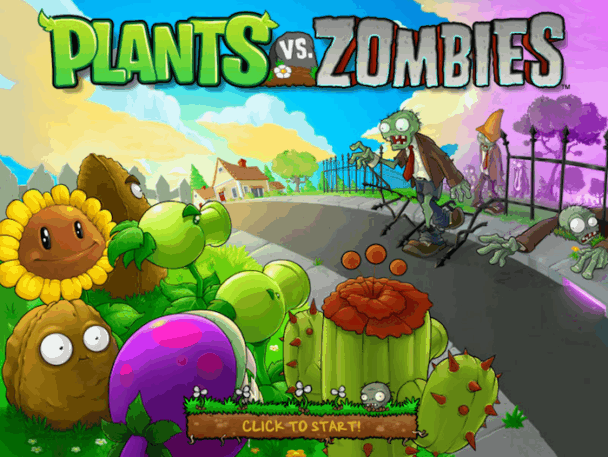
Musical Analysis: How the “Plants vs. Zombies” Soundtrack Exemplifies “Harmonious Mayhem”
Prelude
It’s a cloudless night, and the stars glimmer in the otherwise darkened sky. The eeriness of the silence is only disturbed by the cool rustle of a summer wind. The temperature remains warm. We sit in silence, waiting for it. Time passes. Finally, there it is; our trepidation is replaced by a feeling of angst and a cold sweat. Giant footsteps crash. A rending and wrenching sound of grinding and ripping fills the air, shattering the quiet of the night. Together we watch as an immense head comes into view, dense plates of armor garishly being held together by a blunt assortment of bolts and screws.
Major Melon cries “Hold!” from the vanguard position. At the pate of the gargantuan robot stands the doctor, eager to assault the last vestige of our resistance and claim victory for his vile, pillaging crusade. His minions file and fan out behind him, gawking at our loaded assortment of defense. There we stand, shivering with anticipation, ready to preserve the possibility of tomorrow.
“Squirepo! Re-wee-we-ja,” shouts our leader David. We launch the first volley.
Harmonious Mayhem & How to Hear it
I define harmonious mayhem as the collective and unified demonstration of rigid resistance in the face of certain defeat. Harmonious mayhem can pertain to characters across all mediums and is characterized by the refusal to surrender despite the odds. We find it, among other media, in “Plants vs. Zombies” (PVZ).
PVZ is a tower defense game franchise that gained prominence in the late 2000s and continued on for over a decade after, launching several successful iterations to the franchise. The final battle of PVZ is a microcosm of harmonious mayhem: each of the plants the player unlocked along the way from different worlds (Day, Night, Pool, Fog, Roof) helps in a different way by coming together to stop the tyranny of the series’ main antagonist, Dr. Zomboss. The urgency and tempo of this final encounter is further spruced up by the conveyor belt–type level in which plants are more rapidly given to the player to use. However, what sired the notion of harmonious mayhem is the track that plays through the final level: “Brainiac Maniac.”
Harmonious mayhem as a concept bears similarity to the final battle scene in “Avengers: Endgame” where all the heroes from every world band together to defeat the onslaught of Thanos’ ultimate evil. However, a few key distinctions must be made: the final battle of “Endgame” is mostly just mayhem (albeit fun mayhem). And the mayhem present is one-dimensional, it revolves solely on destruction. Fighting, carnage, and general disorder rule the day. Another distinction: in “Endgame” all the characters are from the same universe, which is not how harmonious mayhem works, the “harmonious” part implies things that are going on simultaneously, but separately. Harmonious mayhem is best pictured as a massive matrix where the characters of each story engage in their various climactic encounters and display immense amounts of valor despite their underdog status.
“Brainiac Maniac” (BM) is a song that perfectly encapsulates the notion of bucking overwhelming odds and taking a resilient stand. BM increases the intensity and duration of the encounter and gives it a climactic feel, almost as if the fate of the world hangs in the balance. BM is characterized by its uplifting energy, and the irresistible, foot-tapping 8-bit theme’s notes.
BM begins with its catchy 8-bit riff, setting the table for the scale and stakes of the job at hand. The energy and angst of the song pulsates until thirty seconds, then the first hook begins (again trademarked by 8-bit goodness), serving as a snapshot of progress. The plants’ energy is in full swing. Following this burst comes a slower melody, giving a sense of a lull in the action: weapons are reloaded and Zomboss refuels his robot and catches his breath. The tension begins to fade and is replaced by a slow piano in which the nagging sensations of doubt and powerlessness seem to flare up and infect the plants. But lo, after several pondering and agonizing seconds, the final riff occurs, a seeming moment of mental fortitude. It is a remix of the original 8-bit loop that personifies the plants’ doubling down on their efforts. BM eventually loops back to where it started, but this time the storm has been weathered; the plants are hardened to the encounter and fight with renewed vigor.
BM embodies the awesome weirdness that is PVZ and its final battle against a giant robot. Make no mistake, the odds are quite lopsided and victory is far from assured. For one, a higher quantity of every zombie variant faced previously in the base game returns and, obviously, the newfound addition of Dr. Zomboss who is equipped with his giant mechanized robot. The robot boasts further unique moves of its own, such as the van throw and the fire breath, both of which destroy all plants in their path. But eventually, despite this uphill climb (and depending on the competency of the player’s strategic abilities), the plants are victorious, and so ends the reign of Zomboss. A sensational piece of music playing throughout.
Though harmonious mayhem’s analysis derives from PVZ, examples can be found everywhere. For instance, one may consider this passage from the battle of Hogwarts in “Harry Potter and the Deathly Hallows” as an example.
“Harry saw Yaxley slammed to the floor by George and Lee Jordan, saw Dolohov fall with a scream at Flitwick’s hands, saw Walden Macnair thrown across the room by Hagrid, hit the stone wall opposite, and slide unconscious to the ground,” the text reads. “He saw Ron and Neville bringing down Fenrir Greyback, Aberforth Stunning Rookwood, Arthur and Percy flooring Thicknesse.”
One could also look to the heroic deeds of the resolute and impregnable Gandalf the Gray in “Lord of the Rings,” when he saves the lives of the fellowship.
“The wizard swayed on the bridge, stepped back a pace and then stood still,” the text reads. “‘You cannot pass!’ At that moment Gandalf lifted his staff, and crying aloud he smote the bridge before him.”
Another final pertaining to Gandalf—this time Gandalf the White—is when he rode out on Shadowfax to face Sauron’s swarms of orcs and thralls all by himself.
“At that moment he caught a flash of white and silver coming from the north, like a small star down on the dusky fields…,” the text reads. “It seemed to Pippin that a pale light was spread about it and the heavy shadows gave way before it…. ‘Gandalf!’ He cried. ‘Gandalf, he always turns up when things are darkest.’”
These are merely two examples that are perfect embodiments of harmonious mayhem, though there are millions more across all mediums that remain untapped. All of these moments occur simultaneously in the matrix grid of harmonious mayhem and transcend time and space.
Harmonious mayhem is not any one act of valor. Rather, it is a conglomeration of the bravery of those who remain steadfast in opposition to the dark forces in their world. Harmonious mayhem happens through a confluence of wills, and though it is found in PVZ by virtue of “Brainiac Maniac,” examples of it are everywhere: human history, fictitious works, stories both of Earth and not. The perseverance of good is boundless and eternal, and “Brainiac Maniac” is its perfect soundtrack.
Ryland Breen can be reached rkbreen@wesleyan.edu.




I really enjoyed this perspective. People usually talk about Plants vs. Zombies because of the gameplay, but the soundtrack deserves just as much credit for making every level memorable. Tracks like “Grasswalk” and “Watery Graves” still stick with me years later because they manage to be relaxing and slightly eerie at the same time. It’s impressive how the music matches the pace of the game without ever becoming distracting. Great analysis—it made me appreciate the soundtrack from a completely different angle.