
Hawaiian Pizza and the Death of Nuance

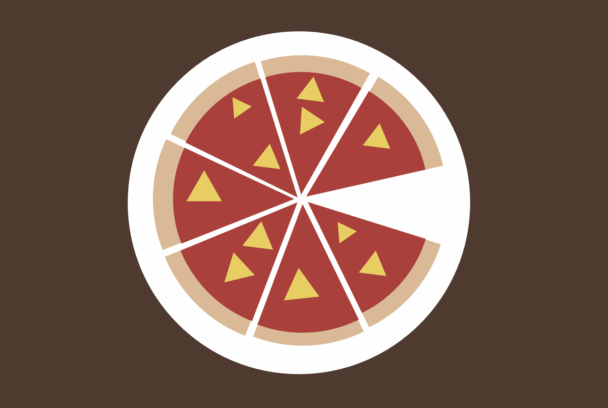
You won’t find a food more polarizing than Hawaiian pizza. The Canadian invention, a classic Italian pie topped with ham and pineapple, has separated the world into exactly two camps. It is either a revelatory dish or a culinary sin. There is no in between.
Social media is in part to blame for the pizza’s infamy. In 2017, then-Prime Minister of Canada Justin Trudeau tweeted in support of the flavor combination. That same year, Jimmy Kimmel offered his comedic perspective on the dish during his late-night show, declaring that “any pizza that tastes better with pineapple wasn’t a good pizza.” In the late 2010s, pineapple on pizza became a potent talking point—even a meme—spawning and spreading through social media platforms.
In a world of possible flavor combinations (often far stranger than “sweet and salty”), other foods don’t carry this burden of controversy. No one bats an eye at the skewers of prosciutto and melon served at fancy parties, or the sweet potatoes finished with marshmallows you’ll find at a Thanksgiving dinner table. Of course, not everyone enjoys these foods, but that’s true of any dish. Some people will like it. Some people will dislike it. Some people will think it’s just okay.
But have you met anyone who thinks Hawaiian pizza is just okay? Rack your brain. There are those who are loud in their support of the pie, and those loud in their opposition. Both sides are loud. One’s alignment on the pineapple on pizza spectrum is almost a personality trait; taking pride in one’s identification as a hater or lover rather than an adult with a nuanced palette is the popular thing to do. There’s a reason it’s become a quirky icebreaker in social settings: It will get people talking passionately, without the stakes of something like a political argument.
The same factors that have radicalized modern political discourse are at play with the Hawaiian pizza dispute. There is a broader cultural pattern on display. Social media algorithms, the same ones that popularized the Hawaiian pizza wars, are designed to maximize user engagement, but this can come at the cost of users being exposed to content that intensifies polarization. They recommend posts—and opinions—similar to what the user has already expressed an interest in, creating echo chambers without crucial external perspectives that encourage balanced outlooks.
When the one-sided nature of social media dips into the realm of politics, things can get very bad, very quickly. For example, QAnon, the conspiracy theory that played a role in the Jan. 6 attack on the U.S. Capitol, originated on the website 4chan’s Politically Incorrect discussion board, a bubble of unfiltered far-right ideology, free from the influence of outside perspectives. Alongside the ever-increasing presence of social media in our lives, polarization is speeding up concurrently: A 2023 national survey from the Public Religion Research Institute found that 23% of Americans believe political violence is necessary to “save our country,” up 15% from 2021. Social media algorithms have the side effect of curbing nuance, encouraging people to unconsciously intensify their political views as they are fed content that reaffirms their own beliefs. Moderation becomes rare.
Nuance is also what’s lacking in the Hawaiian pizza debate. Social media pushes political discussions to the extreme, and this radicalization has dripped down into once low-stakes conversations about food. It is no longer acceptable to think the combination of ham and pineapple is fine, as is acceptable for any other dish. For whatever reason, Hawaiian pizza has been chosen as the poster child for controversial food opinions. If one skews even slightly to the “dislike” side of the spectrum, they are inevitably corralled into joining the ranks of the venom-spitting enemies of pineapple and pork. Or the opposite: One who thinks Hawaiian pizza tastes good will eventually find themselves fighting alongside worshippers who declare the pie as food of the gods. The popular discourse surrounding Hawaiian pizza is more than an icebreaker. It is evidence that we are living in an era more divided than ever. It is a symptom of a culture that encourages extremism and forbids moderation.
Take this moment to reflect on your authentic opinion of Hawaiian pizza. Picture a slice in front of you. Only you. There is no one around to display their judgement, no one around to voice their beliefs about which toppings are right or wrong to enjoy. Imagine taking a bite of that slice. How does it taste? Sweet. Salty. Like pizza, with pineapple and ham on it. Is it amazing? No. There are many pizza toppings that taste better than both of these foods. Is it disgusting? No. Hawaiian pizza is a dish steeped in more controversy than it deserves. Its combination of flavors is truly unspectacular in the grand scheme of things. Our culture’s increasing polarization and thirst for discord has latched itself onto an utterly mundane food of bread, cheese, and fruit. Maybe Hawaiian pizza should be able to exist as just fine. We could use that moderation, after all.
Inigo Hare is a member of the class of 2028 and can be reached at ihare@wesleyan.edu.

Leave a Reply