
Students march for women’s lives
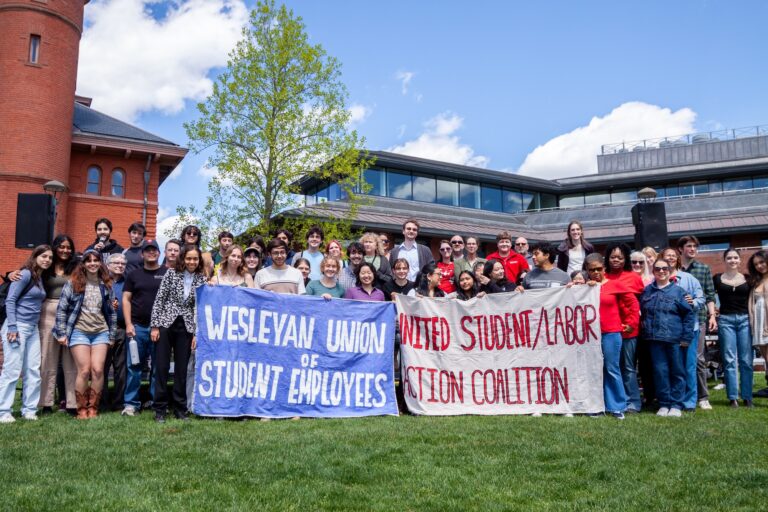
On Sunday, April 25 a delegation of Wesleyan students will join in the March for Women’s Lives in Washington, D.C. As of Tuesday, about 140 students planned to make the trip to March on the Wesleyan delegation’s busses. Many more plan to drive.
“The march is important because it encompasses a range of issues of importance to women around the world: reproductive rights, education and healthcare,” said Gina Eichenbaum-Pikser ’05, one of the delegation organizers. “People don’t realize what’s at stake here.”
The Bush administration has passed several pieces of legislation limiting abortion rights and funding to clinics and centers for education and support for women. The recent signing of the Partial Birth Abortion Ban by the president is just one more example of action that limits women’s right to choose. Although it only focuses on a particular kind of abortion, proponents of the ban have stated that the aim is to outlaw all kinds of abortion in the future.
Currently, abortion and contraceptive rights are protected by Roe vs. Wade, but according to the Wesleyan students organizing for the march, only a small shift would render women’s right to abortion null. Moreover, these national laws do nothing for women in other countries affected by the United States, such as Iraq.
The march coordinators are promoting a theme of “choice, justice, access, health, abortion, and global and family planning,” for women and their families affected by the Bush administration’s policies at home and abroad.
The march is a first time collaborative effort for pro-choice and other women’s rights groups. The organizations involved include the American Civil Liberties Union, Feminist Majority, Planned Parenthood Federation of America, National Organization for America, NARAL Pro-Choice America, Black Women’s Health Imperative, and National Latina Imperative for Reproductive Health, in addition to more than 100 celebrity actors and artists who are also actively protesting the current threats to women’s rights.
The organizers of the delegation said that it is very important that Wesleyan have a healthy representation at the March to show the University’s continued support for these issues and that activism is still alive in today’s generation of college students.
“It is important that college students attend this kind of protest because it is a legacy of our age group to make the government aware that this is a current issue,” said Elle Conger-Milnes ’06. “If our generation isn’t happy with the way things are, the protests aren’t going to go away until they are addressed.”
The Wesleyan delegation coordinators have been trying to raise awareness of these issues around campus in the last few weeks. There was a poetry night last night presented by the organizers of the Wesleyan March delegation to raise funds for the march.
“Another activity promoting awareness of these issues and the march itself was the clothesline by the campus center, which featured a timeline of the Bush administration’s negative action on reproductive rights,” Eichenbaum-Pikser said.
More information about the march can be found on the website at www.marchforwomen.org.

Leave a Reply