
‘Meditations’ explores campus love
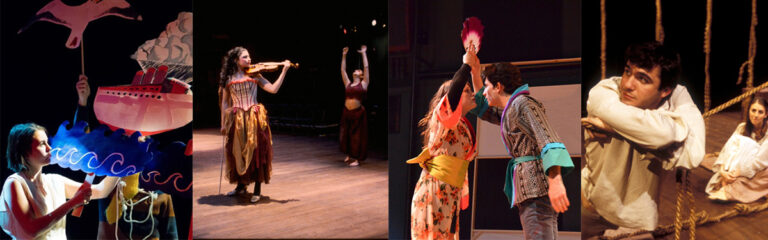
Last weekend, students and faculty alike filled the ’92 theater for four performances of “Meditations / A Love Story,” an entirely student-created multimedia performance piece. Directors Evan Kultangwatana ’04 and Julius Onah ’04 combined film, dance, and theater to ‘tell a love story.’ A musical score composed by Will Swofford ’05 , Patrick Murphy ’05, and the directors tied the performance together.
The performance opened with all five performers, including Onah and Kultangwatana along with Kaneza Schall ’06, Lily Thom ’04, and Nora Bell Painten ’04, facing the audience behind white screens. A film playing above them, they acted out the stories that played out on the screen. Audience members laughed in recognition as photographs of couples from campus passed across the screen.
Through a series of meditations in many different mediums, the performance focused on the theme of dating and being in love in college.
“At college we have such rigid notions of what we should be doing with other people and we put up barriers. In the show we wanted to explore whether these barriers are positive or negative: do they protect us or keep us distant? We wanted to understand how and where we as college students let ourselves connect. College is a four-year paradigm, which makes dating very difficult,” Kultangwatana explained.
The first meditation involved a couple, played by Onah and Schall. Their performance was scripted, but their intimate interaction was extremely engaging. Throughout the performance, Onah’s film showed this couple in different stages of their relationship. Their story dealt with the difficulties they encountered
Kultangwatana revealed that, although their interactions were scripted, “At one point we had them put down their scripts and do interviews in character. So although it was based on fiction, there were certainly elements of the actors in these stories.”
Interspersed with the vignettes of Onah and Schall were more abstract filmic moments, accompanied by voice-overs of Thom, Painten and Kultangwatana.
Kultangwatana noted that while they had planned to script the entire project, “The artists had experiences that needed voice.”
The next portion of the film dealt with insecurities about being single at college and the paradigm that arises within a college environment.
“College is not conducive to relationships,” Thom said.
In voice-overs, the actors discussed the awkwardness of being at parties without knowing anyone and the loneliness and vulnerability that comes from not truly knowing those around them.
Throughout the piece, the three actors beautifully incorporated a dance that reflected what the actors were saying.
“The voice-overs were very cerebral and raw,” Kultangwatana explained. “The dance added color and gave the voice-overs an elasticity of meaning. It allowed people to understand what was happening outside of the direct meaning of the words.”
“I liked how it broke down boundaries between film and dance. It was never one or the other, they worked very well together,” said Abe Lateiner ’04.
As the performance progressed, it became clear that relationships that had seemed perfect were actually much more complicated. Onah and Kultangwatana used other media to reflect these complications.
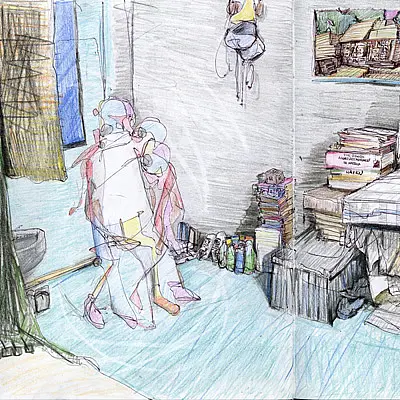
“I really liked the set. Sometimes you could see the characters clearly, and some times you couldn’t – it reminded me of being in a relationship, knowing someone so intimately at some times and then not understanding them at all at others,” Lateiner said.
Although the characters experienced a lot of pain and encountered many difficulties, the story ultimately ended on a positive note. Thom expressed the need to “be romantic with yourself,” and Painten expressed the importance of “letting yourself feel something.”
In the final scene, the actors were seen in full light without any video or voice-over playing. The first and only words spoken on stage came from Onah, who was finally able to tell his lover that he loved her, thus leaving love as a possibility for college students.

Leave a Reply