
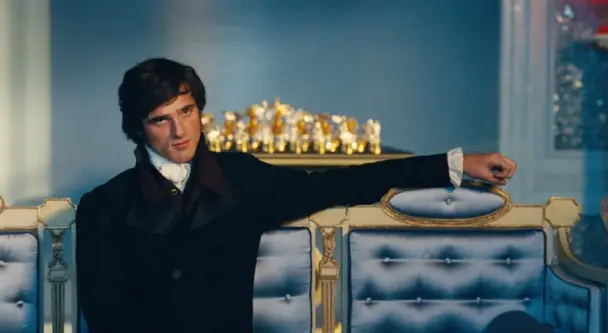
The Non-Reader’s Review of “Wuthering Heights”: Emerald Fennell Screens Empty, Sweaty Concoction
The famous agricultural scientist George Washington Carver once said, “Where there is no vision, there is no hope.”
And I’m not quite sure whether Emerald Fennell has vision.
As someone who has never even touched a copy of Emily Brontë’s “Wuthering Heights,” I entered the cinema hall perfectly primed to love Fennell’s film adaptation without comparing it to its source material. By the end of its runtime, however, “Wuthering Heights” left me cold. At the very least, I was anticipating some steaminess, which had been promised by Fennell and the film’s stars, Margot Robbie and Jacob Elordi. Perhaps a sense of yearning that could have stayed with me as I left the theater. I’d even eat up a movie that was entertaining and debaucherous enough to make my ticket and popcorn worth the price!
But alas, as I walked out of the theater having sat through seemingly endless montages of two very attractive people having sex in a plethora of places, I said aloud: “What the fuck did I just watch?”
For those who have, like me, never read the original text, the movie doesn’t help clarify the plot. “Wuthering Heights”—quotation marks necessary—centers on the tumultuous love story between a woman named Catherine (nicknamed Cathy, played by Robbie) and a man named Heathcliff (played by Elordi). The film first introduces the two as children in the Yorkshire moors, when Heathcliff is adopted by Cathy’s temperamental father and quickly becomes a playmate for Cathy. Over the years, they develop a tight bond as Heathcliff withstands his adopted father’s physical abuse, and eventually they fall in love with one another.
The story takes a turn when Cathy marries her rich neighbor Edgar Linton (Shazad Latif) in order to attain a comfortable life and financial stability. While in the novel, Cathy is seventeen at the time of marriage, in the film, she appears to be in her mid-thirties. Perhaps viewers unfamiliar with the source material might also wonder why a thirty-five-year-old woman is still unmarried in the early nineteenth century, or why she still moves through life with the emotional maturity of a petulant high schooler.
Or maybe they’ll wonder at the reason for Heathcliff’s newfound menace after his sudden departure from the Yorkshire moors. The reasons for his cruel conduct in the novel, which span a tragic backstory of abuse at the hands of Cathy’s brother, along with a lifetime of being ostracized for his dark skin and features, are never expanded on in the film.
Fennell cheerfully prods on with little examination into either of the characters’ interior or exterior lives, refusing to answer any of the pesky logistical questions about character development that the viewer may hold. Instead, it becomes clear as to what she’s really interested in: the lovers’ myriad of sexual endeavors.
Yet even such scenes lack passion and, frankly, become tedious to watch. The romance between Cathy and Heathcliff is somehow even less compelling. Whatever happened to yearning—nasty, pathetic yearning—in Hollywood romances? Though Elordi and Robbie sincerely try to wring out any potent emotionality that the film’s writing provides them with, they ultimately lack the chemistry to make that romance flicker and spark.
Performance-wise, Elordi embodies Heathcliff’s bitter and violent spirit with a decent amount of competence. Robbie, on the other hand, feels painfully miscast despite her incredible talent (concerns about age set aside). She simply does not convince as a plausible nineteenth-century woman, nor as someone ravaged by desire and obsessive, devotional love. Her performance seems to only exist at the surface level, rarely exploring Cathy’s inner life with the curiosity that it deserves.
Disregarding the leads’ lack of tension, the film’s performances may be some of its only highlights. The supporting cast lends “Wuthering Heights” a few desperate pops of excitement, particularly with the performance of delightfully campy Alison Oliver as Isabella Linton. Meanwhile, Hong Chau offers an interesting interpretation of Cathy’s servant Nelly despite having little to do.
The other highlight is Fennell’s strikingly beautiful visuals; in one memorable scene, a sobbing Cathy crumbles onto the floor, her vivid red skirt merging with the imagery of Heathcliff riding into the wondrous red sunset.
All that said, intriguing visuals can’t really save Fennell’s project, a plastic product with no depth whatsoever. The crux of its failure is its utter confusion about what it wants to be. Imagery of flesh-colored walls, gooey egg yolks, and sensual bread kneading reeks of Fennellian provocation and tongue-in-cheek sexuality. This is why it makes little sense when the film’s last third sharply pivots into teary melodrama, filled to the brim with the agony of sickly obsession.
Whether Fennell wished to create a scandalous erotic drama or a tear-jerking tragic romance, she has simply failed on both counts; the film is neither interesting in its provocation nor successful at producing sadness or any particularly strong emotion. It instead resembles a desperate attempt to pervert a literary classic by imbuing it with the contemporary fascination with “smuttification” (as the YouTuber Broey Deschanel termed it). A filmmaker with genuine concern for her characters’ minds, hearts, and bodies alike could have perhaps employed this approach to mine the material for a new and unique interpretation. Fennell, instead, has not created a film but a walking, talking, sexual Pinterest board—maybe a fine Bridgerton fanfic, but no excuse to desecrate a classic.
Avantika Jagdhari can be reached at ajagdhari@wesleyan.edu.




Leave a Reply