
Town Hall Held for Connecticut Environmental Rights Amendment
The Connecticut Environmental Rights Amendment Alliance hosted its third public town hall speaker series at the DeKoven Center in Middletown on Wednesday, Feb. 12.
The alliance advocates for the passing Connecticut Environmental Rights Amendment (CTERA), which would designate the right to clean air and water, a safe climate, and a healthy environment equal to the legal and constitutional status of other freedoms, such as freedom of speech.
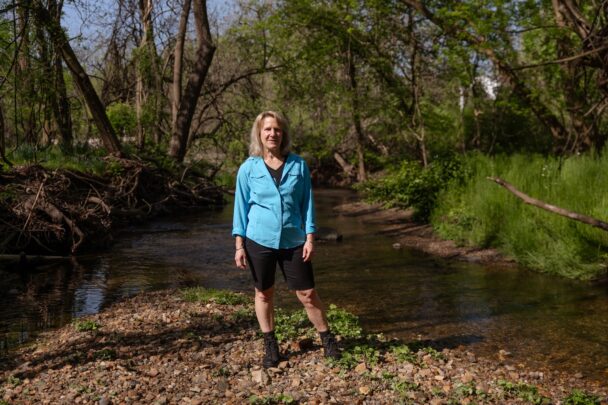
The event featured speaker Maya K. van Rossum, founder of Green Amendments for the Generations (GAFTG), a national nonprofit organization focused on including a Green Amendment in every state constitution across the United States, and eventually at the federal level. The two previous town hall speeches respectively took place in Mansfield, Conn. and Stamford, Conn.
“With the passage of the CTERA, we will be ensuring and requiring that all government officials become constitutionally obliged to protect the environmental rights of all the people,” Rossum said. “[That means protection] at every level of government here in the state of Connecticut, not just the state legislature, but the local town council, the attorney general’s office, the governor’s office, all the regulatory agencies.”
Three states, Pennsylvania, New York, and Montana, have already recognized and protected environmental rights akin to those proposed in the CTERA. Pennsylvania’s Environmental Rights Amendment was adopted in 1971, Montana’s Green Amendment in 1972, and New York’s Green Amendment nearly 50 years later in 2021.
“The language in [the CTERA] is by far the best compared to [the other states’ amendments],” Rossum said. “That’s because, over time, we’ve learned a lot of lessons. We’ve taken all of those good lessons learned, and we’ve built them into our CTERA’s language.”
The CTERA is a constitutional amendment, meaning that it must go through a legislative process. The Connecticut General Assembly must agree to pass the proposed constitutional amendment by a 3/4 majority in both chambers, after which a popular vote would occur as it appears on the ballot in the 2028 election cycle.
In addition to the difficult process of passing the amendment, the CTERA also faces many opponents, including prominent Democrats in the Connecticut House of Representatives Chamber. Connecticut House Majority Leader Jason Rojas, for instance, has notably been against environmental bills similar to the CTERA.
“There’s no doubt that there are environmental laws which keep us from doing lots of things including affordable housing,” Rojas said in a 2024 interview with CT Insider.
Rossum rejected the premise that environmental regulations place restrictions on construction projects or efforts to build more housing for Connecticut residents.
“The CTERA is not going to create an impediment toward affordable housing projects, unless that affordable housing project has really serious environmental ramifications that rise to the constitutional level, which is a very high level,” Rossum said.
Currently, over 40 organizations have signed on in support of the CTERA, including Sierra Club of Connecticut, Sunrise Movement Connecticut, Clean Water Action Connecticut, and the Connecticut Audubon Society. However, although the amendment advanced last year with bipartisan support, prominent House chamber members changed its language so significantly that the organizations withdrew their support for the bill.
As of the writing of this article, CTERA advocates are still hoping the unmodified bill will be passed this year.
Rossum emphasized the potential impact of the bill if it is successfully passed, and the effect it might have on future generations.
“Through this movement, we have a true opportunity to leave a legacy of protection,” Rossum said. “People who will never know who sat in this room tonight and did this heavy lifting and this hard work for them, but they will be forever grateful that we did it, because they will be the beneficiaries of the incredible constitutional protection.”
Brendan Kelso can be reached at bkelso@wesleyan.edu.
Akari Ikeda can be reached at aikeda@wesleyan.edu.





Leave a Reply